Undiagnosed Asperger’s Syndrome?


The following is a definition of asperber’s syndrome along with some of its more common presentations.  I have copied this directly from the website http://www.webmd.com.

“Asperger’s syndrome, also called Asperger’s disorder, is a type of pervasive developmental disorder (PDD). PDDs are a group of conditions that involve delays in the development of many basic skills, most notably the ability to socialize with others, to communicate, and to use imagination.

Although Asperger’s syndrome is similar in some ways to autism — another, more severe type of PDD — there are some important differences. Children with Asperger’s syndrome typically function better than do those with autism. In addition, children with Asperger’s syndrome generally have normal intelligence and near-normal language development, although they may develop problems communicating as they get older.

The symptoms of Asperger’s syndrome vary and can range from mild to severe. Common symptoms include:

  • Problems with social skills: Children with Asperger’s syndrome generally have difficulty interacting with others and often are awkward in social situations. They generally do not make friends easily. They have difficulty initiating and maintaining conversation.
  • Eccentric or repetitive behaviors: Children with this condition may develop odd, repetitive movements, such as hand wringing or finger twisting.
  • Unusual preoccupations or rituals: A child with Asperger’s syndrome may develop rituals that he or she refuses to alter, such as getting dressed in a specific order.
  • Communication difficulties: People with Asperger’s syndrome may not make eye contact when speaking with someone. They may have trouble using facial expressions and gestures, and understanding body language. They also tend to have problems understanding language in context.
  • Limited range of interests: A child with Asperger’s syndrome may develop an intense, almost obsessive, interest in a few areas, such as sports schedules, weather, or maps.
  • Coordination problems: The movements of children with Asperger’s syndrome may seem clumsy or awkward.
  • Skilled or talented: Many children with Asperger’s syndrome are exceptionally talented or skilled in a particular area, such as music or math.”

Having worked in public education at the primary school level I have had occasion to come in contact with several children with diagnosed Asperger’s.  The things I noticed about them was how they constantly missed common social cues.  They also had a tendency to retreat from social interaction, were very sensitive to distractions, and had a very difficult time understanding the world external to themselves.

I had the good fortune to work at the Massachusetts Institute of Technology as an engineer for a number of years.  As I reflect upon the people I knew there it has occurred to me that there were a number of these brilliant people I came into contact with who probably had undiagnosed Asperger’s.  Most people thought of them as being self-centered, narcissistic.  And to some extent that may be true but my take on them is they were not people who thought, as a real narcissistic does, that they could do no wrong.  They just were unaware that they were either out of line in their interactions, or incapable of understanding how to consider another person’s needs and desires when interacting with them.  They do not, however, do this from some evil narcissistic tendency, but probably because they are in capable of such consideration, and when such things are pointed out to them, they are receptive to the consideration of such a short coming.  The true narcissist is not receptive.

I am not trained, nor have I studied, the field of psychology or psychiatry.  But from a strictly lay perspective I cannot help but wonder how many people we think of as being extremely selfish and self-center are actually an Asperger’s candidate.  I believe such a consideration could well help them, and us.

A Few Facts About House Cats


I am a cat person, although I do like dogs, I prefer a cat.  I love their independence.  Cats are survivors and better at taking care of themselves than a dog.  For example, you can leave a cat alone in your house for a few days and when you return the only response you’ll get from your cat is, “did you go somewhere?”  Do that with a dog and you will return to a house that looks like it has been vandalized.  But that aside, I thought I would share a few tidbits I have found out about cats that you might find interesting.

Jinx 003

1.  Why do cats have whiskers? — “The whiskers, unlike human hair, are actually touch receptors. These longer, stiffer hairs — also called vibrissae — are embedded more deeply in the cat’s body than the shorter top-fur coat. The vibrissae are connected securely to the sensitive muscular and nervous systems, sending information about the surroundings directly to the cat’s sensory nerves, giving it a heightened sense of feeling and helping the cat to detect and respond to changes in its surroundings – sort of like kitty radar.” (taken from http://www.petmd.com)

2.  Why do cats purr? — “Although we assume that a cat’s purr is an expression of pleasure or is a means of communication with its young, perhaps the reasons for purring can be deciphered from the more stressful moments in a cat’s life. Cats often purr while under duress, such as during a visit to the veterinarian or when recovering from injury. Thus, not all purring cats appear to be content or pleased with their current circumstances. This riddle has lead researchers to investigate how cats purr, which is also still under debate.”  (Leslie A. Lyons,  Scientific American, January 27, 2003)

3.  Why do cats wag their tail? — “Cats, use their tails to communicate with other animals. For example, the position of a wolf’s tail can tell another wolf what mood he’s in. A confident wolf holds her tail up high, whereas a frightened wolf holds her tail between her legs; a white-tailed deer shows alarm by flicking her tail; horses flatten their tails between their legs when frightened and lash them back and forth when they are irritated or annoyed.  Likewise, your cat’s tail is a barometer of her feelings. A high vertical tail is a sign of happiness. If that high tail quivers from the base up, it indicates that she is really happy and excited. If that tail goes in the opposite direction and is tucked between the legs, your cat is afraid or trying to avoid a confrontation.  A cat’s wagging tail means various things, each wag is slightly different. Broad wagging, even whopping, indicates annoyance. Your kitty may be curled up next to you enjoying a nice petting session when suddenly she decides that she’s has enough. She will signal this to you by swishing her tail up and down or its tip from side-to-side. If you miss the signal, she may bat at you with her paw, or worse, to make her point.  If she’s really agitated, she will wag her tail rapidly back and forth from the base. This is a threatening signal to warn other cats (and you) to back off. On the other hand, a tail that waves back and forth slowly and gently indicates that your cat is relaxed and happy.” (www.petplace.com)

tails

4.  Why do cats bump their face into yours? — “Scent communication is not only kitty’s way of marking her territory — it also provides her with  a comforting familiarity to her surroundings. Cats often scent-mark things that are most important to them. For example, if your kitty head bunts your face, she is letting you know that she trusts you completely. After all, she is placing herself in a rather vulnerable position, not sure of what your reaction will be. Scent communication is a large part of bonding and expressing emotion for cats.  Bunting spreads the cat’s unique odor “signature” upon whatever she rubs. Sharing this scent quickly identifies you, other family members and objects with a familiar odor. Congratulations, you’re a member of her club.” (www.petsadvisor.com)

cat face

5.  Why do cats walk sideways? — She is being playful or showing off.

6.  Why do cats sleep so much? — “Cats have the physiology of a predator, meaning that they’re hardwired to give chase and hunt — mainly at night. Large cats such as lions have a similar pattern of sleeping during the day and hunting at night. Although they have been domesticated for the most part, housecats still retain that wild streak. Even cats at play will display the feline primal instincts of creepng about in the shadows and, without a whisper of warning, pouncing on their target prey. And hunting prey takes an amazing amount of energy. Whether your kitty is hunting for outdoor prey or tackling a catnip toy, all that sleep he gets is reserve energy for running, pouncing, climbing and stalking.” (www.petmd.com)

Jinx - day two 002

7.  Why do cats meow? — “Adult cats, living apart from humans, have very clear communication with one another. Cat language is spoken mostly through scent, then through facial expression, complex body language and touch.  Cat sounds for vocal communication involve caterwauls for mating, chattering upon spotting prey, hissing to ward off an intruder or shrieking when hurt or terrified. Meowing is not part of natural cat language—it was developed almost exclusively for humans.  The only meowing in cat language is done between a mother cat and her kittens. A kitten’s tiny “mew” is a cute, endearing sound, used to solicit attention and care from mom cat. Once the kittens are grown, the mews and meows would stop, if not for communicating with humans.  So why do cats meow to people? Because meowing is what works. Your cat is dependent on you and quickly learns that you are clearly not picking up the scent messages she leaves on your belongings or the body language she is attempting to use.”  (www.catchow.com)

8.  Why do cats rub up against us? — “By engaging in different types of rubbing, cats mark their territory and establish group scents, which are an important factor in maintaining group identity in multi-cat households. When cats rub up against one another, the activity is called allorubbing.” (http://www.examiner.com/article/why-do-cats-want-to-rub-up-against-you-all-the-time)

I was going to put up 10 things but 8 seems quite enough, and answers most of my “compelling cat questions.”  What I did find in reading the various article associated with cat behavior is that such behavior is shared throughout the animal kingdom, although domestic cats are the only animal that purrs when happy.  Cats in the wild, regardless of type, do not purr although snow leopards and certain other large cats have demonstrated purr-like sounds. Oh, and the two pictures of the black & white (tuxedo) cat are of my cat Jinxie.

Why Is Birth Control Still a Hot Topic?


Four of the hottest topics in the history of America have all involved individual rights, slavery, rights of blacks, right of women to vote, and birth control.  Three of those are no longer hot topics but all can find their roots in the early to mid-19th Century.  Why then have we been unable to make the basic tenants of birth control something that is widely accepted so that any discussion of it has a baseline of accepted principles?  The only reason is because there are those who want it to be a part of morality.

Our country realized when it repealed the 21st Amendment, alcohol prohibition, that it could not legislate morality as was done with this amendment.  We clearly recognized that at least where drinking was concerned, whatever morals were attached to it were an entirely personal thing that governments have no business legislating.

In the early 20th Century a woman named Margaret Sanger, of poor Irish Catholic parents from Corning New York, moved to the lower east side of New York City where she set up a woman’s clinic.  As a trained nurse, and one who had aspired to be a physician, she found that the health of poor women was poorly attended to, and worse, there was no forum for the woman to be educated relative to her own body.  Such discussions were considered taboo at the time.  She had found the urban poor to suffer from an extremely high infant mortality rate.  But it was at that time she also found that many of these women desired to find a way to forestall unwanted pregnancies.  And it was on this point in particular that Sanger lead the charge.  He efforts were both criticized and condemned by early 20th century society.  When she tried to inform a larger number of women by sending sex education materials through the mail, she was prosecuted and found guilty of distributing pornography.  That was in 1917 and at the time she received a large amount of her support from the suffragettes.  But when, in 1920, women got the vote, the suffrage movement ceased and with it Sanger’s best support.  And worse for her, she had earlier allied herself with the Socialist movement in the U.S. and alienated even more people because of that.

Sanger died in 1966 failing to see what would certainly have been her greatest victory, the 1973 US Supreme Court decision on Roe vs. Wade.  The SJC decided that it was an issue of privacy and that abortion was the moral decision of a woman in conjunction with her doctor.  That should have made the issue resolved and given the American public a starting place to move on from.  Unfortunately that has not been the case.

Sanger’s inspiration was the idea of giving women the information necessary about her body to make educated decisions with regard to it.  Key to the discussion was always the word “education.”  And it is on this point which America is failing.  Our high teen birth rate, high abortion rate, and high undesired birth rate.

I find abortion to be absolutely abhorrent.  But my solution is not to ban abortion, but to better educate those who have abortions and unwanted pregnancies, teens in particular.  My challenge to the anti-abortion crowd, who euphemistically call themselves “Pro-life,” is to come up with a solution that reduces a woman’s need and/or desire to get an abortion.  It is troubling that these anti-abortion people also seem to be anti-sex education where adolescents and teens are concerned.  Their magical thinking allows that all the sex education they need they can find at home.  Ideally that would be true, but the real world tells an entirely different story.  It is not coincidental that the highest teen birth rates happens to the poorest educated.  It is also not coincidental that unwanted pregnancies happen most frequently not just to teens, but to the poor who do not have access to good medical support.

I was astonished that within the US Congress there is a movement to cease public funding of Planned Parenthood.  While the organization certainly advises women with regard to abortion, its services do not stop there.  They also deal with all aspects of women’s health and education, such as cervical cancer screening, breast cancer screening, STDs and so forth.  How can anyone in their right mind think that public funding for such a group is a bad thing?

America first has to come to terms with the fact that it needs to educate their children with what is happening to their bodies as they enter puberty.  And that education needs to continue, in the public forum, for as long as they are in school.  It is far less expensive, in all respects, to educate our children with regard to sex than it is to have them pregnant when they have not yet stopped being children.  To do this Americans must stop thinking of sex, where education is concerned, as being private, taboo, or too embarrassing.  And also because sexually transmitted diseases, to include AIDS, gonorrhea, syphilis, etc. put us all at risk.

To anti-abortionists I say, support those things that help women from getting pregnant in the first place.  Make it a given that all young girls and women will have equal and unobstructed access to birth control methods.  Make a part of that education the actual costs, both financial and psychological, of bringing a child into the world.  Make a world where abortion is only a last resort, not a convenience, or measure of desperation.  There is no substitute for a well-educated and well-informed public.

Bicycling: A Great Alternative Exercise


Around the year 2000 I finally decided I needed to come up with some sort of exercise regimen.  I had had a heart attack 2 years prior, and it was a strong recommendation of my primary care physician, who also happened to be a cardiologist.  I took up jogging as that was what everyone did.  I don’t think I ever considered joining a gym at that moment but that may have been due more to where I was living than anything else.

I found this pond about 10 miles from where I was living that had a paved walkway around its perimeter.  It was about 2.25 miles total.  I started by doing a combination of jogging and walking, increasing how long I jogged with each successive session, and after a while I could run the route non-stop, and then ran twice around non-stop.  I was doing great until my knees started complaining.  My doctor had an MRI done on my knees and informed me that I had a pretty good case of arthritis and suggested I take up swimming or some other form of low-impact exercise.  That didn’t sit well and said as much.  He suggested that I need to build up the muscles around my jointed which I did.  After about 5 years of jogging I noticed that it was not only boring me to tears, even with the Walkman, it seemed to become more and more difficult.  My stamina was messed up.

It was at that point, I don’t remember why, I thought of how when I was a kid I had loved riding my bike.  I went out and purchased a good beginners bicycle.  I had the good fortune as well that I had moved to a place right next to a rail-trail, the Minuteman Railtrail, that is 11 miles long in one direction.  It took me a few weeks just to get used to riding a bike again.  Then I had to figure out how to handle the 22 miles of round-trip involved.  One of my first discoveries was how easy it was to overdo things.  That is, I was in no shape nor well enough accomplished to being doing that 22 miles right away.  That is when it occurred to me to break the trip up into what I think of as turn around points.  Those were points at a particular distance that would still give me a good exercise without overdoing it.  It was so bad one time that I was actually taken to the hospital from a combination of overheating and dehydration.  Not fun!  But it told me I needed to learn a lot more about proper bicycle exercise.

Today, I consider myself something of an expert bicyclist but only where non-professional, or non-competition bicycling and bicyclists are concerned.  One of the great things about bicycling is that it tends towards longer periods of exercise than either walking or jogging.  I doubt that at my best when I was jogging it ever lasted much longer than an hour and a half.  My bicycling exercise can easily go twice that amount of time and health experts agree that length of cardiovascular exercise, which biking can be, is just as important as how hard you exercise, maybe more so.

To illustrate how effective bicycling has been for me, this year I will turn 64.  I can frequently go out for a 30+ mile non-stop bike ride.  That was unimaginable several years ago, particularly for someone at my age.  The older you get the more difficult it is to maintain any sort of regular exercise regimen.  My current primary care physician, who herself is an avid bicyclist, noted that the last time she took my pulse and blood pressure that were both what you would expect to find in a 30 year-old runner.  That felt awesome to hear.

Living in the northeast the winter months do not lend themselves to bicycling.  Because of that I joined a gym that I use on the cold and inclement days.  That I have little use for a gym in the summer months does not make it a waste of money.  During these winter months I use the elliptical and stationary bike to keep myself in bicycling shape.  It works!  The point here being, I do not allow myself an excuse for not exercising regularly.

If you have read this and are thinking you might want to buy I bicycle let me tell you one of the biggest mistakes I see beginners making.  They go to the bike store and buy a mountain bike because it looks both sturdy and stable, both of which it is, of course!  But it is absolutely the wrong bike for the beginner so do not let the salesperson sell you want.  What you want is what is called a “road bike” or “commuter bike.”  The tell-tale for such bikes is their tires.  A mountain bike has the widest tires while racing bikes have the thinnest.  What you want is a tire that is in-between.  Also, mountain bikes weigh 40 pounds or more!  A good beginners bike should not weight much more than 30 pounds.  That 10 pound difference is a big deal.  My own bike weighs in at 24 pounds.   The better racing bikes come in at 14 pounds or less.  They also cost $5000 at least.  A good beginner’s bike will cost between $350 and $600.

I recommend that when you go to a bicycle dealer, you find one that is not part of a chain.  He should also have a fairly sizeable inventory and repair what he sells.  One way to find out what shops avid bicyclists use is to find online bicycling clubs in your area and see where they buy their bikes.  Many of them affiliate themselves with a particular bicycle shop.  They also likely have classes on bike maintenance and how to ride a bike.  That “how” includes things like what to wear, what to eat and drink, how to ride safely, and where the best riding routes are.

Over the past calendar year, 2012, I put 4000 miles on my bike, and upon reflection I know I could easily have done another 1000 if I had planned a little better.  But that is now this year’s plan.  I have found the money I invested in biking has given me a huge return on my investment.  My health is fabulous, I move easily, and I fully expect live to be 100.

Just Who Is the “Average American”


Sadly, biased political love to use the term “what Americans want” when in truth, it is really only what their more liberal or more conservative side wants.  I do think, however, it is safe to say that what Americans want is for their government to run much more smoothly than it has in recent memory.

Right now American like to think that the Congress that has been in session is particularly polarized and incapable of compromise.  And that may be true but it is certainly nothing new.  When Thomas Jefferson was elected, a Democrat-Republican, the Federalist party thought that it spelled the end of the republic for certain.  Jefferson was viewed as a radical left-winger who cared little for the safety of America.  He did, in fact, do his level best to reduce the military to near insignificance.

But the most polarized Congress ever was probably that which existed during Abraham Lincoln’s years as president.  Not only were the Republicans and Democrats at each other’s throats constantly, but within each of those party there existed groups known as “war Republicans,” “Peace Republicans,” “War Democrats,” and “Peace Democrats” who factionalized their own parties.  Each contented it knew what the American people wanted and what was best for the country.  Part of Lincoln’s greatness was his ability to bring these warring parties together.  To that end he took Andrew Johnson, a Tennessee Democrat, as his running mate for his second term.  He jettisoned Hannibal Hamlin, his first term vice-president, a rather popular Republican, taking the southerner Johnson knowing that once the war was won he would need a southerner to bring the formerly warring parties back together.  That was not the only time there was a split-ticket in the White House, but it was the last time.

In 1908 the Republican party took the more cerebral William Howard Taft over the feisty Theodore Roosevelt as Republican party power brokers viewed TR’s populist tendencies as being too radical for the “Grand Old Party.”  Roosevelt was seen as a friend to labor, had worked diligently to break up monopolies, and was responsible for the starting of the national park system and other populist ideas of the day.  After his defeat to Woodrow Wilson 1912, Taft confided that he was quite relieved from the burden of such leadership.  Years later he was appointed to the US Supreme Court, a job that he was made to do, and ended his career as its Chief Justice and is generally recognized as one of the best ever in that role.  His genius was in Constitutional  interpretation, and not in Constitutional administration as is required of the president.

The point of this, so far, is that the partisan party politics we are seeing today is nothing new, and certain not the worst this country has ever experienced.  The strength of the republic is in its ability to be greater than any single person.

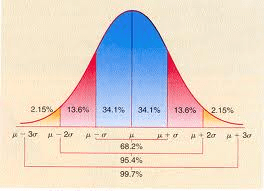
Political pundits love to clamor over who are Democrats and who are Republicans.  But statistics tells us that such definition is foolish at best.  The following diagram is what is known as a standard statistical curve.  It means that when you take a mixed population of anything, in this case the people of the United States, you can present that population with a high degree of accuracy using this diagram.

curve

Look at this diagram as being read from left to right.  Think of it in terms of the left being the political left and the right as being the political right.  If you look at just the blue portion under the curve you will see 34.1% extending from the center to the right and left.  In statistics it is mathematically provable that any population will find 68.2% of whatever you are counting, in this case voting Americans.  This is also known as the first standard deviation.  The next 13.6%, or the 2nd standard deviation, in our example refers to the more liberal or more conservative members of either party, leaving the last 2.15% as the most liberal or conservative.  The mathematics behind these numbers allow for no more than a 1% to 2% error, a very small number.  But what it ultimately means, and most importantly, is that 68.2% of the voting public has close to the same opinion on any given target.

The problem we here in America have is that those political operatives who live in the 2nd or 3rd standard deviation, tend to do a lot of yelling and attention garnering with the claim that they are speaking for most Americans.  But in truth they are speaking for, at most, 25% of Americans.  These people have the sad tendency of being ideologues whose ability to moderate their view is rather limited.  They have the tendency to be heavy-handed and take a “my way or the highway” view on every issue.

I think I am like most Americans.  I am as likely to take a liberal view on any particular issue as I am to take a conservative view on it.  I am a person of strong convictions but I know that in the interest of the greater good there are times when, without abandoning my convictions, I must compromise to find the middle ground where we can all agree.  For example, even as a registered Democrat, I am extremely pro-military and I am not in favor of any military spending cuts as is now being proposed.  That is a rather conservative view I believe.  But to achieve a reasonable end I recognize I will have to give a little.  Another day is in the offing when everything will be in play once again and I can once again fight for what I believe in.

Personally, I view the majority of our congress as being moderates.  Sadly, however, I see them being far too heavily influenced by the more conservative or liberal members of their own party.  They seem to have forgotten the mandate placed upon them by their own constituency, and this is to do the will of the people who put them in office, not the will of the power brokers.


A Few Words of Advice to Gen Y From a Baby Boomer


One thing having lived a lot of years does for you, it gives you a ton of perspective.  Here are a few things I have learned along the way, only too often the hard way.

1.  Marry your best friend — That’s right!  The guy or woman you want is your best friend.  Marriages generally end over three things, money, trust, and communication.  Consider, that person you consider your best friend is a person you would hate to lie to, would trust with your life, and will tell pretty much everything.  And that is exactly the type of person, if not the person you want to marry.

(January 4, 2013 amendment)  A response I received to this section of this post, though maybe given a bit tongue-in-cheek, did none-the-less give me pause to think I had been less than clear, and that there is more to say.

From experience I known people say “we are just friends” and by extension say “why would I want to ruin a good friendship.”  The backdrop to such statements is the consideration of dating such a person, and that dating a friend might ruin a good friendship that you value.  I am asserting that such a belief is absolutely wrong.

If you are a woman and have some really good friends who are male, one of them may well be your best match as a partner in life, as a spouse.  The same is true for guys who might consider one of their best female friends.  My wife is also my best friend, and because of that I believe that it is the best combination possible.  Dating a friend cannot ruin a good friendship because real friends stay with you regardless of events.  If you truly are friends, dating such a person and then finding out the romantic feelings you need just are there should in no way hinder you from going back to being really good friends.  If anything, such an experience should only strengthen such a friendship.

2.  Make a career out of what thrills you — Our society sadly places a lot of emphasis on how much a person earns.  The thing is, what most of us want the most is happiness.  And that leads to the question of how happy can you be when you are making a ton of money in a job you hate?  At some point you burn out and start asking yourself why it was you got into that profession in the first place.  You ask yourself if it was really worth it.  When the time comes you can consider retirement, you should find it almost unthinkable as continuing in your chosen profession still thrills you.

3. Resolve all family issues — I have this saying, “all families are crazy, it’s just a matter of degree.”  I really believe that.  We only get one set of parents and they are gone too often too early.  My father died right before my 21st birthday, and I had so much left to say to him and talk to him about.  When my mother died, she was 89, I felt there was nothing I had left unsaid, and that felt really good.  You can pick your friends but you cannot pick your relatives.  That is not to say you have to be on good terms with all your relatives, but it is good to remember that the ones you would rather not see probably have no knowledge of your feeling that way. With such people politeness and kindness goes a long way, and requires nearly nothing from you.  And for those in your immediate family that you feel have done you some sort of egregious wrong, come to terms with the issue by either resolving it with the person involved, or, accepting that this person’s failure in your eyes needs to have minimal effect upon you as you go forth.  Do whatever it takes to make that statement true.  But at the end of the day, know in your heart that you have done your level best with your parents and siblings, and that nothing that needs saying, particularly “I love you,” is left unsaid.

5.  Make self-care a priority — This is the sort of selfishness that is in keeping with a healthy mind, body, and spirit.  It is natural for most people to think of other people first and themselves 2nd or 3rd or even lower.  That is always the wrong approach.  A healthy body is paramount to how a person feels about himself.  Eat properly, exercise moderately, and see a doctor and a dentist on a regular, scheduled, basis.  Being in your 20s is not a free pass for good health.  Women can develop breast cancer and cervical cancer in their 20s.  Men can get heart disease and diabetes in their 20s.  Worse, since during our 20s we feel the best about our general state of health, these diseases can go undiagnosed until they present a far greater health risk than would have happened with a regular checkup.  Also, pretty much everyone gets gum disease and cavities regardless of age.  People with the healthiest minds are those who realise the need to talk out their problems, regardless of the nature of the problem, with either an expert or someone they trust, a best friend.  Getting feedback on our problems requires us to consider what we are doing and that we might find a better way of doing things.  Or it might reassure us that we are doing the right thing or are okay.  And lastly, but maybe most importantly, we need to find a healthy outlet for our anxieties.  We need a healthy distraction that takes our attention away from weighty things and towards something that makes us feel good in a healthy way.  This needs to be practiced daily if possible, but be something we know we can turn to as needed.  Having taken care of ourselves in this manner, we find ourselves more appealing, more available, and more attentive to others, particularly those we love and care about.  It is difficult for anyone who is not healthy in any of these three respects, physically, mentally, and spiritually, to be at our best for those who need us.

6.  Never loan anyone money — This might seem a bit rash but it is not.  I remember years ago a guy who asked to borrow $5 from me with the promise he would pay me back.  He never has paid me back and I have never forgotten that.  He is also dead now.  What I knew, even before that incident, was that I should give the person the money requested with the understanding that they would not pay me back.  The only requirement I put on them is that the time will come that someone needs to borrow some money from them and when they give that person the money, I will have been paid back.  I also tell them I do not want to hear about how that happens for them.  Remember, it is impossible to cop a resentment over money you give away while it is far to easy to get resentful over money loaned and not repaid.

7.  Don’t worry over what people think about you — Everyone wants to be thought well of but that, of course, is an impossibility.  Regardless of where we are, there will be people who do not care for us.  Maybe they would even say they hate us.  The amount of weight that has is entirely dependent upon how we view it.  I know there are people who I do not want to be around and people who do not want to be around me.  I accept that.  Getting caught up in the reasons one person hates me, or whatever, is a fool’s task.  Short of asking them, I can never be certain.  I do need to ask myself why it is important for me to know and what I intend to do with the information if I were to get it.  I am most likely wasting time that could be better used in another direction entirely.  Being grateful for the friends I do have and being grateful for them is usually all I have to remember to make the fact that someone does not like me unimportant.

8.  Always have a Plan B — I actually learned this from my years on active duty in the army.  We used to like to say, “anything that can go wrong probably will, and at the worst possible moment.”  Keeping that in mind has told me that my initial plan, “Plan A,” may fail and that I will be well served to have a “Plan B” in the ready.  It doesn’t hurt to have a “Plan C” and a “Plan D” as well, depending upon how important success is.  Life loves to throw us curve balls which means we are going to be needing a “Plan B” a lot!

9.  Life is messy — This is the natural follow-on to the previous mention, having a Plan B.  Said Robert Burns in his famous poem “To a Mouse, on Turning Her Up in Her Nest with the Plough,” said,

“But little Mouse, you are not alone,
In proving foresight may be vain:
The best laid schemes of mice and men
Go often awry,
And leave us nothing but grief and pain,
For promised joy!”

We make the perfect plan and still things go wrong, people do not react as we would hope, the weather does not cooperate, and our family drives us nuts.  But think how boring life would be were it predictable.  That challenge comes from meeting life’s messiness with the belief that we can persevere if only we do not allow things to get to us.

10.  Don’t take your self so damn seriously! — A couple of things that can quickly get us into trouble is our thinking how important our belief is or, worse, how important it is for us to be right, or worst of all, how important we are.  Throughout the history of man, all of the most important people who have ever lived have all died, sooner or later, and yet the world has not only gone on without them, but has done quite well.  Most of us have certain very strong beliefs that we are willing to fight for.  The thing with beliefs is, they are each and every one quite personal and unique to one person, ourself.  That is, it is difficult to find anyone who agrees 100% with any one of our beliefs 100% of the time.  While it is good to have strong beliefs, convictions, it is also good to remember that belief which differ from our own are equally important to their owner and deserving of respect.  A person who laughs at himself easily, is one other people will listen to respectfully.  And a person with strong convictions who respects another person of equally strong convictions, though they may be in direct opposition to his own, is a person whose convictions will gain consideration by those of other beliefs.

The Fallacy That Increasing Taxes on the Rich Will Retard Job Creation


During the most recent election Republicans made the claim that raising taxes on the rich would hinder job growth.  That is a fairy tale they like to tell and it is curious that the Democrats did a miserable job of showing it to be the big lie it is.  How can I say this?

Since the Civil War the United States has suffered under no fewer than half a dozen serious recessions and depressions.  Wealthy people love times like that for one very simple reason.  They have not only been intelligent enough to make themselves wealthy, they have built-in assurances that a down-turn in the economy will have a minimal effect upon them.  And in fact, to some degree, they like it when the stock market is at a low.  They view that as an opportunity to take advantage of low stock prices to invest in companies they feel have a healthy future.  The old maxim, buy low sell high, is something they understand well.  I am not saying there is anything wrong with doing that, there is not.  It is actually one of the assurances that our capitalist system will remain strong.

During the 1873 downturn wealthy investors took advantage of low stock prices to invest in the emerging transportation and home heating industries.  Men like Rockefeller, Vanderbilt, and Morgan used those difficult times to pad their finances.  Then, as now, there comes a time when a person has so much wealth it becomes almost meaningless to him.  That is, his focus changes from how much money he can make to how much power he either holds or brokers.  And this is precisely where we are today.

From around 1880 to 1960 America was the world leader in labor intensive industries.  Textile, auto, steel, and a dozen other such industries.  But since 1960 those industries have largely left the United States.  The problem is, they were not replaced with anything.  The auto industry is the perfect example, and maybe the last great bastion, of labor intensive work.  And even it has given way to automation, as you would expect.  But in 2008 all American automakers were on the precipice of extinction.  Two of them, GM and Chrysler needed a federal bailout.  Ford dodged that bullet only because it was able to sell off some of its companies, Jaguar, Volvo, and Land Rover chief among them, to shore up their finances.  I bought a 2012 Ford Fusion, a car I really  like, thinking I was supporting the U.S. economy.  After purchasing it, I discovered the car was entirely made in Mexico, no U.S. workers were involved in its production what-so-ever.

In the 20th Century the United States led the world, hugely, in the aviation industry.  In 1950 there were at least half a dozen companies producing commercial aircraft.  Chief among them were Boeing, Douglas, Lockheed, and Convair.  These companies were healthy and supplying the world with the aircraft it desired.  But during the late 40s and through the 1950s, Europe was retooling its aircraft industry following World War II.  Then in the 1980, the British, French, and German governments made a pact to design and build commercial aircraft.  Today we know this company as Airbus.  During this time the U.S. commercial production was reduced to Douglas and Boeing until Boeing bought out Douglas aircraft.  But in the early to mid-2000s Airbus came up with the concept for their A-380 aircraft.  This aircraft was bigger by almost 50% than the Boeing 747.  But it had problems in budgeting and design.  Were in not for those three government propping up Airbus, the company would likely have gone bankrupt, and almost did anyway.

If you have ever flown on Jetblue, you have been on an Airbus aircraft, the A-320.  This particular aircraft is similar in all respects to the Boeing 737.   But Jetblue, a U.S. corporation, uses only Airbus aircraft.  Why? Price of course.

In the world today, state subsidized industry is the rule and not the exception.  There is absolutely no reason that clothing production in the United States would be the primary source of what we buy.  But it is not.  If you look at the tags on your clothes you will find countries like China, Malaysia, India, and Bangladesh, among many others, that engage in a combination of slave labor and government  subsidizing.  They also are able to ship their productions long distances and still have the lowest price on the U.S. market because there is virtually no tariff on them.

Now, Republicans and rich industrialists maintain that if we add tariffs on the imports it will impede their ability to sell U.S. goods abroad.  But the truth is, more and more, the sale of U.S. goods abroad is decreasing with each passing day even in the absence of tariffs.  What these people are not saying is that they are heavily invested in foreign manufacturing concerns and they count of a substantial income from those investments.  And so if the U.S. starts putting heavier tariffs on the goods those foreign industries export to the U.S., their profit margin goes down.

Remember NAFTA?  The North American Free Trade Agreement signed during the Clinton administration was really about two countries only, the U.S. and Mexico.  Remember my Ford Fusion that is made in Mexico?  Please explain to me how U.S. workers have benefitted by NAFTA?  It seems obvious that something which may have been made in Michigan, Mississippi, Tennessee, is built-in Mexico.

Continue backwards in time and ask yourself, how is it that the United States, with its huge reserves of iron ore, and one-time world leading steel industry, today imports steel?  Ask yourself how a country that can produce endless amounts of cotton, wool, and synthetic fibers has virtually no textile industry?  Ask yourself why the Japanese assemble most of their cars in the United States while U.S. based automakers assemble theirs in Mexico, Canada, and other countries?

The next time someone claims that taxes and/or tariffs are to blame for unemployment call them a liar.  It is not now, nor has it ever been, about taxes.  It has always been about the industrialist maximizing his investment, and if that means moving jobs to other countries, that is what he will do.  He views taxes as a challenge but never views them as an impediment to his investing.  The truth is simple.  Wealthy people are constantly looking for ways to turn a dollar, as they should.  And the answer to keeping jobs in the U.S. has always been painfully obvious but a political hot potato that no one cares to stare down.  If you want to know how to level the playing field in the world market, look at the monetary exchange rates between countries and adjust your levies accordingly.  While not perfect, it will certainly help.

Christmas Reconsidered


I am going to start this with a disclaimer.  I have absolutely no intention of saying Jesus was not the Messiah or the son of God.  Those things are a matter of faith.  And faith is something you have particularly when science and logic fails you.

The world 2000 years ago was such a different place from now.  That is not news.  But it is worth noting that the overwhelming majority of people were illiterate.  Until the invention of the printing press was invented by Johannes Gutenberg in 1450, history was largely kept by story tellers.  In the day of Jesus it was an actual job that people paid for.  These people could also be traveling musicians, merchants traveling to buy and transport goods, and, of course, military men.  For those most important events, leaders in the world at the time of Jesus employed scribes to write down things such as contracts, messages, and in the case of the Jews, the Bible.  It is likely this latter form of communication was used in the writing of the Gospels of the New Testament, Matthew, Mark, Luke, and John.  These men were themselves likely illiterate but they recognized the importance of communicating what they saw.  And even so, the earliest writings of these Gospels in our possession today was not written for at least 50 years after the death of Jesus.  That means the likelihood of a witness passing of first-hand knowledge is quite unlikely.  But does that mean the information is unreliable?  Of the four gospels only two deal with the birth of Jesus, Matthew and Luke.  Is is curious that Mark and John did not write on this subject.  Or is it a case where their transcription of the event have been lost?  It would seem a very important event that all proponents of the new religion would relish and talk about at some length.  But nothing should be implied from this lack of information.

The answer to that is a qualified no.  The qualification goes to the language of the Jews of that day, Aramaic.  The Aramaic language had roughly 5000 words in its entire lexicon.  Compare that to the roughly 250,000 words in today’s English language and you can begin to understand that there were innate limitations to the descriptions offered.  One such limitation comes with the use of the word “virgin” when referring to Mary, the mother of Jesus.  The word is “almah” which in the Hebrew tradition meant “a young girl worthy of marriage.”  It was the Greeks who translated that version into their word “parthenos” which means virgin.  I am not suggesting that Mary was not a virgin, but simply the liberal translations that were made from Hebrew/Aramaic to Greek.  Another such example exists relative to Mary’s husband, Joseph.  He is referred to as a carpenter but considering the lack of wood in the area he was more likely a mason, or some similar trade.

No one knows from certain how old Mary was at the time she was pregnant but Hebrew theologians suggest that she was between 12 and 14 as those were the years fathers married off their daughters.  This was a matter of financial expediency as women did not help keep the household clothed and fed.  That practiced was continued even into 19th Century America when New England farmers sent their daughters to work in the textile mills and send money home.  But fathers of those days in Israel were equally interested in a son-in-law who might help provide for the family.  This usually meant the daughter married a man considerably older than she.  Again, this is thought to be the case for Joseph.  He was an older and successful craftsman.

Theologians and historians generally agree that Jesus was likely not born in December but more likely in the late winter or early spring.  The reason for this is the mention of there being lambs at the birth.  Sheep bear their lambs in the later winter and early spring.  But also, it is known that Cesar Augustus had called for a census which happened in the early spring of the year Jesus was born.  Likely the early church did not like having Jesus being born and dying at the same time of year, so they co-opted the Roman holiday of Saturnalia and assigned it to the birth of Jesus.  There are numerous occurrences of this happening in the history of the Christian church.

Another tradition that was adopted by Christianity was that of lights being an important part of the Christmas tradition.  In Roman times, as Saturnalia was celebrated, they lit candles to symbolize the coming of more light at the darkest day of the year.

And so Joseph leaves Nazareth for Jerusalem with his pregnant wife Mary in tow.  These people were absolutely poor.  It is unlikely they had any intent of paying for a place to stay in Bethlehem, if such a place even existed, it was there for people of greater means than Joseph.  That Augustus had called for a census made available lodging extremely rare and undoubtedly Joseph knew he would need an alternative, but what was it?  That he may have tried to find room at an Inn only to be turned away is quite understandable under the circumstances.  Joseph, being an attentive and a newly wed too, likely desired the best for his new wife but knew his attempts would fail.  He likely noted where herds of sheep or goats were kept and knew he could likely get out of the elements with people of a social standing similar to his own.

If you look at a map you will discover that Bethlehem is a little south of Jerusalem.  But where were Joseph and Mary coming from?  Nazareth?  Nazareth is almost 70 miles from Bethlehem, a journey that would have taken several days at least, and particularly in Mary’s condition.  It is not a reach to consider that this great distance travel, and on a donkey as some like to view, would have been particularly hard on Mary and could possibly have induced her into giving birth.  The fact is, we do not know if Jesus was born immediately upon their arrival or a week after their arrival.  Remember now, this story could only have been related by Mary and Joseph, undoubtedly illiterate, to the story tellers to pass it through the ages.  But this also means that time elapsed time between the birth of Jesus and the earliest telling of the story is at least 100 years, probably more.  Like any event, the first retelling of the event is the most important as that is when it is freshest in the mind.  It is likely the first retelling of the story did not happen until Jesus started his ministry, some 30 years after his birth.  This is supported by the fact that we know virtually nothing of those first 30 years of His life.  There is only a single mention of him as a young boy, and even that is very short on detail, Jesus talks with the rabbis.

Scientists believe the “star of Bethlehem” was actually a comet, misinterpreted by an unsophisticated people as a star.

And what about the three wise men, the magi?  Sometimes they are referred to as the 3 kings.  But what is generally agreed is that they were likely astrologers from Persia and had come to Jerusalem to sell their wares, gold, frankincense, and myrrh.  They may well have been wealthy merchants who would have seemed like kings to the Jews of the day.  Their knowledge of astrology translated as wisdom.

That the actual events surrounding the birth of Jesus likely are vastly different from what was written does not diminish from the story as told at all.  My guess is that the actual story is likely far more interesting and lively from what we have today.  An a historian, I am compelled to question source material.  That we have no first hand accounts of the birth only serves to reinforce the impact the birth of Jesus had on the people of the day.  The absolute charisma and importance of the man makes the case for the miracle of just how much was related for future generations.

Remember Service Members At Christmas


We have today an all volunteer military.  Every single member chose to be in uniform with the understanding that it would mean being away from their family, and being stationed in places that require their presence through the Christmas season.  Many of them will being working on Christmas Day.  I have a lot of experience with this as I was away from home, my place of birth, for 10 Christmases.  It can be a very lonely time.

Most people know someone who is in the military and serving away from.  We tend to think of those serving in the war zones of Iraq and Afghanistan but we should also remember those who are serving in Germany, Korea, Japan, and many other locations including at sea.  For them, it has little to do with where they are serving but the fact that they are not at home at a time when families traditionally get together.  That can bring on a profound loneliness for the individual service member.

Most people know someone who is serving on active duty and is away from home right now.  I can tell you from personal experience, having served 10 Christmases in the military and away from home, that one of the best Christmas presents I got was a letter from home.  And that is not just from my family, but from anyone who cared to write.  This is particularly true for the unmarried soldiers but of course not limited to them.

My recommendation is that if you know of such a person get his address and send him a card.  Even if the only thing you can say in the card is that you are thinking of them at this time of year, that will mean more to them than you can know.  Being remembered is always a wonderful thing, and it really costs you nothing more than a few minutes of your time.

The Self-Image Concept


From our youngest years onward we develop a self-image.  In our young years a good part of our self-image is developed by our environment, our parents, our siblings, our teachers, our neighborhood, and so on.  Also, at least in part, genetics are responsible for our personality.  There is nothing we can do about that part of ourselves.  And until we reach adolescence, teen years, and so forth, it is unlikely we can or will do anything about our self-image.

But at some point we reach adulthood and then our self-image becomes entirely our own responsibility.  The law says we reach adulthood at the age of 18.  Some, usually women, get there more quickly while others, usually men, get there more slowly.  But at some point, say by age 25, we all reach a reasonable amount of maturity that we become entirely in control of our own life.  And that is the key here, understanding that the responsibility for who we are is entirely our own.

What this all boils down to is self-empowerment.  I have had to stop feeling sorry for myself and feeling like I am a victim.  The universe really does not have time for such distractions, and it really doesn’t care either.  And those are good things!  It all simply means that wherever it is within myself that I do not like, I am ultimately responsible for changing those things within as I am able.  What is not acceptable is inaction.

I have been able to build a good and positive ego without becoming self-centered, narcissistic, or ego-maniacal.  I take a daily accounting of my shortcomings and accept the responsibility, on a daily basis, for fixing those things.  I allow myself  to fail without getting down on myself.  I believe that failure is simply an opportunity to better oneself.

I think every person deserves to be happy.  But we are responsible for our own happiness.  Once we feel good about ourselves we find that other people like us better and are more accepting of our short-comings.  I have found that absolutely everything I have ever felt has been felt by someone else and that I was never alone but only felt that way because I was unable or unwilling to believe that I share those very same feelings with millions of others and that I am no better nor worse than anyone else.  This sort of acceptance has allowed me to feel good about myself and improve my self-image to a point that it is good.

Unfortunately, our society does not teach personal responsibility.  Our schools do attempt to teach personal responsibility, but my experience in teaching tells me that parents often undermine this aspect of a child’s education by not believing that their child could be in the wrong.  This teaches the child that active avoidance of the truth is a good thing.  The effect of such learning is that when the child applied that principle to himself, when confronted with an unpleasant circumstance he deals with it by ignoring it or by putting the responsibility upon someone or something else.  And this is exactly how far too many people reach adulthood.  Active avoidance of the truth becomes a lifestyle, particularly when taken stock of one’s self is involved.

I was guilty of exactly that sort of behavior for too many decades of my life.  I had a very low self-image but I was doing absolutely nothing to change that.  I was actively engaged in lowing my own self-image because I was unable to recognize the truth, or if I did recognize it, I was either too fearful or just too dumb to ask for help.  And it is because of my inability to take any positive actions or accept self-evident truths that my self-image remained in the gutter.

Then one day someone asked me if I was willing to do “whatever it takes” to fix my life.  I responded that I was.  I quickly discovered that that meant I had to come to terms with absolute honesty with myself and others.  I had to take a “no excuses” approach to life.  Because of this approach, my self-image today is really healthy and really good.  But it did not get to the point quickly or painlessly.

I have charged myself with being as close to perfectly honest with myself and everyone else as is humanly possible.  I always allow for the possibility that something I believe to be true is not.  I always allow for the possibility that I have unwittingly harmed someone and that upon recognizing that fact, or being told of it, I am immediately responsible for its correction in the shortest amount of time possible.

One of my prime personal maxims today is that of what to do when I find myself in a place or situation that I believe unacceptable for any reason.  I tell myself that I am at least in part responsible for where I find myself and therefore I am 100% responsible for taking action that moves me to a more desirable place.  I cannot wait of the universe to magically change my circumstances because that is simply not going to happen.  I also understand and accept that for as long as I take no action I can on expect things to stay the same, if not get worse.

The way this all relates to self-image is that when I look at myself and take stock, it is not unusual for me to find something within myself that I do not like.  The first thing I do is to accept what I have found.  With that acceptance I know the next thing I have to do is decide what actions to take to fix whatever it is I do not like.  It is not unusual for me to find that I need to get advice from someone else or even their help.  At that point I take the appropriate action.  Once I have done that and have fixed what I originally did not like, I always feel better about myself.  But I also have to accept that there are things I can do nothing about and accept those things too.  In such cases I simply need to figure out how to work with those things I cannot change so that it is not an impediment to my future happiness.