The New American Xenophobia


Xenophobe n. One who fears or hates strangers or foreigners or anything that is foreign. (Webster’s II New Riverside University Dictionary, 1988, p. 1332)

At the beginning of the 20th Century American immigration laws were few. An immigrant had to have on his person $50, a named sponsor to take him in, be free of disease or mental defect, and have no criminal record. Americans today view all immigrants of that time coming through Ellis Island New York. But in truth, the ports of Boston and Baltimore were also quite alive with immigrants.

Europe during the period 1900 to 1915 was fraught with civil wars, unrest, and an Ottoman Empire which was at war with Great Britain. As can be seen by the map below, the Ottoman Empire covered most of the Baltic countries and large portions of the middle east. It is also worthy of mention that this was a Moslem Empire which Christian Europe feared. In Eastern Europe, Russia was flexing its influence as it held onto much of the territory it controlled when it became the USSR. In particular, it controlled most of Poland as we know it today. In 1905 the Czar ordered that all Polish men of a certain age be drafted into the Russian Army. Those who refused realized harsh consequences.

Muslim_population_Ottoman_Empire_vilayets_provinces_1906_1907_census

Ottoman Empire 1905


1_Russian-growth-1801-1914

Russian Czarist Empire


In the case of Italy, the country’s industrial north did not offer enough employment for Italy’s labor force. The Italian tendency towards large families made for an excess labor force. The excess labor force could find work neither on the farm nor in Italy’s factories, hence they looked towards America where, they heard, there existed a need for more labor. They also heard, falsely of course, that such labor, even though unskilled, was well-paid.

The social, economic and political unrest of much of Europe lead to its radicalization. Some were of the new socialism as outlined by Karl Marx and practiced by Trotsky and Lenin prior to the revolution. Conversely, Fascism arose out of Europe’s aristocracy against the growing socialist ideals. The common man found himself caught between the two groups in Europe with no place to run, except America.

The overwhelming majority of immigrants to America in the early 20th century were people coming from extreme poverty. They were indeed a cross-section of Europe embracing every type of religious, political and social belief. And as with any cross-section, among them were the anarchists and others who would prove troublesome to the established American public.

The epicenter of American radicalism in those days was in the small boarding house rooms of Greenwich Village. They were a small but vocal group who advocated the overthrow of the wealthy, the industrialists, and the powerful politicians by any means possible. Names like Emma Goldman, Edna St. Vincent Millay, Margaret Sanger, and John Reed seemed to most Americans to be the ones originating most of America’s radical troubles, but as with many things, the truth was something quite different.

When Leon Czolgosz assassinated President William McKinley, William “Big Bill” Haywood, Emma Goldman was extremely vocal in her opposition to violence as a tool of the anarchists. Margaret Sanger attended many anarchists meetings in Greenwich Village, but her purpose was to gain support for her settlement house in the lower east side and in getting aid for single mothers. John Reed was a journalist who was more interested in reporting on the anarchists, though he did agree with their views, the partaking in their political actions. Big Bill Haywood was an organizer for the Industrial Workers of the World, a socialist union whose prime member was the unskilled laborer. But in 1907 Haywood had been tried for murder in Idaho. Haywood was innocent of the charge, a charge that had been trumped up simply because local politicians hated him, and found innocent after his trial. But he could not shake being labeled as a murder and his presence always brought trepidation to any community he visited.

People like Haywood and Sanger took on the cause of the immigrant and were closely associated with the various new immigrant groups. When a strike broke out in Lawrence Massachusetts in 1912, Big Bill visited the city and both city and state leadership felt certain that riots and all sorts of violence were sure to follow. Again, the truth is far different. Haywood spent very little time in Lawrence and focused his energies on raising funds for the strikers in other parts of New England. He actually had no interest in being a part of the strike save the role of fund-raiser. But then dynamite was found at a house in North Lawrence and everyone was certain that the IWW and Big Bill were somehow behind it. A few days later it was discovered that William Wood, a mill owner, had planted the dynamite in an effort to discredit the efforts of the IWW to win the strike.

What in common between the events of the early 20th Century and those of this presidential campaign, is Donald Trump’s use of fear and xenophobia to activate an American public. Fear is common to all human beings and has been used to exploit people throughout the ages. Because we are in the middle of Trump’s plotting it can be hard to gain perspective, but it is perspective that will save us from foolish beliefs and even more foolish moves.

The immigrant is the life blood of America and their introduction into our country makes us stronger. And while it is true that there are elements in those immigrants who would do America harm, we are more than strong enough to survive their worst. Unlike much of the world, our country thrives upon its diversity. Our Constitution guarantees that diversity cannot be used against us.   And the words at the base of the Statue of Liberty bear remembering, Give me your tired, your poor, your huddled masses yearning to breathe free, the wretched refuse of your teeming shore. Send these, the homeless, tempest-tossed to me, I lift my lamp beside the golden door!”

Amen!

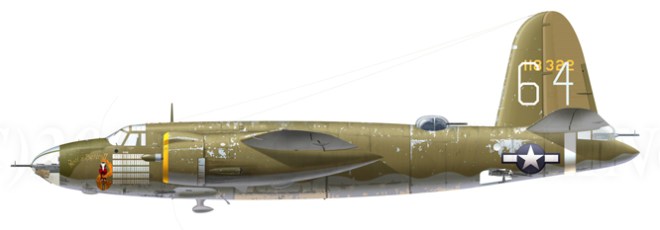
B-26 Bomber, Hell’s Belle on Her 100th Mission; A World War 2 Story


B26_11What follows is an exact copy of a report written during World War 2 by a SSG Robert A. Wade commemorating the 100th mission of the B-26 bomber “Hell’s Belle.”  I have transcribed it exactly as it was written.
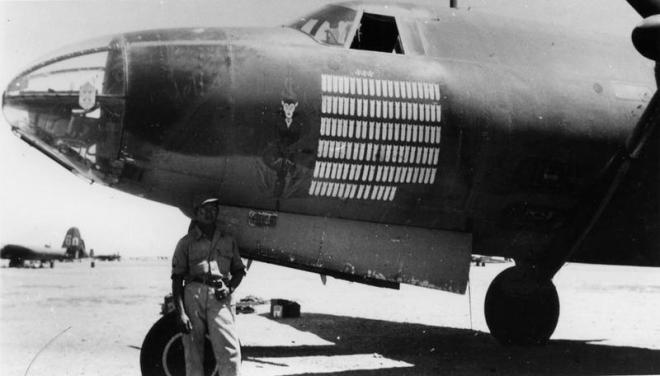
The picture above is of the aircraft named in this account.

By S/Sgt Robert A. Wade

AT A 12th AAF BASE IN SARDINIA – Eight months ago a proud crew chief talked “Hell’s Belle II” out of the salvage heap after it collided with a Messerschmitt on its 23rd mission.

With the same crew chief riding on his first raid as a stowaway, Hell’s Belle completed its 100th mission against the Calafuria, Italy, rail viaduct (May 1) to become possibly the fightingest B-26 Marauder in combat anywhere.

media-413202

(Hell’s Belle II after her 100th Mission)

Hell’s Belle was recommended for grounding after a German pursuit crashed into it during a 35-minute running battle of Salerno Aug. 22. Sixty Nazi fighters jumped the Marauder formation. One Me 109 was shot down and collided with the Belle’s tail, smashing the rudder almost flat and bending the whole tail section. But the B-26 made it home, though it burned out both engines doing it.

“Well, we fixed the tail up,” says the crew chief, Technical Sgt Kenneth L. Smith, 24, Bedford, Pa., “but we couldn’t get it quite back in line, and so it trimmed a little badly.”

Pilots, conscious of the beating the ship had taken, were hypersensitive to the difficult trim, and finally the regular pilot recommended that it be retired from active duty. Smith argued for another chance, and when he was given it, went to work on the plane, tightening, straightening, adjusting. When he finished, the Belle still had some peculiarities— but it went back into combat. “I guess I kinda talked them into it,” Smith admits. “But about that time we got some new pilots who didn’t know anything about the trim being off—and not one of them noticed it. I guess you might call it psychological.”

But even then Smith had no inkling of the record that his plane would roll up. His pleadings for its combat life were due solely to the fact that it was his first ship, and “Well, I like it pretty well,” he says.

Smith denies that he even considered that perhaps his was the B-26 that would be first in the Mediterranean’s oldest medium bomb group to cross the 100 mark, at least not until it had over 75 raids anyway. However, his mechanics have a different version of the story.

“Why, I remember when we hit 50 missions,” says Sgt. Clifford Parks, 25, Littcarr, Ky., assistant crew chief, “and I said, ‘Smitty, let’s see if we can make sixty.’ He went right up in the air and told me we were going to take it up to a hundred at least.”

Smith claims that he didn’t really start sweating the plane out—more than usual—until the score stood around 90. “I kept thinking of that B-26 in another group that went down on its ninety-fourth mission,” he says.

The ground crew and squadron engineering officers believe that Hell’s Belle has more combat missions than any other B-26 in the Mediterranean theater, and oldest combat Marauder in any theater.

Hell’s Belle has been in combat almost continuously since June 7, and has shot down fighters and dodged flak over Pantelleria, Lampedusa, Sicily, Sardinia, Italy and southern France.

Smith gives the bulk of the credit for the record to the plane itself—“You either have a good plane, or you don’t,” is the way he puts it—but squadron engineering officers and other crew chiefs claim that the maintenance on Hell’s Belle has been above average in every respect.

As proof, they point to the fact that Hell’s Belle has returned early only five times in all its hundred missions, and only twice for mechanical trouble. The two mechanical failures were a fault generator and a nose wheel that wouldn’t retract. The other three returns were due twice to gun failure and once to pilot error.

The last 46 missions were flown without an early return, which is an unusual record. And, before that, Hell’s Belle had gone 42 consecutive raids without coming home ahead of time.

The Belle has had only one complete engine change, and Smith believes that it might be flying on its original engines right now if it hadn’t collided with that Messerschmitt. With the exception of one generator, all the original accessories are still in use. This includes carburetors, magnetos, starters, and vacuum, hydraulic and fuel pumps. Also the B-26 has its original radio equipment, and 11 of the 12 machine guns are the ones it started out with.

The Marauder was named by the original pilot, after a previous Belle which had been lost over Tunisia. Bombers with a “II” or “III” after their names are notoriously unlucky, but this one proved the exception to the rule.

Aside from Salerno, Hell’s Belle has been in trouble only once in its career. That was during a January raid on German rail communications above Rome. Flak cut one fuel line and slightly wounded the pilot, but the Belle made it back to an emergency landing in Corsica. But it is no stranger to either flak or fighters. Its gunners have knocked down three Nazi pursuits, and the Marauder’s plexiglass nose and aluminum skin is splotched with patches.

Hell’s Belle has seen all the hot spots the Mediterranean has to offer. Zit has raided Olbia Harbor, Sardinia (where the B-26’s knocked down 10 Me 109’s, with six probables, June 18). Gerbini airdrome, Sicily (19 pursuits downed, July 4). Messina, Naples, Salerno (24 Me’s shot down, with 14 probables, Aug. 22). Anzio, Cassino, Florence, the Abbey di Monte Casino, and has been to Rome eight times, including the first Allied attack, July 19.

The Belle came to Smith on May 20, 1943, just 85 hours out of the Glenn L. Martin plant and the Rome, N.Y., modification center. It now has 724 flying hours, of which 450 to 500 have been combat.

The Armorer who loads the bombs and guns on the B-26, Cpl. Samuel Osgood, 31, 46 Osgood St., North Andover, Mass., figures that the Belle’s average bomb load has been around 2,500 pounds—which should make a rough total of 250,000 pounds or about 125 tons dropped on Axis bridges, railroad yards, airfields, docks, towns, gun positions and troop concentrations.

“It’s been a good ship from an armorer’s point of view,” Osgood says. “Only one gun burnt out in a hundred missions. Besides, I never seem to have to change the load—she usually drops her bombs.”

While Osgood admits that the latter is just luck, it bears out his feeling that the Belle is essentially a good airplane, better than the average.

The five men who have kept the B-26 flying through its hundred missions are tight-knit by their pride in their ship. Every one of them was with the Belle at the beginning of her combat career, and—with one exception—have been with her ever since.

“They’re a damn good crew, every one of them,” Smith declares. A small rather quiet man, Smith was a machine tool operator in a York, Pa., steel mill before entering the AAF in October, 1941. Smith learned his airplane know-how at Keesler Field, Miss., and the Martin plant in Baltimore. He had been overseas 19 months and his chief worry is whether he’ll recognize his three younger brothers when he gets home.

Assistant crew chief Parks was an automobile mechanic employed by the Citizens Motor Co., Vicco, Ky., before the war. Enlisting shortly after Pearl Harbor, he also studied at Keesler Field and the Martin plant, and has been overseas 19 months. A tall, lanky Southerner, Parks is the only crew member who hasn’t been with Hell’s Belle steadily. After about 25 missions, he shirted to another ship and then came back to the Belle when its mission score was 56.

Other mechanic on the crew is Cpl. William L. Howard, 24, 177 15th St., Wheeling, W. Va. A truck driver for the Warwood Armature Co., Warwood, W. Va., Howard entered the AAF in May 1942, and came overseas in January, 1943, where he joined the Marauder group. Small, rather quiet, he takes much good-natured kidding about learning about airplanes at the Rising Sun School of Aeronautics, Phila., Pa., because of the Japanese implications. The other crew members claim that he hasn’t been caught at any sabotage yet, but they’re keeping an eye on him just the same.

Radioman is Staff Sgt. Joseph S. Benak, 33, 1213 Wallgate St., Waterloo, Iowa. His parents live in Raymond, Iowa. Benak was a machine operator for the John Deere Tractor Co., Waterloo, before entering the AAF in March 1942. He was graduated from the Scott Field, Ill., radio school and has been overseas 19 months. Benak takes care of two or three other planes in addition to the Belle.

Osgood, the armorer, is—with Howard—the rookie of the crew, as they both have the least time with the group and overseas. Osgood joined the B-26’s in March, 1943, when they were based in North Africa. He was employed as a wool and textile designer by the M. T. Stevens Co., before entering the AAF in July, 1942. Osgood is a graduate of the Lowry Field, Colo., armament school.

New that Hell’s Belle has 100 missions, what is the next stop?

“Why, two hundred, of course,” Smith says, a little amazed at the question.   “Barring German flak or fighters, there shouldn’t be any reason we won’t make it!”

Some planes slow up noticeably after a great number of missions, as rough landings on bad fields throw the ship out of the best flying trim. Smith has noted no signs of old age or circles under the Belle’s eyes.

Smith flew on the Belle’s 100th mission strictly against regulations, but he has no intentions of making it a regular thing. “Too monotonous,” he claims, “You fly for a couple of hours. Then the Germans shoot at you for a few minutes, and you fly back for a couple of hours.” He plans, however, to go on the 200th mission.

The flak the Marauders met at the Calafuria bridge was heavy and accurate, and two pieces punctured the Belle’s tail section, but as usual did no harm. The viaduct was cut with direct hits.

Four combat crew members celebrated their 50 mission anniversaries with the B-26’s 100 mission cake. They were 1st Lt. Elliott Lysko, 1684 Central St., Stoughton, Mass., the pilot: Staff Sgt. Donald E. Miller, Robinson, Pa., engineer-turret gunner; Technical Sgt. Andrew L. Bergman, 4117 Montgomery St., Oakland, Calif., radio operator-waist gunner: and Staff Sgt. Charles E. F. Brinker, 528 N. Spring St., Blairsville, Pa., tail gunner.

Other crew members on the 100th mission were 1st Lt. Elmer L. Masters, 3639 Linden Ave., Seattle Wash., co-pilot on his 46th mission; and 1st Lt. Gustave G Pappetru, 1412 W. Juneau St., Milwaukee, Wis., bombardier on his 35th.


Hell’s Belle II went on to fly a total of 132 missions before the end of the war.

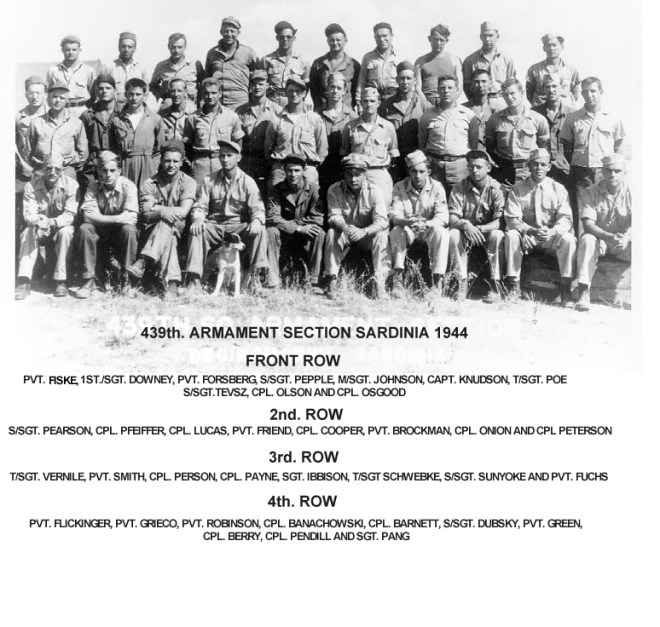
The picture below is of the Hell’s Belle armament section and shows several of the men named in the account.

ARMOR439

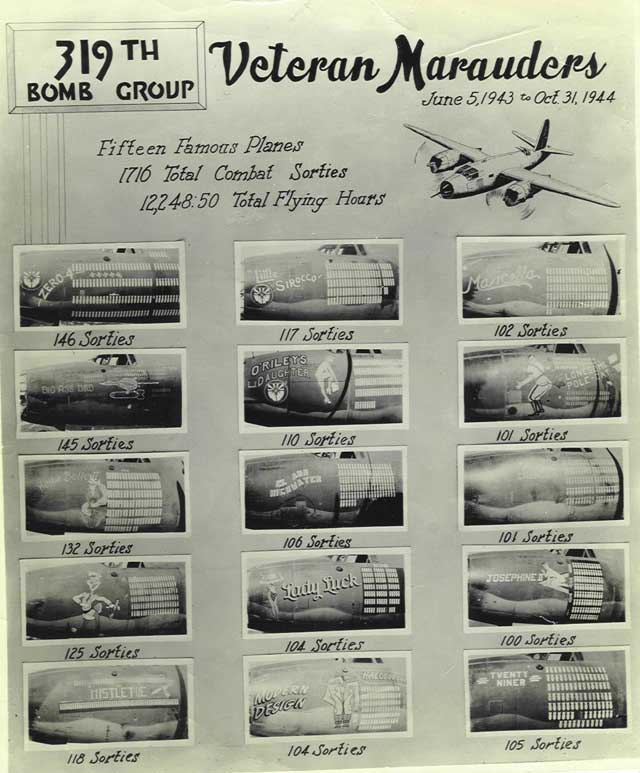
The picture below is of all the aircraft in the 319th Bomb Group, B-26.  A sortie is a mission.  Hell’s Belle II is in the 3rd row.

319th_planes_big


Nature’s Wonderland Just Past Your Doorstop


A little over 15 years ago, after I had my heart attack, I decided it was time to get off my dead ass and exercise. The only thing I could think of was jogging. I found a pond in Wakefield MA, Lake Quannapowitt, that has a path entirely around it and has a length of roughly 2.5 miles. I started out run, walk, run, walk, each day. And each day I did a little better. When I was at the top of my game, so to speak, I was able to jog around that body of water 3 times non-stop. But then I moved and had to find a new location. I actually found two, both in Cambridge, Fresh Pond and the paths along the Charles River and so I began to jog them regularly.

My knees were hurting me so I consulted my doctor who advised me to act my age, that I was not 25 anymore. He was fine with the exercise but jogging had to go and so I join a gym which was good for about a year. But I find gyms boring, really boring. It then occurred to me how much as a child I had loved bicycling. More than once I literally rode a bicycle into the ground. One time the joint at the front fork and the cross bar broke. Anyway, I bought a cheap bike, about $300 and headed off for the Minuteman Railtrail. This pathway starts in Cambridge and travels through Arlington and Lexington and ends just short of Bedford center. The trail itself is roughly ten miles in length and for the most part travels through wooded areas.

While riding the trail I noticed lots of squirrels one of which was totally black and another which was totally white, both rarities. Our local squirrels are of the common gray squirrel variety. And the of course right next to them are the chipmunks.

9031_least_chipmunk_kohl

These guys love to play chicken with you as you ride along and sad to say one was not quite so quick as he thought when I could not avoid him and ran over the little guy. It made me terribly sad.

Another creature I see quite often on this trail is the red tipped hawk.

BD0094_1l

This breed of hawk is common to our area and you see lots of them. But they own the woods along the trail and are fearless creatures. I had one alight on a pole just in front of me as I was moving along, similar to the one above, and stare me down. His obvious power and beauty are breathtaking. I could watch this bird for hours on end as he goes about his business. In flight he is a thing of beauty, barely flapping his wings as he adroitly glides on the air currents, the updrafts and the ambient winds.

One day as I was returning home on the trail I came across a rather large doe. Now I have seen lots of deer in my travel but this one was standing on a small rise a few feet away from the trail, her body parallel to the trail. I stared at her, as she was truly beautiful, and in return she snorted at me as if to say, “what are you looking at?” The picture below is a pretty good representation of just how she looked at me.

untitled

The most surprising creature I ever came across was a wolverine.

1280px-Gulo_gulo_2

Now this guy I did not see along the rail trail but caught him crossing Route 2A in Lincoln MA but yes, I was on my bicycle. I honestly did not know what I had just seen but his fur was much more brownish than the one above and he moved very quickly across that busy highway. What I have found out since about wolverines, having watch a Nat Geo (I think) story on them, is that they are elusive to the extreme and they number only about 200 in the lower 48. Unfortunately, even had I had a camera at the ready it is unlikely I could have gotten a picture of this guy as he quickly disappeared into the brush next to the road. I also found out that a wolverine can claim upwards of 300 square miles of territory. The Nat Geo story said they were thought to be extinct east of the Mississippi until the camera crew found one in Michigan. That may be the only time I will ever see this guy but it was worth the price of admission.

blue heron

The bird above is known as a great blue heron. He has a wing span of roughly 80 inches which translates to about 6 feet 8 inches! There is a marshy area along the rail trail in Lexington and right next to the Lexington land fill when this bird frequents. He is simply gorgeous and I always hope that when I come upon him standing in the swamp that he will decide to take flight and give me a great show.

Other animals I regularly see are cardinals, house cats, beavers, crows and the occasional turtle. The point is, if you ride up and down this path enough you will eventual see many of nature’s creatures in their natural habitat, and that is wonderful, always.

There is a rail trail in every state of the lower 48 and I highly recommend that you find one which suits you and travel it as much as you can. You should be both surprised and amazed at the woodland creatures you will come across in your travels. And that is a trip worth all the time and effort you can give it.

Wealthy People Owning Beaches


Yesterday’s Boston Globe newspaper (July 24, 2016) had an article in it about prime shore line on Cape Cod that is privately owned by some wealthy people. Even with reading the article, this seemed fundamentally wrong. To me it is akin to claiming you own the air.

Our nation’s seashore, in my opinion, should all be public lands in the hands of the federal, state or local governments. And that seashore should extend 10 feet beyond the highest high tide point. Believe it or not, and depending upon where you live, the high tide point can vary with the changes of the moon.

I have also seen where such homeowners have banded together to deny access routes to public beaches when such routes are near their property. This too seems wrong.

Newport Rhode Island is home to some of the most expensive oceanfront properties in the national and yet there is a public walkway which runs between their mansions and the water below. It is a rocky waterfront so there is no beach but it does show that accommodation is possible.

Anyway, back to those homeowners who somehow seem to have gotten beach area included in their property rights. The right and magnanimous thing to do would be for them to sign over their land to the town/city in which they live. Keeping the public off the beach because you happen to own it is both selfish and morally wrong.

Clinton Broke the Law: So Did Others, Now What?


This is difficult for me to say as someone who tends to vote for Democrats but Hillary Clinton broke the law. It is even more difficult to say that Donald Trump is correct on that fact. But the law, regardless of the crime or injury, in civil cases, is bound by precedent.

What I am talking about is the 20,000 emails Karl Rove deleted from a private server located in the White House which was ostensibly for political uses only. This happened in 2007 and is well-documented. In question is whether there were emails pertaining to the Valerie Plame scandal of the Bush regime. At the time, neither the Justice Department nor its arm, the FBI, start an investigation. Congress, Republican controlled, saw no reason to set up a special committee to investigate what Rove and his accomplices had done. And there you have the precedent.

Good leadership always recognizes that the man, or woman, at the top is ultimately responsible for all things which happen during their watch, good and bad. Our politician, and this is without regard to political affiliation, always takes credit and always deflects blame. Ask yourself when the last time you heard any politician say “I screwed up” and take responsibility either for his erroneous actions or for the actions of those who work for him? I am willing to be you never have.

For many decades I held security clearances of various sorts and levels. It was always made clear to me that should I break any of the rules I faced almost certain jail time. But I was neither a politician nor someone in a high position.

Now there is one thing that has been missing from the Clinton debacle, the word ethics. As a public servant, both in the U.S. Army and the U.S. Department of Transportation, particularly in the latter, I was made aware on a regular basis my absolute responsibility for maintaining a completely ethical position in all my works. Little things like not accepting a gift or other item worth in excess of $25, and never doing anything that even “gives the appearance of” a lack of ethics. To do so meant a punishment of some sort.

What many of you may not know is the fact that every department in the United States government has its own Inspector General. This is the person who upon gaining knowledge of some breaking the rules, or worse, possibly committing a crime, is duty-bound to investigate. Every person in the U.S. Government, political or otherwise, takes an oath to uphold the U.S. Constitution. And by extension, that means that they will do all within their power to remain above reproach, to be ethical, to safe-guard the secrets of our government, and to conduct themselves in a manner which is in all respects, ethical.

Now we come to Title 18 of the U.S. Code. This section of Federal Law deals with classified documents and materials. So here is what the code says 18 US Code § 798 – Disclosure of classified information:

(a) Whoever knowingly and willfully communicates, furnishes, transmits, or otherwise makes available to an unauthorized person, or publishes, or uses in any manner prejudicial to the safety or interest of the United States or for the benefit of any foreign government to the detriment of the United States any classified information—

(1)

concerning the nature, preparation, or use of any code, cipher, or cryptographic system of the United States or any foreign government; or

(2)

concerning the design, construction, use, maintenance, or repair of any device, apparatus, or appliance used or prepared or planned for use by the United States or any foreign government for cryptographic or communication intelligence purposes; or

(3)

concerning the communication intelligence activities of the United States or any foreign government; or

(4)

obtained by the processes of communication intelligence from the communications of any foreign government, knowing the same to have been obtained by such processes—

Shall be fined under this title or imprisoned not more than ten years, or both.”


The way dissemination of classified material works is that it is available only on a “need to know” basis. That means the recipient has both a security clearance equal to the classification of the material in question and that that person needs that classified material for the conduct of his job. I suspect Clinton failed to use good judgement in who she shared classified material with. And that she could claim not to know that any particular item was not classified is laughable. In her position she should have had a heightened state of awareness of classified material.

There is another situation which exists which any person who has spent considerable time in government knows: any singular piece of information may not in and of itself be classified, but when many bits of information are put together they must be at the very least be considered sensitive in nature and be treated as classified. On her staff Clinton had someone whose sole purpose was to review material of a sensitive nature to determine the level of classification necessary. It is axiomatically given that you always defer to things being classified until proper authority deems otherwise.

The Bush administration proved fast and loose with its handling of classified material, vis-à-vis Valerie Plame et. Al. No one was ever held responsible for making public knowledge of a person who was in the conduct of her job classified. The Plame incident at the least meets the level of Clinton’s indiscretions if not exceeding them. The FBI could not have gone after Clinton without someone insisting upon an investigation of Bush, Cheney and Rove, and the Republicans know this.

All this is nothing new, sadly, it has been going on for administrations going back as far as anyone cares to go. Politicians typically, and regularly, place themselves above the law, and sadly most get away with it. The only way to change that is for the general public to demand change. Sadly, I do not see that happening any time soon.

America the Violent: It is Time We Curbed Our Gun Preoccupation


Scholars debate the meaning behind the second amendment. The U.S. Supreme Court has chosen to take up a 2nd Amendment suit on only 3 occasions in its entire history. It is not that the 2nd amendment is sacred, it is just that there is no consensus on the writers’ intendent. Scalia commented on “original intent” as that was his belief. But he never spoke on the 2nd.

I did my graduate work on U.S. history, and while the Revolutionary War was not my focus, I was required to be more than just conversant in it. And because of that, I like to point to what the colonists called the “Townsend Act.” They detested all of them. But if you look at the Townsend Acts and the other acts instituted between 1765 and 1774, you will find they directly correspond to the Constitution’s Bill of Rights. When the writers were constructing the Constitution they knew it would need amending and they also knew what those amendments would look like. But for the sake of expedience, getting 9 colonies to agree upon the document, they wrote the main document exactly as you see it today. The Bill of Rights, 10 amendments, were all passed in the first year of America’s existence. George Mason and James Madison, a Virginian wrote them, but we had already added a state, Vermont, which meant they needed 10 of the 14 to ratify. Mason actually wrote 12 amendments. The 11th Amendment was how states were represented in the house. Madison wanted a set small constituency for each congressman. This amendment failed. But the 12th amendment was one we can relate to today even better. It forbade Congress from giving itself pay raises. Of course that one failed.

But back to the 2nd Amendment. It is brief: “A well-regulated Militia, being necessary to the security of a free State, the right of the people to keep and bear Arms, shall not be infringed.” The colonists had, from their earliest days in America, maintained a colonial militia. This was made up of men who assembled once a month on the town’s green, practiced a bit and went back home. Because the colonial governments were always strapped for cash, the members of the militia were required to supply their own guns, which they did.

About 1765, the British government began a concerted effort to “control” the colonists in what they perceived as acts contrary to the desires of the crown. The British government sent British soldiers and British Marines to take the place of the militia and maintain the peace, as they saw fit. At the same time, they replaced the duly elected governors of the colonies with governor-general, their own men. Additionally, they replaced judges hearing admiralty (seagoing) cases with their own extremely biased judges.

Governor Hutchinson of Massachusetts, a British appointee, declared that the storage of weapons and gun powder to be illegal and sent numerous forays to Plymouth, Salem, Portsmouth, NH and other locales, before ordering out his troops on the fateful day of April 19, 1775. The troop commander was ordered to capture all arms and powder known to be stored in Concord and bring into British possession. We all know how that worked out.

And so in the late 1780s when the Constitution and its amendments were being considered and written, the idea that a government could outlaw a state’s right to maintain its own militia was particularly sour in their mouths. It is important at this point to state that each colony joining the central Federal Government made it known that it desired as much autonomy as possible. The 1792 Massachusetts Militia was formed under the 2nd Amendment. The 2nd Amendment strictly outlawed the Federal Government from disallowing such an action.

In 1792, people who possessed guns tended to be members of the militia. And those people tended to be farmers, although certainly not exclusively so. But by that time the state government was suppling the guns necessary for its militia. The militia of 1792 is the National Guard of today. There is a direct lineage. Some states, however, maintain both, a National Guard force which can be called up to federal duty and a militia force which cannot be called up to federal status. In both cases, however, the governor is the commander-in-chief of such forces.

It is my belief that when Madison wrote “the right of the people” he was simply echoing the sentiments of the Declaration of Independence which starts “We the people.” People is being used in a plural sense and was never intended to mean the individual. I am certain it did not occur to Madison that people might grasp this amendment as an individual’s right. But Madison’s intent is clear. He meant the amendment to only apply to military forces.

Now, consider the fact that as of 1986 the purchase of machine guns was made illegal. In a curious twist, it is not, however, illegal to possess one but it cannot be made after 1986. And according to the ATF, as of 1986 there were only 182,619 that were transferable.

Now the only difference between a machine gun and an AR-15, civilian version of the M-16 rifle, is the number of rounds it can shoot with one pull of the trigger. Some machine guns use the same caliber round although most of the older ones use either the old NATO round, 7.62 or a larger round. I bring this up because no one is complaining about the machine gun law but try to restrict the usage of an almost equally lethal weapon and the push back is enormous. It makes no sense.

I do not think that a complete ban on assault weapons is necessary but I do think that any person desiring to own one should have to jump through a series of hoops prior to being allowed to purchase one. Getting such a gun should require legalities akin to gaining a security clearance and in turn, many will find themselves turned away, but for just cause.

I like guns and am an expert marksman. But it is difficult for me to understand why any responsible gun owner and prospective purchaser would object to more strict rules for ownership than now exist. These rules would never keep the responsible owner from purchasing a gun but it would certainly curb the illegal sales of guns and illegal ownership.

The Great Bread and Rose Strike of 1912 — Conclusion


By the first of March, the 7th week of the strike, it seemed as if the strike would go on forever. Neither side had flinched and no progress was made at any of the meetings held in Boston. But one thing had changed, the federal government became involved. On March 2 the U.S. House Committee on Rules convened a special session to hear testimony about the strike. The mill owners were represented, the unions were represented, and the strikers were represented by about a dozen operatives who had traveled to Washington to give testimony before the committee. The committee was headed by Rep. Robert L. Henry, Democrat from Texas. The committee had nine members in all plus a clerk.

Also on March 1st the mill owners, probably seeing trouble ahead with the federal government’s involvement, offered the strikers a 5% raise. But they were not willing to give in on any of the other strikers’ demands, particularly on the premium system which William Wood characterized as being “all right” just like it was. This was Wood’s response to IWW strike committee member Annie Welzenbach, the only woman on the committee. Ms. Welzenbach responded, “No Mr. Wood, we know that the premium is all wrong.” (“I.W.W. Strikers Firm,” (Lawrence) Evening Tribune, March 2, 1912) The owner of the Brightwood Mill in North Andover whose operatives were not striking, announced on March 4 that he was giving his workers a pay raise immediately. Similar raises soon followed in the mills of New Bedford, another city with many thousands of textile workers. The raises were generally around 5%.

In an attempt to sabotage the strike, the Wood Mill and the Arlington Mill announced 5% pay raises for any operatives who returned to work.

During the month of February, the AFL had given some assistance to the strikers but on March 4th announced it was withdrawing its assistance as it once again took an anti—strike stance.

What follows are excerpts from the U.S. House Rules Committee hearings held from March 2 – 7, 1912. (House of Representatives, 62nd Congress, 2nd Session, Document No. 671 – The Strike At Lawrence, Mass. – Hearings Before The Committee on Rules of the House of Representatives on House Resolutions 409 and 433)

“Statement of Hon. William B. Wilson, A Representative in Congress from the State of Pennsylvania: ‘Mr. Chairman, a few days ago the entire country was startled by the story . . . [that] the police powers of the State of Massachusetts . . . were being used to forcibly prevent the children of strikers from being sent out of the city . . . [to] where homes had been provided for them . . . so far as I know, there has never occurred in the history of trade disputes . . . any conditions approaching or even approximating the conditions which are alleged to exist at Lawrence . . . there is hunger and suffering on the part of those who are making the contest . . . and [they] feel that their children would be better provided for . . . by sending them to the homes of others . . . In my judgment it is the height of cruelty to prevent them from sending these children to such places . . . [and] there should be no power on the part of any State to prevents the parents from sending their children . . . so long as they are not deserting these children . . . ‘”

At this point a long series of resolutions from cities and states from around the U.S. are read into the record. Each resolution is a condemnation of the treatment of the strikes and a number of resolutions asking Congress to send monetary aid to the strikers, among other things.

During the afternoon session the committee heard the testimony of Samuel Lipson, a skilled worker from Lawrence who worked in the Wood Mill. He was questioned by Rep. Victor Berger of Wisconsin, a socialist. Lipson was queried about his pay, his hours and the regularity of his work. Then he was asked by Rep. Berger:

Berger: “Were the strikers clubbed (by the police)?

Lipson: “[yes but] it always happened that the police started the trouble.”

Berger: “In other words, it was sufficient to be a striker in order to be a criminal in the eyes of the police of Lawrence?”

Lipson: “Yes sir.”

Berger: “That was the crime?”

Lipson: “Yes; and that is why the trouble always starts, you know.”

Berger: “Now, just tell me, do you know the name of the woman that was killed?”

Lipson: “Anna Lapizzo.”

Berger: “Who killed her?”

Lipson: “I will tell you . . . our witness swore (at the Ettor trial) that they saw the policeman, Benoit, fire from his revolver and the shot that killed the woman. . .”

(Later in his testimony)

Lipson: “And some other ministers tried to speak to their people against the strike, saying if the did not return to work they would never be in heaven . . .”

Berger: “No ministers on your side?”

Lipson: “No.”

(still later)

Berger: “[in court] You mean the striker does not get credence? His evidence is not believed in court?”

What follows is the testimony of John Boldelar, age 14, of Lawrence.

Rep. Campbell: “How many rooms are in your house?”

Boldelar: “Three.”

Campbell: “How many stoves?”

Boldelar: “One.”

Rep. Wilson: “What furniture have you in the house?”

Boldelar: “A couple of beds, that is all.”

Rep. Pou: “I have heard quite a number of people living on bread and water. Has there ever been a time when you were compelled to live on bread and water?”

Boldelar: “Yes, sir. . . sometimes we did not have enough money to buy bread one or two days.”

What follows is the testimony of Tony Bruno, 15 years old, of Lawrence.

The Chairman: “What is the smallest pay you ever get?”

Bruno: “About $1.”

Chairman: “$1 a week?”

Bruno: “About $4.”

What follows is the testimony of Camella Teoli, 14 years old, of Lawrence. Her testimony is considered some of the most compelling of the entire hearing. As with the others she is queried about the size of her family and the pay and conditions of her family.

The Chairman: “Now, how did you get hurt, and where were you hurt in the head; explain that to the committee?”

Teoli: “I got hurt in Washington.”

Chairman: “In the Washington Mill?”

Teoli: “Yes, sir.”

Chairman: “What part of your head . . . how were you hurt?”

Teoli: “The machine pulled the scalp off.”

Chairman: “The machine pulled your scalp off?”

Teoli: “Yes, sir.”

Chairman: “Were you in the hospital after that?”

Teoli: “I was in the hospital seven months.”

Chairman: Did the company pay your bills while you were in the hospital?

Teoli: “Yes, sir. . . the company only paid my bills; they did not give me anything else. ”

Chairman: “They only paid your hospital bills; they did not give you any pay?”

Teoli: “No, sir.”

Teoli testified later that her father had been arrested because he had gotten papers saying she was 14 when she was actually 13. This was found to be rather common practice however.

It became increasingly clear to everyone in Lawrence, and the nation, that the strike needed to be settled in favor of the strikers. Sentiment was no long on the side of the mill owners and they knew it.

William M. Wood, of the American Woolen Company, came to feel the wrath of the committee when it, the committee, decided that a special committee be formed to specifically investigate the American Woolen Company which he owned and was the president. The committee very pointedly stated that the American Woolen Company had benefited greatly from the U.S. Government’s purchases from it, in particular the U.S. Army. But additionally, the committee was told to investigate any trusts that had been formed, they were illegal, investigate excessive capitalization, fictitious capitalization, stock speculation and conspiracies, and its controlling the price of labor. Wood no longer had anywhere to hide, nor did the several owners of the other Lawrence mills.

On March 13, 1912 a settlement between the mill owners and the strike committee was reached. And on March 14, 1912, the strikers voted to end their walkout. What follows is the concessions won by the strikers:

  1. All people on job work, 5% increase flat
  2. All those receiving less than 9 ½ cent an hour, an increase of 2 cents an hour
  3. All those receiving between 9 ½ and 10 cents an hour, an increase of 1 ¾ cents
  4. All those receiving between 10 and 12 cents an hour, an increase of 1 ¼ cents per hour
  5. All those receiving between 12 and 20 cents per hour, an increase of 1 cent per hour
  6. No discrimination will be shown anyone

(“Accept Wage Increase,” (Lawrence) Evening Tribune, March 13, 1912.

The one concession the strikers were unable to get was elimination of the premium system. The mill owners did agree, however, to pay the premium even two weeks instead of every four.

A few years later the strikers realized they had settled for far less than they could have gotten had they held out for all their demands, particularly the 15% pay raise and elimination of the premium system. For decades following the strike many felt shame over what might have been and chose to not speak of the strike. For that reason, there is precious little verbal history on the strike.   Most of what we know from the striker’s position comes from the U.S. House’s investigation and what the newspaper reporters wrote.

But the Lawrence strike helped invigorate unions all over the United States. A few months after the Lawrence Strike ended the operatives of the Paterson, NJ mills went on strike for much the same reason. The IWW faded from the American landscape after 1912 as the AFL finally accepted unskilled labor into its ranks. The Knights of Labor, led by Samuel Gompers, had no part in the strike, but Gompers himself showed up at the committee hearing and gave a mildly favorable nod to the strikers. The Knights died out completely shortly thereafter.

To its credit, the IWW had led the way in how to conduct a successful strike. It had engineered the first sit down strike in Rochester NY which ended successfully. And then its inclusiveness at Lawrence empowered the non-socialist unions around the United States giving rise to unions such as the teamsters, mineworkers, steelworkers and dock workers. Each took the IWW’s lead in conducting their strikes and turned their former poor record of winning around.

The Lawrence Textile Strike did not become known as the Bread and Roses strike until some time after its end. It gained that moniker via a protest song of the same name which was sung by the strikers in Lawrence during their ordeal.

As for Ettor and Giovannitti, as I said earlier they were held over for trial in Salem.  When the trial commenced in October 1912, it was obvious the men were guilty of nothing and were soon set free.

The Lawrence Police Department, the Massachusetts Militia, the mill owners, none received even a rebuke as a result of the strike.


The Great Bread and Roses Strike of 1912 — Part 4


By the first of February with the strike going into its fourth week, an unheard of length in the United States, the I.W.W. received between $1000 and $3000 a day for the strike fund. With it they were not only able to run soup kitchens and hand out much needed clothing, but they were also able to pay each family a weekly stipend depending upon the size of the family. The stipends ran from $2.00 a week for one person up to $5.50 a week for 10 people. It obviously was not entirely fair but it helped keep the strikers out for the duration.

When Joseph Ettor was arrested the Lawrence Evening Tribune on February 1 announced “Haywood Back in Charge.” In truth, Haywood had never been in charge nor did he care to be. His value was stumping for money, not running a strike. And what the public at large had yet to realize was that the committee of 56, that had been organized prior to the beginning of the strike, was in charge.

But February also brought a concession from the AFL when it announced it would start sending aid to the strikers. The AFL’s local office in Lawrence known as the CLU and manned by James Menzie had kept Golden apprised of the progress of the strike. Menzie was fully aware of the resolve of the strikers. He stated the AFL’s position at that time: “We are not antagonizing them [the IWW] but are desirous of bringing a settlement of the strike with benefit to the operatives.” From its national headquarters, AFL secretary Frank Morrison offered aid to the strikes, and invited all strikers to join the AFL. (“AF OF L Offers Aid to Strikers,” (Lawrence) Evening Tribune, February 5, 1912.) This signaled a major shift in the attitude of who could be a member. But it probably also showed concern among its leadership that the IWW was gaining too much strength. In truth, even though there were close to 30,000 unskilled laborers working in the mills, the IWW was never able to attract more than about 900 at any point during the strike. More, once the strike ended, most of those members left the IWW. But what this does show is just how misunderstood this pool of unskilled labor was. Those who should have been intimate with the working man, the union leaders, were actually rather clueless.

Menzie showed his misunderstanding of how the IWW was organized when in early February he characterized the strike as being unorganized. (“Strikers’ Committee Distrusts C.L.U.,” (Lawrence) Evening Tribune, February 5, 1912)

It became obvious to the Massachusetts legislature that the two unions were working at cross purposes and so it created a committee that would assist in bringing representatives of the AFL and IWW together in meetings with the mill owners. Heading the committee were Judge John F. Meany and future president of the United States, state senator Calvin Coolidge. But those meetings which did convene accomplished nothing. Each side had its heels dug into to its initial position. By this time, of the nearly 35,000 operatives employed by the textile mills, upwards to 22,000 were on strike on any given day.

By mid-February over 400 children had been moved from Lawrence to other cities, mainly New York. Mayor Scanlon pressured Col. Sweetzer to stop any further transport of children out of the city and on February 17, Col. Sweetzer ordered exactly that. On Feburary 23 a large group of women with children who were being sent to New York gathered at the railroad station. They were met by the Lawrence police department and a number of militia men. None were allowed to leave the city. Sweetzer stated that he felt the children were being kidnapped. (Frank P. Sibley, “Stops Exodus of Children,” Boston Globe, February 23, 1912.) Sweetzer declined to explain his actions. The women protested their being blocked from putting their children on the train and said they had the right to assemble. Those word were met with swift arrest. Several newspaper reports told of seeing women with babies in the arms in the city’s jail awaiting police court. They were each found guilty of loitering and fined $1. But each women refused to pay the fine and were then escorted off to jail. (James C. O’Leary, “U.S. Actions to be Urged,” Boston Sunday Globe, February 25, 1912.)

It was at this point one Alice Taft, wife of President William Howard Taft involved herself in the strike upon hearing the plight of the children and urged her husband to take action. And of February 26th, Pres. Taft, at the behest of Senator Miles Poindexter of Washington who had just visited Lawrence, got a resolution passed in the U.S. Senate that directed the Bureau of Labor open an investigation, which it did. Senator Henry Cabot Lodge of Massachusetts, a friend of industrialists, vehemently opposed the resolution saying it would be a case of the federal government interfering with a state’s internal affairs. And to back up his position he read a letter he had received from Golden of the AFL who contended the recent arrests were due to methods being used by the IWW. What he failed to mention was the fact that every IWW tactic had been totally within the law. That fact had not gone unnoticed in other corners of the United States. (AF OF L Threatens to Call General Strike,” Lawrence Daily American, February 29, 1912)

Soon after Congressional hearing were begun. What happened at those hearings brought to full view the actual conditions of the strikers and the reason they really had no choice but strike as they did.

The Great Bread and Roses Strike of 1912 — Part 3


On January 25, 1912, a full 2 weeks after its beginning, the strike was showing no signs of ending. Members of the strike committee met with mill owners in an attempt to end the strike but failed. The strike committee represented operatives from every mill but the mill owners, in a statement to the Boston Globe (Boston Globe, January 26, 1912, p. 1) said, “. . . agents . . . have had . . . full authority to meet and discuss any grievances or complaints with the employes of the several mills.” This reflects the manner in which mill owners had historically dealt with union members from the AFL. Additionally, the AFL had formally stated it would not partake in the strike, that any grievances would be voiced through the Local 20 to the mill involved. And so you had a union backing the position taken by the mill owners. William Wood stated firmly that he absolutely would not deal with any general committee representing the strikers.

The tack being taken by the mill owners was a basic divide and conquer. They felt that by holding fast and demanding to only hear grievances from employees of their particular mill the resolve of the strikers would be weakened. They also claimed to not know what particular grievances the strikers had even though a list of five grievances had been submitted to them on January 16.

The strikers demands were:

  1. A 15% pay raise on the 54-hour pay basis
  2. That the premium system be abolished
  3. That all of the mills shut down for three days in order that a settlement could be reached
  4. That double time be paid for all overtime
  5. That no striker would be punished for walking out upon settlement

The “premium system,” to which they referred, was a complicated system of paying a worker according to his output. The idea was to hold a carrot out to improve productivity. But in fact, the workers had little control over their output. They were of course at the mercy of work available, the speed at which a machine ran, and how frequently a machine broke down. The latter was the worst because the various machines broke down with some regularity. The machine attendant who usually tended to 5 machines, saw his output drop while repairs were made. The company made no concessions for such instances.

During those two weeks almost daily meetings of the strike committee were held. All ethnicities were represented with Joseph Ettor leading the meeting. Ettor had assured Mayor Scanlon at the very beginning of the strike that he would implore his people to obey all police directives and to not cause trouble. Ettor reiterated this at the meetings. At two weeks there had been virtually no violence and certainly no strike. But the city of Lawrence felt like it was in a state of siege with not only a very visible police force, but three companies of Massachusetts militia stationed around the mills, rifles in hand. What the strikers did not know is that William Wood had hired the Pinkerton Detective Agency to send men ostensibly to ferret out the possibility of vandalism. But their unstated mission was to cause trouble, rabble rouse, at any and all IWW gatherings. But try as they did, they failed.

If the strikers in Lawrence felt they were going it alone, they were correct. The Massachusetts state legislature, Gov. Foss, the Massachusetts militia, police forces and even the general public were aligned against them. Then, as now, people believed whatever they read in the newspapers. The Lawrence newspapers, the Lawrence Eagle and the Lawrence American, were decidedly against the strike. But what struck most hurtfully at their core was the fact that the most powerful priest in the state, Cardinal O’Connell, had commanded his priests to preach against the strike at mass. Considering at least 90% of the strikers were Roman Catholic, this hurt them greatly. The spiritual head of the Catholic Church in Lawrence, Father James T. O’Reilly, spoken vehemently against the strike.

But January 25 was important for another reason, removed from the strike negotiations going on in Boston. On that day 150 children we put aboard trains bound for Boston and then changed for trains going to New York. The IWW in New York City had managed to gain sympathy from some of the city’s elite who in turn offered to sponsor those 150 starving children coming to them.

The picture below shows noted suffragette Margaret Sanger in Lawrence with the departing children.

3b44256r

Figure 1 Children preparing to leave Lawrence

It was well known and well documented that the strikers and their families were starving. But when the children from Lawrence arrived in New York City, those who were there to receive them were shocked at what they saw. Not only was the children’s malnourishment obvious, but their threadbare clothing shocked them. Their clothing was barely enough to cover their bodies but far short of what was necessary to fend off the cold weather. The New York Times covered the event and word of the condition of the children quickly became national news.

child-parade

Figure 2 Lawrence children paraded down a New York City street

Other cities quickly offered to taken in more children, most prominently Philadelphia. Public perception was quickly changed, the Lawrence strikers finally had national support.

Around 4:30 in the afternoon of January 29 a large crowd had gathered near the Everett Mill on the corner of Union and Common Streets. The strikers had gone there to try to convince people who were still working in the mills to join the strike. What happened next was detailed by a Boston Globe reporter:

“The soldiers clubbed their guns, and swung them hard, so hard that they smashed the butts of two rifles on strikers’ heads. The police clubbed right and left, and the crowd broke and ran.” It was at that point a single gunshot rang out, striking and killing Anna LoPizzo. Her assailant was unknown, to this day, but on January 31 Joseph Ettor and Arturo Giovannitti were arrested and charged with murder. This was in spite of the fact that the two men were over a mile away at the time at a union meeting. When the police realized the murder charge would not hold up they changed the charge to inciting to riot, again, even though the two were nowhere near. They were taken into custody and held in the Salem County jail until October when their trail was finally held and they were of course exonerated. But the police and mill owners had done what they had wanted all along, rid themselves of the ostensible strike leadership. The IWW, however, had planned for just such an occurrence which is one of the reasons the council of 56 was formed. They were the true leadership of the strike and even without Ettor present, they were more than capable of continuing the strike.

The mill owners stood firm, however, even as they felt control over the strike slipping from their grasp. The Lawrence strikers had been buttressed by small sympathy strikes at the Steven’s Mill and Brightwood Mill in North Andover and at the Marland Mill in Andover. Those mills were also textile in nature so they had an interest in a favorable strike outcome for the strikers.

By the first of February, even though the AFL was still against the strike, some of its Lawrence membership had joined the strike. The Lawrence strikers were also joined by the firemen. In this case fireman refers to the men whose job it was to keep the giant mill furnaces burning to power the mills.

And also by February, Bill Haywood in his travels around New England had gathered considerable monetary support which went directly into the strike fund and thence to feeding the strikers and getting them some coal for their stoves. But even more importantly, after the children had arrived in New York City, people from around the nation began to send money to the strike fund. The sums were not great but they were enough to keep the strikers fed.

The Great Bread and Roses Strike of 1912 — Part 2


All strikes have leaders. These leaders are generally union leadership. They have meetings at which the union membership takes a strike vote, yea or nay. In Lawrence, however, the strike which started on January 11 1912 was the very essence of a “wild cat” strike. There was no vote taken, no large membership discussions of how a strike should start and then proceed. It simply started by the action of a few Polish women in one mill who in turn enticed those who worked beside them and those who worked in other mills to join the new strike.

Not everyone got paid on January 11 and so there was reticence among the operatives of mills which had yet to pay their employees. They held out hope that they would not meet the same fate. But when Friday dawned and those operatives were paid, it became crystal clear that the management of all the mills had colluded and reduced everyone’s wages accordingly.

But as I was saying, every strike has leaders and this one was no different. The I.W.W. had in place already a dozen men in leadership positions as representatives to the various ethnic groups. And so on January 12, 1912, Angelo Rocco, one of the IWW’s Lawrence leadership, sent a telegram to the IWW’s New York offices informing them of the strike’s beginning and requesting immediate help. The next day a squat young man named Joseph Ettor, along with his friend, Arturo Giovannitti, arrived in Lawrence to represent the IWW’s headquarters. Ettor’s boyish looks gave way to his ability to speak in several of the native dialects spoken in Lawrence. A poet by training, Ettor was discovered, or discovered, the IWW in the coffee shops around Washington Square in New York. His demeanor was very disarming, he looked as though a single harsh word might render him speechless. But when he spoke, his words conveyed the fervor of his beliefs in the IWW and what it stood for. Ettor wasted no time upon his arrival in Lawrence and called for a rally in the Lawrence common for the very next day. He recognized that the union must speak its demands with a single strong voice and his plan was to be that voice. And so the IWW was fully involved from the first day of the strike.

caruso-ettor-giovannitti_0

Figure 1. Caruso, Ettor, Giovannitti

The AFL, to the contrary, and on the orders of John Golden who was president of the Untied Textile workers in Massachusetts ordered his works to not strike. The AFL felt similarly to the political and industrial leadership of Massachusetts that these unwashed immigrants would soon fold under the pressure of starvation and return to work. They also felt that their membership was reasonable compensated and they therefor had no dog in this fight. What they would find out was that their member did not necessarily agree with that sentiment.

One of the tactics used by mill owners to increase production without incurring additional expenses was to speed up the looms. While this mostly affected the unskilled labor it did also affect the skilled labor when the looms broke down, they were called in, and the looms broken down more often with the increase in speed. But even more basically, they too had to work the 54-hour week, had to endure uncertain working futures as during lean times both skilled and unskilled labor were subject to layoffs. The uncertainty of a steady income was one of the most galling things all operatives faced.

The Boston Sunday Globe reported on January 14 “Mills May Close” and “15,000 Out at Lawrence,” and, “Grave Fears for Tomorrow.” Those grave fears were rumors that the strikers were probably planning riots. To that end, the Major of Lawrence, Scanlon, had requested the state send in the militia to preserve the peace. But the words no one outside the IWW had yet heard was Ettor admonishing his followers to maintain a peaceful strike. He exhorted them to maintain a non-violent attitude even when attacked.

To give you some semblance of the size of these mills I have included pictures from 1912 of four of the 12 mills that were struck.

003_001

Figure 2 The Washington Mill on Canal Street

026_004

Figure 3 The Wood Mill on Merrimack Street

untitled

Figure 4 The Pacific Mills along the Merrimack River

36c8afb98195560e802f3da42ff10e81

Figure 5 The Everett Mill on Union Street

As can be seen from the pictures these were massive complexes which produced a very large portion of the nation’s woolen, woolen worsted and cotton fabrics and clothing. One of the chief purchasers of their good was the US Government. They had uniforms and blankets made in these mills.

On January 15th three companies of Massachusetts Militia arrived at the Lawrence Armory to assist the police in maintaining the police. The militia was of course an unwanted sight by the strikers. The picture below is a famous depiction of striker vs. militia.

imagesDM81W783

Figure 6 Massachusetts Militia and the strikers stand toe-to-toe

The peace at this point was certainly an uneasy one. But the militia’s commander, a Col. Sweetzer, commanded his troops to approach the gathered crowds with fixed bayonets. This was just one of the many provocations placed in front of the strikers to most like get them to do what they professed they were there to stop, riot.

The picture below shows the militia entering the Everett Mill at the owners request to keep his property safe. There had been acts of vandalism, small acts but still a bit costly.

014_003

Figure 7 Militia entering the Everett Mil

Over that first weekend the IWW had formed what was called “the strike committee.” It was comprised of 56 men of all nationalities whose job it was to see the strike through to a successful conclusion.

Then on January 18th, after the strikers had marched up and down the sidewalks of Lawrence’s Essex Street, its main street of commerce, Col. Sweetzer declared that the strikers were breaking the law by inhibiting business on Essex Street. And to be fair, that was part of the IWW plan. But unfazed by Sweetzer’s pronouncement, Ettor told his followers to stay off the sidewalks and march down the streets, as show below.

396_preview

Figure 8 Solidary March of Striking Operatives as formed by the IWW

These immigrants were certainly very new to America but the understood quite well, as prompted by Ettor, their right to assemble and freely march, and march they did with great frequency. The Lawrence police department felt no sympathy for striking operatives and frequently took out their frustrations on any immigrant who they observed has having even slightly broken a city ordinance. Their form of immediate justice is shown below.

5067379

Figure 9 Lawrence police clubbing a lone striker

Then on January 18th Mayor Scanlon declared that if the strikers desired to have further marches they would have to get a permit which he had no intention of issuing. On this point the strikers ignored the mayor and marched anyway. They mayor was helpless to stop the marches.

By Saturday January 20, nearly 20,000 operatives were on strike. Some of these operatives included skilled labor who were AFL union members! The AFL was still a long way off from joining the strikes so this shows how there was an even more general feeling of animosity towards the mill owners.

Then on January 21, the Boston Sunday Globe headline read “Wolf of the Doorsteps of Lawrence Strikers and Terrors of Hunger Facing the Leaders.” But what the Boston Globe, the mill owners, and those external to the strike had failed to realize was the fact that the IWW had already set up soup kitchens and small food banks to see the strikers through their ordeal. This is just one example of the product of the Strike Committee in meeting the challenges it faced.

Still, the strike was little more than a week old and there was still an overwhelming feeling among state leaders and mill owners that the strike would soon fail. The arrogance of the mill owners cannot be overstated. One said that the operatives received a “high average pay” as reported in the January 18 Boston Globe. In truth, the average operative’s wage, and this included skilled labor, average a full 50% lower than in other parts of the state! The high average for an operative was $7.50 per week for a full week’s work and a full week’s work was frequently rare. In my studies I found the average was a lot close to $6 or about 1/3 of what other unskilled laborer in the state received. Considering the average apartment cost the worker $2.50 a week, he had little left for necessities like food, clothing and heat in the winter. Medical care was non-existent and even though all children under the age of 14 were required to attend school, the immigrants could always find a guy who would get the papers showing their children as being older than they actually were. In truth, the average family needed 100% of those able to work working just to keep up. This fact brought out many of the “radicals” of the day. One woman, Mary Heaton Vorse who was at the strike wrote a book called Footnote to Folly in which she described the deplorable conditions the immigrants lived in.

Another person the strike attracted was an IWW man known as William “Big Bill” Haywood. Lawrence leadership feared his arrival and with good reason, where he went trouble seemed to follow. But Haywood was the face of the IWW and his presence was merely to insure the strikers that their needs would be taken care of by the IWW. Haywood only stayed a few days before he lit out on a tour of New England cities and towns where he spoke of the strike in Lawrence and their need for money to feed the striking operatives. At this he excelled and the dollar quickly rolled into the IWW’s strike headquarters in Lawrence.

This would be a great story if it could be said that for the entirety of the 62 days of the strike there were no riots, not disturbances, no hostilities. But only one of those remained true, there were no riots, ever.