Exercise After 40


Exercise is the United States, and probably the rest of the world, is geared entirely towards people in their 20s and 30s.  I belong to a gym but in all the years of my gym membership I have yet to come across an instructor over the age of 40.  Hell, most of them have yet to reach 30!  I paid for a dozen or so lessons from a trainer once.  She was nice but she had no idea, that I could see, of how to treat the over 40 body.  And at that time mine was over 5o!  Asking such people what this “core” is, like a location, and you get a series of odd and incredulous looks.  “How can you not know?” They seem to ask.  If I had known better at the time I would have said something like, “It’s my joints and back which need coaxing into motion.  If we can just start there everything else will work itself out.”

At the time I still had it in my head that jogging was a good thing!  Wrong! When your joints are over 40 they get very upset when you pound on them incessantly as happens with jogging.  Then you will find yourself at you doctor asking him why your joints hurt so much and he will say something like, “Well, you damn fool, you are 43, not 23, act your age!”  I was actually about 53 when I heard those words.  At the time I did not realize I had alternatives and said something stupid to the effect that not jogging was not really an alternative.  He told me that if that was so then I needed to strengthen the muscles surrounding my joints.  Enter the gym!  Sound like a vicious cycle?  It is!

This brings up a good point.  Before attempting any exercise, get yourself checked out by your primary care physician and tell him/her what your plan is.  (S)he will be able to tell you your beginning limits.  When you enter into cardio exercise, it is always good to have your “cardio” assessed to see if it is up to it.

One day, while jogging around a pond, my body said to me, “I’m not doing this any more!”  I protested and pushed on but my body pushed back by slowing me down.  Each time out  felt increasingly more tired and distances that had been fairly easy became more difficult than they should have.  Finally I gave in and retired my array of running shorts.

Then, one day, it occurred to me how much I loved riding a bicycle when I was a kid.  I used to go everywhere on it, and I can remember how I said in fairly good shape just doing that.  That is when I invested in a new bicycle.  For about $350 I got a good solid starter bicycle and set out.  To be sure I was more than a little wobbly at first but after a short while I worked things out and got fairly good.  Well, I thought I had gotten fairly good.  What I had failed to do was to read up on what I should be doing to stay healthy while making bicycling a regular exercise regimen.  One day my body protested that I was abusing it and shut me down in about 10 seconds.  What had happened was I had become extremely dehydrated and I am fairly certain my core temperature rose to a very unhealthy high level.  Still, it took me a couple more years to finally get with it where healthy bicycling goes.  While I was properly hydrating myself I had no idea how to pace myself, how to attack hills, and how to increase my endurance.  That said, I will try to pass on all that I have learned and in doing so, hopefully, encourage you to take up bicycling and forego shin splints and balky knees that come from jogging and other high impact exercise.

The Bicycle — It is extremely important to get a bicycle that fits you.  In this respect one of the most common mistakes I see bicycling beginners do is they buy a bike that is too heavy for them, better known as the “mountain bike.”  This bicycle, with its fat tires and heavy frame, looks like it can take anything you can give it and anything the road throws at it.  While that is true, this bike is truly for the experienced off-road bicyclist.  It is also about 10 to 15 pounds heavier than the bike you need.  If you are just starting out get what is called a “road bike.”  A reasonable substitute is what is called the “commuter bike.”  This bike is meant for exactly what it says, commuting to work or school.  An “around town” bike that may not be suited to an exercise regimen.  There are several good brands, Jamis, Scott, and Cannondale, all of which make a good starter bike that will weigh in about 25 pounds.  Expect to pay around $750 for the basic bike.  Non-chain bicycle stores are probably your best bet.  It is in their interest to serve you well.  And, like a car, buy the bike at a place that repairs them!  Your bike will break down eventually.  Parts wear out.  For example, at about 3000 miles your chain will have stretched and your cassette (the multigears on the rear wheel) will wear out and need to be replaced.  You will know it is 3000 miles from the speedometer/odometer you bought.  I recommend “Cateye” brand as a good easy to understand device.

Buy yourself a good bicycle pump.  You want your tire pressure to be no lower than 1/2 your body weight.  The right amount of pressure keeps the wear on your tires down, and makes your ride easier than if it is low.

Your body — Get your bicycle fit to you.  That is, have the store set your seat to the right height.  And speaking of seats, do not get one of those narrow seats that all the racers use.  You are not a racer!  And after a short while it will hurt your butt more than you want to know!  Also, if you plan to commit to this form of exercise, there is a whole series of specialized bicycling clothing you can buy.  A good pair of padded shorts is going to cost you between $50 and $75 and is worth every penny of it!  If you have the money you can buy polyester biking tops and bottoms but they are going to run you about $150 or so a pair.  A cotton tee shirt, though a little warmer, works just fine.

Your body needs water, lots of it!  All bicycle shops sell plastic water bottles, get 2!  Make sure you bike had at least one holder, 2 is better.  While it is true that as the temperature goes up you need to hydrate more, you still need to hydrate on cold days.

Your route — Every good bicyclist has at least one set route.  He knows the mileage of the route, the hills, the rest points.  Most have several routes.  I have 4, a 22-mile route, a 30-mile route, a 42-mile route, and a 50-mile route, all of which I do regularly.  Having a familiar route is essential to good training.  I recommend that a starter route be 20-miles long.  But within that route give yourself “turn around” points at certain mile markers.  Do that route, or parts of it, very regularly until you have it down and it seems easy.  Once a route is truly “easy” you need to increase your distance.  The only way to improve is through challenge and when something is easy, the challenge is gone.  Most states have “rail-trails.”  These are bicycling paths that have been carved out of abandoned railroad beds.  They are particularly good for the beginner because they take away your having to deal with motor vehicle traffic which can be  intimidating for the beginner.  If you enter “Rails to Trails Conservancy” in your search engine you will find the site that has locations and details for railtrails in every state.

The Ride — Only sprinters are out of breath.  Unless you aspire to be a world class bicycle sprinter, you she never ride so hard that you become breathless, or even winded.  For at least the first month of riding, go at a pace that you can maintain throughout your ride.  This is where the speedometer comes in handy.  The casual rider will ride at between 6 and 8 miles per hour.  Make an initial goal of being able to ride continuously for an hour at 10 MPH.  Then, as time goes on, increase that rate to 11 and then 12 MPH at a given distance.  That speed will be your average over your course and will be dictated by hills.

Maintaining a good rate is accomplished by your bicycle’s gears, 3 in the front and 9 in the rear.  The front gears, the smaller the gear the faster you will pedal.  The opposite is true of the rear gears.  Familiarize yourself with your gears.  When you are challenged by a hill you want to keep shifting to a lower gear so that you are “spinning” and not pressing.  You may find yourself having to slow down to 3 or 4 miles per hour to traverse a hill but that is not only all right, it is advisable.  As you become more familiar with your route, your bicycle and your abilities, you will be able to vary your speed, and your spin, according to the hill.  Hills are not just a necessary evil portion of a bike route, but a welcome challenge to good training.  Hills force you to use a slightly different set of muscles and a different mind-set, both of which work to your advantage in the long run.  But if a hill does defeat you, you find yourself dismounting and walking to the peak, do not avoid it in the future.  Try using a lower gear the next time and keep doing the hill until you own it.

Good exercise is measured in length of time, not speed or distance.  My bike rides vary from 2 hours to as much as 5 hours, and occasionally even a little longer.  Those rides all have built-in rest stops.  If, while riding, you ever feel the least bit dizzy, stop immediately and give your body a good long rest, along with a healthy drink of water.  If you find yourself becoming breathless, slow down first, and if that is not enough, stop and take a break.  Remember, you are not competing against anyone.  Ignore that 23-year-old who just passed you up.  They are irrelevant!  If you use an “out and back” route or a “circular” route, note your half-way point and take a break there.  If you can, create a route that takes you to a place where you can go into a coffee shop or the like for your break.  In the summer it will help cool you down and in the winter, warm you up.

Records and schedules — Keep a written record of your bicycling noting your distance and time, as-well-as the date.  Put yourself on a schedule of at least 3 rides a week.  At least for the first year, never ride more than 3 days in a row.  Give your body a rest.  It will reward you.  Give yourself a time and/or distance goal for each week, and increase that goal on a monthly basis.  During that year you should regularly feel tired, never exhausted, at the end of any ride.

Rules of the road — Bicyclists are subject to the exact same rules of the road that automobiles are.  Stop at stop signs, red lights and for pedestrians in cross walks.  Stay to the right as far as you can, and do your best not to weave in your path.  Use hand signals when turning.  Always wear a helmet!  A man I used to work with was knocked by a car into a curb stone.  His head struck the edge of the curb stone and he was knocked into a coma even with the helmet.  He did fully recover but were the helmet not there, he would have been dead at the scene.  Even at 10 MPH, your head banging into the pavement is more than enough speed to cause death.  Use lights at night and wear light colored clothing.  Do your best to always be aware of your surroundings.  Be particularly mindful of children who are riding bicycles or even walking in front of you.  Their tendency is to move into danger, your path, without warning.

When I started biking finishing a 21 mile course I set up was about all I could do, and on some days, I maxed out at 14, with rest stops!  Now, on any given day, I can ride 35 miles non-stop, have ridden more than 6o miles on several occasions, and feel doing 100 miles as reasonable.  This has come, however, after several years of regular riding, and educating myself on how to conduct myself during any given ride.  On those days when I find myself exceeding my limits, I take it easy until I finish.  Also, I always have a cell phone with me to call for help if necessary.  That has happened only once but that one time came without warning.  I also have the numbers of the police departments of the towns I most frequently ride through.  Using 911 on a cell phone only gets you to the state police.  Local police can get to you much more quickly in an emergency, either yours or someone else’s.

Hopefully this has been helpful and the idea of taking on bicycling will not seem nearly so daunting as it did before.  My last birthday listed me as 64, my resting pulse sits just below 60, my blood pressure 120/72.  And I have heart disease.  I plan to live to be 100, and to still be riding!
Military Preparedness


This month, June 2013, the Department of Defense announced it will be reducing the size of the army, both active and reserve, by 14%.  The reasoning is dual: budget cuts and peacetime requirements.  The problem with this thinking is simple: the army was already too small.  It is relevant here to remind readers of the maxim that those who forget history are doomed to repeat it.

When Thomas Jefferson took office in 1801, he saw the Federal Government saddled with what he viewed as an unwieldy debt.  Jefferson’s idea was to completely eliminate the regular army but “settled” for reducing it by 1/3.  He cut the army’s budget by ½ and stopped all naval ship building stating that a “big boat” navy was unnecessary.  It was, in fact, the will of the people he carried out but it nearly proved our country’s undoing.

Curiously, however, it was Jefferson who founded the United States Military Academy at West Point in 1802.  Jefferson, like other founders of the country, was aware of the vacuum of professionally trained military officers in America.  Washington himself was an exception, but by and large the leaders of the Revolution had been either political appointees or voted into leadership in their state’s militia by their fellow townspeople.  But Jefferson’s view of the future, even with a home grown professional military establishment, he viewed peacetime military needs to by small.

The War of 1812 happened because of the impressment of American commercial sailors being impressed, forced into service, in the British navy.  America did not have the navy to protect its interests.  Although England had no desire to reign over America, it did carry the battle forward was it was engaged.  America was so shorthanded that it was not until 1814 that it was able to raise a force sufficient to repulse the English, and even then a combination of luck and help from the French was needed.

That done, however, America once again fell into a military morass, keeping just enough troops to fight on its western frontier, and the occasional skirmish with Mexico.

The Civil War did nothing to change the American mindset.  The entire war, on both sides, was fought with each state’s militia.  Even though these forces were large they were also quickly and easily disbanded at war’s end.  Heroes like George Armstrong Custer, who rose to the level of Major General, 2 stars, during the war, was returned to the grade of Lieutenant Colonel after the war since he had been a part of the Michigan militia.  To this day, such practices are still common.

The next engagement of any size, the Spanish-American war, did not seriously challenge the state and size of the military to any great degree.  And when America finally entered World War 1, April 1917, its entire army, active and reserve, consisted of about 300,000 men.  Worse, those who were in the regular army, were poorly trained and poorly equipped for the most part.  The American army had no serviceable aircraft with which to counter the German air corps, and no tanks either.  So poorly prepared was America that it was a full year before the first American troops saw action.  Fortunately, American patriotism ran high and once America committed itself, recruiting soldiers in large numbers was fairly easy.  But as anyone familiar with the military knows, from enlistment to the completion of initial training takes a good six months, and then you have green troops.  Thrown into action, green troops are likely to suffer a high casualty rate.   General John (Black Jack) Pershing, a man with considerable experience, knew this only too well and was able to forestall the introduction of American troops into battle until he was satisfied they were properly trained and properly lead.

But World War 1 left such a bad taste in the mouths of Americans, the hideousness of the trench warfare and the liberal use of gas, brought home the horrors of modern warfare.  Americans dubbed it as “the war to end all wars.”  The felt justified in using the draconian doctrines of handling post-war Germany that they were unable to see that it not only destabilized the entire Western Europe, but sowed the inevitable seeds for a second world war.  To be fair, the French and English demands upon reparations from Germany for actual costs of war were so heavy that the economic bankruptcy of Germany was insured.  America, for its part, was happy to simply walk away and be done with it all.

The war over, America once again reduced the size of its military to a level that put the country in jeopardy, although Americans were wont to see or understand this.  Funding for development of new weapon systems, particularly the military aircraft, was cut to nearly nothing.  The allies had forced upon the defeated German people, and itself, a tonnage limit to the number and size of naval forces.

During his court martial in 1925, General William Mitchell warned America against the military complacency it had not only embraced, but demanded.  He warned the cost in American lives at the outbreak of hostilities, a foregone conclusion in his estimation, would be great.  No one listened.  On July 1, 1941, a mere 5 months prior to the attack on Pearl Harbor, the active army forces stood at 151,000.  Once again, too many of those soldiers were poorly trained and poorly equipped.

After WWII, Korea and Vietnam provided enough inertia for America to keep a sizeable and adequately supplied military.  In the late 1980s, during the Reagan-Bush administrations, the Base Closure Commission was tasked with closing and combining unnecessary and redundant military facilities.  This was actually a good idea.  But with it came the incessant reduction in the size of the active duty military, those who are not a part of either the reserves forces or the National Guard.

When the first Gulf War happened, the reliance upon National Guard forces increased more than at any time since the Civil War.  To be clear, the American National Guard, while partially federally funded, fall firstly under the command of each state’s governor and then as a secondary reserve force to be activated, brought on active duty, during periods of national emergency.  The primary mission of these citizen soldiers had always been primarily to ensure the security of the individual states.  The Vietnam War did use National Guard troops but it was more the exception than the rule.  Today, that had changed.  Also during the Vietnam War, those National Guard troops used in the war were assured of a single tour and nothing more.  That too is no longer true.  Entire National Guard units have experienced 2, 3 and 4 tours of duty in Iraq and Afghanistan.  This has led to the states being consistently short-handed in National Guard troops to conduct necessary state activities.  And yet, these short-handed states, will be asked once again to reduce the size of their force.

My concern is a simple one.  The extensiveness of our next altercation is an unknown but it is a sure thing.  If, for example, North Korea decided to invade the south, we would be hard pressed to provide the additional forces South Korea would need to protect itself.  To its credit, South Korea possesses one of the largest and best trained military forces in the free world.  But even so, it is not nearly as large as it northern neighbor and would require our immediate and substantial support.  I am not certain to what level we could meet that commitment.

That part of the world which would love to take America down is only encouraged by our continued reduction in force.  They know our ability to respond is reduced and it gives them confidence to do their mischief.  You must remember, there is a certain percentage of the military which cannot be deployed to a war zone simply because of our requirements at home, and in other countries.

I believe that if anything, the size of our active duty army needs to be at around 1 million men, or a little more than twice its present size.  Similarly, our reserve forces, to include the National Guard, should be at last another 1 million men.  And this is over and above active and reserve naval and air forces and their respective reserve components.  Yes, it is expensive but it is also the cost of our peace of mind in today’s world.  While we may never fight another war like World War 2, we also cannot entirely dismiss the idea.  We do so only at our own peril.

Thoughts on the Marathon Bombing


On the day of the Marathon bombings, I was out exercising, taking a 50-mile bicycle ride, which meant I did not know of the bombing until almost 2 hours after they occurred.  I was stunned, and glued to the television for hours afterwards.  When I first saw, and heard, the recording of the bombs going off, my first reaction was that they were small.  My thought was that they power was approximately that of a single artillery round.  That told me we were not dealing with a well-organized terrorist, although I knew immediately it was a terrorist.  We are fortunate that these men, Tamerlan and Dzhokar Tsarnaev, could not carry out an attack with IEDs such as are known in Iraq and Afghanistan, was quite fortunate.  Not to minimalized the deaths of those 3 who were killed by these bombs, but it certainly could have been a lot worse.

The picture were are getting of the Tsarnaev brothers leads us to believe that Tamerlan embraced some sort of radical Islam on a trip in 2009 to Chechnya.  By 2011 he was on the FBI’s radar after a, as yet unknown, foreign country requested information on him.  But all accounts of his brother, Tsarnaev, suggests a youth who was drawn in by his brothers radicalism, and not of his own undertaking.  Still, he is guilty of acts that should land him in prison for the rest of his natural life if the government choses not to pursue the death penalty.

But at this point I feel it only responsible to point out that long standing positions of the NRA and conservative members of Congress aided Tsarnaev.  How so?  Massachusetts has some of the toughest gun laws in the nation and yet Tsarnaev had a sizeable cache’ of weapons.  They were probably legally procured too.  Or were they?  Tamerlan was a legal permanent resident but not a naturalized US citizen.  That being so, Massachusetts law prohibits the sale of guns to non-US citizens.  The loophole, of course, is the internet.  Massachusetts law requires a background check using the NICS (National Instant Check System) prior to the sale of any gun.  This database is used to identify individuals who are barred from gun purchases.  Had there been no loopholes, and better laws, the FBI could have, in 2011, flagged Tamerlan in the database as someone they would want to know about should he attempt a gun purchase.  But for some reason, we do not know yet, that did not happen.  Furthermore, the NRA and its cronies, have doggedly blocked all attempts to require gun powder makers to put a marker in their product to identify who produced it.

The gun lobby’s declaration that background checks and registration denies access to guns to law abiding citizens should ring rather hollow by now.  By all accounts, these two men were, prior to April 15 2011, law abiding citizens.  And yet, one of them was a person of interest to the FBI who, it appears, eluded detection because of a lack of laws and controls.

The violence of Columbine, Sandy Hook and Boston is not only going to continue but with increasing frequency if we do not put controls into place.  The simple fact is, truly law abiding citizens who harbor no ill-intent have nothing to fear of comprehensive background checks and gun registrations.  Law abiding gun dealers have nothing to fear either.  But right now, commerce is trumping public safety.  There really is, and never was, a good argument against comprehensive background checks and registration.  And while this may not have stopped the bombing, it would certainly have given Tamerland Tsarnaev reason to pause before he attempted to purchase what became weapons of mass destruction.

The Real Story Behind the Battle of Lexington and Concord 1775


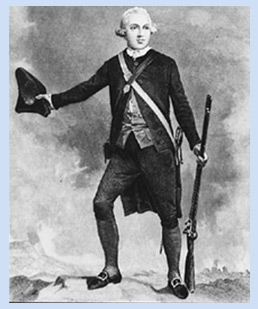
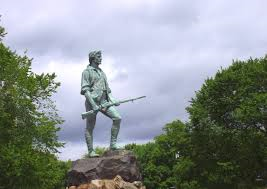
minuteman

The events of April 19, 1775 were not very surprising.  For a good five years many Americans had been itching for just such a confrontation with England.  The “Boston Massacre,” the “Tea Party” were just a couple of the predictors of what was almost inevitable.  In some ways, it was surprising that the rebellion did not start at an earlier date.  There certainly had been enough incidents for one to have started.  The single biggest deterrent had been America’s leadership to show they were loyal to their king and their mother country, England.  Not only did they consider themselves as Americans, but as loyal Englishmen who had the same rights as their fellow countrymen who lived in England.  But that is exactly where the division happened.

By the mid-18th Century, England was an empire with the best navy in the world and arguably the best army in the world.  It was at this time that the idea of the sun never setting on the British Empire was coming into vogue.  British North America was by far its largest claim, although India was by far its most profitable.  Wealthy English merchants, who populated the House of Lords, and who had the ear of the king, regardless of who he was, jealously coveted their claims in the lands outside the British Isles.

With the exceptions of the Massachusetts Bay Colony and the Plymouth Colony, all of British North America were settled as mercantile interests.  Competing with these interests were the French, who the English despised, who had strongholds in Canada, the Ohio River Valley and the Mississippi delta.  The two countries seemed to be literally warring with each other for several hundred years.  The French were claiming much of the extremely profitable sugar cane areas of the Caribbean.  At the heart of this was not just sugar as a sweetener, but as the basis for molasses and rum, two things English merchants heavily desired.

In their desire to firmly control all they laid claim to, British merchants persuaded Parliament to pass a series of laws meant to protect their interests, the so-called Townsend Acts.  Passed in 1767, these acts were used to bring in line the already rebellious Americans, in particular those who lived in Massachusetts.  At the time, Massachusetts was a leading ship builder and, by default, heavily invested in the shipping industry.  At the heart of the Townsend Act was the revenue act, also known as the stamp tax.  Despite attempts by Britain to restrain trade of its colonies in North America to only England, and to require colonist to use English ships exclusively, Americans had ignored these dictates.  Their claim, as loyal Englishmen, as well as Americans, was they had an equal right to trade as their desired and without constraints not placed upon the merchants in England.

The destruction of the tea in the Boston Harbor was meant to be even more provocative than it was.  Its leader, Samuel Adams, cousin of John Adams, was the radical leader of the “Sons of Liberty.”  He would have been happy had war broken out right after the Boston Massacre.  Ironically, his cousin John gained prominence from this event as he served as defense counsel for the British Army lieutenant who was tried for murder.  John was shrewd and knew if Massachusetts were to stay in control of their courts, the courts had to be shown as a place where any man could count on a vigorous defense and expect a reasonable finding by the court.  Adams won his case.  The lieutenant was exonerated.  Unfortunately, a few years later the crown saw fit to seize control of the courts from the Americans along with control of the colony’s chief executive, the governor.  Duly elected governors were replaced by English governors general and martial law.

The colonists concern, at the time of the destruction of the tea in Boston’s harbor, was not that they had to pay a tax but “[they] thought it reasonable that the Colonies Should bear a part of the national Burden, as that they should share a part of the national Benefit . . . The Colonies soon found that the duties imposed . . . not only exceeded our Proportion, but beyond our utmost Ability to pay . . . We had always considered ourselves, as part of the British Empire.”  (New Hampshire Gazette; January 6, 1775) They were asserting themselves as citizens of England who did not receive the same consideration as those who lived in England.

In late 1774 England had denied the colonist the right to their own defense.  It made it illegal for the colonist to store guns and ammunition, black powder, in any central location.  General Thomas Gage, commander of the English Army, made forays to Taunton, Salem, Somerville, and Portsmouth to seize guns and powder being held at those locations.  At each instance, save the Somerville foray, his attempts were stymied by vigilant Americans who sent word ahead of Gage’s troops of his designs.

thomas-gage

General Thomas Gage

In January 1775, Lord Dartmouth, Secretary of State for America in London, in a letter to General Gage, said: “The violence committed by those who have taken up arms in Massachusetts have appeared to me as the acts of a rude rabble, without plan, without concert, without conduct, and therefore I think that a small force now, if put to the test, would be able to encounter them, with greater probability of success, then might be expected of a larger army, if the people should be suffered to form themselves upon a more regular plan.”

Boston, however, had become an armed camp with over 1000 troops camped on its common.  The tensions between the Bostonians and the soldiers was palpable.  Taunts were frequent but most Bostonians feared for the lives at Gen. Gage was the leader of the local government, and their health and welfare was at his pleasure.  But Gage was not entirely unsympathetic with the Americans given his marriage to Margaret Kemble, a native of New Jersey.

Massachusetts had retained a central government of its own even after the insertion of Gen. Gage as its governor.  The provincial government, as it was known, met in Watertown and Cambridge on a regular basis.  At its heart was the committee on defense.  This committee, supported by similar committees in every Massachusetts city and town, was responsible for the militia each town organized.  While technically illegal, Gen. Gage did nothing to stop their existence.  Gage’s formally trained, well-equipped troop of army regulars were the obvious superior to anything the colonists could assemble.  Each town in Massachusetts held elections to decide who its militia officers would be.  And while every man from 16 to 60 was required to be a member of this militia, their training was spotty, their weapons crude, and their leadership questionable.  The colony had absolutely no professional military men.

The citizens of Massachusetts had reason to believe that the British rule of provincial America was about to become more severe.  In the April 17, 1775 issue of the Boston Evening Post it was reported:

“Friday last the Nautilus . . . arrived here from England with Dispatches for his Excellency General Gage . . . [with] passengers . . . of his Majesties 17th Regiment of Light Dragoons; which, with the 35th, 49th, and 63rd Regiments of Foot, are said to be expected here soon.

Yesterday, the Falcon Sloop of War also arrived here from England.”

Also, on April 17, 1775, the newspaper the Boston Gazette reported:

“General Gage’s letters being read in the House of Commons, it appears from one of them it has been recommended to him by Lord Dartmouth to disarm some of the Colonies, which in his opinion, was not practicable until he was Master of the Country.”

From such accounts, colonists could only believe that all hopes of self-rule, which they demanded, was not in their immediate future.  The restraint with which John Adams and John Hancock had been able to effect was being overcome by events.  The peaceful resistance Massachusetts residents had long observed was in obvious jeopardy.

For obvious reasons, the one town which did not have an assembled militia was Boston.  But to make up for this, the citizens of Boston maintained a group of spies who watched every action made by the British regulars and reported back to the provincial government.  Oddly, we have no idea who any of these spies were but their existence is unquestionable as witnessed by the events of April 18 and 19, 1775.

On the afternoon of April 18, 1775, Lieutenant Colonel Francis Smith received orders from Gen. Gage to lead an expedition although he was not advised of the mission’s object nor destination.  Later that afternoon, British patrols were sent into the countryside to block messengers from alerting the countryside to the movements of British troops. It was just such a patrol that intercepted and captured Paul Revere.  That evening, after a British patrol, led by Major Edward Mitchell, passed through Lexington, provincial militia gathered at Buckman’s Tavern to safeguard John Adams and John Hancock.

220px-Francis_Smith

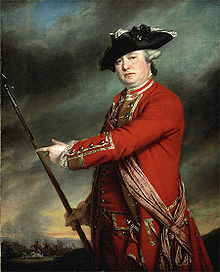
Col. Francis Smith

Word had gotten out that General Gage was planning to take the stores of guns and powder located in Concord.  What was not known was how he would effect his actions.  Boston, at the time, resembled the bulb of a flower with a long narrow strip of land, known as the neck, connecting it to the main land at Dorchester.  The British army had in its possession boats it could use to ford the Charles River at Charlestown, if it desired, to make such a move.  Or, an alternative, it could march down the neck and out through Watertown toward Concord.

The British troops, who had been assembling on Boston Common early that evening, were hungry, wet and cold that evening after a cool windy rain pushed through the area.

Notwithstanding Longfellow’s claim that one lantern meant they were coming by sea, that single lantern meant they were crossing the river.  In truth, we do not know if Revere saw the lantern in the North Church.  He left Boston around 11PM, rowed across the Charles River to Charlestown from where he started his famous ride.  All he told us is that his friend, Dr. Joseph Warren, who had sources inside the British camp, requested he ride to Lexington to warn Adams and Hancock of the British movements.  At the same time Revere’s friend, William Dawes, left Boston on horseback riding down “the neck” to the countryside.

joseph-warrenpaul revere

Joseph Warren                                                                   Paul Revere

William_Dawes

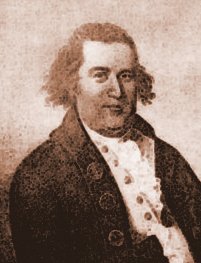
William Dawes

No one ever said “the British arm coming” because the colonists still considered themselves to be British and such a statement would have been nonsensical.  Like Revere and Dawes said “the lobster backs” or “the red coats” are coming.  Revere never made it to Concord as he was captured by the British army.  But in Lexington, around 1:30AM, near the Lincoln town line, Revere was captured by British regulars, Dawes narrowly escaping.  To their credit, they had enlisted Dr. Samuel Prescott to continue the ride with them and it was he who finally brought the alarm to Concord.  From Concord, a fourth rider rode to Worcester.

Each town in Massachusetts had its own alert system in the case of an emergency as was expected.  When Revere warned someone in Medford, for example, he took the alarm to Stoneham and that man to Reading and so forth.

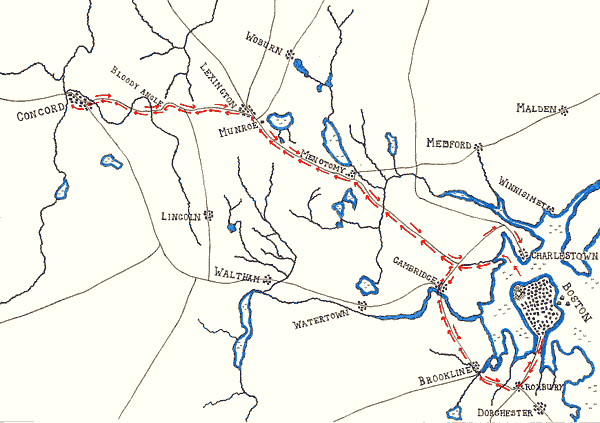
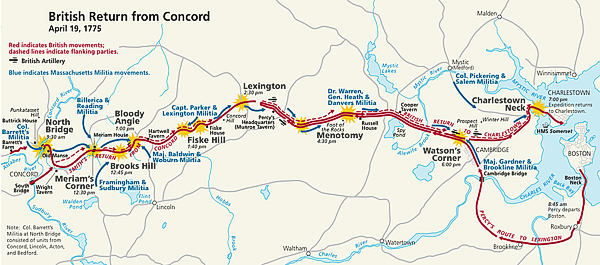
In the very early hours of April 19 General Gage’s troops, 400 in all, boarded barges to cross the Charles River.  At the same time, however, Gage dispatched another 500 troops, at Col. Smith’s request, members of his artillery, to march down the neck and out to Concord.  Gage was attempting to maximize his chances of success.  The map below shows the route used by the British troops.

lex concord

For April, it was a warm and humid night.  This certainly set the tone for a long series of unpredictable events.  By 2 in the morning Revere and Dawes had made it to Lexington where Hancock and others were hold up.  The distance from Charlestown to Lexington, roughly 12 miles, could be covered in a matter of hours by Gage’s troops.  But it was 4:30 before the troops were in sight of Lexington center.  The Hancock and others had been gathered expectantly at Buckman’s Tavern.  During that time roughly 250 militia, Minute men, had also gathered on the green.

The British troops advanced at a slow rate and, Col. Smith aware and worried over that aspect, dispatched Major Pitcairn, of the Royal Marines, to secure the bridges that lay ahead.  Doubtless Smith was remembering an encounter at a bridge in Salem some months before that had stymied his attempts to secure guns and powder there.  Pitcairn ordered his men “on no account to fire, not even attempt it without orders.”  This order too buttresses the argument that it was the colonists, and not the British regulars, who fired the first shot.

The militia were a rag-tag group of questionable leadership and an unquestionable lack of discipline.  Conversely, the British regulars marched to the green in a tight formation headed by Colonel Smith, a career officer.  It is important to note that the 400 British regulars matched the entire population in size of the town of Lexington.  This sight, with the 77 militia assembled, was a scary force to behold for the residents and the militia.  No one, on either side, knew what to expect.  But this assemblage, for the first time, pitted a significant colonial force against the crown.

As the two forces faced each other, the British regulars at staunch attention versus the militia who, though of fair size, lacked any semblance of military aptitude.  British Major Pitcairn orders the militia to disperse upon his arrival at the green.  Captain Parker, commander of the militia and a combat veteran, realized he necessarily needed to follow this order and told his men to disperse.  Prior to that, Parker had ordered his men to not fire upon the British troops except in self-defense.  But as they were doing so the infamous “shot heard round the world” rang out.  Given the high state of discipline displayed by the British regulars, it is likely that the shot came from one of the colonists.  In the end, 8 colonists lay dead while only a single British troop was wounded.  This did not bode well for the colonists.  How these minute men, at close range, did not score a single hit of any sort makes you wonder why they would even consider continuing the fight.  But their retreat from Lexington was just as much an advance to Concord where they reassembled and took on the British.

Col. Smith arrived in Lexington after the skirmish and was horrified by what he viewed as a breakdown of discipline.  He absolutely did not desire to engage the colonists at any point during his trip to Concord.

What the colonists at Lexington did not know was that the 400 troops they faced there were about to grow to 700 as Brigadier Lord Percy’s brigade was about to meet up with Col. Smith’s soldiers.

The weather, early that day, had the temperature a coolish 45 degrees, a typical New England day.  It was a clear breezy day that hid the heat which would envelope these British soldiers in their wool uniforms later in the day.

At about 7AM Col. Smith’s troops reached Concord.  From Lexington his troops had marched in battle formation, and in plain sight of the provincial militia who marched parallel to them with fifes and drums playing.  Smith had two objectives: destroy the weapons stored there and then eat breakfast.

Just a few miles from Concord center, in the town of Lincoln, 200 militia attacked Col. Smith’s advancing troops.  These were men from the towns of Bedford and Lincoln.  These men, sitting on either side of the road, caught the British in a cross-fire.

In Concord, the provincial militia waiting there, under the command of Col. James Barrett, withdrew to the heights overlooking the North Bridge and waited for reinforcements to arrive.  From their vantage point, the provincial troops could not see the movements of the British troops.  When they saw smoke rising from the town they assumed the British were burning homes and moved from the hill to attack the British.  In fact, the British had simply lit a fire to burn to dispose of some military equipment.

The few troops the provincials first encountered quickly retreated back to the center of town where they all waited for the expected reinforcements.  But at some time after 9AM, the British commander decided to leave Concord.  At the time, the skirmishes between the two sides had gained nothing for either side.  The British commander likely felt it prudent to return to Boston before anything more serious happened.  In past skirmishes, British troops were allowed to return to the city unmolested.

The colonists had other ideas, however, and took to attacking the retreating British troops from the relatively secure positions astride the road.  The British commanders were outraged by these tactics.  They did not view the Americans as being real soldiers.

As the day progressed, however, the colonists’ lack of military training started to play in their favor.  The British regulars had a very particular way of marching and of fighting.  The idea of guerrilla warfare, a rather new concept, was not a part of the British military lexicon.  It was their belief that two forces stood opposing each other and commenced the battle in their set positions.  One would fire upon the other until victory or defeat was realized.

return to boston

By the time the British reached Merriam’s Corner, about a mile from town and site of the earlier skirmish, about 1100 provincials have gathered and snipe the British troops.  Smith knew the provincials were moving to block his retreat put his grenadiers and light soldiers on the road first to guard against ambushes.  Even so, Smith’s column is under almost continuous attack.  Still, Smith was able to maintain control over his troops.  But at about 2:30PM his troops are ambushed at Fiske Hill.  Smith is wounded and some of his regulars break ranks and run.

At about 3PM Smith’s troops meet up with 900 reinforcements some of whom are Percy’s artillery.  Percy’s artillery is able to break up the closest provincial troops.  Percy takes on a scorched earth policy and burns houses of suspected snipers.  Percy’s men, however, left Boston with only 36 rounds of ammunition each, far less than needed to execute proper military maneuvers.

Around 4:30PM Percy’s troops reach Menotomy, today’s Arlington, where the day’s bloodiest fighting occurred.  Discipline among the British troops had broken down as they looted, pillaged, and burned homes.

The provincial troops that gathered in Menotomy had largely seen no fighting earlier in the day.  They were the minutemen who came from Medford, Cambridge, and Watertown.  They convened at the crossroads in Menotomy center and awaited the British troops, looking down the Lexington Road.  By this time the day’s temperature was in the mid-80s and it was humid.  The retreating British troops had marched the 20 miles out to Concord and then back without food or much rest.

When the British finally reach Charlestown, it takes three hours to move the troops back across the Charles River to the safety of Boston.  Most had neither eaten nor slept in two days.

At the end of the day, of the approximately 1400 British troops engaged in action, 73 were killed, 174 were wounded, and 26 were reported missing.  Of the 4000 American militia who were engaged, 49 were killed, 39 were wounded, and 4 were missing.

Major Corporations Who Paid No Taxes In 2012


With April 15 looming large for all us private citizens, here is a little food for thought.

Verizon Communications
Profits: $19.8 billion    Effective tax rate: -3.8%

General Electric
Profits: $19.6 billion    Effective tax rate: -18.9%

Boeing
Profits: $14.8 billion    Effective tax rate: -5.5%

Pacific Gas & Electric
Profits: $6 billion    Effective tax rate: -8.4%

The negative number indicates government subsidies.

I have two questions: 1)  How can I get in on the no tax deal?  2) How can I get subsidized by the Federal Government.


North Korean Threat Real


Anyone who does not take the North Korean dictator’s threat, Kim Jong Un, seriously is foolish.  Some months ago I wrote about my own personal experiences in Korea.  The recent sabra rattling tells me that not much has changed.

The Korean people as a whole find their heritage in China.  Not withstanding that, North Korea’s best ally used to be the Soviet Union, not China.  That is an important distinction because since the fall of the Soviet Union, North Korea has found itself even more isolated than it was before.  Thought they share a common ideology with China, Communism, China has always held its neighbor at arm’s length.  China has not openly warred on any nation in over 100 years, and it is unlikely it has any such interest today.  They are not about to be drawn into anything by North Korea.  And while North Korea undoubtedly still gets technology and arms from Russia, it no longer can count on that country as an ally, as in the old Soviet days.

When I arrived in South Korea in 1968, what I saw was an armed and tense camp.  The armistice with the north was but 13 years old, and memories of that war were still fresh.  Think of it this way:  the US Civil War ends in an armistice where both sides retain sovereignty but refuses access to its soils by the other side.  The good people of Maryland want to visit their relatives in Virginia but are not allowed to.  That is exactly what happened, and is still going on, in the Koreas.  In the late 60s and early 70s, the cold war took on a whole different flavor in the far east.  What you had were two countries who wanted to war with each other but were prevented from doing so by their allies, America and the Soviet Union.  It was seen then that an escalation of hostilities into a nuclear war were not far fetched.  Kim Jong Un’s father, Kim Il-sung, vowed that he would reunited the Koreas by force.  The South Koreans fully expected such a war and were prepared for it.  Kim Il-sung shot down an American spy plane, an EC-121, and fired upon the USS Pueblo in an attempt to capture it.  The ship’s captain allowed the ship to be taken.  North Korea held the ship for a year before releasing it.  What this says is, North Korea was not then afraid to carry out its threats, and we have no reason to believe that it will not follow through on threats it makes today.  In North Korea’s mind, at least, a lot is at steak.

The US intelligence community believes that North Korea as most has medium range missiles, with an outside range of about 3000 miles.  That renders the entire U.S. and Guam and Hawaii outside its range.  But well within its range are US allies, South Korea and Japan.  The Japanese have already expressed deep concerns about North Korea’s threats, as well they should.  It is not unreasonable to think the North Koreans still harbor resentments arising from Japan’s World War 2, and before, occupation of the Korean peninsula.

The west’s best hope against North Korea’s carrying through on any of its threats may lie with senior North Korean military leaders.  These men would necessarily know the consequences of declaring a war on any country.  Regardless of who North Korea attacked, it would be viewed as an attack on US interests.  Japan is still allowed only a defense force and would necessarily rely upon the U.S. for its defense, something I am certain we would do.  South Korea, on the other hand, has a very large, well-trained and well-equipped military which could hold its own against an incursion from the north.

It is impossible to predict what the North Korean dictator has in mind, what his plans are, and what he is willing to do.  North Korea’s unpredictability rendered it a pariah in the communist sphere because of this.  And it is exactly this reason that any and all threats made by North Korea must be taken very seriously, and be considered in a “worst possible scenario.”

Parent Child Misunderstandings


Many years ago, on a trip to Canada, my father lost his patience with me.  He exclaimed, to my horror, “you’re just like your mother!”  My father was an incredibly patient man, but more than once I pushed him past all reasonable patience, and into something else.  That was just one such time.  I remember that incident so well because I could not believe what he had said.  And for years afterward, I made it a mission to insure that I was not anything like my mother.  She and I had always had a contentious relationship, and that is putting it mildly.

My father grew up in an upper middle-class house while my mother grew up dirt poor, and adopted by an aunt and uncle who could not have made her feel more unwelcome.  They were married shortly after World War 2.  My father was a WWII vet and met my mother after he got back.  It was a set up but a mutual friend, but a good one.  My view of my parents’ marriage was that it was excellent, a model of what a good marriage should look like.  I have not changed that view at all.  But what I have changed is my view of them as individuals.  Unfortunately, my father died right before my 21st birthday, and I never really got to know him.  That was in large part due to adolescent and teenage selfishness on my part.  I forgive myself that because I believe it is something most, if not all, teens go through.  While teens we think how dumb our parents are, and when we get older, we discover how dumb we were.

My mother lived to age 89.  I firmly believe she could have lived longer if she had desired.  But I think she gave up living.  Along the way she had lost the only man she ever loved, and she adored him.  Of that there is no doubt.  Then she suffered the loss of a child when her son, my brother, died.  That almost killed her, literally.  At some point after that I decided to discover who she really was.  My mother was very tight-lipped, and did not care to talk about her childhood.  It was miserable so why would she?  Her father had deserted the family when she was only 4, and then her mother died when she was 11.  She was shuffled around between relatives, not uncommon in those days, until she settled with an aunt and uncle.  She graduated high school and went to a hospital that sponsored a nursing school and took up her profession.  She was, by all accounts, an excellent nurse, and it served our family well during some lean times we experienced.

I was so angry with my mother for years for doing this and not doing that.  But at no point did I stop to consider the tools available to her for bringing up a handful like me.  She called me a bull in a china shop, an apt description, as I was my own little force of nature when I was young.  I had to have my way which frequently collided with her having her way.  Seldom was it a question of right and wrong, just a question of who would prevail.  That made it difficult for my father, brother and sister to contend with but I don’t think either of us ever considered that very much.

In my 30s I suffered from a particularly severe case of depression.  Although I know the reasons, they are not germane to this.  What is important is that my mother did not take the news well.  I know now that at the time she viewed it as a failure of hers.  It was not, of course, but that was what she grew up believing.  I found out some years later that she had suffered an extremely severe case of depression of her own that required ECT.

Then I became a parent and had children of my own, three daughters.  I adore them but I know for fact that my good intentions do not always come across that way to them.  I am certain they have thought of me as intrusive, and not being sensitive to their desires.  It is this realization that let me know that I was indeed, in many ways, very much like my mother.  We parents have this tendency to take our children’s problems personally, and our distaste for something they are doing is really our fear that they will be hurt.  We do not always express ourselves well, and I know that was the case with my mother.  My mother had the extra problem of having virtually not support system when she was a young parent.

The human being has yet to be born who does not have one serious problem during their life.  Usually it’s many.  As parents we want only the best for our children.  We want them to have better lives than we experienced.  We want them to be happier.  We sometimes, foolishly, want to shield them from failure, sickness, and bad people.  That is simply impossible.

If your parents are still alive, get to know them all over again.  Ask them lots of questions about what they experienced when they were children and when they were your age.  I had to learn about my father through his sister because, as I said before, he died at such a young age.  And parents, just be sure to tell your children that you love them, and be big enough to admit that you are still capable of making mistakes.

Equal Protection Under the Law For Gay People


That was the question one of the justices on the U.S. Supreme Judicial Court asked today.   I guess I am not too smart, because I felt pretty certain that every American citizen was guaranteed that by the Constitution.  Does that mean parts of our population do not considers gays to be American citizens?

I am not gay, have no gay feelings or tendencies, and cannot say I really understand gay.  But I am extremely fortunate that I have never harbored any bias or ill feelings towards gays.  I was a member of one of the most conservative groups in American society, the military.  I remember there being a fair number of gay soldiers, a few even worked for me.  But I looked upon their sexual preference as being no different from my own.  I always preferred white American women.  I lived in Korea and Italy and many men were quite taken by Oriental women or European women.

That there is something wrong with a person who defines himself as gay in an entirely religious position, taken directly from the Bible.  But in this country, supposedly, our laws are supposed to be made without any religious consideration.  The Defense of Marriage Act, and the California voter initiative, show that is not exactly true.  What I find most remarkable about the California law is that it was pushed by conservatives.  Why is that remarkable?  Conservatives are, supposedly, proponents of keeping government out of our personal lives.  Or is that only when it suits them?

I belong to a very conservative religion, Roman Catholicism.  There is zero chance that in my lifetime, or anytime in the near future, that the Catholic church will condone same-sex marriages by its priests.  There are like-minded protestant churches, Mormans, Pentacostals, Baptists, and many others I feel pretty certain.  But here’s the thing, the gay community is not advocating for them to do so!  They are advocating for legal civil ceremonies.  And in this country, according to the First Amendment, that should be all right.

I believe I can say with a fair amount of certainty that there are gay communities in all 50 states in the union.  And within those communities there are gay couples who are rearing children.  By allow civil marriages, those gay married couples would automatically assume the same responsibilities for child rearing that everyone else has now.  Corporate America would benefit because married couples need have only one health insurance policy between them for coverage.  As it stands now, unmarried gay couples must each have their own policy.

The bottom line is simple.  Gay people have existed in all of recorded history and will continue to do so.  The right thing to do is to accord them 100% of the same rights, enjoyed and guaranteed, to non-gay Americans.

A Democrat Against Assault Weapons Ban


That Democrat is me.  I have given this issue a lot of thought.  The question that should be asked, in my opinion, is not which weapons should be on the street, but what can we do in insure that those people who own weapons will be fully responsible.  The NRA and its supports love to trot out how good honest Americans should have the weapon of their choice without except.  I agree with that statement, but it does not go far enough.

Neither the NRA, nor anyone else, has much of any idea who legitimate gun dealers are selling weapons to.  And worse, is the private sale of weapons.  But let’s start at the beginning.  Every weapon produced in the United States has a serial number on it.  Why bother except that the manufacturer can tell by the serial number when it was made?  Once that weapon leave the manufacturer the is somewhere between little and no record of where it goes and who buys it.  Try to but an automobile that does not have a vehicle identification number on it.  You cannot!  Why?  Every state in the union requires that a record of the vehicle and all transaction be kept.  And there is the exact system I am suggesting for all gun sales.  I have never heard the NRA complain about having to register their cars, which intrinsically requires their own name be included, so why complain about gun ownership?  How much do you want to bet that the number of guns ending up in the hands of criminals goes down radically because otherwise responsible individuals suddenly become equally responsible about to whom they sell their guns.   And when a gun in found in the hands of a criminal, this data base can be used to find out who is selling weapons to these people.  If the NRA is entirely a group of law-abiding citizens, it is difficult to understand why they would stand in the way of the police from finding out who is selling these weapons.

This suggesting does not raise the level of difficulty for a truly law-abiding citizen to buy any gun he desires.  If anything, the general public view of them will go up because all Americans will be able to say they feel safer in general and that they favor ownership of any sort of gun.

One of the ancillary laws that needs to be passed is how many rounds can be loaded into a weapon at one time.  The Central Florida student who just committed suicide was to be found in possession of a magazine that held 100 rounds.  Law enforcement officials noted that he had gained legal ownership of all weapons.  But why does an arms dealer or a consumer need a magazine that holds 100 rounds?  I suggest 16 rounds might be a reasonable top end.

Democrats are focused on the wrong thing.  We do not need to remove any weapons from the street.  We simply need a system of tracking what is sold and who can sell weapons and under what circumstances.  Republicans are also focused on the wrong thing.   When the Police Chiefs Union and other law enforcement groups are calling for better gun regulation, if you truly support your local police department, you have to listen to them.

The problem with gun control, or a lacking there of, is the absolute refusal by each political party to even attempt to find a middle ground.  Are they being controlled by PAC or special interest group?  They shouldn’t be!

A New Pope, But Same Old Church


I was born a Catholic. The first Pope I remember was Pius XII. When he died in 1958, the College of Cardinals elected Angelo Giuseppe Roncalli to be his successor. He became Pope John XXIII. What the College of Cardinals were looking for then, and still are, was someone who would maintain the status quo. What they got, unexpectedly, was a reformer Pope, like none who was known in their recent memory, and who has been unparalleled in his desire to bring the church into the 20th century. While he did not succeed, he did bring it into a more reasonable form. Most notable was changing the mass from being said in Latin to that of the local population. Other changes, what nuns could wear, the addition of lay members as servers, allowing for changes in how the mass is celebrated. But John XXIII died in 1965 and since then there has been a succession of very conservative Popes. These Popes have been deaf to the cries of the 1 billion plus Catholics throughout the world.

A Pope is an absolute ruler. He is answerable to no man on earth, only to God. A Pope can speak ex cathedra, which means, he can arbitrarily change church law without advice from anyone and there is no mechanism to reverse his decrees, short of his dying and a new Pope coming into power.

When I was young, Lawrence Massachusetts had 14 very active Catholic Churches and their associated parishes. The masses were well attended, and the churches were relatively healthy. Today there are only 2 Catholic Churches in Lawrence even though the city’s population boasts of just as many who claim to be Catholic now as did then. And Lawrence is not the exception but the rule. American Catholics have deserted their church in droves. Why? The answer is both simple and obvious, people who must live in the 2013 world are being led by men who still think like it was 1813.

In 2012 the Archdiocese graduated exactly one man, Patric F. D’Arcy, from its seminary. That number is by no means an anomaly. For decades now dioceses all over the United States have had to tell aging priests they could not retire because there was no replacement. Not having a replacement would not be so bad if that priest were also not the only priest in that parish. But that is exactly what is happening. This knowledge I gained through first hand contact with a priest in Oklahoma City. There are parishes in the United States that have no priest at all assigned because of the extreme shortage. These parishes are serviced by a visiting priest. How well can he know the people of that parish and attend to their needs?

Several years ago I was privileged to visit Poland.  Polish Catholics are very active and their churches well-attended and healthy.  I am at a loss to explain the differences between Polish Catholics and American Catholics.  I think it possibly, and likely, that Polish Catholics have only been free of Communist rule for 20 years and are still in that honeymoon phase where they can openly attend their church without worry about what the government might do to them.  But while there I also learned that a Krakow Catholic church had sent a priest to a Massachusetts parish that was experiencing a desperate shortage of priests.  That priest, however, was made to feel persona non grata and soon returned to Poland.  He was not made to feel that way by the parishioners but by the diocese in which the church was located.  Poland has an abundance of priests.  Is the American Catholic Church too vain to accept help?

One thing that probably drives more Catholics permanently away from their church is the church’s stance on divorce.  Unless you can get the church to annul your marriage, something money, not truthfulness, can attain, then you are not allowed to remarry in the Catholic Church.  The divorce rate among U.S. Catholics is probably identical to that of the rest of the population.  The U.S. divorce rate right now stands at about 50%.  The Catholic Church has immediately disaffected half of its starting population. It is small wonder that so many churches have had to been closed.  Why would anyone go back to a place that has rejected them?

A Boston Paulist Priest, Jac Campbell, now deceased, started a program, “Landings,” in the late 1980s to invite “lapsed Catholics” back into the church.  The program was meant for all Catholics who had left the church, but was clearly targeting that one group.  I attended a “Landings” seminar in the early 1990s, and while I was touched, and at least briefly returned to the church, I understood that regardless of how welcoming the Paulist fathers are, the rest of the church is not following suit.

“The Paulists seek to meet the contemporary culture on its own terms, to present the Gospel message in ways that are compelling but not diluted, so that the fullness of the Catholic faith may lead others to find Christ’s deep peace and “unreachable quietness.” Paulists do not condemn culture, nor do they try to conform the Gospel to it. Rather, we preach the Gospel in new ways and in new forms, so that the deep spiritual longings of the culture might find fulfillment in Jesus Christ. To this end, Paulists use printing presses, movie cameras, and the Internet to give voice to the words of Christ – the Word Himself – to a new generation of Americans.

The Vision of the Paulist Founder

The founder of the Paulists, Isaac Hecker, was a spiritual seeker, a wandering soul. He lived for a time in Transcendentalist utopian communities where he consulted the leading thinkers of his day. Though a seeker, he became a man of conviction: once he found the truth in the Catholic Church, he gave his whole life to it. His only desire was to proclaim the truth to others so that they too could find their true selves as North American Catholics.”  http://www.paulist.org/who-we-are

In Boston at least, the Paulist fathers are some of the most liberal priests anywhere in the church.  To their credit, they openly welcome gay Catholics to their masses.  They are active participants in the “Landings” program.  They make lots of room for divorced Catholics and Catholics of all sorts regardless of who they are.  They are, in my opinion, exactly the face the entire Catholic Church needs to put forward if it ever hopes to meet the needs of all its people, and not just those who will give in to its absolutist ideals, its impossible demands.

We have a new Pope and he has a great opportunity.  He can allow the church to wallow in its 19th century ideas through the 21st century, or he can be an advocate for all the people of the church, not just the select few.  With Pope Francis I we have some hope because he was renowned for working with the poor in his native Argentina.  But he is also known to be extremely conservative.  The question is, is he happy with the way things are?