Bits of Wisdom


I am at a place in my life where I can reflect on all I have learned and the wisdom of the years I have gained.  The wisdom comes from a combination of personal experience, and what others have told me.  Some of these lessons were hard learned.  I was warned in advance of negative personal experience of what I could expect, and yet I did it anyway.  Those lessons are tough, but you never forget them either.  I want to share some of those things.  I am not putting them in any particular order, just as I think of them.

You do not have to go to every fight you are invited to.  What this means is, people are going to confront me and challenge me.  Some are them are looking for a fight, verbal, emotional, or something else.  It is my experience that most of those fights are not worth having.  Such fights are commonplace in families.  But when I take a moment to think about what is being said, I usually come to the conclusion that I do not need to add my two cents.  Even when directly challenged, I am usually better served in allowing the person the victory they are looking for.  It is a funny thing, after a while these people stop bothering you.

Do you want to be right or happy?  I used to have to be right all the time.  I drove myself nuts.  I worked so hard being right I did not have time for much of anything else.  This particular saying goes along with the previous one.  If I were taking a position in a discussion with someone who was of the opposing feeling, it was my mindset that would have me doggedly arguing with the person to get the “win.”  But what was I winning?  These days I am entirely happy with making a point and then letting go.

My feelings are never unique.  I used to go around feeling various things and believing that I was alone with those feelings.  A funny thing happened when I talked to other people about my feelings, I found other people who shared the exact same feelings.  That included even some of my craziest feelings that I felt too ashamed to bring to the light of day.  But once exposed, I saw those feelings were always shared with someone and never unique.

I have a God of my misunderstanding.  How do you understand a supernatural being when you only have human terms to use?  You cannot and it is for that reason that I have decided I have a God the way I understand Him but I always temper that by saying it is likely a misunderstanding.  It just happens to be the best I can do at any given moment.

Don’t take yourself too seriously.  This is the admonition against thinking I am the center of the universe.  To Red Sox do not lose games because I was watching them or did something I should not have done.  It does not just rain on me.  No one is out to get me.  My importance in the universe is extremely small, tiny, but that is a good thing.  The world got along just fine before I was born and will continue to do so after I die.

I am responsible.  This simply means I have to take responsibility for all of my actions, and I must do so as the occasion arises.  Being responsible does not allow for procrastination.  And that means I am responsible for taking care of myself in all respects.

Judge slowly, forgive quickly.  It used to be I would take someone’s inventory and judge them in about one minute, if not less, and that was before I ever heard them say a word.  That is a terrible thing to do to anyone.  I am not giving a person a chance when I act that way.  I also always have to be cognizant of the idea that I am seldom in a position to pass judgement on anyone for their actions as I am seldom aware of all the facts.  But in that same way, when I have been wronged I can get past it far more quickly if I forgive the person quickly.  Holding resentments is a huge waste of time.  I have found that when someone wrongs me  I do better by assigning their action to a demon they are fighting and that it really has nothing to do with me.

A little gratitude will kill a big case of the blues.  I say to people, “you know how I know it is going to be a good day?”  When they say “no,” I say it is because I woke up.  Each day is full of promise and it is up to me to take advantage of what is placed in front of me.

Well, those are a few of the ideals I live by these days.  I hope some might work for you.

Why Taxes Must Go Up


I am the last one who needs to have his taxes raised.  I am retired and on a fixed income.  Although my income keeps me comfortable there is not much room for extra or emergencies.  I can get extra income by working but I am limited in doing that because it affects my retirement pay after I earn a certain amount.

Paul Ryan, Republican Wisconsin representative, says that he would reduce the size of the national deficit by reducing the size of the government.  But he would also reduce taxes.  If he does both then the deficit likely stays the same and our other national problems just get worse.  Ryan is on the short-list of possibilities for Mitt Romney’s running mate this fall.

I am four square in favor of reducing the size of our government but I have yet to hear a single politico say what that would look like, what goes and what stays.  My guess is Ryan and his cohort will go after the social programs first.  And that means they will go after welfare, those who wield the least power lose.  Is there even a PAC for welfare?

I think congress would be better served by first fixing the law that govern the economics of the various government agencies.  Fully funded oversight from the GAO is also a must.  I worked within the federal government for over 30 years, and I can tell you that one of the biggest problems is how the government contracts out its work.  For decades agencies have been begging for fully funded initiatives but congress almost always declines and requires annual begging from the agencies to keep its contracts funded.  This is extremely wasteful.  Having to justify project funding, let’s say there was a project to buy all new computers for the FAA’s air traffic control facilities, would be stretched out over 2, 3, or more budgets.   Even though the need to replace the computers does not change, congress’ priorities do, and on a whim congress can decide to not fund that particular initiative at all or at a very low-level.  That can cause contractors to raise their prices or remove themselves from the contract all together.  Now what was a bad problem just became worse.  The message here is, fully funded initiatives costs the government less in the long run.

But making government work better simply is not going to be enough.  We as Americans expect a lot from our government at all levels.  But as Americans we have become horribly spoiled.  We are always looking for a bargain.  We want a lot but we do not want to pay a lot for it.  In meeting those needs of the public, however, America has incurred a debt that goes far beyond money.  We have lost contact with the idea of “you get what you pay for.”  Somewhere along the way Americans have lost sight of that very simple but very real concept.  For many decades we have been paying for an efficiency apartment and now we are wondering why we do not live in a penthouse.  When we were single the efficiency apartment was fine but now that we are a family of five we have to accept that we need more space and that space costs more, much more.  There is also a debt to be paid beyond rent for living in that space and we have paid nothing towards that.

Our roads and bridges are crumbling before our eyes.  Our public transportation is woefully inadequate.  Our airspace control is in desperate need of modernizing.  Our police and fire forces are underfunded and hence undermanned.  Our military is too small.  Agencies like NOAA, NASA, NIH, VA, and many others are underfunded in their research capabilities.

Right now the average American pays less than 15% to the federal government in taxes.  We can afford more.  We have one of the lowest tax rates of any nation in the world.  We could almost double our tax rate and still be low relative to the rest of the world.  I am not saying we should double our personal taxes.  But in the interest of fixing our infrastructure and other governmental problems, I would personally be willing to have my taxes go up by 25%.  I would prefer to keep that money for myself, of course, but I cannot be so selfish that I am not willing to pay for what I use.

Americans, next time your car hits a pot hole that you think should have been fixed a long time ago, or, you come upon a closed bridge that you think should have been repaired or replaced long ago, or next time you wonder why you next door neighbor is going to the middle east for the national guard for a third or fourth time, remember it is because you are not willing to pay enough to make things different.  You get what you pay for and we are faced with that right now.


The Incomprehensible Decision of the US Supreme Court


The US Supreme Judicial Court just decided that police has the right to do strip searches as they see fit, regardless of the nature of the crime someone is being detained for.  The decision, 5 to 4, is a misstep to be certain, but it is a very difficult one to correct.

The SJC exists for a single purpose, to uphold the Constitution of the United States on a legal issues brought before it.  It cannot, for example, act unilaterally.  It acts only on legal cases it accepts as brought before it from the lower courts.  It is the responsibility of the plaintiff to show that a lower court decision, or an action by the President of the United States or Congress, is unconstitutional in nature.  Such was the course of the case it heard on strip searches.

In this particular case the 4th Amendment, the right against unreasonable search and seizure, was at the heart of the matter.  I find it curious, therefore, the Judge Anton Scalia found in favor of upholding the right of law enforcement to conduct such searches as it sees fit.  I say that because Scalia is an “original intent” justice.  That is, he believes court actions must be consistent with the original intent of the portion of the Constitution in question.  I have heard Scalia interviewed and my opinion of his is he is a brilliant jurist with a very common sense approach to the law, very pragmatic.  I have always felt that his conservative political leanings not withstanding he would always err in favor of the broadest interpretation of the Constitution.  I am disappointed, therefore, the he took a very narrow approach to this case.

Let’s take the 2nd amendment as an example of how justices can differ greatly in their interpretation of our basic law.  The 2nd amendment has been the focus of an SJC case only twice in our nation’s history.  This is extremely unusual but it speaks to the court’s dis-ease with interpreting original desire.  The key word in this amendment is the word “militia.”  In 1774, prior to our nation’s war against England, each colony of the America’s was a government unto itself, and answerable only to the King and Parliament.  The colonists desired to have a defense force of their own so the formed state militias.  The minutemen of Massachusetts were just such a group.  When the king forbade the colonists from storing gun power, lead, and weapons, the colonists rightly viewed this as an act against the basic right to self-protection.  England had no intention of taking guns away from individuals but it did take offense to anyone other than its own forces collecting as an armed force.

The writers of the first ten amendments had certain overt actions taken by England, particularly between 1768 and 1775, in mind when they wrote each of the ten amendments.  If you look at the amendments you will find an admonishment against the government lodging its soldiers in private residences.  This does not seem to make much sense in today’s world but at the time the king had declared that the British army could in fact be housed in private homes as commanders saw fit.

Let’s be very clear about one thing.  The writers of this portion of the Constitution were extremely wary of any individual official using his office to gain any advantage over the individual and that individual’s right to move about and live as he sees fit.  Too many times the colonists had fallen victim to the whim of an official of the crown.  They wrote the entire Constitution and its first ten amendments with that in the front of their mind.  The writers believed that the rights of the individual must be upheld, even over the feeling of security by others.  For example, most of us find the rantings of neo-Nazis to be hate speech that has the possibility of inspiring violence against people.  But the reason we allow such hateful speech is that we have faith in the other laws of our country to protect us against people who would do us harm.  And that as much as we might like hate-speech removed from us we do so only at the peril of other forms of speech.

In the latest case it was decided that the safety of the law enforcement officials trumped the rights of the individual over unreasonable search.  In essence, the SJC said that strip searches are not unreasonable given the idea that “you never know” who might become dangerous or violent once inside a prison or jail.  I think this decision an abomination to our most basic of rights.  People in law enforcement understand theirs’ is a dangerous job by its very nature.  I think we should afford such officials every right to insure their own personal safety but the line gets crossed at being allowed to do a strip search just because you think someone might present a danger.

The 4th Amendment has been under attack ever since “The Patriot Act” took place.  The argument at that time was the same, public safety trumped individual rights.  As much as I want to feel as safe as possible, I also understand that a free society necessarily leaves us vulnerable to those who might do us harm.  But, it is never ever right to use group safety over individual safety.  The right of the individual in our society always has to trump the rights of any group.

Is Your Child a Bully?


I think if you gathered 100 parents of school-age children in a room, most, if not all, would say their child is not a bully.  The fact is, I would say at least 10 of them has a child who is a bully, and maybe more.  That is not a scientific fact, but it comes from my experience over the past 4-plus years in the classroom of a primary school here in Massachusetts.

What does a bully look like?

The picture above, “Butch” from the “Little Rascals” series of the 1930s who played the bully, might be akin to what so many people think a bully looks like today.  The fact is they look a lot like this:

To be clear, I do not know who the girl and boy are in the above pictures, but in my experience they could easily be bullies in their schools.  The fact is, a bully does not have a particular look, a particular family type, a particular race or religion.  Bullies are as likely to look cute as they are mean.  And a kid who looks mean may be the furthest thing from a bully.

Bullies do not act out in any particular place.  A child can be an angel in the classroom but a bully on the playground, on the school bus, or when they are walking home.  A bully is not a dumb kid, and I believe he, or she, is more likely to be of above average intelligence, but are saddled with a severe case of insecurity, and a bad self-image.

A bully is not just he kid who beats up other kids.  A bully is more likely to wage a psychological war with his prey, constantly picking on his target by belittling him, and degrading him.

The skilled bully, very common, knows when not to act out, around his teachers and parents.  He presents the well-behaved, sincere, and caring young person.  But in reality, just beneath the surface, his is angry and looking for a target of his aggressions.  Girls are as likely to be bullies as are boys.  Size of the child is not an indicator of anything as a small child is just as likely, if not more so, to be a bully as the big child.

Schools are required by law to deal directly with bullying, even perceived bullying, immediately and in writing.  Parent must be informed immediately.  But that is exactly where the problems truly begin.  Too many parents, when informed that they child has been caught bullying another child, deny that their child could possibly engage in such conduct.  Their “angel” is simply not capable of being a bully.  The fact is, everyone is capable of being a bully.

There is a movie that comes out tomorrow, Friday March 30, called “Bully.”  I have not yet seen it but plan to.  I would hope that all young parents would go to the movie and take their kids along, regardless of age.  Bullies happen in the first grade just as they do in any other grade.  But in taking their kids to the movies, their children might open up about problems they are having with bullies at their school.  Some children may see their own bad behavior in the movie and how it plays out, and will tell their parents of their own bad acts.  It is my experience that bullies do not like doing what they do, they simply do not know how else to act, lack coping skills, or in worse cases, lack impulse control.  Sometimes the fix is as simple as making a child aware of how wrong their actions are and making consequences for them.  But other children need professional help, not a bad thing, and in rare cases, medication.

Bullying is epidemic in our schools.  But we cannot lay this problem at the feet of our teachers.  It is the parent’s responsibility to teach their children who to act properly and to discipline their children appropriately.  We each have a personal responsibility where our children are concerned.  We each have to accept that we just might be harboring a bully and that until we take action, nothing will change.

Why We Need AMTRAK, and More of It!


There was a time when you could get on a train in your hometown and travel to just about any other town in the United States.  That was before the Interstate highway system, and before America started its love affair with the automobile.  To be fair, travel by passenger train was on the decline before either of those two things happened.  The nation’s improved road system of the 1920, the emergence of the intercity bus, and the emergence of the truck all had an effect on passenger rail traffic.  But the Interstate highway system and low-cost air fare were the death knell for intercity passenger rail.  By the time AMTRAK came into being in 1971 intercity passenger rail service was on life support.  Only four railroads opted out of the initial AMTRAK system: the Boston & Maine Railroad, the Southern Railroad, the Chicago, Rock Island and Pacific Railroad, and the Denver and Rio Grande Railroad.  AMTRAK cut the existing routes in half and started business as a government entity.

From its inception there was acknowledgement for the need of certain “corridor” passenger rail service.  These were seen as likely money-makers for the new system.  The original plan was to somehow turn a profit on the other non-corridor routes.  That was pure pie-in-the-sky thinking of course.  During the Reagan years there was a movement to shut down AMTRAK entirely if it could not live without a subsidy, which it could not of course.  Gasoline was still relatively cheap in those days and it was generally assumed that our transportation infrastructure could survive quite well without AMTRAK outside of a few named corridors.

Fortunately forward thinkers of the day kept the system alive.  The Clinton administration brought some long overdue cash infusion into the system.  A true high-speed route from Boston to New York, Philadelphia, and Washington, DC was put in place.  That high-speed still pales in comparison to high-speed trains in Europe or Japan but it is still pretty good.

Over the past 10 years patronage on AMTRAK has climbed significantly, particularly in the corridors, the Northeast, Detroit/Chicago/St. Louis, and San Diego/Los Angeles/San Francisco.  Even more, the government has identified a number of other potential corridors that need to be developed in the future on top of improving the existing ones.

True high-speed rail will make AMTRAK competitive with the airlines in what is referred to as “short-haul.”  Cities like Chicago and Detroit, or Chicago and St. Louis with true high-speed rail can be two or three hours apart on the train.  High speed rail would also make an overnight trip New York to Chicago and other mid-west cities possible.  You could board a sleeper at Penn Station in New York at 8 in the evening and arrive in Chicago by 8 the next morning.  Even better, it is from one downtown location to another.  Some good planning and using existing technology will give Americans a via alternative to both the automobile and the airplane.

We are approaching $4 a gallon gasoline.  But people also need to realize that aviation fuel prices are also rising and will be reflected in air fares, even on discount airlines.  The upward movement of fuel prices is unlikely to change ever again.  There will be fluctuations, of course, but in the long-term prices are going to rise considerably as world demand rises and world supply plateaus and falls.

The time will come when Americans will be clamoring for more rail service because they will realize it to be the most affordable transportation available to them.  But our investment has to come now.  The price of that investment has to go up as the years pass.  One time investments in the straightening of railroad rights-of-way, necessary for good high-speed rail, is at its least expensive right now.

The necessity for a good and comprehensive passenger rail system in America is not speculation.  It is going to be a necessity at some future date, that is an absolute.  How we deal with our future is a choice we have to make now.  Economically, the amount a fuel needed to transport 1000 people between any two cities via rail is far less than any other mode of transportation that now exists.  That translation will become evident to all Americans in the future.  How well we are able to deal with it in the future is dictated by our actions now.

If you want to see what a first class rail system looks like go to Europe.  Get on a train in Paris and go to Rome.  The entire trip, the same distance as New York to Chicago, takes 12 hours.  The New York to Chicago trip takes 18 hours.  There are two trains from New York to Chicago, and four Paris to Rome.  There are actually many more trains between Paris and Rome, those four are just the high-speed trains.  In the U.S., there are only two New York to Chicago trains regardless of speed.

It is time Americans came to accept what Europeans and Asians have known for decades.  Americans have to accept the fact that we need trains, more of them, and faster.

Should the Government Require People to Buy Health Insurance?


Here in Massachusetts it is already law, yes, you must buy health insurance.  On Massachusetts tax forms you must certify that you have health insurance and provide proof.  If you do not, there is a penalty you must pay.  But is this a good thing?  Is it a legal thing under our Constitution?  Those are the very questions the US Supreme Judicial Court is considering right now.

Republican Governor Mitt Romney was responsible for bringing this law into effect in Massachusetts.  The Democrats since Pres. Obama has been in office have made it their priority to get health care to everyone while the Republicans have been four square against it.  But should the U.S. have a law that requires all American buy health insurance?  That is the question before all of us right now, and it seems a majority of Americans are against this requirement as it now stands.

I have heard that upwards to 40% of all Americans are not covered by health insurance.  But when they get sick, hospitals are required to treat them.  Doctors cannot turn a patient away for lack of health insurance.  Even more, hospitals and doctors supply medication and other items generally covered by health insurance.  These costs are picked up by those of us who have health insurance.

I have always had health insurance.  Even though I am retired I still have health insurance as a part of my retirement plan.  I do, however, still have to pay 50% of the premium but I consider that insignificant when I think of what life would be like without health insurance.  Actually, I do not want to have to think about such a thing but millions of American do have to think of exactly that.  Some, upon retiring, lose company supplied health insurance.  I suspect such people put off retirement for as long as possible.

This particular portion of President Obama’s health care plan is tricky.  It is reasonable for us to expect the 25-year-old who is employed by a company that supplies health insurance to buy it, but he has no requirement to do so.  That means when he is sick or injured he has a right to “free” care at a hospital.  But his bill is paid by those of us who have insurance in our premiums.  But should we require self-employed people and small companies to buy health insurance?  Do we do this to make it fair for the rest of us who do buy insurance and pay the sometimes pricey premiums?

Well, I cannot in good conscience, my Democrat Party leanings not-withstanding, go along with a law that requires someone to buy insurance.  I think it goes against the basics of a free society.  I do believe, however, that affordable healthcare in the form of insurance, is a right the every person in a free society should have.  Right now that is not true.  Regardless, it is my belief that the US SJC is going to declare this part of the health care bill as being unconstitutional, and it should be.

This should bring into focus for the Republican party the absolute necessity for a comprehensive health care plan that covers all Americans without penalizing any portion of Americans as is now true.  Maybe that means hospitals and doctors can turn away anyone who does not have insurance?  That would at least be fair.  Or maybe it means if you are on some sort of public assistance you must be given free care while everyone else must pay?  You see, that is the problem!  How do you resolve getting health care to those currently not covered by insurance without penalizing those who are covered.  The Democrats solution of throwing a lot of money at it or requiring everyone to get health insurance is not the solution.  But the Republican idea of ignoring it altogether, and offering no solution what-so-ever is equally as unacceptable.

We are supposed to be a very intelligent nation.  We are, in fact the richest nation in the world.  But then we are ranked only 37th in healthcare by the World Health Organization.  What this says is that the Democrats have the right idea but the wrong solution and the Republicans need to join the Democrats in finding a solution to this problem even as they, properly, object to the law as it is.  The only moral high ground here is that which includes a solution to this long-standing problem.  Nothing short of that is acceptable.


Why Does the United States Still Have 5113 Nuclear Warheads?


Here is a little exercise for you.  Find a map of the world and count out 5113 cities and other targets that would be worth dropping a nuclear bomb on.  That mean every country in the world because if you start eliminating “friendly” countries like most of Europe, all of South America and most of Africa, along with a number of Asian and sub-Asian countries your choices decline quickly.  If you consider that dropping a single warhead upon one city is enough to totally destroy it and the same is so for all military targets, what is left?

There was a time the U.S. had in excess of 31,000 nuclear warheads!  Those were the days of “mutually assured destruction.”  The acronym for that would be “MAD” which seems about right. The idea was, if the USSR struck first we could not only return in kind but with enough force to assure their destruction.  Well, Russia has about 1200 warheads these days, China about 300, and a few scattered around the rest of the world.  Why do we have any at all?

The horrors of the atom bomb were well displayed at Hiroshima and Nagasaki.  The after effects were felt for decades.  No further proof was necessary.  The USSR wanted what we had and did such.  Then we wanted our bombs to be larger which we did.  At one point 100-megaton bombs were being exploded.  There was a sick sort of glory associated with each such accomplishment.  But after a while the Strategic Arms Limitation Talks stopped above ground testing and then all testing.  Finally it limited the amount of weapons any country could own.

It has been 67 years since man first unleashed the power of the atom in weaponry.  You would think that by this time we would know quite enough that ownership of over 5000 such weapons should be something of a national embarrassment.  Not only is it excessive, it is also extremely expensive to maintain such force.

There was a time when every warhead was designated for a particular target, even those carried aboard aircraft.  I would hope that such days have passed but with an arsenal of over 5000 I cannot help but wonder if many are still specifically targeted.  To me that says that some planners still believe there is an ocassion where use of nuclear weapons still exists.  I want to know what circumstance that is.  Russia is no longer a threat of any sort.  China is happy within her borders and does no sabre rattling at all, unlike the U.S.  There is North Korea, of course, but its ability to deliver any of its nukes is still quite questionable.  Who does that leave?  Of whom are we afraid?  Or are we still supporting some secret agenda?

I firmly believe that in the future the ownership of more than a dozen or so nuclear arms will be deemed as sheer foolishness, and in some senses provocative.  The ownership of such weapons will be purely deterrent.  Our statement will be that we have a few that we can guarantee delivery to the target of our choice should the occasion arise.  I expect such nukes would be the property of the U.S. Navy upon its submarines, and that all other nuclear weapons would be declared obsolete.

The United States defense industry has produced “smart bombs” and cruise missiles that have a degree of accuracy which should instill fear upon any warring entity.  Addition of nuclear capability adds nothing.  Furthermore, our stealth bombers and fighters, our advanced avionics and battlefield weapons keeps us as the most formidable force upon the Earth.  Our strength lies in our ability to further such technology and not in how many people or building we can annihilate with a single blow.

Wars are inevitable and the continued strength of our military forces is of paramount concern.  But that strength cannot come with a threat to the continuation of all humanity.  No nation, no people, no group, can ever justify its actions when it puts in balance the survival of the human race.

A wise man once told me that I do not have to take on every fight I am invited to.  Oft times the more intelligent thing to do is nothing.  America stands for freedom and liberty but we do better by simply carrying the message to the world than trying to bludgeon it into our belief system.  But when challenged in terms that allow us no other avenue, we are still stronger than any other nation on earth even before any consideration is given to our nuclear arms.  Therefore, how much do we really need them, and how many?

America: Home of the Free, Land of the NIMBY


America has the ability to meet 100% of its power needs without using a drop of oil or single chunk of coal.  But for reasons that defy common sense, and just a bit of intelligence, Americans seem horribly averse to the idea of building nuclear power plants.   Worse, some Americans are trying to close down the ones we have!

At some time in the future I feel certain science will come up with a cheap way to convert sunlight into electric power.  But for the forseeable future, that is not going to happen.  The technology we have right now simply does not allow for such a conversion to a level that will make a dent in our power demands.  The closest we come is a giant photo-voltaic site in New Mexico that is attempting to meet some west coast demands, but it falls far short of supplying enough power to one city let alone a region.  Even more, of course, it is only effective during daylight hours.

America has done a good job creating hydro-electric power but we are about maxed out in that area.  Wind farms a popping up but again, the limiting factor is the number of wind turbines needed and how much power they can actually supply.  Sadly, that too is a very small number.

The power we can obtain from the atom is virtually limitless.  It is the most efficient and environmentally friendly power source we have today.  People somehow seem to equate the way power is generated from the atom to the atomic bomb.  They are only remotely alike, and that is only in the sense that they both using fissionable material.  But the similarity ends there.

Almost since its inception, atomic power has been the safest source of energy on earth.  Considering the many thousands of nuclear plants that exist around the globe today, there has been only one event where a nuclear meltdown created a danger to the health of local inhabitants, Chernobyl.  The incident in Japan last year was not a meltdown.  It was the result of a confluence of events that are so rare the associated risk seemed manageable.  I can assure you, future nuclear planning will take into account what happened in Japan.  In the U.S. we had Three Mile Island.  For those of you who do not remember, that was a case where there was an actual reactor meltdown.  But American safety standards were, and are, so stringent that during and immediately following that meltdown the ambient radiation in the Three Mile Island area did not change one iota.  That is, there was no measurable radiation coming from the plant itself which left only that radiation generated by the sun.  To put this in perspective, a person sun bathing next to Three Mile Island at the time of the meltdown would definitely have suffered from radiation sickness with a day long exposure.  That sickness would have come entirely from the sun, just as it does from lack of protection from a day at any beach in the world.

The other big objection to nuclear power seems to be that of what to do with the nuclear waste.  Right now all such waste is kept at the nuclear plant that produces it.  Why?  Because no one wants the trains going through their back yards that would carry such waste to the Utah mountains where it would be disposed of.  Have you ever seen the rail car specifically designed from the transportation of such material?  I have.  You could explode a rather large bomb beneath one of these cars and the integrity of the container would not  be compromised!  Why then, do people think a rail accident in their back yard would put them in danger?  Fear, which is simply a euphemism for ignorance.

The last objection to such facilities is that they have a very specific lifetime, after which the container become too brittle to allow for continued safe energy production.  That happens because the radiation emitted by all nuclear plants within their containment facilities reacts with the metals surrounding them.  This reaction slowly degrades, and of course contaminates, the containers.    But like the spent nuclear rods themselves, these materials can be safely transported to a permanent storage facility.

What people do not seem to realize is that every day millions of gallons of highly toxic material passes by their houses every day in both rail cars and trucks.  The amount of care in such transportation, while substantial, is still far less than that for nuclear materials.  And the hell of it is, people do not seem bothered much at all when accidents involving one of these materials happens.

If Americans want to enjoy the good life, as they have in the past, they are going to have to allow for things to happen In Their Back Yard and stop saying, Not In My Back Yard!

Require All High Schoolers Take a Class in Parenting


The incidence of teen pregnancy is far too high.  Children having children.  High schools having to devote precious resources to helping teen parents care for their child while they get an education.  How does that happen?  One of the greatest benefits of such a class would be getting teens to reconsider sexual activity once they realized how difficult bringing up a child is, particularly for someone their age.  At the very least they may practice safe sex, and more likely, more would refrain from sexual activity altogether.

I did not get married until I was 25 and my first child arrived when I was 26.  To say I was unprepared is a huge understatement.  I was virtually clueless.  While I was financially capable of caring for a child, I was not in the least educated in parenting.

Nationally, high schoolers are required to take four years of English, three years of science, and two years of math.  Why not also require one year of parenting?  Even better, require that all students take the class even before they are allowed to drop out of high school, and maybe especially so.

Such a class would in no way, shape, or form be a sex education class.  It would start out with what expecting parents go through, their responsibilities to themselves, and to the unborn child.  Then they would learn the basics for caring for a new-born, home care, doctor’s visits, sick child, and what a day in the life of a new parent is like for any 24-hour period.   It would also teach them about the economics involved in child-care, what the costs of proper child-care look like.  It would also take up the task of what to do with a child when something goes wrong.  It would also make them aware of children born with defects and how that impacts the new parent.

One last thing, I would make it a requirement for every student to get a grade of “B” or better to pass the course.  Parenting education is far too important to allow for mediocre grades.  But the upside of this, such exposure will ultimately be helpful to all students, even the most responsible, as they go through life.  There is nothing better than good preparation for anything you enter into.


Detroit’s Automobile Innovations of the Past 50 Years


Do you harken back to when cars had huge V-8 engines, no catalytic converter, and were easy to fix?  Here are a few examples of such cars.  Still think you want these back?

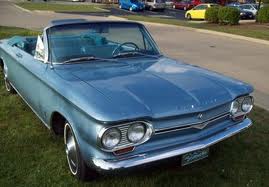
1. Chevrolet Corvair.  Ralph Nader made his name by filing suit against GM claiming that this car was “unsafe at any speed.”  Even though his claims were later disproven, the car died an early death.  This car was revolutionary in Detriot because it was a rear engine design and the engine was air cooled, just as the Volkswagon bug had been for years.

Chevrolet Corvair

2.   Ford Edsel.  People just did not like this car for some reason.  Ford introduced it as its own line of automobile which may have been its biggest fault.  After 2 1/2 years of production, Ford stopped making it.

Ford Edsel

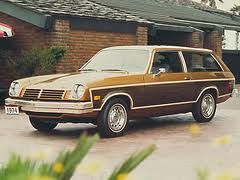
3.  Chevrolet Vega.  The Vega had an aluminum block engine that was revolutionary in its day.  There was really nothing wrong with the car mechanically, but the engine just did not sound right, possibly it was the louder than normal engine noise that was its downfall.

Chevrolet Vega

4. American Motors Gremlin.  American Motors was already on life support when it brought out this car.  It sporty look was supposed to appeal to the youthful buyer.  It did not appeal to much of anyone.

American Motors Gremlin

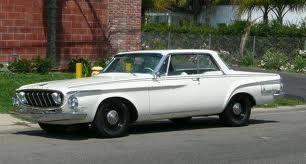
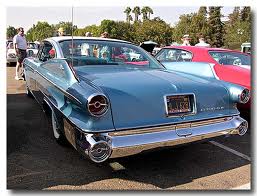
5.  Dodge Polara.  Dodge was desperately trying to compete with Ford and Chevy with this product.  Dodge and Plymouth both went quickly through several models in the early 1960s before it finally hit it right in 1964.  The Polara is but one of many failed attempts.

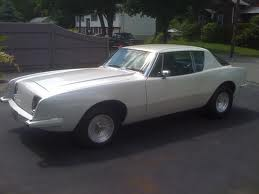
6.  Studebaker Avanti.  The Avanti was a car way ahead of its time.  It was well-built, fast, and good-looking.  The rest of Studebaker was on its last legs and people were simply not visiting the Studebaker showrooms to see this car.  The Avanti is a collector’s dream car as there were so few produced.

Studebaker Avanti

7. International Scout.  For a short while the International Harvester Corporation tried to convince Americans that it had a great family car.  The only problem was, this model was the only model it produced and aside from the Federal Government, virtually no one bought it.

International Scout

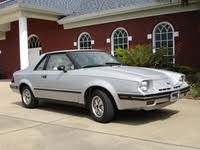
8.  Ford EXP.  Ford decided the American public was ripe for a two-seater car and introduced this one.  Its front wheel drive was unusual in its day.  The car was not particularly comfortable and could not carry much.  I know.  I bought one new.

Ford EXP

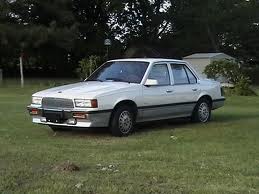
9.  Cadillac Cimarron.  Cadillac has a reputation, well-deserved, as a very well-made car meant for people of means.  GM, in its infinite wisdom, wanted to share luxury with the average person.  What we got was an Oldsmobile with a Cadillac logo.

Cadillac Cimarron

10.  Dodge Matador.  This was another of Chrysler Corp’s early 60s attempts, nuff said.

Dodge Matador

These next cars were not produced by Detroit but they just might rate as a some of the worst cars ever sold in the United States.

1.  VW Thing.  When Volkswagon stopped making the Beetle in the mid-70s it thought it would fill the gap with this little goodie.  It is actually a replica of a staff car commonly used by the Nazi military in the late 1930s until the end of World War 2.

Volkswagon Thing

2. Jugo.  Jugoslavia, always pro-western, wanted to enter the  American Auto market with this thing.  It was very inexpensive and was typical of automobiles made in Communist countries.  They were simply not at all reliable.  Think you have seen something similar from American automakers?  The car next to the Jugo is the Plymouth Horizon which was actually much better built.

JugoPlymouth Horizon

3.  Renault Le Car.  The French wanted to get the Renault into the United States after it acquired American Motors Corporation.  It was about as successful as any AMC car.

Renault Le Car