Equal Protection Under the Law For Gay People


That was the question one of the justices on the U.S. Supreme Judicial Court asked today.   I guess I am not too smart, because I felt pretty certain that every American citizen was guaranteed that by the Constitution.  Does that mean parts of our population do not considers gays to be American citizens?

I am not gay, have no gay feelings or tendencies, and cannot say I really understand gay.  But I am extremely fortunate that I have never harbored any bias or ill feelings towards gays.  I was a member of one of the most conservative groups in American society, the military.  I remember there being a fair number of gay soldiers, a few even worked for me.  But I looked upon their sexual preference as being no different from my own.  I always preferred white American women.  I lived in Korea and Italy and many men were quite taken by Oriental women or European women.

That there is something wrong with a person who defines himself as gay in an entirely religious position, taken directly from the Bible.  But in this country, supposedly, our laws are supposed to be made without any religious consideration.  The Defense of Marriage Act, and the California voter initiative, show that is not exactly true.  What I find most remarkable about the California law is that it was pushed by conservatives.  Why is that remarkable?  Conservatives are, supposedly, proponents of keeping government out of our personal lives.  Or is that only when it suits them?

I belong to a very conservative religion, Roman Catholicism.  There is zero chance that in my lifetime, or anytime in the near future, that the Catholic church will condone same-sex marriages by its priests.  There are like-minded protestant churches, Mormans, Pentacostals, Baptists, and many others I feel pretty certain.  But here’s the thing, the gay community is not advocating for them to do so!  They are advocating for legal civil ceremonies.  And in this country, according to the First Amendment, that should be all right.

I believe I can say with a fair amount of certainty that there are gay communities in all 50 states in the union.  And within those communities there are gay couples who are rearing children.  By allow civil marriages, those gay married couples would automatically assume the same responsibilities for child rearing that everyone else has now.  Corporate America would benefit because married couples need have only one health insurance policy between them for coverage.  As it stands now, unmarried gay couples must each have their own policy.

The bottom line is simple.  Gay people have existed in all of recorded history and will continue to do so.  The right thing to do is to accord them 100% of the same rights, enjoyed and guaranteed, to non-gay Americans.

A Democrat Against Assault Weapons Ban


That Democrat is me.  I have given this issue a lot of thought.  The question that should be asked, in my opinion, is not which weapons should be on the street, but what can we do in insure that those people who own weapons will be fully responsible.  The NRA and its supports love to trot out how good honest Americans should have the weapon of their choice without except.  I agree with that statement, but it does not go far enough.

Neither the NRA, nor anyone else, has much of any idea who legitimate gun dealers are selling weapons to.  And worse, is the private sale of weapons.  But let’s start at the beginning.  Every weapon produced in the United States has a serial number on it.  Why bother except that the manufacturer can tell by the serial number when it was made?  Once that weapon leave the manufacturer the is somewhere between little and no record of where it goes and who buys it.  Try to but an automobile that does not have a vehicle identification number on it.  You cannot!  Why?  Every state in the union requires that a record of the vehicle and all transaction be kept.  And there is the exact system I am suggesting for all gun sales.  I have never heard the NRA complain about having to register their cars, which intrinsically requires their own name be included, so why complain about gun ownership?  How much do you want to bet that the number of guns ending up in the hands of criminals goes down radically because otherwise responsible individuals suddenly become equally responsible about to whom they sell their guns.   And when a gun in found in the hands of a criminal, this data base can be used to find out who is selling weapons to these people.  If the NRA is entirely a group of law-abiding citizens, it is difficult to understand why they would stand in the way of the police from finding out who is selling these weapons.

This suggesting does not raise the level of difficulty for a truly law-abiding citizen to buy any gun he desires.  If anything, the general public view of them will go up because all Americans will be able to say they feel safer in general and that they favor ownership of any sort of gun.

One of the ancillary laws that needs to be passed is how many rounds can be loaded into a weapon at one time.  The Central Florida student who just committed suicide was to be found in possession of a magazine that held 100 rounds.  Law enforcement officials noted that he had gained legal ownership of all weapons.  But why does an arms dealer or a consumer need a magazine that holds 100 rounds?  I suggest 16 rounds might be a reasonable top end.

Democrats are focused on the wrong thing.  We do not need to remove any weapons from the street.  We simply need a system of tracking what is sold and who can sell weapons and under what circumstances.  Republicans are also focused on the wrong thing.   When the Police Chiefs Union and other law enforcement groups are calling for better gun regulation, if you truly support your local police department, you have to listen to them.

The problem with gun control, or a lacking there of, is the absolute refusal by each political party to even attempt to find a middle ground.  Are they being controlled by PAC or special interest group?  They shouldn’t be!

A New Pope, But Same Old Church


I was born a Catholic. The first Pope I remember was Pius XII. When he died in 1958, the College of Cardinals elected Angelo Giuseppe Roncalli to be his successor. He became Pope John XXIII. What the College of Cardinals were looking for then, and still are, was someone who would maintain the status quo. What they got, unexpectedly, was a reformer Pope, like none who was known in their recent memory, and who has been unparalleled in his desire to bring the church into the 20th century. While he did not succeed, he did bring it into a more reasonable form. Most notable was changing the mass from being said in Latin to that of the local population. Other changes, what nuns could wear, the addition of lay members as servers, allowing for changes in how the mass is celebrated. But John XXIII died in 1965 and since then there has been a succession of very conservative Popes. These Popes have been deaf to the cries of the 1 billion plus Catholics throughout the world.

A Pope is an absolute ruler. He is answerable to no man on earth, only to God. A Pope can speak ex cathedra, which means, he can arbitrarily change church law without advice from anyone and there is no mechanism to reverse his decrees, short of his dying and a new Pope coming into power.

When I was young, Lawrence Massachusetts had 14 very active Catholic Churches and their associated parishes. The masses were well attended, and the churches were relatively healthy. Today there are only 2 Catholic Churches in Lawrence even though the city’s population boasts of just as many who claim to be Catholic now as did then. And Lawrence is not the exception but the rule. American Catholics have deserted their church in droves. Why? The answer is both simple and obvious, people who must live in the 2013 world are being led by men who still think like it was 1813.

In 2012 the Archdiocese graduated exactly one man, Patric F. D’Arcy, from its seminary. That number is by no means an anomaly. For decades now dioceses all over the United States have had to tell aging priests they could not retire because there was no replacement. Not having a replacement would not be so bad if that priest were also not the only priest in that parish. But that is exactly what is happening. This knowledge I gained through first hand contact with a priest in Oklahoma City. There are parishes in the United States that have no priest at all assigned because of the extreme shortage. These parishes are serviced by a visiting priest. How well can he know the people of that parish and attend to their needs?

Several years ago I was privileged to visit Poland.  Polish Catholics are very active and their churches well-attended and healthy.  I am at a loss to explain the differences between Polish Catholics and American Catholics.  I think it possibly, and likely, that Polish Catholics have only been free of Communist rule for 20 years and are still in that honeymoon phase where they can openly attend their church without worry about what the government might do to them.  But while there I also learned that a Krakow Catholic church had sent a priest to a Massachusetts parish that was experiencing a desperate shortage of priests.  That priest, however, was made to feel persona non grata and soon returned to Poland.  He was not made to feel that way by the parishioners but by the diocese in which the church was located.  Poland has an abundance of priests.  Is the American Catholic Church too vain to accept help?

One thing that probably drives more Catholics permanently away from their church is the church’s stance on divorce.  Unless you can get the church to annul your marriage, something money, not truthfulness, can attain, then you are not allowed to remarry in the Catholic Church.  The divorce rate among U.S. Catholics is probably identical to that of the rest of the population.  The U.S. divorce rate right now stands at about 50%.  The Catholic Church has immediately disaffected half of its starting population. It is small wonder that so many churches have had to been closed.  Why would anyone go back to a place that has rejected them?

A Boston Paulist Priest, Jac Campbell, now deceased, started a program, “Landings,” in the late 1980s to invite “lapsed Catholics” back into the church.  The program was meant for all Catholics who had left the church, but was clearly targeting that one group.  I attended a “Landings” seminar in the early 1990s, and while I was touched, and at least briefly returned to the church, I understood that regardless of how welcoming the Paulist fathers are, the rest of the church is not following suit.

“The Paulists seek to meet the contemporary culture on its own terms, to present the Gospel message in ways that are compelling but not diluted, so that the fullness of the Catholic faith may lead others to find Christ’s deep peace and “unreachable quietness.” Paulists do not condemn culture, nor do they try to conform the Gospel to it. Rather, we preach the Gospel in new ways and in new forms, so that the deep spiritual longings of the culture might find fulfillment in Jesus Christ. To this end, Paulists use printing presses, movie cameras, and the Internet to give voice to the words of Christ – the Word Himself – to a new generation of Americans.

The Vision of the Paulist Founder

The founder of the Paulists, Isaac Hecker, was a spiritual seeker, a wandering soul. He lived for a time in Transcendentalist utopian communities where he consulted the leading thinkers of his day. Though a seeker, he became a man of conviction: once he found the truth in the Catholic Church, he gave his whole life to it. His only desire was to proclaim the truth to others so that they too could find their true selves as North American Catholics.”  http://www.paulist.org/who-we-are

In Boston at least, the Paulist fathers are some of the most liberal priests anywhere in the church.  To their credit, they openly welcome gay Catholics to their masses.  They are active participants in the “Landings” program.  They make lots of room for divorced Catholics and Catholics of all sorts regardless of who they are.  They are, in my opinion, exactly the face the entire Catholic Church needs to put forward if it ever hopes to meet the needs of all its people, and not just those who will give in to its absolutist ideals, its impossible demands.

We have a new Pope and he has a great opportunity.  He can allow the church to wallow in its 19th century ideas through the 21st century, or he can be an advocate for all the people of the church, not just the select few.  With Pope Francis I we have some hope because he was renowned for working with the poor in his native Argentina.  But he is also known to be extremely conservative.  The question is, is he happy with the way things are?

Who Was Deborah Sampson, and Why Should We Care?


There are three words all men and women who join the military are made aware of: Duty, Honor, Country.  Men and women join the military do so for many reasons, but in the end, those who serve fully and honorably understand those words implicitly, and better than any who have never served.  This is not meant as a slight towards those who have not served, but as a point of divergance.  The idea, and ideal, of “duty, honor, country” goes back to April 19, 1775, when a few Massachusetts men bravely said, “no more!”  The knew they would either be hung as traitors to the crown, or heroes of a new country.  In those days we were largely a bunch of poorly trained, poorly armed, and raggedty bunch as has ever been seen.  There was no shortage of fear that our independence, as declared July 4, 1775, would be still-born.   Washington himself, upon arriving at Cambridge Massachusetts to review the tens of thousands of colonial soldier camped there, feared for the future.  They were ill-mannered, dirty, vulgar, and about the furthest things from a group of soldiers as could have been imagined.  But as Washington passed among these fledgeling soldiers, in support of a fledgeling cause, his six foot two frame mounted smartly upon a white stallion, and regaled in as smart a uniform as could be found in the colonies, every men paused to take measure of this man who they knew intuitively to be their new leader.  Each and every one of these men had come to fight the British regulars out of a sense of duty to their America, though such duty was more a feeling than anything yet written in words.

Image from the collections of the Massachusettts Historical Society.

The colonial army, though too oft defeated in singular battles, had clung on tenaciously, in spite of hunger, desertions, quarrels among the colonial officers.  The idea that a woman could fight as a soldier was not even a consideration, let alone a reality.  But on May 20 1782, Deborah Sampson (her image above) of Plympton Massachusetts, her breasts tied tightly to her chest, her hair cut short, and dressed as a New England farmboy, enlisted as Robert Shurtleff in the company of Captain Nathan Thayer of Medway Massachusetts.  Seven months prior to her enlistment, the British surrendered at Yorktown, Virginia, and the October 1781 battle was the last large-scale one.  Guerilla warfare continued, however, and Sampson’s unit, the Fourth Massachusetts Regiment, fought several small battles in upstate New York, especially near West Point and Tarrytown.  Sampson proved quite skillful, yet despite her ability in these hand-to-hand skirmishes, she was wounded.  In one skirmish, she received a head injury from a saber and was hit with a musket ball in the upper thigh.  She received medical attention for the head wound, but did not inform the doctor of her thigh wound for fear that her identity would be discovered.  After leaving the hospital, Sampson bravely removed the musket ball herself and went on fighting.

Sampson was one of the special soldiers selected to go to Philadelphia to defend Congress from soldiers who were upset that they had not been paid at the war’s end.  During this time, she grew sick and became unconscious due to a head fever.  The nurse thought that Sampson was dead and went to retrieve the doctor.  While searching for a heartbeat the doctor felt the wraps around Sampson’s chest and unwrapped them to inspect what he thought was an injury.  To his surprise he found that his patient was actually a woman.  Dr. Barnabus Binney decided to take her home to give her better care without revealing her identity.

Dr. Binney kept her secret, and Sampson returned with her regiment to New York.  There, General Henry Knox (who would become the nation’s first Secretary of War) honorably discharged “Robert Shurtleff” at West Point on October 25, 1783.

Sampson continued the ruse in face of talk in Stoughton Massachusetts, where she had returned to, that a woman, she, had fought in the war.  She denied such accusations.  But she was found out eventually.

Deborah Sampson Gannet (she had married Benjamin Gannet in 1785) was recognized by Massachusetts less than a decade after the war was over.  On January 19, 1792, she was awarded 34 pounds, which included the interest accumulated since her 1783 discharge.  A document praising her service was sent with the pension.  The document stated “that the said Deborah  Sampson exhibited an extraordinary instance of feminine heroism by discharging  the duties of a faithful, gallant soldier, and at the same time preserving the  virtue and chastity of her sex unsuspected and unblemished and was discharged  from the service with a fair and honorable character.” It was signed by John Hancock.

The call to military service has always been a strange one, attracting one while repulsing another.  That call is no less plaintiff to women, as this relation has shown.  Though they were barred from any form of military service until World War 1.  Women, however, disguised as men, fought in every war until then.  The call to service is a strong one to all who answer.  It defies definition but its existence is without doubt.  Deborah Sampson, and everyone else who has answered the call, has always done so for country, and never for any political predeliction.  While war is an extension of political ambition, service, entirely unrelated, is an extension of ones duty to his, or her country.  Deborah Sampson was the first American woman hero, but far from the last.  She, like most others who have served, did so not because she had to, but because she wanted to, more, the need to.

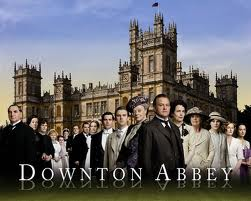
Downton Abbey: Not Just a PBS Soap Opera


da

I am thoroughly addicted to Downton Abbey, the PBS Masterpiece theater show going into its fourth season.  For those of you who are the uninitiated, let me just say that this is not your prototypical Masterpiece Theater production.  I confess that I have in the past been entirely turned off by such programming as I found them a little pretentious, often plodding, and frankly, just uninteresting.  What caught my eye was an advertisement for the show that Shirley MacLaine was in the production, and the scene shown was of her character being a feisty American woman who was willing to take on the English aristocracy fearlessly.  MacLaine is in but 2 episodes of the third season, and in truth adds only minorly, though importantly, to the entire story.

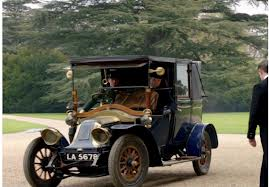
A good friend of mine, born in New Zealand but claiming England to be his home now, said, when I inquired of him if he had seen the show, it was nothing more than a soap opera and therefore of little consequence.  I did not respond to this, deciding that I needed to give consideration to his indictment.  In the end, I decided that his statement about it being a soap opera was not false, but it also merits little in the overall consideration of the program.  Compared to any prime time show, it stands head and shoulders above anything any of the major networks, including the BBC, is offering these days.  And while it has a fair share of technical imperfections such as, why would a wealthy aristocratic family be driving a 1o year-old car even if it was a luxury vehicle at the time it was sold.  The vehicle in question is the 1908 Renault (shown below), a beautiful example of European luxury in its day, but something that any well-to-do family would have sold by the time of the opening scene of this show, 1912.  But such inaccuracies can be overlooked, though not entirely forgiven, for a story-line that is an important consideration of the English aristocracy at the time.

renault

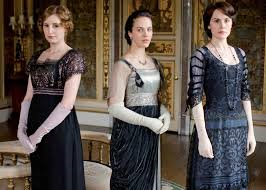
The first two seasons of Downton Abbey take place between 1912 and 1919.  We are presented with the “Earl of Grantham” and his American wife trying to deal with the challenges of the day.  A Victorian era remnant, the Earl’s mother and a “dowager,” played by the indomitable Maggie Smith, is desperately trying to hold on to the past, the Earl, desperately trying to hang on to the status quo, and his three daughters (shown below), in their late teens and early 20s, trying to navigate the obstacles of their future.  We get a rather nice look into the challenges faced not only by the English aristocracy, but of the same challenges American aristocrats of that day were attempting to overcome.  To wit, F. Scott Fitzgerald’s novel The Great Gatsby shows us just such a family in 1920s America.  And while this show certainly is not of the literary heights of Fitzgerald’s novel, it none-the-less does give us pause to consider the challenges faced, not only by this English family, but of all family life in England from 1912 to 1920.  And for a television production, it is quite well written and well acted.

sisters

The characters of Downton Abbey are not monolithic, as often happens in television melodramas, but ever-changing people as we might expect.  As in any good novel, there are characters we love, hate, question, and change our mind over.  They act bravely, foolishly, selfishly, and at times, evilly.  The story works hard to bring out the audience’s on biases, prejudices, and identification with the characters presented.  The vast number of actors in this show are unknown to American audiences, but they do not leave us wanting for good acting.  They draw us in, capture our attentions, and leave us wondering, as should happen.  There is no overacting, which is a relief.  There is no character so good nor so bad that we can discount them as the ideation of an overactive imagination.

Maggie Smith’s character (shown below), Dowager Countess of Grantham, is what women of her day were, the moral conscience of the family.  The dowager is openly contemptuous of the direction of the world, but is able to moderate her actions by her absolute desire to keep her family together by whatever means.  She is extremely principled, dogmatic, and never at a loss for a cutting remark.  But when you look beyond her opinionated remarks, you find a woman who truly wants only the best for her family, and though she is wont to ever admit to a fault, she frequently moderates her position to achieve her end.  If you listen just a little closely, you will find the dowager’s one-liners to be priceless, and frequently very telling.  For example, in an early scene, her niece, Lady Sybil, remarks questioningly, “can’t we have our own opinions?” to which the dowager responds, “No! Not until you are married and then your husband will tell you what your opinions are.”  In today’s society we would find such a remark shocking but in those days, that is exactly what was expected.

ms

We are given an aristocratic family in transition, even though most of that family is unaware that it is going through such.  We are taken, painfully, through the trials of World War I that all English families had to endure.  No family in Britain escaped the horrors of that war, and the show does a decent job of showing exactly that.  Much is made of what England and its families had to endure during Word War 2, but it all started in World War 1.  Many scholars contend that World War 2 was nothing more than an extension of the first war.  But the important part that we see in this show is how big an impact that war had on every family.  This, so to speak, sets the stage for the second world war.

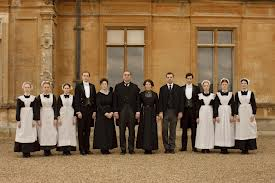
We are also treated to a personal look at the lives of the Grantham House servants (seen below), of which there are many.  We Americans have little to draw on about how such “service employees” existed because, if nothing else, the extensiveness of such servants never existed in this country.  But one thing is brought out very well. “To be of service,” as the members of the house’s servants were, was, in its day, thought of as a profession to aspire to and to be extremely proud of.  While this sort of person has largely disappeared, as had to happen, it still is a point of fact for the times in which it existed.  It gives us another point of reference when considering the aristocracy of that day.  And as a historian, I am certain that a fair amount of literary freedom was taken and facts ignored.  Still, it gives us a decent starting point if we desire to look further in understanding what happened all those years ago.

servants

And that is exactly my point.  In the years 1912 to 1920 and beyond, not just England, but the world was confronted with quickly changing times amid wars, insurrections, and civil strife.  The year 1912 is an excellent starting point if one cares to discover the changes of the early 20th Century.  England fought a war and had to contend with Ireland’s desire to be an independent country.  Russia went from a Tsarist state to a communist country.  The world was being made smaller but inventions such as the telephone and the phonograph, motion pictures, radio, and faster ships.  Countries began using, for the first time ever, weapons of mass destruction, mustard gas, tanks, and machine guns to name a few.  And with all that, family life had to go on.  What that looked like is exactly what this show is all about.  It often happened in fits and starts, but it was always challenging at every level, not just the aristocracy.  There are many situations of that day brought out that we today consider a matter-of-fact.  But in those days the notion of responsibilities of men and women to one-another and their offspring was a far cry from what it is today.

I could not recommend this show more strongly to everyone.  Take it with a grain of salt because it is certainly not entirely accurate, but it is entirely entertaining at the very least, and better yet, it should give one pause to consider so many things, not just of what was happening back then, but what is going on today.  We have not come so far that we cannot learn anything from what is proffered in this show.  In reality, we could learn a lot.

American Entitlement


In my advancing years I am looking for new and better ways to be “of service” and how I can be a productive member of society in the long-term.  It will not be long before I am “entitled” to Medicare, but I am at odds over being deserving.  While it is true that I have paid into this program my entire adult life, I have a pretty good insurance policy that will see me through the rest of my life, provided I continue to pay into it, which I will.  This entitlement called “Medicare” seems a bit redundant to me although I confess to not knowing a lot about it.  It is my hope I will never find the need to figure it out for any personal use.

I never got an allowance, and to be perfectly honest, the concept of such a thing when I was a kid was totally foreign to me.  True, I begged money from my parents from time-to-time, but once I figured out how I could earn it for myself, in general I stopped asking.  And so, from about age 12 onward I always had ways to putting money in my own pocket without my parents help.  This concept seems relatively lost on today’s generation.  Why is that?  Why do they feel entitled to an allowance and a whole lot more?  I suspect a lot of the blame lies in my generation’s permissiveness.

Once again this year I have to send the government money to pay for my federal and state taxes.  Consider that I am living off social security and a modest retirement plan.  I do not begrudge the government a cent of this money.  It seems to me the benefits I have reaped far outdistanced anything I have paid in taxes.  Having lived in, and visited, several dozen foreign countries, I can attest to the fact that we have things better than anyone else in the world.  But I do not understand why paying your fair share is such a hard concept for the Republican party to get its arms around.  They seem to be the party of tax loop-holes and unequal levying of taxes on individual.  This goes back to millionaires, and billionaires, who literally figure out how to pay nothing, or very little, it taxes, while low and middle-income families are required to pay anywhere between 15 and 28% of their gross income.  The entitlement of the rich is astounding.

The Reagan administration was the champion of laissez faire when it came to corporate and financial America.  It was, in their minds, somehow un-American to make them answerable for their actions.  When Wall Street imploded in 2007, so adept was Wall Street at double-talking, they invented the phrase “too big to fail” which was, and is, a euphemism, bail me out and do not hold me responsible even though I have acted anywhere from irresponsible to absolutely criminal.

I have this strange believe that with the entitlements one gets just from being born in America, goes a responsibility to serve, at least for a little while, at the federal, state, or local level.  I chose the military to do that.  People these days love to criticism the military and lump it together as the “military-industrial complex.”  To be certain, industrial America is, and unfortunately, always has taken advantage of defense dollars and spending them as if they need not worry about responsibility for responsible spending.  I am not now, nor have I ever been, a part of that.  I chose to serve on active duty in the army for 11 years, another 4 in the national guard, and have just recently returned to a unit of the Massachusetts State Militia known as the Massachusetts State Defense Force.  For my participation in this organization I am paid absolutely nothing except when ordered to duty by the governor.  I do this because I feel responsible and this is how I respond.

The only things I feel entitled to are those things I have worked for and earned.   If I have to pay higher fares to keep the MBTA running, fine.  Do not misunderstand, I want its debt to be brought under control, but in the meantime, I will pay my way.  If I have to pay a little more in federal taxes to improve the condition of the roads I drive on, so be it.  What I expect in return from congress is a more responsible approach to the letting of contracts.

I want an end to all corporate welfare, without exception.  Corporate America should be entitled only to equal protection under the law, but no financial compensation for being in business.

What Price Defense?


b-52

The picture above, as you all probably recognize, is of a U.S. Air Force B-52 bomber.  What you probably do not realize is that this bomber, of which 92 are still on active duty, was first manufactured in 1955 with the last being made in late 1962.  That means the youngest B-52 is 51 years old!  How many of you would consider driving a 1962 Ford or Chevy as your everyday car?  Well, that is exactly what we ask the men who man these bombers to do.  The B-52 has a 5-man crew.  To be fair, only the latest models are still in use, and they receive a degree of maintenance which guarantees the safety of the crew.  Still, it is flying on something you cannot replace, the airframe, and that airframe is at least 51 years old.  The Boeing 707 was the heart of the long-range commercial fleet when these aircraft were first produced.  Anyone flown on one of those lately?  Why do you think that is?

Within the Air Force inventory are the B-1 and B-2, but neither can fly the mission of the B-52.  So why do we not just retire them?  Because we are not ready to say the nuclear bomb era is over and this aircraft still reigns supreme when it comes to carrying such a payload.

kc-135

The front aircraft above is a KC-135, a refueling aircraft, which just happens to be refueling a B-52.  This aircraft was first delivered to the Air Force in 1956, and if it looks a little familiar, it should, it is the military version of the Boeing 707.  According to the Air Force, it stills has 414 of these aircraft on active and reserve status.  The last KC-135 was delivered to the Air Force in 1965.  That fleet is no younger than 48 years old, most older.  To be fair, the Air Force, reinforced its refueling fleet by buying a military version of the McDonnell Douglas DC-10, the KC-10, which were built after 1981.  But military cutbacks allowed a purchase of a total of 59 of these aircraft, far fewer than needed to replace an already aging KC-135 fleet.  The entire KC-10 fleet is at least 20 years old.

c-5

The picture above is of an Air Force C-5A.  This air craft was first delivered to the Air Force in 1970 and were produced, in the “B” and “C” models, until 1989.  A fleet of 59 C-5 “M” models are scheduled to be delivered.  Still, the bulk of this fleet is at least 20 years old.  In 1991 the Air Force started taking delivery of its replacement, the C-17.

f14

The picture above is of the Navy’s F-14, first delivered in 1970, but fully retired in 2006.  The Navy replaced this aircraft with the F/A-18, seen below.

fa-18

f-15

The picture above is of an Air Force F-15.  It was first delivered in 1975.  This aircraft, however, is still in production costing taxpayers about $140 million a copy.

f-22

The aircraft above is the Air Force F-22.  It cost about $140 million a copy.  This is the aircraft the Air Force prefers to the F-15.  Strangely, the F-22 is no longer produced, the last coming off the assembly line November 2011.

Keeping the peace is expensive, particularly in a world as unpredictable as this one is.  The majority of servicemen and women are not interested in going to war, but when they must, they would prefer to do it with equipment that was developed for today’s circumstances.

Take your 1962 Ford to your mechanic and tell him you want it to have a catalytic converter, GPS, satellite radio, air conditioning, and all the other bells and whistles.  He can do it but by the time he gets finished you will wonder why you did not just buy a new car in the first place.  Yes, you will have all the bells and whistles of today’s car but you are still going to have a 50-year-old body, frame, and numerous other parts.  As foolish as all this sounds, it is exactly what people are expecting of the military.  You are asking our military men and women to fight tomorrow’s wars with yesterday’s equipment.  Please, tell me the logic of that?

I was recently told that the money we spend on new F-22 aircraft would be better spent on education.  The sophistry of that argument is incredible.  I absolutely think we should spend more money on the education of our young people, but not to the detriment of those charged with protecting our country.

Just as a bit of a post script, present plans include keeping the venerable B-52 for the next 20 years!

100 Years Before Gloria Steinham, Feminism Was Founded


On a day in June 1848, a group of women, headed up by Susan B. Anthony and Elizabeth Cady Stanton, met at Seneca Falls New York.  They were meeting as an organization for the first time, although they did not have any formal name for their group, in short time they became known as “the suffragettes.”  Even though they were wont to name themselves, they were not wanting in declaring their position.  Lucretia Mott, also in attendance, had written a document that bore a striking similarity to a document associated with the beginning of a new nation.  She wrote, pointedly:

“When, in the course of human events, it becomes necessary for one portion of the family of man to assume among the people of the earth a position different from that which they have hitherto occupied, but one to which the laws of nature and of nature’s God entitle them, a decent respect to the opinions of mankind requires that they should declare the causes that impel them on such a course.  In the 1930s, Hepburn wore a pants-suit in a movie, something unimaginable, and certainly not ladylike, for the day.  She had also been married and divorced, and made it well-known that she did not need a man to be a success.  She never formally married again.  But Hepburn unapologetically started dating a married Spenser Tracy.  Tracy made it clear that he would never leave his wife.  Hepburn dared the gossip columnists to make much out of her affair with Tracy.  They tried, and they failed.  Hepburn’s message to the Hollywood establishment was that she was in charge of her life, and she would live it as she pleased, not as the movie moguls would have her.  She and West showed Americans that an intelligent and smart woman, could also be very likeable, quite loveable.

We hold these truths to be self-evident: that all men and women are created equal; that they are endowed by their Creator with certain inalienable rights; that among these are life, liberty, and the pursuit of happiness; that to secure these rights governments are instituted, deriving their just powers from the consent of the governed. Whenever any form of government becomes destructive of these ends, it is the right of those who suffer from it to refuse allegiance to it, and to insist upon the institution of a new government, laying its foundation on such principles, and organizing its powers in such form, as to them shall seem most likely to effect their safety and happiness. Prudence, indeed, will dictate that governments long-established should not be changed for light and transient causes; and accordingly all experience hath shown that mankind are more disposed to suffer, while evils are sufferable, than to right themselves by abolishing the forms to which they were accustomed. But when a long train of abuses and usurpations, pursuing invariably the same object, evinces a design to reduce them under absolute despotism, it is their duty to throw off such government, and to provide new guards for their future security. Such has been the patient sufferance of the women under this government, and such is now the necessity which constrains them to demand the equal station to which they are entitled.

The history of mankind is a history of repeated injuries and usurpations on the part of man toward woman, having in direct object the establishment of an absolute tyranny over her. To prove this, let facts be submitted to a candid world.

He has never permitted her to exercise her inalienable right to the elective franchise.

He has compelled her to submit to laws, in the formation of which she had no voice.

He has withheld from her rights which are given to the most ignorant and degraded men–both natives and foreigners.

Having deprived her of this first right of a citizen, the elective franchise, thereby leaving her without representation in the halls of legislation, he has oppressed her on all sides.

He has made her, if married, in the eye of the law, civilly dead.

He has taken from her all right in property, even to the wages she earns.

He has made her, morally, an irresponsible being, as she can commit many crimes with impunity, provided they be done in the presence of her husband. In the covenant of marriage, she is compelled to promise obedience to her husband, he becoming to all intents and purposes, her master–the law giving him power to deprive her of her liberty, and to administer chastisement.

He has so framed the laws of divorce, as to what shall be the proper causes, and in case of separation, to whom the guardianship of the children shall be given, as to be wholly regardless of the happiness of women–the law, in all cases, going upon a false supposition of the supremacy of man, and giving all power into his hands.

After depriving her of all rights as a married woman, if single, and the owner of property, he has taxed her to support a government which recognizes her only when her property can be made profitable to it.

He has monopolized nearly all the profitable employments, and from those she is permitted to follow, she receives but a scanty remuneration. He closes against her all the avenues to wealth and distinction which he considers most honorable to himself. As a teacher of theology, medicine, or law, she is not known.

He has denied her the facilities for obtaining a thorough education, all colleges being closed against her.

He allows her in Church, as well as State, but a subordinate position, claiming Apostolic authority for her exclusion from the ministry, and, with some exceptions, from any public participation in the affairs of the Church.

He has created a false public sentiment by giving to the world a different code of morals for men and women, by which moral delinquencies which exclude women from society, are not only tolerated, but deemed of little account in man.

He has usurped the prerogative of Jehovah himself, claiming it as his right to assign for her a sphere of action, when that belongs to her conscience and to her God.

He has endeavored, in every way that he could, to destroy her confidence in her own powers, to lessen her self-respect, and to make her willing to lead a dependent and abject life.

Now, in view of this entire disfranchisement of one-half the people of this country, their social and religious degradation–in view of the unjust laws above mentioned, and because women do feel themselves aggrieved, oppressed, and fraudulently deprived of their most sacred rights, we insist that they have immediate admission to all the rights and privileges which belong to them as citizens of the United States.

In entering upon the great work before us, we anticipate no small amount of misconception, misrepresentation, and ridicule; but we shall use every instrumentality within our power to effect our object. We shall employ agents, circulate tracts, petition the State and National legislatures, and endeavor to enlist the pulpit and the press in our behalf. We hope this Convention will be followed by a series of Conventions embracing every part of the country.”

Within this document are no fewer than a dozen different issues that could have taken of a life of their own.  But Anthony and Stanton understood the importance of a single issue that had the best chance of not only attracting women, but of survival.  Suffrage had to be the issue, and Anthony and Stanton this single cause until 1920 when women were first allowed in the national elections.

In the latter part of the 19th Century, radical women were taken on the leadership of the day by insisting that women’s health issues deserved attention, and more, but to the consternation of every male Politian, it needed a public audience where women could get trustworthy information about their own bodies, and what they could do about their condition.  To be fair, there were a few male physicians who agreed that women deserved to have medical knowledge of their body.  But the rest of the male culture was not having this, and made the discussing of such issues at their hospitals, illegal.  The American Medical Association took the position that doctors had a duty to inform women about their pregnancy to whatever degree they would understand.  There was a caveat, however, they were not allowed to broach the subject of birth control.  In the mind of the powers that were, that was an immoral subject on its face, and not a subject any moral woman cared to have with anyone beyond her husband, and possibly her confessor.

And this is where the next greatest feminist, Margaret Sanger, came in.  She had devoted her entire being to the education of women with regards to their health and birth control.

When Sanger created a pamphlet that she could send out to the women living in the Lower East Side of New York, the Post Office Department promptly put an end to such distribution by getting any document that spoke about birth control as being pornographic, and instituted a law that forbade the transmission of pornographic material through the U.S. Mails.  This did not stop Sanger, but it certainly slowed her down.

The early 20th Century brought into being a new media device, the motion picture.  At first they were mostly a combination of racy movies of women in various stages of undress, and westerns, with a few comedies thrown in for good measure.  The motion picture industry necessarily had its female stars.  One among them, Theda Bara, used her name and her Jewish roots to make a political statement.  Theda Bara is an anagram for “Arab death.”  She quickly claimed top billing, and made a place for women in the movies.

In 1919, Mary Pickford, a silver screen giant, along with Charlie Chaplin, D. W. Griffith, and Douglas Fairbanks started the studio, United Artists.  Now a woman had a say in what sort of movie was produced at a major studio.

Competing with the movie theater was Vaudeville.  Vaudeville predates motion pictures, and by the time the silent films turned into “talkies,” the death of vaudeville was at hand.  Deeply invested in vaudeville was Mae West, a woman who was fiercely independent and never found it a problem to speak her mind, which she did regularly.

Mae West had begun writing her own plays and one, “Sex,” landed her in jail on charges of obscenity.  The play was the story of a Montreal prostitute.  West starred in her own film.  She was convicted on the obscenely charge and spent 10 days in jail because of it.  West was a very talented, and much to Hollywood’s male studio heads and others, she was very intelligent.  She wrote many of the movies she starred in.  She was succeeding in a male dominated industry.  Even more, at the height of her popularity, West, who was not particularly pretty, certainly did not look the part of the 1930s movie actress, young, very skinny, and flat chested.  West was none of these, and every man in America wanted to marry her.  She was not interested.

In the mid-1930s a “decency committee,” sometimes improperly referred to as the “Hays Commission,” held sway over the content of every movie released from its inception forward.  The tenants of the Hays Commission were as follows:

General Principles

1. No picture shall be produced that will lower the moral standards of those who see it. Hence the sympathy of the audience should never be thrown to the side of crime, wrongdoing, evil or sin.

2. Correct standards of life, subject only to the requirements of drama and entertainment, shall be presented.

3. Law, natural or human, shall not be ridiculed, nor shall sympathy be created for its violation. Sex The sanctity of the institution of marriage and the home shall be upheld. Pictures shall not infer that low forms of sex relationship are the accepted or common thing.

1. Adultery, sometimes necessary plot material, must not be explicitly treated, or justified, or presented attractively.

2. Scenes of Passion

a. They should not be introduced when not essential to the plot.

b. Excessive and lustful kissing, lustful embraces, suggestive postures and gestures, are not to be shown.

c. In general passion should so be treated that these scenes do not stimulate the lower and baser element.

3. Seduction or Rape

a. They should never be more than suggested, and only when essential for the plot, and even then never shown by explicit method.

b. They are never the proper subject for comedy.

4. Sex perversion or any inference to it is forbidden.

5. White slavery shall not be treated.

6. Miscegenation (sex relationships between the white and black races) is forbidden.

7. Sex hygiene and venereal diseases are not subjects for motion pictures.

8. Scenes of actual child birth, in fact or in silhouette, are never to be presented.

9. Children’s sex organs are never to be exposed.

III. Vulgarity The treatment of low, disgusting, unpleasant, though not necessarily evil, subjects should always be subject to the dictates of good taste and a regard for the sensibilities of the audience.

IV. Obscenity Obscenity in word, gesture, reference, song, joke, or by suggestion (even when likely to be understood only by part of the audience) is forbidden.

V. Profanity Pointed profanity (this includes the words, God, Lord, Jesus, Christ – unless used reverently – Hell, S.O.B., damn, Gawd), or every other profane or vulgar expression however used, is forbidden.

VI. Costume 1. Complete nudity is never permitted. This includes nudity in fact or in silhouette, or any lecherous or licentious notice thereof by other characters in the picture.

2. Undressing scenes should be avoided, and never used save where essential to the plot.

3. Indecent or undue exposure is forbidden.

4. Dancing or costumes intended to permit undue exposure or indecent movements in the dance are forbidden.

VII. Dances 1. Dances suggesting or representing sexual actions or indecent passions are forbidden.

2. Dances which emphasize indecent movements are to be regarded as obscene.

VIII. Religion 1. No film or episode may throw ridicule on any religious faith.

2. Ministers of religion in their character as ministers of religion should not be used as comic characters or as villains.

3. Ceremonies of any definite religion should be carefully and respectfully handled.

IX. Locations The treatment of bedrooms must be governed by good taste and delicacy.

X. National Feelings 1. The use of the Flag shall be consistently respectful.

2. The history, institutions, prominent people and citizenry of other nations shall be represented fairly.

XI. Titles Salacious, indecent, or obscene titles shall not be used.

XII. Repellent Subjects The following subjects must be treated within the careful limits of good taste: 1. Actual hangings or electrocutions as legal punishments for crime. 2. Third degree methods. 3. Brutality and possible gruesomeness. 4. Branding of people or animals. 5. Apparent cruelty to children or animals. 6. The sale of women, or a woman selling her virtue. 7. Surgical operations.

Hemlines were lowered while dress-tops were raised.  Even the cartoon figure of Betty Boop fell victim.  But West would have none of it.  She exuded sexuality in every movie she made.

West took it on as a challenge and well-crafted phrases slipped right past the censors.  She was an absolute master of the double entendre.

“When I’m good, I’m very good, but when I’m bad, I’m better. ”

“A dame that knows the ropes isn’t likely to get tied up.”

“I used to be Snow White, but I drifted.”

“Is that a gun in your pocket, or are you just happy to see me?”

“I’ve no time for broads who want to rule the world alone. Without men, who’d do up the zipper on the back of your dress? ”

West had hundreds of such one-liners, but that final one clearly states that she knew who was in charge, she was.

At this same time a young actress named Katherine Hepburn, was making a name for herself as being avant-garde.  Hepburn was born into an upper-middle class family, her father a respected physician.

The last of these great women, before there was an organized women’s rights group, was Rosa Parks.  A black man could have done the same thing, but a diminutive black woman who was also a mother, put an exclamation point on her ascertation of equal rights.

While the “feminist movement” did not get its name until the late 1960s, it, by this recollection, can claim its roots in early 19th century America.  I mentioned only a few of the many famous women from the 19th century and early 20th century who, in her own way, made a statement that forwarded the position of all women in America.  Gloria Steinham and Betty Friedan deserve a lot of credit for energizing women’s rights to a degree it needed to be at, but their causes, all, had been handed down to them, none was new.

Good Manners, and Other Alien Ideas


I was with a group of friends today when the subject of using bad language came up.  Someone had the idea of gently suggesting to all in attendance that it would be nice if we all refrained from using bad language.  The exact thing said, I believe, was, no one has ever been offended by a lack of bad language.   Well, you would have thought it had just been suggested that hence forth all speech was to be censored.  The discussion was suddenly rich with self-absorption with a healthy amount of entitlement.  My suggestion of being respectful was met with disbelief and followed by looks of incredulity that I could make such a suggestion.  One woman suggested it was an obvious attempt to muzzle her.

I feel like I missed something, somewhere.  I had long-held the belief that, for the most part, when a person uses bad language it is either because they are not smart enough to use better language, or they think people will be impressed by the bad language.   To be fair, and honest, once in a while I drop a four-letter word or two into what I am saying.  But shortly after saying it, I think less of myself for having done so.  The fact is, save for the rare primal scream, there really is no place for bad language in our society.

That takes me to the next point, good manners, or lack of them.  Our society seems to have gotten away from the once popular idea of thinking of the other person first, before yourself.  Now, that seems to have been reversed.  It is a toss-up between me first and what is in it for me.  It was once believed to be good form for a man to hold the door for a woman.  It was almost a law that you referred to your elders, particularly those who were family members or in a position of authority, as mister or misses, aunt or uncle, as so forth.  That seems to have gone into disfavor, and I do not, for the life of me, understand why.

The world has gotten the idea that it has a right to know the most personal and intimate details of every public figure without exception.  And while I think public figures can expect a much higher than normal notice than the rest of us, they have a right to a very private life, a life free of the unyielding paparazzi, the withering shine of bright lights, the daily intrusion into their private lives.  The yellow journalism meant to thrill a voyeuristic society does not say much for our priorities.

During my last two years of elementary schools, grades 7 and 8, when boys messed up there was this teach who would require of us, as punishment, to copy, word-for-word, a short document named “The Gentleman.”  Its meaning was meant to give us contrast, what we had done via our bad actions, as opposed to what a gentleman would have done.

We seem to now live in a society that feels entitled to do or say whatever it desires.  And, strangely, along with that entitlement is the total absence of personal responsibility.  When confronted with our misdeeds we immediately go into “excuse mode.”  Excuse mode is that instance at which we recognize our misstep, we come up with an excuse rather than take absolute responsibility by making the painfully obvious solution of admitting that we messed up.  The truth has fallen victim to permissiveness and entitlement, along with a huge dose of irresponsibility.

Well, here is the reality: bad language is always unacceptable.  Being polite and showing good manners is always in vogue.  Being respectful of others is always a good idea.  Admitting to our short-comings is always better received than our best excuse.  But most importantly, showing ourselves to be decent and kind people,  makes us more memorable than pretty much anything else we can or will do.

Which God of Our Fathers?


Americans seem to love the phrase “God of our fathers,” but how is that God defined?  If you listen to today’s religious conservatives you will most definitely get a version which they will swear by.  They will also quickly point out that the founders of our country were all God-fearing men.  That is an impossible position to defend because it mostly lacks for definition.

The founders of our country were, in the first place, English merchants who saw an opportunity in the New World at the Virginia plantation.  Their allegiance, such as it was, was to the Church of England.  But the colony the founded at Jamestown was far more interested in it commercial value than allying itself to any particular religion.  As was true in later settlements, these Englishmen did not first erect a church and then a community to surround it.

Next you have the “Pilgrims” who settled Plimouth Plantation.  This group, very left-wing for its day, denied the Church of England any power over them.  When they landed in what is now Massachusetts, they formed their own religion.  They committed the ultimate heresy, of that day, by allowing a woman to preach the word of God!  This woman, Anne Hutchinson, was physically assaulted by the good men of the Massachusetts Bay Colony, when she dared venture to the environs of Boston and talk about God.  When arrested in the vicinity of Salem she was “dragged” behind a horse back to the Plimouth Plantation where she was warned to never stray from again.

The inhabitants of the Massachusetts Bay Colony were the Puritans who, although they found themselves in conflict with the Church of England, did not harbor the radical beliefs of their erstwhile brethren, the Pilgrims.  Even so, once settled in Massachusetts they formed their own church, or more correctly a church defined by their leader John Winthrop, which became known as the Puritan Church of America.

Then there came the people who founded New York City, then known as New Amsterdam, who were Lutherans, more liberal than their English cousins, but far more conservative than the Pilgrims.  Further south, in the Delaware Maryland peninsula, came the Catholics.  To this day the flag of the state of Maryland reflects old Catholic emblems.  Further to the south, southern Virginia and the Carolinas, came the Scots who brought with them their Presbyterian ideals.  This all points to the vast differences in religious ideology that existed at the very beginning of America.  What can be said with good certainty is that most Americans believed in a God of some definition particular to their own personal belief.

By the time Americans declared themselves an independent nation, 1776, Puritanism had given way to Congregationalism.  The Pilgrims had, in part, evolved into the American version of the Quakers.  But America, that which attended a church, basically identified itself with Protestantism.  Even so, American Protestants were divided between that religion which governed agrarian Americans and that which American merchants gave sway.  This division first showed itself in 1692 during the hysteria of the Salem witch trials.  Those most affected by those proceedings were the farmers, the people outside the main village, who were far more compliant with the preaching of the pulpit than were the merchants living in the village proper.  A study of the “afflicted” showed all but 2 of the 30 or more women brought to trial on charges of witchcraft came from the farming areas.

Our American Constitution was, for the most part, written by five men. Gov. Morris of Pennsylvania, one of the chief contributors was an Episcopalian.  Alexander Hamilton is difficult to nail down as to his beliefs.  He had called himself an Episcopalian, Presbyterian, and Huguenot.  Thomas Jefferson was a “deist” or, as we would probably call him today, an agnostic.  John Dickinson was a Quaker.  Though his input was minimal due to his advancing years, Benjamin Franklin declared himself a “scientist” when queried about his religious beliefs.  Franklin was known for his outspoken ways but his beliefs were truly not much removed from the beliefs of his peers.  These men, all, were American aristocrats, scholars, statesmen, and merchants.  Theirs was a detached respect for the various religious institutions.  The inclusion of the word “God” in any American document was as much to mollify the masses as to express any personal beliefs.

The founders of the United States had just finished a war with England over the right to “self determination.”  The cry of “taxation without representation is tyranny” was the tip of the political iceberg of that day.  Colonial leaders had long and loudly complained over their lack of representation in the English Parliament.  They recognized, however, that if they were to become a united country the idea of dictating religion, as was true in England, had to be outlawed in the new nation.  The Constitutional delegates represented, at the very least, eight different religions.  It was obvious to them that an agreement over a uniform God and religion was an impossibility.

The brilliance of these men was over their ability to compromise and come to terms on a document that was acceptable to all the colonies involved.  For example, John Adams and other vocal northerners desperately wanted a clause that outlawed slavery in the Constitution.  The powerful Virginians, not entirely opposed to such language, correctly pointed out that the 3/5 vote needed to accept the Constitution was impossible under the present circumstances.  They knew at its adoption the Constitution was an imperfect device but one which allowed for challenges and changes as such things allowed.  And to that end, as soon as the new republic was formed, the adoption of the first ten amendments, what we refer to as the “Bill of Rights” was under way.  The first five amendments reflect prejudicial English laws that had been forced upon the colonists at various times and for various reasons.  Chief among them was what they considered every “Englishman’s right” to free assembly.  But that right was undermined by military governors in the waning days of colonial rule by England.  But also, many of these men had been reminded that their ancestors came to America to worship, or not, as their conscience dictated, and not as a king dictated.  And to that end came the 2nd part of the first amendment, the absolute separation of church and state.  They were not going to allow their God to be defined by a king or any other political entity.

The very most basic principle at rule here is the absolute right of the individual to be free of any governmental action with regard to religion and religious ideas and ideals.  To that end, our government is prohibited from taxing any recognized religious entity.  The separation of church and state must remain absolute.  Today’s America enjoys the greatest diversity ever of religious beliefs.  We have gone far beyond our original belief which were based in Protestant orthodoxy, to a country the Jews, Islam, Hindu, Buddhist, agnostic, atheist, and a plethora of other beliefs.  Large portions of the American population, while believing in a higher power, does not chose to call that higher power God.

That any individual or group believes that God is a necessary part of our government is just wrong.  It is an absolute insult to those who do believe in a higher power not called God.  But to be fair to all people regardless of their belief, our government necessarily must remain detached from all discussions regarding God, or any other religious ideology.  And while any individual member of our government has the absolute right to express his beliefs, he must, in total fairness, remember that his particular beliefs are unique to himself, and not necessarily shared beliefs.  More importantly, to govern effectively, he can go not further than to allow his religious belief to be his moral compass but not a point of government.