Colombia: An American Friend


Why Colombia as a topic. I was researching who belonged to OPEC as a start, but it produced no countries that I did not expect. But there was Venezuela. I wondered how this could be the only country, besides the United States, in the Americas to produce oil. It turns out that it is not. Along with Venezuela there are Brazil, a true surprise to me, Mexico and Colombia. Colombia made the most sense to me as it shares a long border with Venezuela to its north and east.

I remember many years ago there were advertisements on television about coffee from Colombia. As it turns out Colombia is only second to Brazil in coffee production. Then I looked at who are Colombia’s main trading partners, and it turns out that the United States import more than double of another other country.

My thoughts turned to thinking that Colombians as a whole must be much like Americans in their earning power. But that is just not the case. First, we must look at the Colombian peso. Right now, the inflation rate in Colombia is 13.3%. It is most simply about the demand for products not produced in Colombia far outpaces its exports. The Colombian Peso is in constant fluctuation and of late, its value against America, its biggest trading partner, has fallen dramatically. That means that certain necessities are very expensive. The following table lists the top 8 imports Colombia gets from America.

  1. Machinery including computers (11.6% of total imports)
  2. Electrical machinery, equipment (11.1%)
  3. Vehicles (10.7%)
  4. Mineral fuels including oil (8.3%)
  5. Plastics, plastic articles (4.8%)
  6. Pharmaceuticals (4.4%)
  7. Organic chemicals (3.8%)
  8. Cereals (3.4%)

And so, a weak Peso vs the Dollar makes importing these things to Colombia very expensive to Colombians.

Rich people, regardless of where they live, seem to have a certain immunity to things like inflation. That is because buying an automobile, regardless of price, is not at issue to them. But when you consider the average Colombian, if they must have an automobile, it must be the least expensive available.

The median household income in Colombia is $15,812. That is below our poverty line but in Colombia, many goods and services are inexpensive relative to an individual’s income. In 1991 Colombia changed its constitution to include socialized medicine. But then I came across a figure which absolutely floored me. The rate of single mothers in Colombia is 84%! Of course, then I had to look at education levels. Well, that turns out to be 59% of Colombians have completed a secondary education or GED. Compare that to America which is 88%.

What do single mothers do for a living? An article written in Forbes magazine states, “Beyond the challenges the sheer volume of these numbers bring forth to already strained resources, the issue in Colombia is further compounded by the fact that a large majority of these single-parent families are headed by women, and that women represent a disproportionate percentage of the countries poor, a phenomenon commonly labeled as the “Feminization of Poverty”.  It is well-documented that lone-mother households are at the highest risk of poverty amongst women due to lack of income. This is further exacerbated by deprivation of capabilities and the gender biases present in both Colombian society and government. The culmination of all these factors in modern day Colombia has resulted in a vicious cycle of emotional, financial and social problems and other stressful life events for both the single mothers and their children.”

Another source took me to what jobs a single mother might take and among them is “sex worker.” I am not just talking about prostitution, the most obvious, but a much less obvious option they take which at the least keeps them off the street, “Cam Girl.” What is that? That is an online industry that has been around a very long time where, mostly men, go to find women, and sometimes men, who will perform various sex acts for them. I found such a site, I will not mention its name, where I was able to chat with a number of women. With one or two exceptions, each was a single mother where the father took no part in support of his child. They had taken the job out of desperation for some sort of an income. One woman in particular, who I will call Julie, recently had to be in the hospital. While she was in the hospital her income went to zero, which brought yet another hardship on she and her son. And as it turns out, such incidents are not uncommon at all. Even worse for them, when people find out what they do, they are ostracized by their community and God forbid their family should find out. They stand the stark possibility of being thrown out of the only housing they have.

American commerce is entwined with that of Colombia, but it seems to me that American investors would do well to invest in Colombia where labor is cheap and readily available. American venture capitalists would not only find it a good investment, but in turn, the people of Colombia would have a chance of lifting themselves out of poverty and those women working in the sex business would have other options.

Study: World has 9 years to avert [climate] calamity


First, I must give credit to the Boston Globe, November 12, 2022, p. A4, for that heading, it being, excepting the setoff word, climate, a direct copy of its subtitle to “War may have put climate goals out of reach.”

I found this article absolutely stunning until I read its contents and then did a bit of research. It amazes me the amount climate change deniers still in the world today. Even more, those in political power who take no, or little action towards changing their nation’s responsibility towards reducing our greenhouse gas epidemic. It must be noted that most scientists, probably an overwhelming number, are agreement over our impended doom from these emissions.

The chart below lists the greenhouses emission by each country’s total in descending order. Notice the United States, which claims to be doing so much, is in the number 2 position! This is entirely unacceptable. Number 3 India is an interesting case that along with its status on this chart, it also has the ignominious reputation of have amount the 10 most polluted cities in the world, mixed in are Pakistan and other 3rd world countries.

Conservative Americans are amount the first to deny global warning and liberals are shouting about it. But in truth, it is the liberals who are failing the most simply because most compromise on issues where holding your ground is called for.

For the United States, there needs to be a much more concerted effort to reduce CO2 emissions by about 80% and well before 2031, the deadline. The United States cannot be a world leader in this fight when it comes in 2nd in total emissions worldwide. But the above chart is only referencing CO2 pollution. The chart below is referencing Methane pollution for the purpose of this discussion. I have not been able, thus far, to find a country-by-country accounting for this sort of pollution. In the United States, however, two of the most prolific forms of this comes for natural gas leakage at drilling sites and their pipelines, and also from fracking where the search for oil always finds a collection of natural gas which is supposed to be burned off but that only adds to the CO2 pollution.

For at least 30 years now, Europeans have been taking the problem with pollution seriously. Many cities, excepting England, have taken the tack of making their inner cities less friendly to automobiles, and in some cases, banning them altogether. In place of automobiles, they have doubled down of rail transportation and well set out bicycle ways.

Such tactics in the United States would be met with heavy opposition and politicians bent on saving their political butts would bend to that opposition rather than doing the right thing.

Consider, there is no city in the United States that can properly handle 4 lanes of traffic entering its limits with any ease at all, leading to a 40-mile commute taking as much as 1.5 hours or more. All cities on the East Coast plus Chicago, San Diego, Los Angeles, San Francisco, Houston, and a host of other cities cannot continue to maintain these roads and the problems that go with them for much longer.

Consider that the average length of a railroad coach is 67′ and that of an automobile almost 15′. Simple math tells us that even the 4 automobiles, were each carrying 3 individuals totaling 12 total is a far cry for the 60 to 100 passengers a single railroad car can carry. A rapid transit car can carry at least 50 people, light rail cars and buses the same. Highway maintenance on average, costs $14,500 per year. By shutting down one lane of a 4-lane highway in both directions for 25 miles saves $750k per year. Now, take the New Jersey turnpike which extends 41 miles from the Garden State parkway to Exit 7, Bordentown and is 8 lanes wide. Remove the 4 inner lanes in each direction, a total of 328 miles, and you have a total savings of $4.7 million a year. New Jersey has an exemplary commuter rail system as well-as an extensive bus system.

In probably every city their existing commuter rail, rapid transit, light rail and buses systems would have to be both modernized and expanded first. But this would give the public several years to plan on the eventual shut down of highway traffic lanes.

Such a bold step forward would cost in the 10s of trillions of dollars to properly implement. Couple that with all cities denying entry to their city center by private automobiles, another public screaming point, and inner-city pollution declines dramatically.

Right now, when it comes to public transportation, the United States is little more than a third-world country. Countries like Italy, Germany, Holland, France and a host of others, put the U.S. to shame in their approach to public transportation. Even China, the world’s greatest polluter, has a rail transportation superior to ours.

Why is this true. First, it America’s continuing love affair with the automobile, next, politicians of all stripes failing to inform the public of what should, by now, be painfully obvious, global warming is happening, and at an ever-increasing rate, just ask Floridians.

There is, however, one form of public transportation, which is one of the largest polluters in the U.S., the nation’s airlines! How do we reduce that? Simple, convince Americans to take AMTRAK on medium length journeys over air travel. This, of course, will require a heavy investment in AMTRAK but the rewards far outweigh the costs. Already, the Northeast Corridor of AMTRAK, from Boston to Washington DC, is heavily traveled by businessmen as well as private travelers. But routes such as Cleveland to Chicago, Atlanta to Miami, Dallas to Houston, Chicago to St. Louis, Milwaukee, Minneapolis and Detroit.

Americans, living near to large cities, must learn a new way of getting around or be culpable for getting the globe to “point of no return,” that point where warming accelerates at a rate no one can stop. Is that nine years hence? I do not know but it seems many scientists are thinking that way. Who are you going to believe, your next-door neighbor, you politicians, or the scientists?

I am only showing the pollution type below, that of “particulate matter” and in this case, that of plastics.

On final note on this. When I was taking a course in Astrophysics at Harvard University, my professor made a point of saying that anything which produces heat adds to global warming. That polluter is nuclear power and everything else which has the side effect of producing heat.

The New American Xenophobia


Xenophobe n. One who fears or hates strangers or foreigners or anything that is foreign. (Webster’s II New Riverside University Dictionary, 1988, p. 1332)

At the beginning of the 20th Century American immigration laws were few. An immigrant had to have on his person $50, a named sponsor to take him in, be free of disease or mental defect, and have no criminal record. Americans today view all immigrants of that time coming through Ellis Island New York. But in truth, the ports of Boston and Baltimore were also quite alive with immigrants.

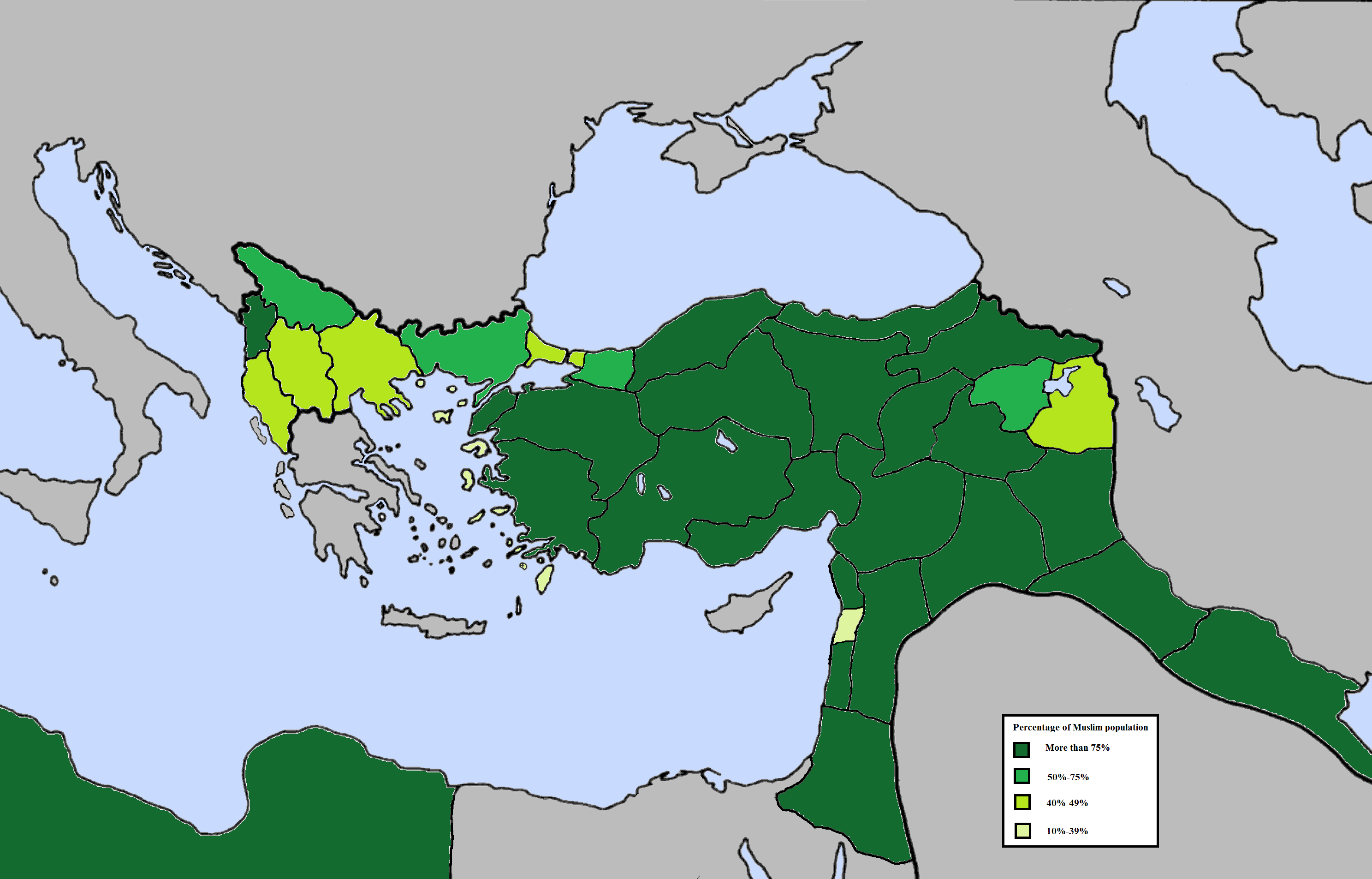
Europe during the period 1900 to 1915 was fraught with civil wars, unrest, and an Ottoman Empire which was at war with Great Britain. As can be seen by the map below, the Ottoman Empire covered most of the Baltic countries and large portions of the middle east. It is also worthy of mention that this was a Moslem Empire which Christian Europe feared. In Eastern Europe, Russia was flexing its influence as it held onto much of the territory it controlled when it became the USSR. In particular, it controlled most of Poland as we know it today. In 1905 the Czar ordered that all Polish men of a certain age be drafted into the Russian Army. Those who refused realized harsh consequences.

Muslim_population_Ottoman_Empire_vilayets_provinces_1906_1907_census

Ottoman Empire 1905


1_Russian-growth-1801-1914

Russian Czarist Empire


In the case of Italy, the country’s industrial north did not offer enough employment for Italy’s labor force. The Italian tendency towards large families made for an excess labor force. The excess labor force could find work neither on the farm nor in Italy’s factories, hence they looked towards America where, they heard, there existed a need for more labor. They also heard, falsely of course, that such labor, even though unskilled, was well-paid.

The social, economic and political unrest of much of Europe lead to its radicalization. Some were of the new socialism as outlined by Karl Marx and practiced by Trotsky and Lenin prior to the revolution. Conversely, Fascism arose out of Europe’s aristocracy against the growing socialist ideals. The common man found himself caught between the two groups in Europe with no place to run, except America.

The overwhelming majority of immigrants to America in the early 20th century were people coming from extreme poverty. They were indeed a cross-section of Europe embracing every type of religious, political and social belief. And as with any cross-section, among them were the anarchists and others who would prove troublesome to the established American public.

The epicenter of American radicalism in those days was in the small boarding house rooms of Greenwich Village. They were a small but vocal group who advocated the overthrow of the wealthy, the industrialists, and the powerful politicians by any means possible. Names like Emma Goldman, Edna St. Vincent Millay, Margaret Sanger, and John Reed seemed to most Americans to be the ones originating most of America’s radical troubles, but as with many things, the truth was something quite different.

When Leon Czolgosz assassinated President William McKinley, William “Big Bill” Haywood, Emma Goldman was extremely vocal in her opposition to violence as a tool of the anarchists. Margaret Sanger attended many anarchists meetings in Greenwich Village, but her purpose was to gain support for her settlement house in the lower east side and in getting aid for single mothers. John Reed was a journalist who was more interested in reporting on the anarchists, though he did agree with their views, the partaking in their political actions. Big Bill Haywood was an organizer for the Industrial Workers of the World, a socialist union whose prime member was the unskilled laborer. But in 1907 Haywood had been tried for murder in Idaho. Haywood was innocent of the charge, a charge that had been trumped up simply because local politicians hated him, and found innocent after his trial. But he could not shake being labeled as a murder and his presence always brought trepidation to any community he visited.

People like Haywood and Sanger took on the cause of the immigrant and were closely associated with the various new immigrant groups. When a strike broke out in Lawrence Massachusetts in 1912, Big Bill visited the city and both city and state leadership felt certain that riots and all sorts of violence were sure to follow. Again, the truth is far different. Haywood spent very little time in Lawrence and focused his energies on raising funds for the strikers in other parts of New England. He actually had no interest in being a part of the strike save the role of fund-raiser. But then dynamite was found at a house in North Lawrence and everyone was certain that the IWW and Big Bill were somehow behind it. A few days later it was discovered that William Wood, a mill owner, had planted the dynamite in an effort to discredit the efforts of the IWW to win the strike.

What in common between the events of the early 20th Century and those of this presidential campaign, is Donald Trump’s use of fear and xenophobia to activate an American public. Fear is common to all human beings and has been used to exploit people throughout the ages. Because we are in the middle of Trump’s plotting it can be hard to gain perspective, but it is perspective that will save us from foolish beliefs and even more foolish moves.

The immigrant is the life blood of America and their introduction into our country makes us stronger. And while it is true that there are elements in those immigrants who would do America harm, we are more than strong enough to survive their worst. Unlike much of the world, our country thrives upon its diversity. Our Constitution guarantees that diversity cannot be used against us.   And the words at the base of the Statue of Liberty bear remembering, Give me your tired, your poor, your huddled masses yearning to breathe free, the wretched refuse of your teeming shore. Send these, the homeless, tempest-tossed to me, I lift my lamp beside the golden door!”

Amen!

Christmas For Christians and non-Christians Alike


What is Christmas? It is the celebration of the birth of Jesus. But how would you feel if you were born on February 15 but no one celebrated your birthday until September? Well, that is exactly what happened to Jesus. He was actually born in the spring, no one really knows the actual date but the Bible itself hints at this plus historians know that the census Joseph and Mary were participating in happened in the spring. But the early Christian church had a problem, well, actually it had a lot of problems but with regard to the birth of Jesus they would have had to place his birth around the time of Easter. And how would that work? Celebrating the birth and death of Jesus in the same month, maybe even the same week? Their resolution was to take over the old Roman holiday of Saturnalia which was on December 25. This was done to displace one of the many pagan holidays with Christian holidays.

But Christmas as a holiday was really an invention of the 17th Century Christians. But not all Christians! The Puritans of America considered the holiday as blasphemous and did not participate.   And even with those who did celebrate it, it was ill-defined. An English tradition called wassailing was imported to America. In late 18th Century Boston bands of boys would go around the city banging on doors and demanding food. Needless to say, the gentry of Boston thought Christmas just a nuisance. And even in Charles Dickens’ A Christmas Carol, Scrooge was simply uttering the feelings of many Englishmen of the day, that Christmas was just an excuse for workers to get a day off. Similar sentiments were held in America.

But as the 19th Century rolled on, the first Christmas Card was invented, a minister wrote The Night Before Christmas for his children and the sentiment of good will and giving was born. The first American Christmas carol was written by Phillips Brooks of Andover Massachusetts in the 17th Century. That carol is Oh Little Town of Bethlehem. But most carols were written in the late 19th Century and 20th Century. The words of these carols usually speak of the nature of Christmas.

That said, I suggest that even though Christmas was born in the Christian tradition, it is no longer a strictly religious holiday celebrated only by Christians. Many people who do not believe in Jesus as a messiah or deity, celebrate the date none-the-less. Many in the American Jewish community will have both the menorah and Christmas tree in their homes. And if not the tree, then Christmas ornaments. It should be noted that the idea of bringing greens into the household is also an old Roman tradition that went with Saturnalia.

For those who are not Christian they can still celebrate the spirit of Christmas. The old idea and ideal of peace and good will should easily transcend all beliefs to be embraced by people of any religion or of no religion at all. The idea of selfless giving at this time of year can be practiced by anyone. It is my hope that this year when Americans consider the people of Islam they look upon them using the spirit of Christmas, good will to all. And this spirit should be extended to everyone of any belief.


Where Has America Gone?


I went to graduate school to study U.S. History. I have always wondered how we, as a country, have gotten to where we are. I still wonder that but at least now I have a good working knowledge of the forces which brought us to this day. I have a deep appreciation of George Santayana’s words: “Those who cannot remember the past are condemned to repeat it.”

I, like so many Americans today, look upon our Congress as the most dysfunctional body imaginable. The present Congress in its dysfunctionality is not, in my opinion the worst ever. That honor, if you will, belongs to the various Congresses which presided during our Civil War of 1861 to 1865. Both major parties where so horribly splintered it is amazing they ever agreed upon anything. It was only a few years earlier, 1856, when Rep. Preston Brooks of South Carolina attacked Sen. Charles Sumner of Massachusetts on the senate floor, literally with his cane, beating him so badly he required medical attention. Brooks was ostensibly defending the honor of Sen. Andrew Butler whom Sumner had earlier called an “imbecile.” For his actions Brooks was fined $300.

It is of note that members of Congress in the 19th century were seldom millionaires although most were from well-to-do families. They were elected because they espoused the desires of their constituency and, as in the case of Brooks, were willing to literally fight for those desires. Brooks was incensed over the personal verbal attack abolitionist Sumner made on Butler by saying, “Senator Butler has chosen a mistress. I mean the harlot, slavery.”  These men were obviously and heatedly devoted to those causes important to their state.  Sadly, I do not believe such can be said for any member of Congress today.

Every American has 3 representatives in Congress, two senators and a representative.  But if someone were to ask me what any of those three people has done for my state, Massachusetts, lately, I quite honestly could not say a thing.  I simply do not know even though I do my best to remain informed.

At its inception the United States could easily have broken apart into 13 separate countries.  After all, each state had long before adopted its own constitution, set up its own form of democratic elections, and put together a fully and independently functional state government.  But by 1783 the colonies had come to realize the value of coalescing into a single and strong central government.  Still, they were bitterly divided upon what that government would look like and how each state could maintain a reasonable level of autonomy within the structure of a federal government.  To that end they decided on an election process which provided for the possibility of a complete turnover of the federal government at 6 year intervals.

That process was designed prior to political action committees, huge and rich corporations, and even, yes, political parties.  Thomas Jefferson believed that their need only be a single party made up of the “wise and well-born.”  But Jefferson actually oversaw that exact change when he departed from the Federalist party line, with which he greatly disagreed, and stated the Democratic Republicans.  He realized that Virginia’s needs were frequently at odds with those of Massachusetts or New York.  The original fight over state autonomy versus federal regulation continued until 1868 and the adoption of the 14th Amendment which, in part, bars states from enacting laws contrary to federal law.  At that time states fought jealously to preserve the general good and well-being of the residents of their state.  They did this through those elected to Congress.

At the beginning of the 20th Century politicians who were called “Populists” saw well-moneyed interests exerting control of the US Government to the detriment of the individual citizen.  Industrialists like Vanderbilt had lobbied and secured eminent domain so they could gain control of otherwise privately owned property.  Rockefeller who was able to gain monopolistic control of the fledgling oil industry, Carnegie the same in the steel industry and other “tycoons” of the day.  Congress enacted anti-trust laws, monopoly laws and in 1934 the Securities and Exchange Commission.  It took well over 30 years but Congress properly recognized that corporate America had systematically diluted the power of the individual American for its own use.

From 1900 until 1980 Congress and the President did an excellent job of insuring that the rights of the individual American were not trampled on by a few powerful interests.  But when Ronald Reagan became President the executive and legislative elements of our government began undoing all the work of the previous 80 years.  Reagan used sleight of hand by breaking up the communications monopoly AT&T had created while his real agenda was something entirely different.  Reagan started the charge against the average working man when he successfully oversaw busting the air traffic controllers union.  It was an entirely unnecessary action as the power of the president has always allowed for his ending a strike when he believed the national interest and the national defense were at issue.  Previous presidents had used this power to end lengthy coal miners’ strikes for example.  But none ever considered breaking up a union as this would have been viewed as un-American.  He effectively declared open season on America’s unions even though the power of all unions was lessening and the frequency of strikes decreasing.

He then took aim at the federal regulatory process, in particular financial interests.  He declared that such institutions were too heavily regulated and unnecessarily regulated, that they were self-regulating by their very nature and in their own interest.  This gives rise to the question of why the stock market crash on 1987 happened.  Is it possible that the sudden deregulation had gone contrary to the public good?  Congress ostensibly righted that ship by putting in place laws which would limit or stop stock trading should the market give signs of being in a free-fall.  But the deregulation continued.

Since 1980 control of the Congress has switched between the Republicans and Democrats many times.  But they have increasingly shown an inability to come to a consensus of compelling domestic and foreign issues, not the least of which is the regulation of the giant conglomerates existing in the United States today.  While America’s infrastructure deteriorates at an alarming speed, Congress is having a food fight over taxes, entitlements, and defense.

No state and nor individual, conservative or liberal, is benefiting from the actions of today’s Congress.  If individual members of Congress were truly interested in the welfare of their constituents, they would be figuring out how many multiple trillions of dollars it will take to bring our infrastructure back to where it should be rather than allowing it to continue where it where it is.  Such an investment would of course greatly benefit corporate America but unfortunately they are totally devoted to their own selfish interests.  Every year corporate America spends literally billions of dollars lobbing Congress to do their bidding while trampling on the rights of private Americans.  For example, the energy industry has long touted how “clean” burning natural gas is while failing to reveal that in reality from its mining to its burning natural gas actually hurts the environment more than coal!  But who has more money to spend on lobbying, environmentalists or the energy industry?  The energy industry has done such a great job of championing their cause that they have been able to get local environmentalists to do their bidding, vis-à-vis closing coal burning electric generating plants.  It would be fine if they actually maintained the 3% pollution rate they claim rather than the 16% reality.

Starting around 2006 and continuing for the next 5 years the foreclosure rate in American sky-rocked mostly because of a mostly unregulated banking industry which allowed sub-prime loans to people who had little idea of the agreement they had entered into.  Worse, these very same large financial institutions were making bets on the success or failure of marginal investments.  It came to light that these institutions were cooking the books, so to speak, to justify what they did.  First came Enron, then Morgan Stanley, then Shearson, and so on.  A few failed but most were propped up thanks to the federal government, “too big to fail” was the war cry.  Why did it happen?  Deficient regulation and oversight.

Sadly, while all this was happening, Congress was kowtowing to the moneyed interests which got them elected while to some extent, if not completely, ignoring the welfare of the individual American.  Democrats and Republicans had obfuscated their duty to the individual American rather than anger the PACs which got them elected.

At this point I should come up with a solution.  Sadly, I do not have one short of saying America needs to toss out everyone who now populate Congress and put in new people.  That is not going to happen but something akin to it needs to happen.  Today’s members seem to feed on being antagonism and lack either the will or ability to come to any sort of an understanding with their adversary, they seem to believe that maintaining an adversarial relationship is the recipe for political success.  They use that very negative adversarial and contentious mood to invigorate those who voted them into office.  They sell it as acting in their constituents’ best interest when nothing could be further from the truth.  Members of Congress keep their attention focused on the next election and how they will get re-elected while subordinating the needs of those they represent.  Congress has become adept at selling Americans a ticket to hell and having those same Americans out beating the bushes for directions.

I fear for the future of my children and grandchildren, it seems very bleak right now.  I fear the America my ancestors fought and died for has been purchased by corporate America and that future governance is being decided in America’s boardrooms rather than America’s living rooms.  America is in desperate need of a revolution, a revolution that will empower them and put them back in control of their future.

Ten of the Nicest Small Cities in America


I have not been to every small city in America nor am I any sort of a travel guru.  However, I have been to a lot of small cities having been in 44 of our 5o states.  The following is an entirely subject view of what I believe to  be 10 American cities that should be on anyone’s list of must see destinations.  I do not  believe that any of these cities exceeds a million people in population.  Some, however, do exist in extended areas of over one million.  Excepting the first entry, they are in no particular order.

1.  Savannah Georgia — I consider Savannah to be the nicest small city in all of America.  When you drive into Savannah you cannot help but notice the Spanish moss hanging from the trees.  Although this is not unique to Savannah, when coupled with the beautiful old homes and parks of the city, it may be singular in that respect.  The downtown portion of Savannah can be walked, entirely, in about 15 minutes.  It is only about two blocks wide by 8 or 9 long, and sits next to its large port facility.  Just outside of the commercial portion of Savannah sits most of its stately homes which have frequently shown up in Hollywood movies, “Forest Gump” and “Midnight in the Garden of Good and Evil” were each shot there.  Renown for its friendliness, Savannah is a delight to all who visit there.  If there is not other small city in America that you make a must see, make this the one you do see.

2.  Portland Oregon — Portland sits on the Columbia River when it makes a sharp turn northward on its journey to the sea.  It is a very modern and very clean city that is steeped in the logging history of the northwest.  You drive 5 minutes from downtown Portland in any direction and find yourself in the gorgeous Oregon countryside.

3.  Oklahoma City Oklahoma — Oklahoma City is a sprawling small city.  If for no other reason you have to visit OKC for the food.  There are many many restaurants that serve either Mexican food or steaks that would put to shame similar restaurants in just about any other city in America.  It is also the home to the cowboy museum, a place where the old west is put on display and its history explained.  If you happen to go there during the summer, OKC has its own minor league baseball team which plays in a beautiful little stadium referred to as “the Brickyard.”

4.  Honolulu Hawai’i — This seems like a no-brainer right?  Waikiki is incomparable to its beauty and shops.  Waikiki boasts a large number of high-end stores that those of us of modest means can peer into.  But it is also rich in cultural history.  The Queen Iolani Palace, the cultural center, and even the pineapple field tours speak to its rich and long history.  Of course, there is also the Pearl Harbor memorial, an emotionally moving place to reflect on the tragedy of World War 2 as you stand a few feet above the sunken hulk of the USS Arizona.

5.  Sacramento California — Sacramento, like Oklahoma City, is a sprawling city that sits at the confluence of the American and Sacramento Rivers.  While the city itself is slightly over 100 square miles in size, the downtown portion is just a little over one square mile.  The capitol building and surrounding grounds may be the most beautiful of any of the 50 states.  The is also a portion, just a short distance from downtown, know as “old town.”  Old Town sits on the bank of the Sacramento River and is the oldest portion of Sacramento.  The building of this area are maintained to reflect an old west flavor.  Also here is the California Railroad Museum.

6.  Nashville Tennessee —  This, like Honolulu, seems like a no-brainer.  How can anyone not like the home of the Grand Old Opry.  Though rich in country music history, the city also boasts a lively blues music venue which has to be enjoyed.  But Nashville is more than just that offering a good selection of restaurants that serve a variety of southern cuisine, ribs, catfish, and grits have got to be tried here.

7.  St. Augustine Florida — St. Augustine is the oldest city in the United States.  It Spanish heritage can still be found in its architecture and food.  It also has long stretches of beautiful beaches that are not congested with the crowds of Floridas more southern cities, and yet rival them in beauty.

8.  Santa Fe New Mexico — Santa Fe is a beautiful combination of Mexican adobe architecture and native American culture.  The city sits in the foothills of the Rocky Mountains amidst the scrub pine.  It is a quaint small city of just under 70,000 people where you can lose yourself in its tranquility and beauty.

9.  Salt Lake City Utah — Salt Lake City sits snugly between the towering Rocky Mountains to the east and the Great Salt Lake to the west.  Founded by the Mormons in the 19th Century, located in its northern portion is the huge Mormon Temple, a beautiful cathedral-like structure that is central to the religion.  During the late spring the city has a stunning vista of the still snow-capped Rockies.

10.  Burlington Vermont — The largest city in Vermont at about 43,000 people, Burlington sits on the shores of the gorgeous Lake Champlain.  The city is the center of commerce for what is called Vermont’s “Northern Kingdom.”  Its downtown area has a large collection of quaint shops and small comfortable restaurants.  The lakeside portion of the city boasts a nice combination of boat rentals and tour boats.

I also want to offer ten other cities, without comment, that I consider worthy of visiting.  1.  Portland Maine, 2. Louisville Kentucky, 3. Charleston South Carolina, 4. Bar Harbor Maine, 5. Gettysburg Pennsylvania, 6. Laramie Wyoming, 7. Richmond Virginia, 8. Napa California, 9. Lake Tahoe Nevada, 10. Provincetown Massachusetts.

Whatever Happened to the American Dream?


The simple answer is ‘it is alive and well.”  But the form it takes varies greatly.  That form is, of course, defined by whoever has that dream.  But like so much of what I write, this subject needs a little history behind it.

The first people to have a dream that America could possibly answer were English merchants, followed by the group of separatists we now call the Pilgrims.  They were followed by the Puritans.  Each of these first three groups had their own separate and specialized version of the new American dream.  The English merchants saw huge economic possibilities in the New World.  The Pilgrim came purely for religious freedom, and the Puritans for a combination of both, religion and  business.  All three groups realized the American dream, some quickly, some a little more slowly.

Through 1945 at least, the idea of freedom of some sort, religious, business, personal, was the single most attractive part of the American dream.  Even when immigrants were sold a bill of goods, as the Italians and Poles who were recruited at the beginning to the 20th century to work American factories with the promise of riches, many had come to escape the persecution of the Tsar, military impressment, and starvation that the Italian immigrant had known.  They were huddled into ethnic masses, ghettos, in America’s cities, and while the original immigrants found it difficult to escape the squalor they found themselves in, most quickly came to realize that the potential for their children far outweighed whatever shortcomings they had endured.

But the end of World War 2 saw the return of over 2 million soldiers to the American economy.  The federal government, remembering the economic travails of World War One vets, decided to give veterans a way to buy their own homes through the Veterans Administration which gave rise to the VA Home Loan.  World War One vets had felt abandoned and when the depression hit, they formed what was called “Hooverville” right next to the capitol building.  They were a constant reminder the president and congress of the unfilled promises made them following WWI.

Enter a man named William Jaird Levitt.  In the late 1920s he developed an idea of selling a large tract of affordable housing to upper middle class Americans on Long Island.  The idea, while successful, was derailed by the depression.  During WWII he won a large contract to build housing for the navy.  But when the federal government came up with the idea of government guaranteed loans, Levitt cashed in by creating an entire town on Long Island, Levitttown.  Small tract houses were advertised to the veteran as a way to realize the American dream, at least as defined by Levitt.  Levitt invited ex-servicemen to visit his model house and see how they could cash in on the new American dream, a house, a car, a wife, and two kids.  That advertising ploy was hugely successful, so much so, that some years later Levitt repeated his idea in Pennsylvania.  But now, burned into the American psyche, was this new version of the American dream and it has survived to this day.

In 1922 Congress passed an immigration law, the first of its sort, the limited the number of immigrants who could enter the U.S.  The law, hugely racist, was passed using 1900 immigration figures as the basis of who could enter the U.S. and in what numbers.  In 1900 the largest portion of immigrants came from northern Europe.

On April 30, 1975, the American embassy in Saigon Vietnam fell to the North Vietnamese communists.  Americans saw on their television hundreds of Vietnamese, friends of America they were called, being airlifted off the top of the American embassy.  Shortly after that hundreds of Vietnamese who feared for their lives took to boats to escape their native land.  They became known as the “boat people.”  Most of those refugees were welcomed to America in no small part because of American guilt over what had occurred in their homeland.  The point here is, first, America made an exception to the immigration law, and second, but more importantly, these Vietnamese had an American dream in their minds that did not include a house, a car, and two kids.  Their dream was a throwback to the original settlers of English North America and the immigrants who came through the early part of the 20th Century.

Today’s politicians are selling the American public the idea that the American dream includes a right to a job, a right to very low taxes, and a right to feel entitled.  Those three things are a gross exaggeration of reality.  At the beginning of the 20th century poor immigrants desired one thing and one thing only, a chance.  They did not feel entitled to anything.  I think Americans today believe the American dream should be given to them and not worked for.

The American dream is alive and well, it is just not the one being sold by the politicians.  It is not up to the government to find you a job.  It is up to you.  It is not up to the government to lower the unemployment rate, it is up to business.  You are not entitled to a car, a house, or anything else save a chance equal to that of anyone else.  The American dream is the chance to lead a happy and successful life according to your own definition of what that looks like, and nothing more.

Who Owns God?


If you went to church with me when I was a kid, you would have heard that God was properly defined by the Roman Catholics, and everyone else had an incorrect version.  And that was even after Vatican II.  While Catholics certainly have moderated their world view of their religion, it still reeks of “we got it right.”

In today’s world we hear a lot about the Moslem version of God.  I think it fair to say that their view is an extremely unpopular one here in the United States.  That probably includes most Moslems who live here as well, but that is just a guess.  I say that because it is my firm belief that most Moslems who live here have adopted a very moderate, or mainstream, view of God.  They certainly are not the ones yelling, “death to infidels!”  And they certainly are not advocating a jihad against America.

These most basic of feelings that all humans seem to hold, that of a person deity, are the very reason I speak up strongly for the separation of church and state.  We are the only country in the world, that I know of, that has this admonition.  Those Americans who want God worked into portions of our government would do well to ask themselves, which God.  That is, which particular religious slant on God are you in favor of?  You have to choose simply because there is no generic God that I have ever heard of.  That is because as soon as you evoke the name God, in each person’s mind this takes on a very particular point of view.  Hence, our forefathers understood that extremely well and they did not want a Church of England God, or even one of their homegrown versions to have any place in our government.

Since monotheism has existed there has always been a mix of God and religion.  For most of history men have been incapable of separating the two.  Mostly, they have had no desire to separate the two.  I believe that is because they have the notion that there has to be a mixed for a society to be successful.  For a long time that actually worked.  Prior to the 20th Century most societies lived almost entirely within themselves.  Tribalism, as sociologists call it, defined a religious belief and that tribe in turned formed a government for itself.  The people were monolithic, that is, all of one kind.  Until the 20th Century it was not at all unusual for a person to never travel more than 20 miles from where he was born.  That meant these societies were so homogenous that singular beliefs usually worked.

Still, certain groups of people decided even before the 20th Century that their take was the proper one and anyone not so defined was a “heathen.”  For Americans, a great example of this was the European view of the Native American cultures.  Even those Native Americans were mono-theistic, since the did not refer to “God,” and did not understand the European concept, it was clear to those European that the Native Americans were obviously heathens.  Many organized religion set out to bring Christianity to a group that neither wanted nor needed Christianity.  They were mono-theistic and it was Christian ignorance that brought on the problems.  Christians had a long history of such foolishness.  The Inquisitions of the 15th Century and before that the crusades to the middle east to ostensibly recover the Holy Grail.  I say ostensibly because the true reason was the European belief that old Christian churches were somehow being desecrated by the Moslems.  Just a little bit of education by the Christians about the Moslem religion would have shown them that nothing could have been further from the truth.  Even so, I doubt that would have stopped them.  Ignorance and passion have a way of getting together in mankind to bring death and destruction to anyone who has the temerity to believe something different.

I have serious problems with the way the Moslem religion is practiced in the Middle East.  Even in today’s world they are still little more than second class citizens in their own societies.  In Saudi Arabia they cannot drive a car.  Why?  I have not a clue.  In many countries in the Middle East, a woman found guilty, or even suspected, of infidelity to her husband is subject to stoning and death.  Most such countries also require her to wear a burka, to one extent or another.  Men, on the other hand, are not hindered by any such restrictions.  Even the adulterous husband does not fear for his life.

But I can allow for that a whole lot more than some of the practices that are going on right here in America.  These days in America there is more religious intolerance than I think we have had at any time in our history.  And I am a US historian by degree so I can say that with some conviction.  The native Americans of Massachusetts had a word for religious tolerance that bears remembering, “Chargoggagoggmanchauggagoggchaubunagungamaugg,” which means, you fish on your side, I fish on my side, and no one fishes in the middle.  They were all about peaceful co-existence.

Conservative politicians in America have taken God hostage and are holding him over the heads of Americans.  They tell us how our morals need to be shaped.  They do this via their own religious background.  They are openly contemptuous of anyone who dares believe anything different as well.  They are smart enough to live the name God out of their discussions, but if you could nail one of them down on the origins of their belief, which I doubt you could, they would have to admit that it is directly tied to their God.  One of the great debates in America today is over gay marriage.  Those against it say it is somehow ruining the institution of marriage.  Really?  How is that a country that has literally hundreds of definitions for religion can only have one with regard to marriage?  I find that rather peculiar, and rather disingenuous of anyone to make such a claim.  For centuries in this country the acceptance of marriage free from all religious entanglements has been understood as an absolute right.  If two people desire only a judge or justice of the peace to declare them legally married does that not separate marriage from all religious views?  The corruption comes when people insist that when the marriage is between same-sex individuals somehow God has to be magically introduced into the equation.  That is some of the worst logic I have ever heard and yet, it is the conservative Christians of this country who had taken God and force-fed it upon our entire society.  They tell us that their version of God and marriage are the correct one and God help anyone who differs with that version.

I have many friends who have very conservative Christian views of the world.  I am happy for them.  Some I even admire in the way they practice their religion.  I think they know better than to tell me what is moral and what is not.  They simply are not interested in hearing my lash out at them, and they know they will.  But Americans have become extremely lazy about the separation of church and state.  Instead of finding abhorrent anyone trying to force via legislation morality upon them, they allow politicians, PACs, and religious groups to get away with exactly that.  They are allowing those groups ownership of God, and in doing so, allowing for a particular take on God to be foisted upon all Americans.  It is time for that to stop!  In fact, it is long overdue.  The death of this country is very likely to come from religious zealots who have little tolerance for opposing views.  They are still living in 16th societies that no long exist.

Americans gasp when they hear about the religious intolerance and excesses of the Middle East.  But Americans need to take a second look at themselves.  Are we not doing the same sorts of things?

What the Attack on Pearl Harbor Really Did to America


December 7, 2011 marks the 70th anniversary of the attack on Pearl Harbor by Japan.  Most people see that as America’s entry into World War 2.  That is actually not true, as I will show later.  But just as importantly, the attack changed the complexion of America forever.  It was America’s coming of age in the world, if you will.

Prior to December 7, 1941 America was an isolationist country that had not ever fully participated in a war in Europe or Asia.  You may say, but we were in World War 1, and you would be correct.  But our participation in that war was fairly brief.  Even though we declared war on Germany on April 4, 1917, it was not until the spring of 1918 that the first US troops arrived in Europe.  A little over six months later the war ended, and while the US did sustain substantial casualties, its involvement more hastened a battle weary Germany to the armistice.

The post World War 1 scenario had the US taking a decidedly isolationist role in the world.  US troops strength was greatly reduced, its air service was almost discontinued, and its navy gutted.  Although the US and England had assumed leadership of the oceans, the US largely left such duties to the English.  Although the US doubled its troops strength between 1920 and 1940, those troops were not prepared to fight a war.  While the navy had built some new ships to replace its old ships, as Pearl Harbor illustrated, the majority of the Navy was a fleet of obsolete ships.  All the battleships at Pearl Harbor on that day were of World War 1 heritage or older.  The aircraft carriers that the Japanese had as their highest priority were, to say the least, underwhelming.  On December 7, 1941 the Navy had a total of eight aircraft carriers on its roster which included the first carrier it ever owned.  That carrier, the USS Langley, was sitting in the Philipines and never saw action.  Two of the three remaining carriers were the ones stationed at Peal Harbor.  These ships, the Lexington and the Enterprise, were at sea at the time of the attack.  The USS Saratoga was en route to San Diego.  The rest of the fleet was assigned to Norfolk Virginia.  The Japanese feared the carriers in particular and the reason was for exactly what they did to Pearl Harbor they realized could be visited upon Japan.

To say the least, the US never saw the attack coming, although there had been plenty of warnings.  Not the least of which was by one General William Mitchell who at his own court-martial in 1926 had predicted that the Japanese would attack the US at Pearl Harbor.  US leadership scoffed at the idea citing the close relations the US enjoyed with Japan at the time.   But between that time and 1941 Japanese militarists had taken virtual control of their government and had begun a campaign of imperialism in China and southeast Asia.  It needed the raw materials necessary to maintain a sizable army and navy.  These included oil, iron, and rubber, none of which Japan had within its borders.  After Japan invaded Japan the US cut off oil and scrap metal exports to Japan.  While the US viewed the action as diplomatic, Japan’s leadership viewed it as a virtual act of war.  By 1939 Japan knew it would have to deal with the US in military actions and prepared for that.  Its attack upon Pearl Harbor was an action it had practiced in great detail for well over a year prior, to include finding a port area on its own shores that doubled as a Pearl Harbor look-alike where it performed many bombing runs.

In 1939 when Germany attacked Poland President Roosevelt already knew he would have to fight a war in Europe eventually.  But FDR and his advisors knew very well that the people of the United States were in no mood for a foreign war.  To that end, when he ran for president in 1940 he did so saying he would keep the US out of the war in Europe.  Even though he had already accepted that we would have to fight a war in Europe, neither he, nor anyone else, suspected that the impetus to fight that war would come from Asia.

While FDR knew that any substantial increases in Naval strength would be noticed by the world community, he felt that updating the air service could be done fairly easily.  The truth to this is the fact that only two new aircraft were developed between 1941 and 1945, the P-51 and the B-29.  The entirety of the remaining inventory was in production at the outset of the war.  The Army Air Corps actually had more aircraft than pilots at the outset of the war.

After England and France sustained huge loses at Dunkirk, England requested immediate assistance from the US in the form of troops and material.  Then, as now, the president could not commit troops.  FDR recognized he also could not send ships and other material without getting the wrath of the Axis and the American people.  To circumvent this, FDR entered into a “treaty” with England that became known as the “Lend/Lease Act.”  The act allowed FDR to lend or lease mothballed ships to England.  Once that commenced merchant marines and other cargo carriers supplied England with the aircraft and other materials it needed to sustain the war with Germany.  By mid-1941 the US was in a virtual fighting war with Germany already as German submarines had attacked many of the convoys.  The US Navy had been escorting these convoys and had returned fire.  For all intents and practical purposes we were at war with Germany but since there had been no signficant loses of American lives, FDR could not declare war.

It is not unreasonable to infer that where America was, and is, an immigrant nation, and that a significant portion of the US population were first or second generation immigrants from the warring nations, a substantial portion of Americans might view such a war against their relatives as being undesirable.  The biggest reason, however, was that the average American could not imagine a scenario where Germany would bring the war in Europe to America’s shores.  The US population did not have a stomach for a foreign war as it still had a good memory of how ugly World War 1 had been.

Americans in November 1941 were apparently blissfully unaware of the presence of German submarines patrolling the US Atlantic coast.  The war in Europe was at our doorstep even though it had taken no aggressive action.  Americans may have also been lulled into a false sense of security by the British having sunk Germany two most dangerous warships, its battleships Bismark and Tirpitz.  Germany had no active aircraft carriers and had only one unfinished in a port.  At the time trans-Atlantic flight was confined to small aircraft and all larger aircraft made the trip via Gander Newfoundland or Ireland.  The US did have such capability but this was not something the average American knew.  This fact is shown by the fact that on December 7, 1941, while the attack on Pearl Harbor was underway, a number of B-17s were flying into Pearl Harbor from the US west coast.

The attack on Pearl Harbor was enough to completely change the American attitude of going to war.  The fact that American ships had been sunk and American lives lost was more than enough.  But the Roosevelt administration felt the average American could not understand the extent of the death and damage done at Pearl Harbor so the details of the attack and pictures of the attack were kept from the American public for well over six months, and even then it was judiciously released.  The few pictures that were released were done in the Saturday Evening Post, and other such picture magazines.  FDR got the press to agree to an embargo on information and to censorship.  For the duration of the war all press releases had to be authorized through the War Department.  Few objected.

Now, exactly 70 years after the attack on Pearl Harbor, it can be difficult for us to imagine the American landscape on that day.  America was truly a sleepy country but it leapt into action, and, as Japanese Admiral Yamaguchi, who headed the attack on Pearl Harbor, clairvoyantly said, “I fear we have awakened a sleeping giant.”  American sprang into action and almost overnight industry was converted from making cars and refrigerators to making tanks and aircraft.  America woke up and vowed never to be asleep at the switch ever again.  America built war ships at a mind numbing rate.  At one time Henry Kaiser, who built the “Liberty Ships,” completed a ship in slightly less than five days.  The US took the lead militarily and has never looked back.  Americans have since overcome any urge to revert to isolationism as well.  Pearl Harbor did a lot more than bring the US into the war.