You Do Not Ever Need to Feel Lonely Again


I am struck by how many people say they feel lonely a lot. Why is this? Is it because they do not have a mate? Is it because they do not know what to do with themselves? Is it because they are depressed?

I will start with the last thing first. Depression is a medical condition which requires treatment, first and foremost, by a psychiatrist. I hear many people say they went to their primary care physician to deal with it. If the primary care physician is not immediately referring such patients to a psychiatrist, shame on them! But once that condition is stabilized, the following suggestions apply to them equally as with someone who does not have depression.

The first thing you might do is read a book. Figure out which types of books are likely to be of greatest interest to you. Expect to find some that, after reading a book or two, did not hold you as you had hoped. Move on to another genre and do not stop until you have identified at least two genres that please you. Once that is accomplished, play a game with yourself to read as many of these books in a month as you can. Of course, libraries are a great resource in finding books but if you end up like me, you use your local bookstore to find them. And once you are done with them, please, do not throw them away. Simply put them in the library’s return book area or drop off device and be certain they will be welcomed.

Next, get outdoors and walk. Even walking is a great source of exercise but as another use, you can get out into nature and enjoy her. Most people own an automobile, so if you live in a city, make no excuses about there being nothing to find in the city. I can easily combat that idea, but that is for another time. In the countryside, find a walking trail. Walk slowly with the determination to find as many different animals as you can. Even when I am riding my bicycle, you would be surprised by all the animals I saw. And oh yes, bring a camera with you. You may see some animal you have seen frequently, but this is a photographic notebook of your travels. And no time of year is not good to do this. Once you start see certain animals and birds, of course, many times, find a spot where you can rest and watch these creatures in their habitat. Note how they move and which of their species they move with and how they do it. One thing you will find, birds love to be in the company of another of their species but of the opposite species gender. Note the color differences. If the bird is brightly colored, most likely it is a male. But do not stop a birds, notice bugs, and if you have the stomach for it, spiders, they are the most resourceful and creative of all insects, in my opinion. And for a mind blower, remember that scorpions are related to spiders!

Another thing to take note of is the flora of the woods. In northern climes, see if you can spot a lady’s slipper, a type of orchid which is rare but not impossible to find. If you see one, there are probably others near it. But do not pick them! They are an endangered species. Of course, also in nature are trees. There are nine different types of conifer trees, pine trees. There are 35 different species of elm tree, there are 600 different types of oak tree, there are 17 types of walnut tree, there are 13 different types of cedar tree, and the list goes on.

Can you find edible plants? There are 120,000 types of these plants.

Wild flowers abound and figuring out what you are looking at is a challenge unto itself.

I recommend that your purchase some of the different books that apply to each of the things above: trees, birds, wild animals, edible plants, rocks and other things.

Finally, if you find yourself “stuck” in the city and cannot get out for any reason, take a walk along the sidewalks. As you do and come upon a building you think is old, look up and find some of the most amazing architecture. Modern buildings are cold and without merit. But buildings dating back to the 1930s and earlier, were built with a lot of pride. You will find cornices, finials, balustrades, arched windows, colored glass, and windowed and non-windowed domes, some with bells. There are many other parts as well but that is what you will need to identify. Start with the easy buildings, old public libraries and other public buildings. Take pictures of these buildings, make a written note of them, such as what the picture is, and take them home and research them. It is not impossible to find a building dating back to the 1850s, or earlier! Note the progression of styles. Find out what their original use was. Let’s say you live in New York City. There are two buildings of note that I would bet most New Yorkers know nothing of their history. The first is the Flatiron building and the other is Grand Central Terminal.

Each of the things noted above are things you can do alone. And some beg you to do them alone. But the important part of all these exercises is that you will not feel alone while doing them and you cannot help but learn something new, never a bad thing.

One last important note. If you find yourself drinking every night or everytime you feel lonely, consider the case that you might be an alcoholic. Call your local Alcoholics Anonymous Service Center and talk to whoever answers. They are alcoholics in recovery and can give you some useful guidance.
It Isn’t Easy Being Human


I remember when I was a college freshman, a professor asked the question, “what makes us human?”  He was asking us to answer what separates us from any other animal on the face of the earth.  I do not know the answer he gave, but I know the answer to be our ability to make a weighted and thoughtful decision.  No other animal, when faced with something, stops to consider its options.  All animals, except human, act purely on instinct.  Animals cannot make decisions as humans do.  They draw entirely on experience, Pavlovian, and instinct.  Animals also always exist entirely in the moment.  A German Shepard does not distinguish between his own breed and any other.  All he sees is another dog.  We humans should be so blessed.  It would certain make for a lot less animosity.

But the single thing that separates us most of all from all other animals is the fact that we have the knowledge that one day we will die.  No other animal, without exception, has any concept of mortality.  They never consider what things will be like next year.  They are entirely involved with living today, and assuring their continued survival but without regard to death.

We, as human beings, make hundreds of judgement decisions every day.  Sometimes we fail and we recognize that we have failed.  The concept of failure is not in an animal’s mind.  Animals do not think that they failed, they are already moving on to their next plan that will fulfill their need.  We humans would do well to take that approach.  Unfortunately, many us get bogged down with our failures and allow those failure to rule our lives.  We think we are “failures” rather than accept that failure is a simple fact of the entire animal kingdom, and is seldom a moral issue, another thing animals are incapable of, moral judgement.

Regardless of what you may think, no animal now, or ever, has ever been evil.  Evil is an entirely human concept.  Animals kill other animals because they are protecting their young, their territory, or for food.  The mountain lion does not kill the deer because he hates any particular deer.  He kills it for food.  Bears attack humans because they usual perceive us as a threat to their territory.  A polar bear will actually track a human down and kill him, but that is because he sees us as prey, not because he dislikes us.

In the entire animal kingdom, except for humans, survival of the fittest is an absolute law.  We humans, however, do not have to follow that law.  We have the ability to help the “less fit,” those who are weak, sick, mentally deficient, etc.  How much and how well we do that is a matter of choice.  Had other species been able to make such judgements, the woolly mammoth of North America for example, they would still exist today rather than having fallen into extinction.  Because we are capable of understanding we have an immediate obligation to help and to understand our fellow humans.

It was not until the mid to late 20th century that humans had any real understanding of mental health.  And because we are at our hearts animals, we tend to deal from our fears and too often let those fears control our actions.  It is known today that a very large portion of our population, at some point in their life, suffers, even briefly, from some form of mental illness.  Most common, of course, is depression.  There are those who suffer from what is called clinical depression, and who suffer for a long time, if not a life-time.  Then there are schizophrenics, bi-polar, psychotics, who require intense and life-long treatment.  Those people suffer the largest degree of alienation from other humans even though their disease is truly a disease like cancer, chicken pox, polio, or any other disease humans suffer from.  The difference being that diseases of the mind cannot be seen except in their outward manifestations, and that scares us.  We become uncomfortable when we are around such people.  But what we need to remember is our responsibility to them is no less than it is to anyone else, maybe more so.

On any given day we humans are bound to make a goodly number of mistakes in judgement.  Most such mistakes we do not make much of, and are soon forgotten.  Once in a while a mistake rises to something more serious.  When such things happen one of the most foolish things we can do is to dwell on the mistake, and beat ourselves up over it.  The most healthy thing we can do is to apply the appropriate fix and put it in our rearview mirror.  There seems to be something unnatural to humans in doing that, but it is actually the most healthy thing we can do.  If we can learn one very good lesson from the rest of the animal kingdom, we need to learn how to live in the moment.  It is impossible to change history, regardless of how shameful, but as humans we do have the good fortune to not repeat of our mistakes by simply making a mental note of what did not work in the past.  Animals are incapable of such behavior.

It is truly not easy being human, but it is extremely rewarding.  Unlike our animal friend, we know we exist and we can do something about how we exist.  Still, happiness is generally a choice.

Never Kill a Spider


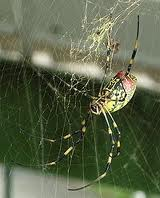
My wife, and a lot of other people, see a spider and the first thing to go through their mind is how to kill it.  Now I do understand the desire of people to have spider-free homes but I do not agree with their techniques of ridding themselves of them.  You probably think I am some sort of tree-hugging liberal.  I do not hug trees.  I used to climb them but have never hugged one, nor do I have any desire to hug one.  But I have a principle that says “never kill anything that removes pests you do not like.”  Spiders feed on flies and mosquitos, two insects I have no problem killing.  If I could speak to a spider I’d say to her, “listen, you take care of those  pests on the outside and I will take care of them in here.”  Anyway, I take a paper towel, very loosely bunch it up, and gently remove it from the house to the outdoors where it can do some good.

People need to remember that the biggest pest in the entire animal kingdom is the human.  No animal, rats included, are dirtier.  I am sure you think I am crazy now because I included rats.  Not at all.  Zoologists point out, when asked, that the disease rats carry almost always is because of humans.  Rats are natural scavengers, and they go where the easiest food supply is.  Ergo, find where humans live and you will find a ton of “food” for the rat.  Take that very same rat, put him far out in the wild, and what you will find is an extraordinary neat and clean animal.  That includes the “rat’s nest.”  A squirrel’s nest, the rat’s cousin, is never thought of as being a dirty place even though he builds his house almost exactly the same way.  Now, as to killing rats, not a problem.  Their disease carrying tendency is why, unlike the poor spider which carries no diseases at all.

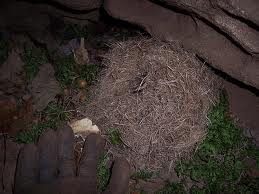
rat nest

squirrel nest

If you compare the two nests above you will find little difference between them.  In the wild the only difference is, squirrels nest in trees and rats nest on the ground.

I have absolutely no fear of snakes, nor do I look upon them as being evil. Many snakes feed on something we could do without, rats. Snakes are curious animals. Lacking teeth, they eat their prey whole and slowly digest it. Snakes are no in the least bit interested in living in close proximity of humans, anymore than most people are of them. When I lived in Italy, a couple of friends of mine came across a snake in the grass. Not fearing him I reached down and picked him up. Fortunately I knew about picking a snake up behind its head. Unfortunately, I picked him up about an inch too far behind his head. The snake whipped around and tried to sink his fangs into my thumb. Fortunately, for me, all he got was my thumbnail. I quickly dropped him but one of my friends, in spite of my protestations, stomped him to death. That was entirely unnecessary. The snake was rightfully protecting himself and had I left him alone nothing would have happened. The point is, to find a snake you generally have to be somewhere in the wild. There are exceptions, people who live in desert areas will tell you of encounters in their backyards with rattle snakes and others. But even so, we need to remember, it is we humans who have invaded their territory and not the other way around.

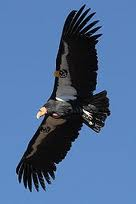
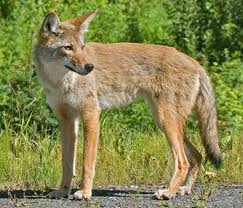
We human beings are supposed to be pretty smart but there is a wealth of information that tells a very different story. There is no better example of man’s insensitivity to the natural inhabitants of an area than in Southern California. There are few places in the world where man’s invasion has done more to hurt indigenous animals. The condor of California almost went extinct because of such human infestation and insensitivity. Californians complain about the coyotes and other desert dwellers who roam their backyards. Hey, they were there first! Time to learn to live with them. Even more, it is time to accommodate them.

California condor

California coyote

Hawaiians have an interesting way of looking at a reptile that likes to wander into their houses, the gecko. They claim geckos are good luck in your house and warn against killing them. Good for them! They do not bite and if you want them out, remove them but do not kill them.

gecko

One thing is a constant in the animal kingdom, except for those who think they are smart. Animals give very clear signals of their intentions. They are, if you take time to understand them, very easy to deal with, as a rule. Give a snake a wide berth, he will not bother you. Do not corner an animal, he will not likely attack.  If you stay away from a mother who is caring for her young, she will allow you to pass in peace.  Remove a spider from you house into the great outdoors, and he will do you a huge favor by killing a mosquito that might have bitten you or by killing a fly who might have landed on some of your open food.

Killing ants, cockroaches, hornets, bees and termites in your house is understandable.   But if you find that a squirrel has taken up lodging in your attic or wall you can be assured he found a defect in your roofing or walls.  Thank him for it and find how he got in.  Get someone out to your house who knows how to draw him out without killing him, it is possible.  Extermination should always be your last resort.