Nature’s Wonderland Just Past Your Doorstop


A little over 15 years ago, after I had my heart attack, I decided it was time to get off my dead ass and exercise. The only thing I could think of was jogging. I found a pond in Wakefield MA, Lake Quannapowitt, that has a path entirely around it and has a length of roughly 2.5 miles. I started out run, walk, run, walk, each day. And each day I did a little better. When I was at the top of my game, so to speak, I was able to jog around that body of water 3 times non-stop. But then I moved and had to find a new location. I actually found two, both in Cambridge, Fresh Pond and the paths along the Charles River and so I began to jog them regularly.

My knees were hurting me so I consulted my doctor who advised me to act my age, that I was not 25 anymore. He was fine with the exercise but jogging had to go and so I join a gym which was good for about a year. But I find gyms boring, really boring. It then occurred to me how much as a child I had loved bicycling. More than once I literally rode a bicycle into the ground. One time the joint at the front fork and the cross bar broke. Anyway, I bought a cheap bike, about $300 and headed off for the Minuteman Railtrail. This pathway starts in Cambridge and travels through Arlington and Lexington and ends just short of Bedford center. The trail itself is roughly ten miles in length and for the most part travels through wooded areas.

While riding the trail I noticed lots of squirrels one of which was totally black and another which was totally white, both rarities. Our local squirrels are of the common gray squirrel variety. And the of course right next to them are the chipmunks.

9031_least_chipmunk_kohl

These guys love to play chicken with you as you ride along and sad to say one was not quite so quick as he thought when I could not avoid him and ran over the little guy. It made me terribly sad.

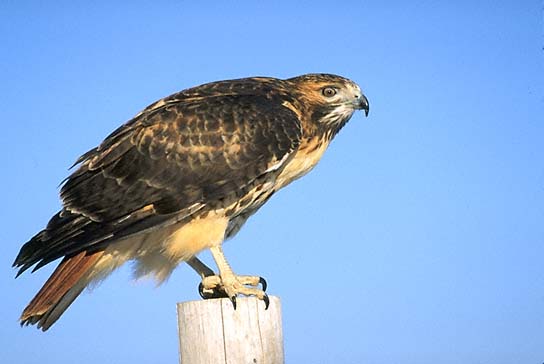
Another creature I see quite often on this trail is the red tipped hawk.

BD0094_1l

This breed of hawk is common to our area and you see lots of them. But they own the woods along the trail and are fearless creatures. I had one alight on a pole just in front of me as I was moving along, similar to the one above, and stare me down. His obvious power and beauty are breathtaking. I could watch this bird for hours on end as he goes about his business. In flight he is a thing of beauty, barely flapping his wings as he adroitly glides on the air currents, the updrafts and the ambient winds.

One day as I was returning home on the trail I came across a rather large doe. Now I have seen lots of deer in my travel but this one was standing on a small rise a few feet away from the trail, her body parallel to the trail. I stared at her, as she was truly beautiful, and in return she snorted at me as if to say, “what are you looking at?” The picture below is a pretty good representation of just how she looked at me.

untitled

The most surprising creature I ever came across was a wolverine.

1280px-Gulo_gulo_2

Now this guy I did not see along the rail trail but caught him crossing Route 2A in Lincoln MA but yes, I was on my bicycle. I honestly did not know what I had just seen but his fur was much more brownish than the one above and he moved very quickly across that busy highway. What I have found out since about wolverines, having watch a Nat Geo (I think) story on them, is that they are elusive to the extreme and they number only about 200 in the lower 48. Unfortunately, even had I had a camera at the ready it is unlikely I could have gotten a picture of this guy as he quickly disappeared into the brush next to the road. I also found out that a wolverine can claim upwards of 300 square miles of territory. The Nat Geo story said they were thought to be extinct east of the Mississippi until the camera crew found one in Michigan. That may be the only time I will ever see this guy but it was worth the price of admission.

blue heron

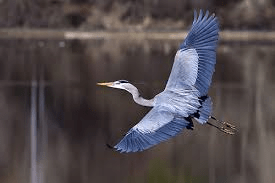
The bird above is known as a great blue heron. He has a wing span of roughly 80 inches which translates to about 6 feet 8 inches! There is a marshy area along the rail trail in Lexington and right next to the Lexington land fill when this bird frequents. He is simply gorgeous and I always hope that when I come upon him standing in the swamp that he will decide to take flight and give me a great show.

Other animals I regularly see are cardinals, house cats, beavers, crows and the occasional turtle. The point is, if you ride up and down this path enough you will eventual see many of nature’s creatures in their natural habitat, and that is wonderful, always.

There is a rail trail in every state of the lower 48 and I highly recommend that you find one which suits you and travel it as much as you can. You should be both surprised and amazed at the woodland creatures you will come across in your travels. And that is a trip worth all the time and effort you can give it.

Rails to Trails Conservancy


On October 2, 1968, the US Congress passed the “National Trails Act.”  Then on January 1, 1976, the Railroad Revitalization and Regulatory Reform Act under which the “Rails to Trails” program was inaugurated.  From there the Rails to Trails Conservancy, a not for profit organization, was founded and has actively worked to transform over 9000 miles of abandoned railroad right-of-way to trails which the public can use for both commuter transportation and recreation.  Today, there are more than 1,600 preserved pathways that form the backbone of a growing trail system that spans communities, regions, states and, indeed, the entire country. (http://www.railstotrails.org/aboutUs/index.html)

In my own state, Massachusetts, I regularly use the Minuteman Bikeway, an 11 mile route which extends from Cambridge to Bedford via Arlington and Lexington.  There is also a 2nd spur, not part of the Minuteman, which extends from Cambridge to Somerville, approximately 2 miles.  Both these paths are heavily used.  During the winter months Cambridge, Arlington, Lexington and Bedford plow the path following snowstorms.  The Cambridge to Arlington portion is particularly heavily used by commuters who take the subway to its end in Cambridge and then walk the route to their homes in Arlington.  This trail is over 20 years old and its heavy use to testament to the vision the Rails to Trails Conservancy has.

The building of such a trail requires a local and state commitment to construct such a path on an abandoned railroad right-of-way.  Although there is a funding requirement from the state, the federal government provides the majority of the funding under the Rail Revitalization Act.  To be certain, this is a very simplified version of what must be done however I point to it as being eminently doable with a reasonable level of backing from state and local authorities.

To my dismay, Massachusetts has not done very much with its hundreds of miles of available rail lines while other states, Ohio, Indiana, and Michigan, to name a few, are very actively extending their system of paths.  The value of these paths is obvious to even the casual observer.  I write the recommending that any who read this actively support the building of new trails in their own states.  The following link will take you to the Rail to Trails Conservancy.

http://www.railstotrails.org/aboutUs/index.html

Exercise After 40 — You and Your Bicycle


You have decided to give bicycling a try, again.  Do yourself a favor and put out of your mind re-uniting with your childhood bike.  Kid’s bikes are for kids!  Your adult bike is an investment, and you should take time to investigate which bicycle makes the most sense for your needs.

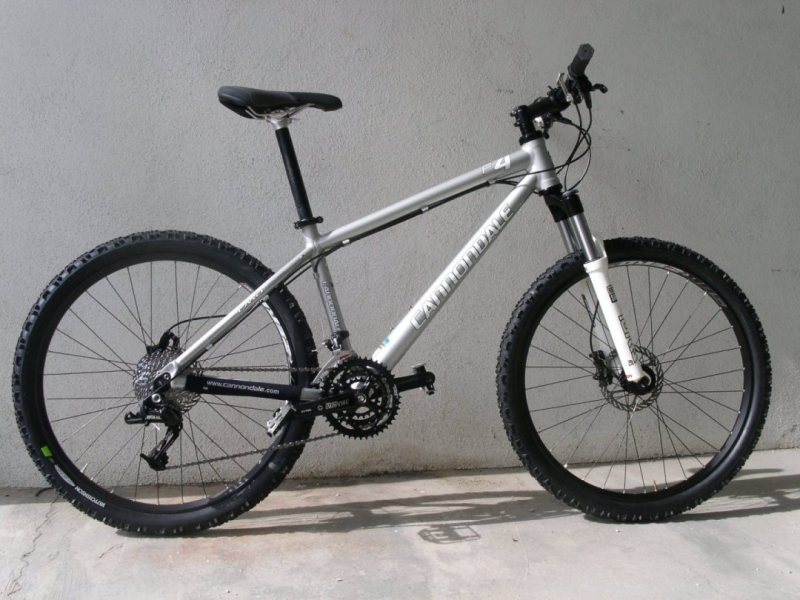
This is a mountain bike, and if you are re-introducing yourself to the sport, this is exactly the bike you DO NOT NEED!

MINOLTA DIGITAL CAMERA

Mountain bikes weigh in at 28- 32 lbs.  Whatever the weight of your bike, that is how much you have to drag up hills.  Not only that, notice the thick heavily treaded tires.  These are great for dirty and gravel but really at to the effort you have to put into moving it on paved surfaces.  And get away from the thinking that they are more sturdy than other bikes, they are not!  Much lighter bikes are equally as sturdy.

The bicycle below is your standard road bike with straight handles.

road bike

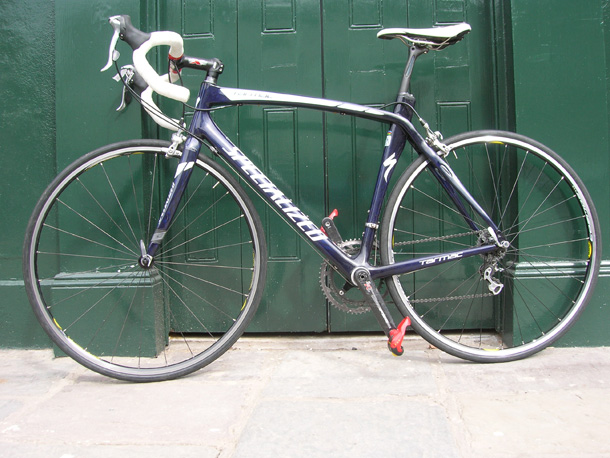
Below is a road bike with drop handles.

road bike drop

The difference is simple, they dictate the position of your body while riding.  Bicycling is by its nature very easy on your back, and very good for lower back muscle development.  But in terms of comfort while you are riding, most of us over-40 types do better in the more upright position.  I recommend that you get the straight bar.

You can buy a good starter bicycle new for between $650 and $1100.  If that sounds expensive, let’s put some perspective on it.  If you buy into an inexpensive gym, $30 per month, a year is going to cost you $360.  And I can assure you, from experience, you are much more likely to exercise longer on a bicycle than at a gym.  Good exercise is more about “how long” than how much you exert in a short time.  An hour in the gym might seem like forever whereas on a bike it is almost fleeting.  A good bike ride will last nearer to 2 hours and will be mostly cardio.

Bicycle composition

This may sound a bit strange, but bicycles come is several common compositions.  The most common type is the steel bicycle.  Don’t let the name fool you.  Steel bikes are not any heavier than aluminum bikes.  Either one, steel or aluminum, can weigh in around 25 pounds, a good starting weight.  Then there are titanium and carbon fibre bicycles.  Both these frames are much more high end which translates into dollars, of course.  Still, you can buy a good carbon fibre bicycle for under $2000.  What you get in return is a much lighter bike.  The really high end bikes can weigh in at a paltry 14.5 pounds.  But then these bikes, the Fuji if particular, can cost upwards to $15,000!  Don’t let the name “carbon fibre” fool you.  The technology behind these “composite” bikes is not new, although new in the sense of bicycle history.  They are equally as strong as any steel bicycle, and reward you with less weight to deal with.

Bicycle Parts

– The cassette

cassette

The above is the rear set of gears on your bicycle.  This one has 8 gears but they can also have more or fewer gears.  The cassette will wear out after about 3000 miles.

The crankset

crankset

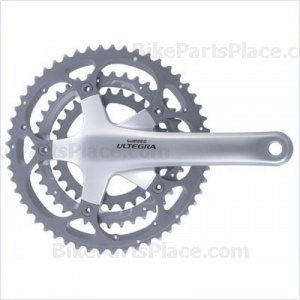
The front set of gears, known as the crankset, contain either two or three driving gears.  I recommend the one with three.  The lowest gear, also known as the “granny gear” is almost vital when climbing a big hill.

Brakes

pad brakes

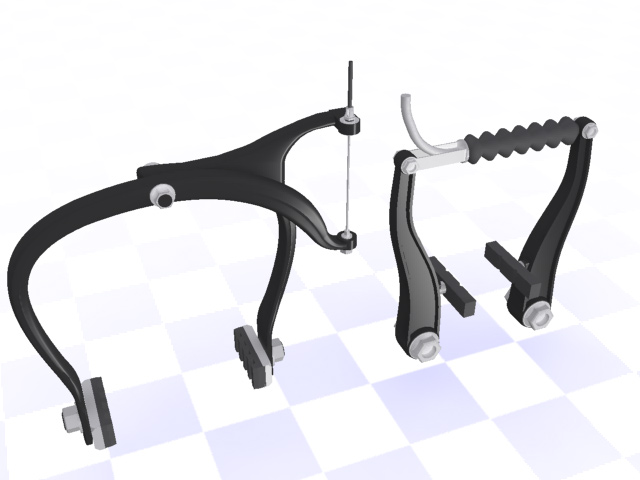
The padded brake is the most common brake used on bicycles today and provide a good braking medium.  Brake pads should be replaced about once a year depending upon how much you ride.  It is good to get your bicycle tuned up about once a year and you can have the shop check your brakes at that time for wear.

disc brake

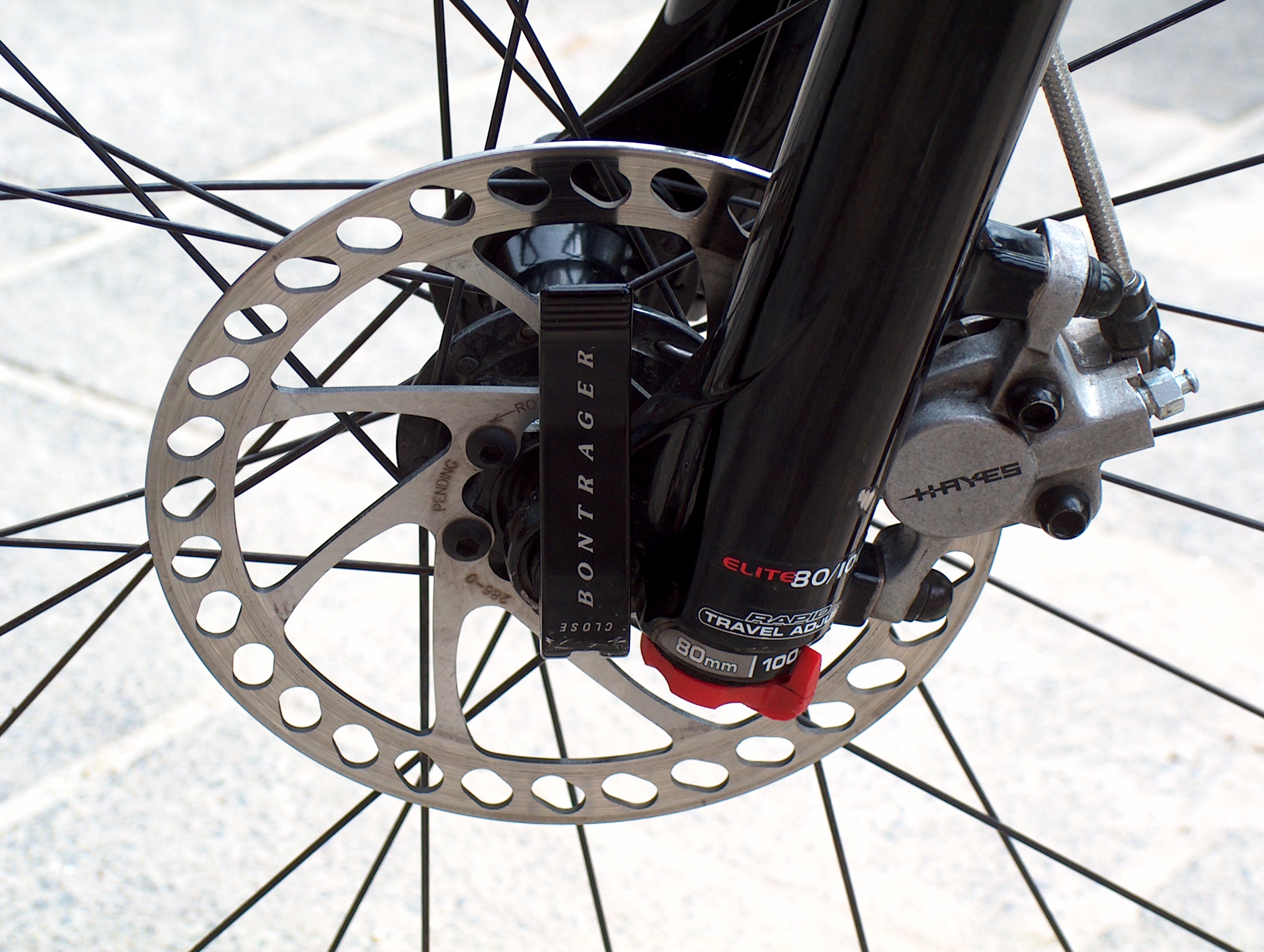
Above is an example of the bicycle disc brake.  The difference is simple.  Rather than using a rubber on metal, side of the wheel, to stop the bike uses a pneumatic ceramic on metal system.  The biggest difference is in how much less pressure you need to use to engage a disc brake over pad brakes.  Like pad brakes, these brakes wear out too and need replacement.

Wheels

wheels

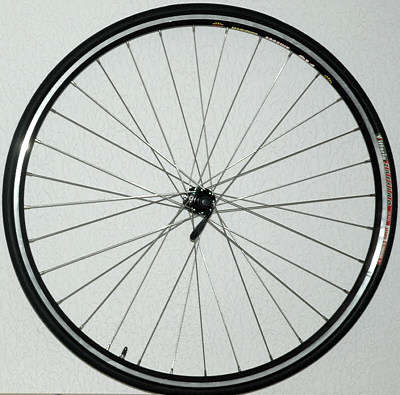
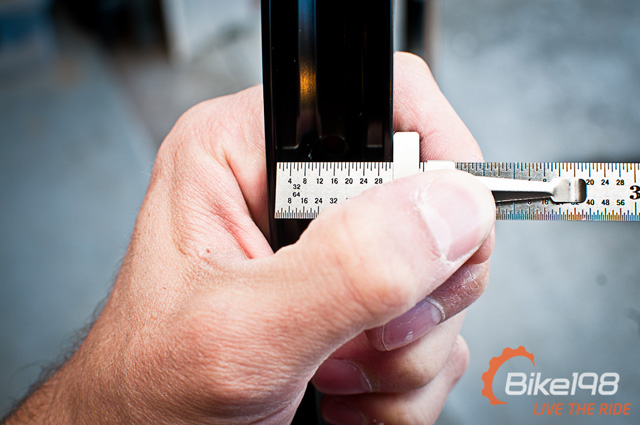
Bicycle wheels, like frames, come in many styles.  The above is the most common.  But these days, wheels are measure not only by rim diameters, 26 inches being the most common, but wheel width.  (see below)

pacenti-rim-width

The width shown above is good for road bicycles.  While the thicker the width the tire, the more comfortable the ride, you also invite more friction, something that slows you down, with the wider tires.

You should check your spokes at least once a month to insure they are in good working order.  Spokes can loosen up or even break.  This, of course, lends to the overall safety of the bike.  Each spoke should be firm, allowing no play at all in it.

Also, learn to fix a flat!  You can buy repair kits, but for my money, about $5 a tube, I find simply replacing the tube not only more expedient, but more sensible.  All you need, besides the replacement tube, is a small portable pump which can either be attached to the bike or put in your backpack.

Lights not reflectors

If you expect to be out on your bike after dark, but certain you bike is equipped with a rear red light, at the very least.  Reflectors really do little for your safety and are best left off the bike.  The rear lights are inexpensive and keep you visible to traffic coming up from behind you.  Today there are rear lights with rechargeable batteries included.  You simply connect the light via a standard cable to your computer and allow it to charge up.  But also consider a good front light as well.  These days, both lights come with a standard “flashing” mode which attracts the attention of others on the road, which you want!

Chains

Bicycle chains do wear out!  I put over 7000 miles on one once and could not understand why shifting gears had become difficult.  The man who checked my chain pointed out to me that over time bicycle chains stretch.  I had added nearly an inch of length to mine!  No wonder I was having trouble.  Chains are very inexpensive.  Change them at roughly 3000 miles.  Keep your chain, and other friction points, lubed.  Use a very light lubricating oil.  All bike shops sell such oil but you can do just as well with WD-40.

Seats (saddles)

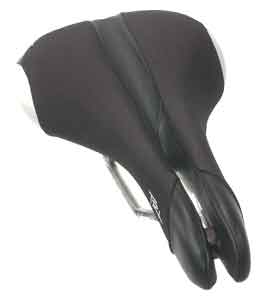
narrow saddle

The above seat is your typical racer’s saddle.  But some shops seem intent on selling similar saddles to everyone who comes in.  It’s a fashion statement but not too smart when you are starting out.

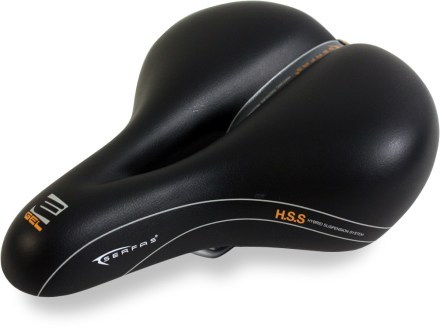
gel saddle

This saddle is a “gel saddle” and maximizes comfort.  I highly recommend this, or similar, saddle if you are starting out.

Shoes & clip ons

dimension_platform_pedal

Most bicycles come with peddles similar to the one shown above.  These are fine for bikes strictly used around town, not for exercise.

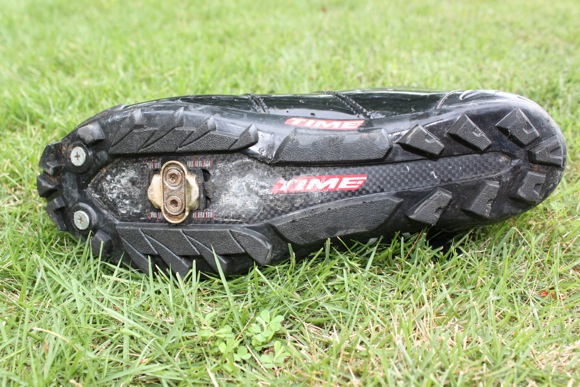
cleat clip peddle

Shown above is the standard “clipless” peddle and its associated shoe wear, the cleat.  These provide a stable platform for long bike rides.  While you are attached to the bike peddle, a small twist of the ankle quickly slips you from the peddle, a very easy release.

I hope what I have offered gives you food for thought in your bike purchase.  It is probably most important that you find a dealer, preferable a small businessman, to buy your bike from.  He will also prove to be an invaluable source of information about your bike, riding, and just about anything else you can think of.  Such shops also frequently have riding clubs.  These clubs are great places to learn the ropes, and you do not have to be an experienced rider.  The generally accommodate people of all levels.


Exercise After 40


Exercise is the United States, and probably the rest of the world, is geared entirely towards people in their 20s and 30s.  I belong to a gym but in all the years of my gym membership I have yet to come across an instructor over the age of 40.  Hell, most of them have yet to reach 30!  I paid for a dozen or so lessons from a trainer once.  She was nice but she had no idea, that I could see, of how to treat the over 40 body.  And at that time mine was over 5o!  Asking such people what this “core” is, like a location, and you get a series of odd and incredulous looks.  “How can you not know?” They seem to ask.  If I had known better at the time I would have said something like, “It’s my joints and back which need coaxing into motion.  If we can just start there everything else will work itself out.”

At the time I still had it in my head that jogging was a good thing!  Wrong! When your joints are over 40 they get very upset when you pound on them incessantly as happens with jogging.  Then you will find yourself at you doctor asking him why your joints hurt so much and he will say something like, “Well, you damn fool, you are 43, not 23, act your age!”  I was actually about 53 when I heard those words.  At the time I did not realize I had alternatives and said something stupid to the effect that not jogging was not really an alternative.  He told me that if that was so then I needed to strengthen the muscles surrounding my joints.  Enter the gym!  Sound like a vicious cycle?  It is!

This brings up a good point.  Before attempting any exercise, get yourself checked out by your primary care physician and tell him/her what your plan is.  (S)he will be able to tell you your beginning limits.  When you enter into cardio exercise, it is always good to have your “cardio” assessed to see if it is up to it.

One day, while jogging around a pond, my body said to me, “I’m not doing this any more!”  I protested and pushed on but my body pushed back by slowing me down.  Each time out  felt increasingly more tired and distances that had been fairly easy became more difficult than they should have.  Finally I gave in and retired my array of running shorts.

Then, one day, it occurred to me how much I loved riding a bicycle when I was a kid.  I used to go everywhere on it, and I can remember how I said in fairly good shape just doing that.  That is when I invested in a new bicycle.  For about $350 I got a good solid starter bicycle and set out.  To be sure I was more than a little wobbly at first but after a short while I worked things out and got fairly good.  Well, I thought I had gotten fairly good.  What I had failed to do was to read up on what I should be doing to stay healthy while making bicycling a regular exercise regimen.  One day my body protested that I was abusing it and shut me down in about 10 seconds.  What had happened was I had become extremely dehydrated and I am fairly certain my core temperature rose to a very unhealthy high level.  Still, it took me a couple more years to finally get with it where healthy bicycling goes.  While I was properly hydrating myself I had no idea how to pace myself, how to attack hills, and how to increase my endurance.  That said, I will try to pass on all that I have learned and in doing so, hopefully, encourage you to take up bicycling and forego shin splints and balky knees that come from jogging and other high impact exercise.

The Bicycle — It is extremely important to get a bicycle that fits you.  In this respect one of the most common mistakes I see bicycling beginners do is they buy a bike that is too heavy for them, better known as the “mountain bike.”  This bicycle, with its fat tires and heavy frame, looks like it can take anything you can give it and anything the road throws at it.  While that is true, this bike is truly for the experienced off-road bicyclist.  It is also about 10 to 15 pounds heavier than the bike you need.  If you are just starting out get what is called a “road bike.”  A reasonable substitute is what is called the “commuter bike.”  This bike is meant for exactly what it says, commuting to work or school.  An “around town” bike that may not be suited to an exercise regimen.  There are several good brands, Jamis, Scott, and Cannondale, all of which make a good starter bike that will weigh in about 25 pounds.  Expect to pay around $750 for the basic bike.  Non-chain bicycle stores are probably your best bet.  It is in their interest to serve you well.  And, like a car, buy the bike at a place that repairs them!  Your bike will break down eventually.  Parts wear out.  For example, at about 3000 miles your chain will have stretched and your cassette (the multigears on the rear wheel) will wear out and need to be replaced.  You will know it is 3000 miles from the speedometer/odometer you bought.  I recommend “Cateye” brand as a good easy to understand device.

Buy yourself a good bicycle pump.  You want your tire pressure to be no lower than 1/2 your body weight.  The right amount of pressure keeps the wear on your tires down, and makes your ride easier than if it is low.

Your body — Get your bicycle fit to you.  That is, have the store set your seat to the right height.  And speaking of seats, do not get one of those narrow seats that all the racers use.  You are not a racer!  And after a short while it will hurt your butt more than you want to know!  Also, if you plan to commit to this form of exercise, there is a whole series of specialized bicycling clothing you can buy.  A good pair of padded shorts is going to cost you between $50 and $75 and is worth every penny of it!  If you have the money you can buy polyester biking tops and bottoms but they are going to run you about $150 or so a pair.  A cotton tee shirt, though a little warmer, works just fine.

Your body needs water, lots of it!  All bicycle shops sell plastic water bottles, get 2!  Make sure you bike had at least one holder, 2 is better.  While it is true that as the temperature goes up you need to hydrate more, you still need to hydrate on cold days.

Your route — Every good bicyclist has at least one set route.  He knows the mileage of the route, the hills, the rest points.  Most have several routes.  I have 4, a 22-mile route, a 30-mile route, a 42-mile route, and a 50-mile route, all of which I do regularly.  Having a familiar route is essential to good training.  I recommend that a starter route be 20-miles long.  But within that route give yourself “turn around” points at certain mile markers.  Do that route, or parts of it, very regularly until you have it down and it seems easy.  Once a route is truly “easy” you need to increase your distance.  The only way to improve is through challenge and when something is easy, the challenge is gone.  Most states have “rail-trails.”  These are bicycling paths that have been carved out of abandoned railroad beds.  They are particularly good for the beginner because they take away your having to deal with motor vehicle traffic which can be  intimidating for the beginner.  If you enter “Rails to Trails Conservancy” in your search engine you will find the site that has locations and details for railtrails in every state.

The Ride — Only sprinters are out of breath.  Unless you aspire to be a world class bicycle sprinter, you she never ride so hard that you become breathless, or even winded.  For at least the first month of riding, go at a pace that you can maintain throughout your ride.  This is where the speedometer comes in handy.  The casual rider will ride at between 6 and 8 miles per hour.  Make an initial goal of being able to ride continuously for an hour at 10 MPH.  Then, as time goes on, increase that rate to 11 and then 12 MPH at a given distance.  That speed will be your average over your course and will be dictated by hills.

Maintaining a good rate is accomplished by your bicycle’s gears, 3 in the front and 9 in the rear.  The front gears, the smaller the gear the faster you will pedal.  The opposite is true of the rear gears.  Familiarize yourself with your gears.  When you are challenged by a hill you want to keep shifting to a lower gear so that you are “spinning” and not pressing.  You may find yourself having to slow down to 3 or 4 miles per hour to traverse a hill but that is not only all right, it is advisable.  As you become more familiar with your route, your bicycle and your abilities, you will be able to vary your speed, and your spin, according to the hill.  Hills are not just a necessary evil portion of a bike route, but a welcome challenge to good training.  Hills force you to use a slightly different set of muscles and a different mind-set, both of which work to your advantage in the long run.  But if a hill does defeat you, you find yourself dismounting and walking to the peak, do not avoid it in the future.  Try using a lower gear the next time and keep doing the hill until you own it.

Good exercise is measured in length of time, not speed or distance.  My bike rides vary from 2 hours to as much as 5 hours, and occasionally even a little longer.  Those rides all have built-in rest stops.  If, while riding, you ever feel the least bit dizzy, stop immediately and give your body a good long rest, along with a healthy drink of water.  If you find yourself becoming breathless, slow down first, and if that is not enough, stop and take a break.  Remember, you are not competing against anyone.  Ignore that 23-year-old who just passed you up.  They are irrelevant!  If you use an “out and back” route or a “circular” route, note your half-way point and take a break there.  If you can, create a route that takes you to a place where you can go into a coffee shop or the like for your break.  In the summer it will help cool you down and in the winter, warm you up.

Records and schedules — Keep a written record of your bicycling noting your distance and time, as-well-as the date.  Put yourself on a schedule of at least 3 rides a week.  At least for the first year, never ride more than 3 days in a row.  Give your body a rest.  It will reward you.  Give yourself a time and/or distance goal for each week, and increase that goal on a monthly basis.  During that year you should regularly feel tired, never exhausted, at the end of any ride.

Rules of the road — Bicyclists are subject to the exact same rules of the road that automobiles are.  Stop at stop signs, red lights and for pedestrians in cross walks.  Stay to the right as far as you can, and do your best not to weave in your path.  Use hand signals when turning.  Always wear a helmet!  A man I used to work with was knocked by a car into a curb stone.  His head struck the edge of the curb stone and he was knocked into a coma even with the helmet.  He did fully recover but were the helmet not there, he would have been dead at the scene.  Even at 10 MPH, your head banging into the pavement is more than enough speed to cause death.  Use lights at night and wear light colored clothing.  Do your best to always be aware of your surroundings.  Be particularly mindful of children who are riding bicycles or even walking in front of you.  Their tendency is to move into danger, your path, without warning.

When I started biking finishing a 21 mile course I set up was about all I could do, and on some days, I maxed out at 14, with rest stops!  Now, on any given day, I can ride 35 miles non-stop, have ridden more than 6o miles on several occasions, and feel doing 100 miles as reasonable.  This has come, however, after several years of regular riding, and educating myself on how to conduct myself during any given ride.  On those days when I find myself exceeding my limits, I take it easy until I finish.  Also, I always have a cell phone with me to call for help if necessary.  That has happened only once but that one time came without warning.  I also have the numbers of the police departments of the towns I most frequently ride through.  Using 911 on a cell phone only gets you to the state police.  Local police can get to you much more quickly in an emergency, either yours or someone else’s.

Hopefully this has been helpful and the idea of taking on bicycling will not seem nearly so daunting as it did before.  My last birthday listed me as 64, my resting pulse sits just below 60, my blood pressure 120/72.  And I have heart disease.  I plan to live to be 100, and to still be riding!

Bicycling


I learned to ride a bicycle at a rather young age.  I never had training wheels.  My introduction to the bicycle came from the boy who live next door.  He had a new bicycle and he dared me to ride it.  His front yard had a very slight incline from the house down to the street.  I got on the bike at the top of that slope, saddled up, and rode on down.  My brief ride ended quickly as I was forced to take a fall right in front of an on-coming truck.  But when you are that age you are immortal.  I got right back on the bike and rode like I had been on it for a long time.

When I went home I badgered my parents into getting me a bike.  My mother had a friend who had an old bike in her cellar.  I can still see it.  Fat tires, spray painted gray fenders, and it only cost $10!  That was my first bike.  I rode it until it literally fell apart and my parents got me a brand new bike for my birthday.

From that time until I got my driver’s license I rode a bicycle constantly.  I rode one bike so much that one of the welds split apart and it broke in two.  I learned to fix the brakes, change the chain, fix any flat I ever got, and anything else it needed.  But the automobile spelled the end of my bicycling for many years to come.  I had fallen victim to the American love affair with the automobile and I had forsaken my physical health in that cause.

Then about 12 years ago I saw the need to exercise and took up jogging.  Everyone did it and you can do it just about anywhere.  For a person of my age and body type I did fairly well.  My best day jogging was a non-stop 12 mile run.  On any given day I jogged six or seven miles.  But after a while my knees started complaining and I noticed it became more difficult to keep up my pace.  My new bicycle had 27 gears, something I had not experienced before.  But it did not take me long to get used to it and to get a routine going.

It was not easy making an exercise routine out of it.  I did not know simple things like pacing and proper shifting along with which gear to be used and how fast my feet should be rotating.  That has taken a number of years.  During the interim I gave away my first bike when I decided to buy a carbon compound very lightweight bike that is made for speed.  That did not last long as I found it to be too much bike for me.  I sold the bike and got one far better suited for what I wanted to do.

That is the bike I am using today and it is just about at its 10,000 mile mark.  I have done that in about 4 years.  I was going to replace it at that mark but I have decided to replace certain parts and hold off on a new bike until next year.  I learned that things like chains stretch, the rear gears wear down, and all those moving parts need to be changed more often than I had dreamed.  I have replaced all of those parts but still have a few more to go.

For the past twenty plus years there has been a group called the Rail Trail Conservancy that has been acquiring abandoned railroad lines and converting them to use as bicycle paths.  The funding is a combination of private donations and federal funding.  I am fortunate to have such a railtrail near me.  The Minuteman Rail-trail goes from Arlington through Lexington to Bedford, a distance of roughly 10.5 miles.  I access the railtrail a couple of miles from its beginning that gives me a total roundtrip route of 23 miles.

I have found that doing that 23 mile trip 4 times a week or more is enough to give me a substantial cardio-vascular exercise routing.  I average 14 MPH on my route.  To put that in perspective, the average pleasure rider goes around 8 MPH, a normal exercise speed is around 12 MPH, while mine is listed as a strenuous rate.  Still, that is far slower than the 18 – 20 MPH average that speed racers move in their routines.

A good exercise routine is measured in large part by how much time you put into your daily exercise.  My 23 mile route takes around 1.5 hours to complete.  That is 3 times longer than the suggested minimum for a good amount of exercise.  I find it usually is pretty easy to do 1.5 hours on a bike as my mind is engaged in a constantly changing surrounding.  That is as opposed to exercising in the gym where the only thing changing is the people around you, and even that happens very slowly.

Even though I like using the rail-trail there are days when it is not a good place to go.  It is a very popular route for people walking.  A lot of people on the rail-trail makes it rather difficult to maintain a constant speed safely.  At those times I move over to the road and that is where other problems begin.

For the most part, motorists are pretty good about sharing the road.  But there are some who seem either oblivious to anything else on the road, me in particular, or who are resentful about sharing the road.  I have had many close calls with cars and have been hit once.  That one time a woman decide to turn right when I was right along side her car.  I was going about 15 MPH so my reaction time was extremely limited.  Fortunately I have always been someone who bounces well so I bounced off the side of her car, taking off her side-view mirror in the process, and then off the pavement.  I had my share of cuts and bruises along with an injured back but nothing serious.  She rushed out of her car very apologetically and said she had not seen me.  I was tempted to suggest she might have looked into that side view mirror I had taken off her car and should would have seen me.  I am rather hard to miss.

True, there are too many bicyclists who do not observe the rules of the road as they should and I believe the police should come down on them.  That includes me too, of course, when I do not follow one.  But I do stop at red lights and stop signs.  I stop for people in cross-walks, and I always ride with traffic and never against it.  I do not go up a one-way street the wrong way, and I always walk my bike on the sidewalk.

I think the use of bicycles in the U.S. is going to continue to rise.  I hope so.  But right now our roads are not made to accommodate cars and bicycles very well.  Motorists need to be aware that a bicyclist has as much right to the road as he does.  Even more, at least in Massachusetts, when you are on a four lane road the bicyclist has a right to one of the lanes.

I hope that state and local governments will provide for bicycling in their annual budgets and planning.  I also hope that motorists will realize how vulnerable a bicyclist is to their car.  In a collision, the car always wins.