Reflections On the Presidents I Remember


I have been alive now to have lived under four different Presidents of the United States. The first I must be excused from any remembrance of Harry Truman as when he left office, January 1953, I was only 3. Pres. Eisenhower is the first president of whom I have any memory. It was probably around 1958. The media seemed to be mocking him for having back problems and his regular appearance on the golf course. I do remember when he was running for re-election in 1956, in the town of Andover MA where my father had his business, everyone seemed to be wearing “I LIKE IKE” buttons. Of course, I was still not of an age during his administration to have any political feelings about him. My father, who had served in World War 2, voted for him twice for obvious reasons. On reflection, great credit must be given to Pres. Eisenhower as he had the idea to take the German Autobahn and replicate in the United States as our Interstate Highway system.

In 1960, John F. Kennedy was running against Richard Nixon, Eisenhower’s Vice-President, for the Presidency. I remember a family a short distance from my house having “vote for Nixon” signs all over a pine tree in their yard. Even to my young 11-year-old brain, this seemed to be a bit overboard. And so, I took the opposing side and rooted for Kennedy, even though I was for too young to vote. After all, Kennedy was a Massachusetts man and a Catholic, both which I was, and am. Also, something that bothered me immensely, the Republican Party launched a campaign against Kennedy saying, to effect, that his election to the Presidency would mean the Pope would be meddling in our country’s affairs. Something inside me told me that was not true.

After Kennedy had won, by an extremely narrow margin, I stopped thinking about politics. It was not until 1963, when I was 13 years old, and a freshman in high school, that one sad day, November 23rd, someone came to the music room, where I was part of the band, and told us that Kennedy had been assassinated. Time seemed to stop. It was a little after 2 in the afternoon, and everyone started wandering in the corridors, no one saying much of anything besides “can you believe it?” There was no need to announce the end of the school day as students were already leaving the school and heading home. I think most of us watched in stunned silence, before our televisions, the next six days. In between his assassination and funeral, Jack Ruby shot Lee Harvey Oswald on live television. I did see that as it happened and once again was stunned by what was going on in our country at that time. Our first youthful President, in either our recollection or that of our parents, had been taken from us and was replaced by a much older man. In Kennedy so many of us had such high expectations which started with his promising to put a man on the moon and then his handling of the Cuban missile crisis.

I think a lot of people tuned out as Johnson was sworn into the Presidency aboard Air Force 1. He did keep the space race going which gave us all something to cheer about. But he also increased our presence in Vietnam which had started during the Kennedy Administration. Personally, I tuned that out as graduating from high school was my priority. On reflection, a little reflection back then on what was going on in Vietnam would have done me good. Still, it would not have changed my mind away from joining the military. I think Johnson was an average president. He had no crowning achievements.

An aside. Pres. Johnson had kept many of Kennedy’s cabinet members. One of them was Robert Kennedy, the Attorney General. Eventually he was replaced but in 1968 he was running for President and once again our hopes arouse only to be dashed when he was assassinated by Sirhan Sirhan. I was in the U.S. Army’s flight school at the time. I called my mother and in tears asked her what was going on. I felt our country was in trouble.

In 1969, Richard Nixon took office as President. At the time, the U.S. Army had given me all all expenses paid for vacation in the far east, Asia. For some reason, still unknown to me, our former vice-president, Hubert Humphy (it could have been Nixon’s VP) showed up in-country and set up the protect him at all costs scenario. I though it to be foolishness on his part and it gave me a poor opinion of Richard Nixon, poorer, that is, than I already had. Nixon simply continued the mess which was going on before realizing its futility. I was a career soldier and I do remember something he did for which I am grateful. He gave the entire military a big pay raise. We really deserved and even though we were still grossly underpaid, we were thankful. Nixon’s presidency was first blackened by the Spiro Agnew debacle, when it was found out he was doing illegal business activities and was forced to resign. He was replaced by Gerald Ford, a soft spoken, well-respected senator from Michigan. When Nixon resigned, Ford filled the void.

President Ford was made fun of from his stumbling a couple of times. But in true, he was a breath of fresh air after the Nixon Presidency. Pres. Ford was a highly qualified, honest to a fault President. It is a bit difficult to explain Ford’s failure to win the Presidency in 1976 but he at least had restored honor to the position.

President Jimmy Carter was probably one of the least ready for the job Presidents we have ever had. People were quick to point out that he had a degree in nuclear engineering, his service in the US Navy in such a position. His folksy way made him a most likeable person and that may have been the single reason he prevailed. By anyone’s measure of his time in office, he was a failure. To his credit, Carter tried to free the hostages in Iran only to have the mission fail from an unforeseen sandstorm. In the election of 1980, Republicans used that failure to describe his entire Presidency, along with very high interest rates, something no President has much control over. He was also submarined by the Republican “October surprise” where Ronald Reagan had promised to free the hostages.

President Reagan took office on January 20, 1981, and the hostages in Iran were immediately released. That some sort of an illegal backroom deal was made was obvious. But what was it? Reagan was a good talker and could convince people of many things. Reagan, like Carter, had a folksy way about him and with economics as they were going into the election, it was easy for the American public embrace him in hopes of a change for the better. Interest rates did go down. Our economy also seemed to settle down and an era of “good feeling” set in. But behind the scenes, the Reagan administration arranged for the sale of arms to Iran, something that had been made illegal by Congress. The funds gained from the sales were used to arm the Nicaraguan rebels. At the forefront was Lt. Col. Oliver North. And although North was the most visible part of those illegal doings and who took the fall. In truth, nothing happens of that nature that the President is not aware. Then in 1987 the stock market took a fall so great that all trading had to be suspended. Until that time, there was nothing to stop the freefall. Not long afterward, Congress passed a law directing the stock markets to put in stop gap measures should the market be headed for a similar fall. It has been used in the years since. And finally, we know for fact that President Reagan suffered for Alzheimer’s Disease. It is well-established that this disease takes its time settling in and that it is likely he was suffering from it while still President. Although some Democrats have suggested that Nancy Reagan was calling the shots, I think it was most likely VP Bush. Reagan’s successes can be measured in just 2 places. First, he put in place a minimum tax rate for all corporations and person’s making over a million dollars a year. Republicans since have seen fit to remove those things. More importantly, he united what had been a divided Republican Party.

I am not going to say much of President George H. W. Bush. Mr. Bush was an extremely honest president and one who did not shy from difficult situations. His downfall, of course, was when he found it necessary to raise taxes after having run on a no new tax platform. I was in Gunter AFB in Mississippi in 1991 with a high ranking official from the U.S. Air Force’s air staff from the Pentagon. I was working for the U.S. Department of Transportation but worked entirely on military projects related to transportation and logistics. The man I was with, who I will call George, sat with me as we watched the beginning of our war against Saddam Hussein. Mr. Bush did not feign enjoining the fight but instead put exactly the right troops at exactly the right time in Saudi Arabia to take on the Iraqi Republican Guard, purportedly their finest troops. I think the Bush Presidency was an overwhelming success at all levels.

Then in 1993 the reins of power were turned over to Bill Clinton. Bill Clinton may well have been the most intelligent President we have ever had, to include going forward to the present day. Republicans hated Clinton in some part because he stole some of their agenda, eliminating the national debt, and also by repeated, and mostly without merit, the claims of sexual misconduct by the President, the one which was both true and caused his impeachment, was his dalliance with Monica Lewinsky. But he was far from the first, or even the second, to have had such dalliances. Presidents Kennedy, Eisenhower, Roosevelt and Harding all have well-documented such affairs. Why was Clinton different? Republican truly hated him and had been spurned on by New Gingrich, a Republican representative from Georgia. How would I characterize the Clinton Presidency? A little above average, in light of his financial successes, but nothing to cheer about.

The last presidency I will comment on is that of George W. Bush. Mr. Bush probably made the Presidency via US Supreme Court meddling. It overturned a Florida Supreme Court decision, something the USSJC is wont to do at all times. In office on 8 months, Mr. Bush was put into an impossible situation. On 9/11 he was blindsided by a terrorist attack on our country. Many people, particularly Democrats, were quick to point to his inaction immediately following the attack. That was simple political fodder, expediancy, when in fact, there was nothing to do in the moment except to support those at the twin towers in their efforts. That he did do with immediacy. From there, a planned attack on Iraq was formed. The reasoning used, extremely faulty, was that Iraq held weapons of mass destruction and hid terrorists. There were no weapons of mass destruction but there certainly were terrorists. And when it was discovered that Osama Bin Laden was behind the 9/11 attacks and that he was hiding in Afghanistan, the war was expanded to there. I think those were the right moves at the time. Saddam Hussein was still in power in Iraq and had no problem not only terrorizing his own people but harbored those who terrorized other countries. By-and-large, the Bush Presidency was above average. His one big failure was his inability to reign in financial markets, and in particular, the sub-prime mortgage thieves. Even though I did not vote for Mr. Bush either time, I found myself defending him when Democrats were calling him a draft dodger, someone who used his father’s office to gain a position in the Texas Air National Guard. The very fact that he served was enough. As anyone who ever served in Vietnam knows, members of the National Guard of the various states were not immune from serving there, and many did. He was, and is, an honorable man who served his country to the best of his ability.
The Fallacy That Increasing Taxes on the Rich Will Retard Job Creation


During the most recent election Republicans made the claim that raising taxes on the rich would hinder job growth.  That is a fairy tale they like to tell and it is curious that the Democrats did a miserable job of showing it to be the big lie it is.  How can I say this?

Since the Civil War the United States has suffered under no fewer than half a dozen serious recessions and depressions.  Wealthy people love times like that for one very simple reason.  They have not only been intelligent enough to make themselves wealthy, they have built-in assurances that a down-turn in the economy will have a minimal effect upon them.  And in fact, to some degree, they like it when the stock market is at a low.  They view that as an opportunity to take advantage of low stock prices to invest in companies they feel have a healthy future.  The old maxim, buy low sell high, is something they understand well.  I am not saying there is anything wrong with doing that, there is not.  It is actually one of the assurances that our capitalist system will remain strong.

During the 1873 downturn wealthy investors took advantage of low stock prices to invest in the emerging transportation and home heating industries.  Men like Rockefeller, Vanderbilt, and Morgan used those difficult times to pad their finances.  Then, as now, there comes a time when a person has so much wealth it becomes almost meaningless to him.  That is, his focus changes from how much money he can make to how much power he either holds or brokers.  And this is precisely where we are today.

From around 1880 to 1960 America was the world leader in labor intensive industries.  Textile, auto, steel, and a dozen other such industries.  But since 1960 those industries have largely left the United States.  The problem is, they were not replaced with anything.  The auto industry is the perfect example, and maybe the last great bastion, of labor intensive work.  And even it has given way to automation, as you would expect.  But in 2008 all American automakers were on the precipice of extinction.  Two of them, GM and Chrysler needed a federal bailout.  Ford dodged that bullet only because it was able to sell off some of its companies, Jaguar, Volvo, and Land Rover chief among them, to shore up their finances.  I bought a 2012 Ford Fusion, a car I really  like, thinking I was supporting the U.S. economy.  After purchasing it, I discovered the car was entirely made in Mexico, no U.S. workers were involved in its production what-so-ever.

In the 20th Century the United States led the world, hugely, in the aviation industry.  In 1950 there were at least half a dozen companies producing commercial aircraft.  Chief among them were Boeing, Douglas, Lockheed, and Convair.  These companies were healthy and supplying the world with the aircraft it desired.  But during the late 40s and through the 1950s, Europe was retooling its aircraft industry following World War II.  Then in the 1980, the British, French, and German governments made a pact to design and build commercial aircraft.  Today we know this company as Airbus.  During this time the U.S. commercial production was reduced to Douglas and Boeing until Boeing bought out Douglas aircraft.  But in the early to mid-2000s Airbus came up with the concept for their A-380 aircraft.  This aircraft was bigger by almost 50% than the Boeing 747.  But it had problems in budgeting and design.  Were in not for those three government propping up Airbus, the company would likely have gone bankrupt, and almost did anyway.

If you have ever flown on Jetblue, you have been on an Airbus aircraft, the A-320.  This particular aircraft is similar in all respects to the Boeing 737.   But Jetblue, a U.S. corporation, uses only Airbus aircraft.  Why? Price of course.

In the world today, state subsidized industry is the rule and not the exception.  There is absolutely no reason that clothing production in the United States would be the primary source of what we buy.  But it is not.  If you look at the tags on your clothes you will find countries like China, Malaysia, India, and Bangladesh, among many others, that engage in a combination of slave labor and government  subsidizing.  They also are able to ship their productions long distances and still have the lowest price on the U.S. market because there is virtually no tariff on them.

Now, Republicans and rich industrialists maintain that if we add tariffs on the imports it will impede their ability to sell U.S. goods abroad.  But the truth is, more and more, the sale of U.S. goods abroad is decreasing with each passing day even in the absence of tariffs.  What these people are not saying is that they are heavily invested in foreign manufacturing concerns and they count of a substantial income from those investments.  And so if the U.S. starts putting heavier tariffs on the goods those foreign industries export to the U.S., their profit margin goes down.

Remember NAFTA?  The North American Free Trade Agreement signed during the Clinton administration was really about two countries only, the U.S. and Mexico.  Remember my Ford Fusion that is made in Mexico?  Please explain to me how U.S. workers have benefitted by NAFTA?  It seems obvious that something which may have been made in Michigan, Mississippi, Tennessee, is built-in Mexico.

Continue backwards in time and ask yourself, how is it that the United States, with its huge reserves of iron ore, and one-time world leading steel industry, today imports steel?  Ask yourself how a country that can produce endless amounts of cotton, wool, and synthetic fibers has virtually no textile industry?  Ask yourself why the Japanese assemble most of their cars in the United States while U.S. based automakers assemble theirs in Mexico, Canada, and other countries?

The next time someone claims that taxes and/or tariffs are to blame for unemployment call them a liar.  It is not now, nor has it ever been, about taxes.  It has always been about the industrialist maximizing his investment, and if that means moving jobs to other countries, that is what he will do.  He views taxes as a challenge but never views them as an impediment to his investing.  The truth is simple.  Wealthy people are constantly looking for ways to turn a dollar, as they should.  And the answer to keeping jobs in the U.S. has always been painfully obvious but a political hot potato that no one cares to stare down.  If you want to know how to level the playing field in the world market, look at the monetary exchange rates between countries and adjust your levies accordingly.  While not perfect, it will certainly help.

Think Your Car is Made in America? Think Again and Check the List Below


1.  Chrysler, most assembled in America although some in Canada, some transmissions made in Mexico and Brazil

2. Ford

– Escape, engine manufactured in Mexico, tranmission manufactured in Japan, assembled in Missouri

– Explorer, engines manufactured in Germany and U.S., tranmissions manufactured in U.S. , assembled in U.S.

– Focus, engines manufactured in U.S., transmissions manufactured in Germany and U.S., assembled in U.S.

– Fusion, engine made in U.S., tranmission made in Mexico, assembled in Mexico

– Mustang, manufactured and assembled entirely in U.S.

– Taurus, manufactured and assembled entirely in U.S.

General Motors

– Buick, engine made in U.S. and Canada, tranmission made in U.S. and Mexico, assembled in U.S.

– Cadillac, engine made in U.S., Canada, and Mexico; tranmissions made in U.S., France, and Mexico, assembled in U.S.

– Chevrolet, engine made in U.S., Canada, and Mexico; tranmissions made in U.S., France, and Mexico, assembled in U.S.

– Honda (all) Manufactured and assembled entirely in U.S. except for some transmissions which are made in Japan

– Nissan (all) engines made in U.S., transmissions made in Japan and Mexico, assembled in U.S.

– Toyota (all), engines manufactured in U.S. and Japan, transmissions made in U.S. and Japan, assembled in U.S.

Detroit’s Automobile Innovations of the Past 50 Years


Do you harken back to when cars had huge V-8 engines, no catalytic converter, and were easy to fix?  Here are a few examples of such cars.  Still think you want these back?

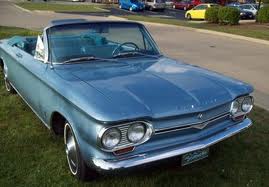
1. Chevrolet Corvair.  Ralph Nader made his name by filing suit against GM claiming that this car was “unsafe at any speed.”  Even though his claims were later disproven, the car died an early death.  This car was revolutionary in Detriot because it was a rear engine design and the engine was air cooled, just as the Volkswagon bug had been for years.

Chevrolet Corvair

2.   Ford Edsel.  People just did not like this car for some reason.  Ford introduced it as its own line of automobile which may have been its biggest fault.  After 2 1/2 years of production, Ford stopped making it.

Ford Edsel

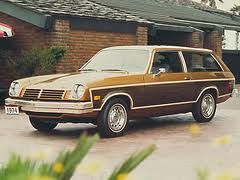
3.  Chevrolet Vega.  The Vega had an aluminum block engine that was revolutionary in its day.  There was really nothing wrong with the car mechanically, but the engine just did not sound right, possibly it was the louder than normal engine noise that was its downfall.

Chevrolet Vega

4. American Motors Gremlin.  American Motors was already on life support when it brought out this car.  It sporty look was supposed to appeal to the youthful buyer.  It did not appeal to much of anyone.

American Motors Gremlin

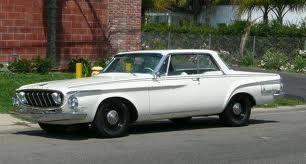
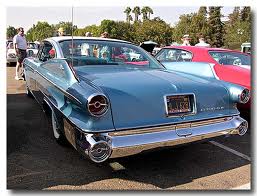
5.  Dodge Polara.  Dodge was desperately trying to compete with Ford and Chevy with this product.  Dodge and Plymouth both went quickly through several models in the early 1960s before it finally hit it right in 1964.  The Polara is but one of many failed attempts.

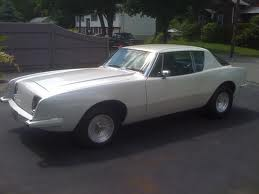
6.  Studebaker Avanti.  The Avanti was a car way ahead of its time.  It was well-built, fast, and good-looking.  The rest of Studebaker was on its last legs and people were simply not visiting the Studebaker showrooms to see this car.  The Avanti is a collector’s dream car as there were so few produced.

Studebaker Avanti

7. International Scout.  For a short while the International Harvester Corporation tried to convince Americans that it had a great family car.  The only problem was, this model was the only model it produced and aside from the Federal Government, virtually no one bought it.

International Scout

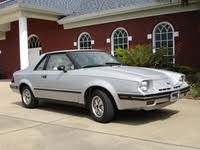
8.  Ford EXP.  Ford decided the American public was ripe for a two-seater car and introduced this one.  Its front wheel drive was unusual in its day.  The car was not particularly comfortable and could not carry much.  I know.  I bought one new.

Ford EXP

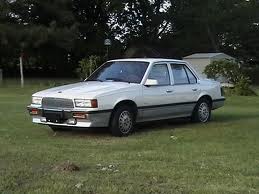
9.  Cadillac Cimarron.  Cadillac has a reputation, well-deserved, as a very well-made car meant for people of means.  GM, in its infinite wisdom, wanted to share luxury with the average person.  What we got was an Oldsmobile with a Cadillac logo.

Cadillac Cimarron

10.  Dodge Matador.  This was another of Chrysler Corp’s early 60s attempts, nuff said.

Dodge Matador

These next cars were not produced by Detroit but they just might rate as a some of the worst cars ever sold in the United States.

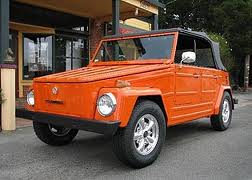
1.  VW Thing.  When Volkswagon stopped making the Beetle in the mid-70s it thought it would fill the gap with this little goodie.  It is actually a replica of a staff car commonly used by the Nazi military in the late 1930s until the end of World War 2.

Volkswagon Thing

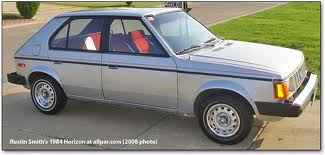
2. Jugo.  Jugoslavia, always pro-western, wanted to enter the  American Auto market with this thing.  It was very inexpensive and was typical of automobiles made in Communist countries.  They were simply not at all reliable.  Think you have seen something similar from American automakers?  The car next to the Jugo is the Plymouth Horizon which was actually much better built.

JugoPlymouth Horizon

3.  Renault Le Car.  The French wanted to get the Renault into the United States after it acquired American Motors Corporation.  It was about as successful as any AMC car.

Renault Le Car

What the Year 2020 Will Look Like


Everyone likes to make predictions, and I am no different.  There was a time in my life that my job depended upon my knowing exactly where the cutting edge of technology was.  I was quite fortunate for having worked at M.I.T. in the mid-1980s on a computer development project.  We were working on networking computers, and describing what a computer work station should look like software wise.  It was a good education in the sorts of things to look for.

As far as computers are concerned the speed of the home computer will continue to increase but not at the rates that we have seen in the past ten years.  The top end of home computing speed right now is about 3.2 gigahertz.  By 2020 I expect that speed will be roughly 4.5 gigahertz.  What will hold down speed is the ability of chip makers to produce processors that have more and more transistors on them.  They have already introduced the idea of dual processors to mimic speed increase.  What is really happening is two processors doing the work that one used to but at the same relative speed.  The breakthrough will come when they develop processors that use light instead of electricity.

What will continue to move forward in leaps and bounds is the ability of computers to deal with graphical data.  The time it takes a computer to find a piece of data and display it is the heart and soul of computing.  But right now one of our great limitations is the ability of the Internet to pass data along.  There is a little thing called “bandwidth” that dictates how much data can be sent at any particular moment in time.  That bandwidth is the same as the size of a pipe dictating how much water can be pushed through it.  Therefor, the two most important parts of the Internet are the computers that hold the data and their ability to retrieve the data, and, the ability of the transmission lines to carry that data.  Both those things are going to increase dramatically.  There will be a dramatic shift from the copper wire carrying data towards fibre-optics carrying data.  That alone will increase both bandwidth and data speed.

Here is a hurtful prediction.  Expect the price of gasoline to be around $10 a gallon.  With that the death of the SUV and the American full size car will have happened.  Also, the death of Chrysler Corporation along with the possible deaths of Ford and GM.  Why?  They still have not gotten it.  That it is simply the types of cars offered by Toyota, Nissan, and Honda.  Toyota’s largest sedan is about the size of American mid-sized cars while the rest of their fleets are the size of or smaller than American small cars.  What can save GM and Ford will be their ability to supply small fuel-efficient cars, more so than they do now.  But also, they need to make more readily available their hybrid cars.  Case in point, I tried to buy a Ford Fusion hybrid this past summer.  I was told that the waiting time for such cars was 90 to 120 days.  I was not willing to wait.  I could have bought a Prius however without a wait.  That means American automobile manufacturers are not being fully competitive with the Japanese.  That will be their downfall.

There is one type of automobile, not now available anywhere, that could become popular with the fast rising prices of crude oil.  That type is the liquid natural gas car.  The only thing that need be put in place for that to be viable is a distribution system for automobiles.  There is actually a good distribution of this fuel for buses and trucks.  Furthermore, the fuel is far more ecologically friendly and is in abundance in North America.  What could push this fuel into the forefront is the stability of the middle east.  If it destabilizes greatly, which it could, that would quickly push up the price of crude quickly.

By 2020 I expect China will begrudgingly abandon the Communist Party as its population moves towards 1.5 billion.  This will be in large part due to the increased difficulty of importing oil and other resources not natural to China.  As the Chinese economy increasingly relies upon capitalism to fill its needs, and the older party leadership dies, it will find itself migrating away from Communism.

Expect by 2020 the Euro to be a memory as more and more countries abandon it in favor of its own currency.  While European economic unity continues to be a good idea, its single currency will be found to be an impediment to the economic stability of individual countries, and therefore abandoned.

One of the strange results of the coming oil shortage will be the decreased unemployment.  Americans are going to find it more economical to buy local, or buy American.  The price of transportation long distances will increase much faster than markets can bear.  That will mean imported goods will increase enough in price that Americans will look for lesser expensive domestic products.  This, of course, will in turn put a lot of American to work.  But it will also make American goods more desirable in foreign markets.

Environmentalists will be unhappy with this because there will be a huge push for production of electricity from coal.  It will also lead to the beginning of a new series of nuclear power plants.  But because of the time it takes to build a plant they will not start coming on-line until the very end of the decade or later.  Still, that will mean our becoming more independent of foreign oil.

George Clooney will get married.

So will JaLo, yet again.

The number of cable channels will more than double if not triple.  The 998 channels now available will not be enough to handle the demand.  Expect big increases in the number of religiously based networks and sports networks.  Cable television will become much more specialized in those areas along with news networks that will start offering news programs based in foreign countries.

Manned space flight will not return but there will be an increase in unmanned space activities in the world of science.  Along with that will be the increased use of satellite telephones.  Companies now offering cell phone use will soon switch to satellite cell phones simply because the need for earth based physical plants will decrease dramatically with their increase.

Satellite radio will increase dramatically and decrease the number of broadcast radio stations greatly.  Satellite radio and GPS systems will be standard equipment in cars.

Well, that is it for now.  I expect there will be a part 2 to this as I consider the subject some more.