Study: World has 9 years to avert [climate] calamity


First, I must give credit to the Boston Globe, November 12, 2022, p. A4, for that heading, it being, excepting the setoff word, climate, a direct copy of its subtitle to “War may have put climate goals out of reach.”

I found this article absolutely stunning until I read its contents and then did a bit of research. It amazes me the amount climate change deniers still in the world today. Even more, those in political power who take no, or little action towards changing their nation’s responsibility towards reducing our greenhouse gas epidemic. It must be noted that most scientists, probably an overwhelming number, are agreement over our impended doom from these emissions.

The chart below lists the greenhouses emission by each country’s total in descending order. Notice the United States, which claims to be doing so much, is in the number 2 position! This is entirely unacceptable. Number 3 India is an interesting case that along with its status on this chart, it also has the ignominious reputation of have amount the 10 most polluted cities in the world, mixed in are Pakistan and other 3rd world countries.

Conservative Americans are amount the first to deny global warning and liberals are shouting about it. But in truth, it is the liberals who are failing the most simply because most compromise on issues where holding your ground is called for.

For the United States, there needs to be a much more concerted effort to reduce CO2 emissions by about 80% and well before 2031, the deadline. The United States cannot be a world leader in this fight when it comes in 2nd in total emissions worldwide. But the above chart is only referencing CO2 pollution. The chart below is referencing Methane pollution for the purpose of this discussion. I have not been able, thus far, to find a country-by-country accounting for this sort of pollution. In the United States, however, two of the most prolific forms of this comes for natural gas leakage at drilling sites and their pipelines, and also from fracking where the search for oil always finds a collection of natural gas which is supposed to be burned off but that only adds to the CO2 pollution.

For at least 30 years now, Europeans have been taking the problem with pollution seriously. Many cities, excepting England, have taken the tack of making their inner cities less friendly to automobiles, and in some cases, banning them altogether. In place of automobiles, they have doubled down of rail transportation and well set out bicycle ways.

Such tactics in the United States would be met with heavy opposition and politicians bent on saving their political butts would bend to that opposition rather than doing the right thing.

Consider, there is no city in the United States that can properly handle 4 lanes of traffic entering its limits with any ease at all, leading to a 40-mile commute taking as much as 1.5 hours or more. All cities on the East Coast plus Chicago, San Diego, Los Angeles, San Francisco, Houston, and a host of other cities cannot continue to maintain these roads and the problems that go with them for much longer.

Consider that the average length of a railroad coach is 67′ and that of an automobile almost 15′. Simple math tells us that even the 4 automobiles, were each carrying 3 individuals totaling 12 total is a far cry for the 60 to 100 passengers a single railroad car can carry. A rapid transit car can carry at least 50 people, light rail cars and buses the same. Highway maintenance on average, costs $14,500 per year. By shutting down one lane of a 4-lane highway in both directions for 25 miles saves $750k per year. Now, take the New Jersey turnpike which extends 41 miles from the Garden State parkway to Exit 7, Bordentown and is 8 lanes wide. Remove the 4 inner lanes in each direction, a total of 328 miles, and you have a total savings of $4.7 million a year. New Jersey has an exemplary commuter rail system as well-as an extensive bus system.

In probably every city their existing commuter rail, rapid transit, light rail and buses systems would have to be both modernized and expanded first. But this would give the public several years to plan on the eventual shut down of highway traffic lanes.

Such a bold step forward would cost in the 10s of trillions of dollars to properly implement. Couple that with all cities denying entry to their city center by private automobiles, another public screaming point, and inner-city pollution declines dramatically.

Right now, when it comes to public transportation, the United States is little more than a third-world country. Countries like Italy, Germany, Holland, France and a host of others, put the U.S. to shame in their approach to public transportation. Even China, the world’s greatest polluter, has a rail transportation superior to ours.

Why is this true. First, it America’s continuing love affair with the automobile, next, politicians of all stripes failing to inform the public of what should, by now, be painfully obvious, global warming is happening, and at an ever-increasing rate, just ask Floridians.

There is, however, one form of public transportation, which is one of the largest polluters in the U.S., the nation’s airlines! How do we reduce that? Simple, convince Americans to take AMTRAK on medium length journeys over air travel. This, of course, will require a heavy investment in AMTRAK but the rewards far outweigh the costs. Already, the Northeast Corridor of AMTRAK, from Boston to Washington DC, is heavily traveled by businessmen as well as private travelers. But routes such as Cleveland to Chicago, Atlanta to Miami, Dallas to Houston, Chicago to St. Louis, Milwaukee, Minneapolis and Detroit.

Americans, living near to large cities, must learn a new way of getting around or be culpable for getting the globe to “point of no return,” that point where warming accelerates at a rate no one can stop. Is that nine years hence? I do not know but it seems many scientists are thinking that way. Who are you going to believe, your next-door neighbor, you politicians, or the scientists?

I am only showing the pollution type below, that of “particulate matter” and in this case, that of plastics.

On final note on this. When I was taking a course in Astrophysics at Harvard University, my professor made a point of saying that anything which produces heat adds to global warming. That polluter is nuclear power and everything else which has the side effect of producing heat.

Afghanistan: Biden’s Huge Blunder


President Biden made a misguided plan to remove U.S. troops from Afghanistan immediately after taking office. He was more concerned with the look rather than the reality. As someone who served in the 25th Infantry Division, I can tell you that absolutely no commander is willing to leave the battlefield before the job is done, and the job in Afghanistan is far from done!

One of the concerns, unwarranted, was that we were becoming an occupational force in a country where we have been involved for 20 years. Really? Let us look around and you will quickly see that we have been an occupying force in Germany, Italy, Korea and Japan since 1945. What of that? In Korea we have committed 28,500 troops. And in Japan we have 39,000 troops! In Germany we have 34,000 troops. That is a total of over 100,000 troops.

Afghanistan is unstable and very likely to fall under the control of the Taliban before year’s end. This is extremely unnecessary since we should maintain a large military presence there. The army maintains 10 infantry style divisions on active duty. That comes to over 200,000 men. By simply splitting 2 divisions at a time for one year in Afghanistan, you would not be putting our men at risk for more than a minimal time.

The Afghan troops are failing miserably, many just quitting the fight even before it has begun and giving up bases and materials to the Taliban. There are a small number of elite forces who are struggling to push back against the Taliban but they simply lack the numbers to maintain the fight, let alone win it.

The Vietnam War shows us the inevitability of what will happen upon our departure. Now, as someone who was a part of that, I can say in that case we needed to withdraw as we lacked any commitment from the general public for us to stay. But you can see on YouTube how the last personnel leaving that country had the Vietcong hot on their tails. Although such a thing will not happen in Afghanistan, it will still happen in time.

If we are going to continue to be a true friend to the people of Afghanistan, we must recommit to having a large military presence in that country until its troops are fully and properly trained, and, until the country is both politically and economically stable. That will probably take a long time but for our own security, we need as many stable governments in the middle east as can happen.

Biden’s Horrible Decision About Afghanistan


President Biden has pledged to take all of our troops out of Afghanistan by September. His generals in Afghanistan have been vocal about this being a mistake and President Biden needs to listen to them!

I have heard it said that our country is not about “nation building.” Nothing could be further from the truth. At the end of World War 2, we left a very sizable number of troops in Germany, Italy, Japan and Korea. Of those four countries, all still have U.S. troops stationed there to help maintain the peace. Other countries which host a contingent of U.S. troops are Poland, Turkey, Greece and Spain. It has been 76 years since the end of that war, so why do we keep troops there? In the cases of Germany and Japan, the U.S. insisted in 1945-6 that those countries write into their constitutions that they will only maintain a defensive force, although in recent years both countries have built their military to a size where they could easily become offensive. For the most part, those countries have become very stable and their contributions to the world of innovation, science and industry have been huge.

In both Afghanistan and Iraq at the beginning of this month there were about 2,500 troops each. The stability of each is quite precarious to the extent that U.S. troops could do little to stop ISIS when it terrorized that region and is still lurking in the background. In Afghanistan, the Taliban are an even greater threat to the security of that country. By and large, the people of Afghanistan are quite happy to have U.S. forces present. Not withstanding that, the Taliban have taken a sizeably portion of the country and returned it to the brutal subugation it held prior to the war. It does not take much intellect to know that when the U.S. creates a military vacuum, one which Afghany forces are not prepared to defend, the Taliban will quickly take over.

If anything, the U.S. needs to increase its forces in Afghanistan and maintain a presence for the foreseeable future. Afghanistan has tremendous agricultural potential but that will be minimal if the Taliban are allowed to return. History dictates that it must be remembered. When the U.S. and other allied forces were victorious in World War 1, no troops were left in Germany to insure its stability. There existed several far right wing groups who did not care for the new regime and from the early 20s until 1933, they engaged in political war with the ruling government only to have it taken over by the Nazis. Other huge mistakes were made, ridiculous reparation demands of Germany cause the country to remain bankrupt until Hitler took over and refused to pay. Would things have been different had the allied forces maintained a presence in Germany? We can only speculate but at the very least it would have put a damper on right wing efforts to overthrow the ruling government.

It is very unlikely that Afghanistan will ever reach the economies of Germany and Japan, but it can become a very stable country if it is allow to find its own way with inteferance from the Taliban. And even more importantly, the work is far from done in Afghanistan for the U.S. as long as the Taliban is allowed to maintain its current strength. I can only hope that someone in Biden’s circle will read and take to heart this article, or, that he will heed his generals and stop removing troops.

Freedom Isn’t Free


soldier

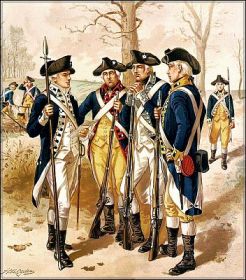
On July 5 1776, one day after the Declaration of Independence was made public, our new-born nation was a mess.  Mostly, we had been clashing with the British since April 19 1775.  The Battle of Bunker Hill was the one exception where large numbers of men on both sides lost their lives.  But in truth, neither side was yet prepared for a full out war.  The British troops were the best trained, best armed, and had the best leadership by far.  England had the ability to fund a short war and defeat almost any enemy she desired.  That British confidence of an impending American defeat was high was understandable.  The single thing that kept America viable over the next 7 years was its dogged desire to prevail.  The be sure, the Continental Congress was bankrupt, unable to pay its soldiers as promised.  The new American army suffered through a very high rate of desertion.  Conversely, the British Army suffered virtually no desertions.  Gen. Washington looked upon the British commander, Gen. Howe, with envy.  His troops were well fed, well armed, well trained, and supremely confident.  While the Battle of Yorktown was the finality of the war, it had truly ended long before by greatly diminishing the English war coffers and the distance at which the war was fought.  Also, sentiment in England was of a country weary of a civil war, that being that Americans had previously been viewed by the English public as brethren who had previously been an integral part of their country.  But the cost of that war, on both sides, lingered for decades after 1783.  For the first time, America had to deal with its war veterans and the promises it had made to them.  Some of those promises were not fulfilled until well into the 19th century.

When Thomas Jefferson took office he took offence to the large standing army he inherited and did his level best to entirely disband it, claiming that such an army was entirely unnecessary.  And although his feeling about the American Navy was not quite so draconian, he still reduced its size as well.  But then came the War of 1812.  The war was started over the impressment of American sailors in the British Navy.  And even though the war was started at sea, it was entirely completed on land.  Britain had entertained the idea that it could recapture this country that had slipped its rule only 30 years prior, well within the memory of most in government and power.  But again, the cost of a protracted war at a great distance proved too much.  Britain had actually conceded the war prior to the Battle of New Orleans because of that reason.  But America had quickly reassembled its army but not before the British army lay waste to the new American capitol at Washington and ran with impunity for well over a year.


The American army was relatively stable, well trained, and well equipped until the end of World War 1.  Many called that war, “the war to end all wars.”  It was believed that after WW1, a war which counted its casualties in the 10s of millions, there would never again rise the desire of any country to war upon any other country at such a scale.  The allies, America, Britain, and France agreed upon the size of the world’s navies.  It was believed that only a navy could transport large armies to other countries and by limiting those navies would necessarily limit any country’s desire to do war.  That, of course, proved hugely fallacious  By Americans, gripped by isolationist ideas, reduced its army by such large numbers that had the Japanese attacked the US mainland 1940 with its marines and armies using it large naval fleet, we would have been in serious trouble.  Couple that with its ally, Germany, and an invasion by Germany, American’s 458,000 men in uniform would have been severely tested and, in many cases, eliminated owing to poor training, being poorly equipped, and marginally led.  I mention that number because it was only due to Franklin D. Roosevelt’s belief that the US entry into the European war being eminent, he increased the size of the military to 1.8 million in 1941.  Even so, that military was not particularly well trained or well equipped.

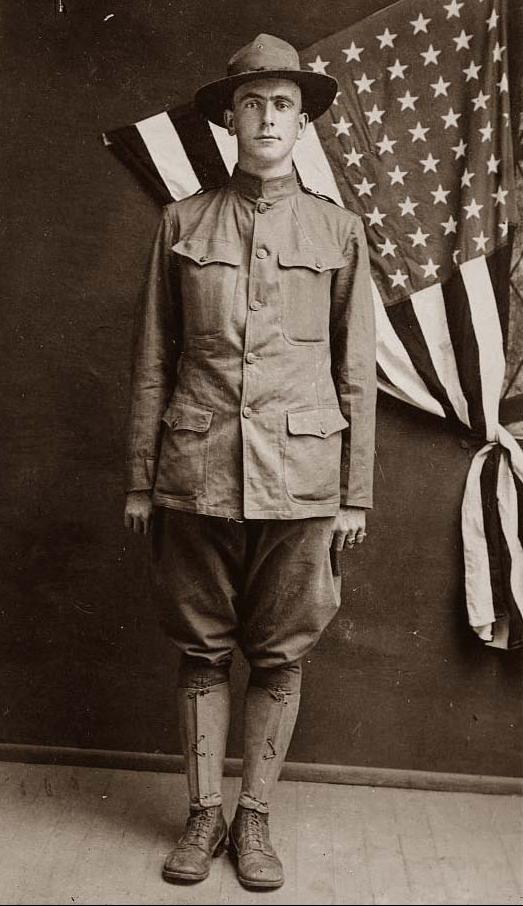
Soldier-World-War-I

That 1940 number is worthy of note because it is the number at which today’s Army stands.  The total number in today’s military, all branches and both active and reserve, stands at about 1.3 million but declining.  Since 1988 the US Congress has been hell bent on reducing the size of the military, and the number of its installations when there were about 2.1 million men in uniform.  People viewed, and still do, our defense budget as out of control, over-burdening, and unnecessary.  The present day public has this view that we can somehow conduct a war at a distance and with a “World of Warcraft” mentality.  We have smart bombs, high tech aircraft, and cutting edge equipment at every point.  But what the American public forgets is that in the end, it is the individual soldier would fights and wins, or God help us, loses the war.  High tech equipment is rendered useless without men to operate and maintain it.  But even more importantly, and something we all should be intimately aware of right now, is that today’s war, today’s battles, are largely fought and won by the rifleman.  We fight large numbers of enemies who do not wear any uniform, are terrorists who blend in with the local population.  We should have learned that lesson back in the 1970s when in Vietnam we had to fight the Viet Cong who did the same.  But it seems we have forgotten and so we have doomed ourselves to repeating our past mistakes.

Today, the US Army has a total of 13 divisions, 1 armored, 1o infantry of various sorts, and only 2 reserve/national guard.  During the conduct of the Vietnam War, the Defense Department guaranteed each soldier that he would be required to serve in a war zone for only one 12-month period in his career.  Today, soldiers are required to serve 2, 3 and even 4 tours in our present-day war zones.  We have known since World War 1 the hugely negative effects of war upon soldiers and we strived for 50 years to protect our soldiers against such circumstances.  What in World War 2 and Korea was called “battle fatigue” is today known as Post Traumatic Stress Disorder.  Most, if not all, our soldiers today who have served in Afghanistan and Iraq suffer for some degree of PTSD.  This too is a cost of war.

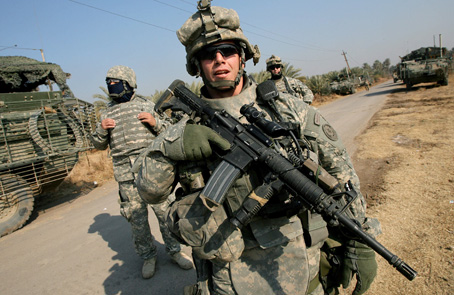
PH2008011502336

We have two choices right now, as I see it.  We can either withdraw all our troops for the worlds battle grounds or greatly increase the size of our military.  Our military is extremely stressed and stretched far too thinly for the mission it has been given today.  Too few are being asked to do too much.  And since I do not see us withdrawing from the world’s battlefields at any time in the near future, it is our duty, an imperative, to adjust the size of our military to fill those needs.  And as distasteful as the American public may find it, the best deterrent to terrorist and like activities in countries such as Iraq and Afghanistan is the presence of a large infantry force until that country is capable of defending itself.  Clearly neither Iraq nor Afghanistan is ready to defend itself.  This is exactly what we did at the end of World War 2 in Germany and Japan, and it worked extremely well.  Why is it we cannot commit ourselves in the same manner today?

Americans really need to consider its mindset towards our military and those we serve.  While it has become common practice to thank those who serve, those words ring rather hollow when we do not back them up with actions that show our support.  Americans should insist that soldiers not be forced into harms way more than once in their military service and back that promise up with the dollars it takes to keep that promise.  Americans need to suck it up, bite the bullet, or whatever cliché you care to use, and commit to a force that not only serves our country in general, but those who serve within it as well.  Right now we are asking too few to do too much.

America’s Politicians Are Compromising Its Future


Winston Churchill said, Those that fail to learn from history, are doomed to repeat it.”  He was repeating what George Santayana said in 1906.  Churchill’s reference is more compelling because he said it as the result of the outbreak of war in Europe in 1939.  It seems, however, that this bit of wisdom has fallen upon deaf ears when it comes to the Congress of the United States.  Democrats in particular, but some Republicans too, are hell-bent on reducing the size of our military.  The concern is the size of the defense budget.  What is being forgotten is America’s security.

After World War I the United States entered into a period of isolationism that proved disastrous.  When it came time that we had to go to war against Germany and Japan, our military was in a very sad state of affairs.  But that was where it had found itself just prior to Word War I as well.  Why?

Then, as now, the price of freedom is steep.  The guardians of our freedom is our standing military.  It is their readiness and ability to quickly go into action that keeps us strong, safe, and free.  After World War I Americans, with a complicit Congress, thought the size and price tag associated with it was far too steep.  There was a huge reduction is equipment and personnel.  When the United States was drawn into World War II in 1941, it was extremely undermanned, poorly trained, and poorly equipped.  But after WWII we seemed to have learned our lesson.  The United States, particularly with the cold war, kept a well-equipped, well-trained, and reasonably sized force until the mid-1980s.  Then, during the Reagan administration, it was decided that we needed to close out-dated and redundant military installations.  With that, it was felt we could achieve a budget savings that was needed.  It was a truly good idea in theory but in practice it has been a political boondoggle that defies logic and common sense.

The Base Closure Commission was first convened in 1988 to consider the necessity of the 3800 military installations then in existence.  On December 29, 1988, the first base closure commission (with its 12 members appointed by the Secretary of Defense Carlucci) issued its report. It recommended the closure, in part or in whole, and realignment of 145 bases. The commission projected that this would improve the effectiveness of the base structure, and would save an estimated $693.6 million a year in base operating costs.  Considering the total defense budget for 1989 was $427.7 billion this was fairly insignificant.  The first base closed was Pease AFB in Portsmouth NH.   But as usual, members of Congress fought tooth and nail to keep every single proposed closing that impacted their state removed from the list.  This, of course, lead to the back-room deals which resulted in the closing of bases that left both the Pentagon and those knowledgeable in military affairs scratching their heads.

For example, during the second round of base closures Fort Huachuca Arizona was scheduled to be closed.  Its men and facilities would be moved to Fort Devens Massachusetts.  Fort Huachuca was the home of the Army Communications Command along with a number of other smaller groups.  Fort Devens was home to the Army Security Agency and several other groups.  The Army Security Agency was responsible for the security of military communications.  With Massachusetts’ nation leading technology base it seemed a match made in heaven.  Its operations and those as the nearby Hanscom AFB, an air force research and development installation engaged in many of the same activities as the army’s security agency.  It must have made too much sense.  But Hanscom AFB has also been a target for a base closure.  To this day it is my belief that Sen. Ted Kennedy made a back room deal with Sen. John McCain in which he secured the future of Hanscom in exchange for closing Fort Devens.  Fort Huachuca remains open today.

To put a dot on this i, if you look at the history of base closures you will find that the majority have come in states where Democrats either tend to be in power or hold great sway.  Large bases which probably should be closed, but have consistent avoided that bullet, remain open and all are in states that are strongly conservative.  Large bases like Fort Sill Oklahoma, Fort Jackson South Carolina, Tinker AFB Oklahoma, and others which probably should be closed remain open because of their location over their mission and cost.  I mention these things just to show how much of a political football our military is.  Political expediency reigns supreme over military needs.  This is exactly how it went right after World War I.

I would like to suggest that one major area of savings can come from reducing our military presence abroad.  Korea, for example, is home to some 50,000 troops.  Why?  The South Korean military is large, very well-trained, and very well-equipped.  Whatever threat exists from North Korea is something they can deal with themselves.  I would suggest removal of all troops from Korea save a small contingent at a joint US/Korea facility at Osan AFB which is an excellent staging area in the case of an emergency.

Then there is the US presence in Japan.  Following World War II, Japan signed an agreement that it would maintain only a defense force, no capital ships or large tactical army allowed.  But in the 75+ years since that treaty was signed Japan find its power in its industrial might, something it always wanted anyway, and shows no interest in being a military power.  I suggest that like Korea all U.S. troops save a very small contingent at an air force base be removed and that Japan be allowed to grow its own military.

The same is true for Germany.  After World War II it was required to sign a treaty that allow only for a purely defense military.  Like Japan, Germany is no longer a state that has any interest in the militaristic tendencies of its past.  Here again we could easily remove all troops save the small contingent and allow Germany to raise and maintain its own regular military.  There is absolutely no reason to believe that Japan and Germany would not continue to be anything but wonderful allies.  And this in turn would greatly reduce the cost of military forces abroad.

One of the things our military has become extremely adept at is quickly deploying to anywhere in the world in response to foreign threats.  We are better served by having a highly mobile and quickly deployable force located in the United States than at most of the locations overseas.  This would mean, however, increasing the number of available transport aircraft but that cost is greatly offset by the savings realized from removing forces overseas.

Key to this is keeping enough men and material available to respond to any emergency.  The proposed cut of 100,000 troops is entirely contrary to good military standing.  We are already too small in the size of forces.  Our soldiers are forced to endure too many overseas deployments to meet the nation’s needs.  Military effectiveness relies upon good troop morale.  A good way to undermine that is to send the same soldier over and over again into harm’s way.  We learned, supposedly, in World War II the dangers of that and during Korea and Vietnam soldiers were not required to serve more than one tour of one year in a combat zone.  That could not be further from the truth today.

We must get our Congress to work smarter and put aside their selfish political agendas.  Democrats have to give into the idea that the entitlement programs desperately need reigning in and controlled.  Republicans have got to understand that the only way our government gets revenue is through taxes.  They have got to put an end to corporate welfare and give in to the hard reality that we all may have to pay a little more to continue our way of life.

The large land wars of the past involving multiple nations at once seems unlikely.  But we can no longer afford the cold war deployment model either.  What we need is to listen to the Pentagon’s Joint Chiefs of Staff and their aides as to the present and future needs of a well-trained, well-equipped, and properly manned military force.  Politicians really need to get it out of their heads that they both understand and are sensitive to the real needs of the military.  Don’t build ships that naval leaders do not want.  Don’t build aircraft that air force leadership doesn’t want.  Address their real concerns and you will show, finally, that you do remember our history.

America’s Disinterest in Classical Music


I just read a posting on Facebook that told of a man, Joshua Bell, a concert violinist, was placed in a Washington DC Metro station with a $3500 violin at rush hour as a test of how the general public would react.  After 45 minutes the Bell had been able to collect only $30 from 20 people.

The Washington Post who organized this asked the questions, “Do we perceive beauty? Do we stop to appreciate it? Do we recognize the talent in an unexpected context?”  Now this article is making the rounds and an indignant public is responding as if some sort of commentary on Americans in general has been made.  This is foolishness to the utmost.

Classical music is an acquired taste just as any sort of music is.  I do not believe it appeals to the majority of Americans.  I don’t think this is any sort of commentary on the average American other than American’s are mostly drawn to other sorts of music.  In the Washington Post test it is likely that the music drew only those people who both like and appreciate it.  If you hear something you do not find beautiful, regardless of what anyone else says, you are not going to take time to listen.  That is just human nature, and nothing more.

I think you will find a greater portion of Europeans who appreciate classic must than Americans but because it is a part of their culture as much as anything.  American music includes jazz, blues, country, blue grass, and rock and roll.  It is part of our identity.  You cannot go to Poland and expect to find blue music being played every weekend somewhere as you can in the U.S.  It is a very simple cultural thing.

Countries like Poland, Germany, France, Italy, and Russia have classical composers who are a part of their history.  As such, in any country where a famous classic artist was born, homage is given to them, airports, parks, and monuments have their name.  They are a regular part of the national dialogue.  With that comes a natural interest in the music they wrote, and with that what the music of their contemporaries was and sounded like.

I love classical music most likely because I heard it when I was young.  My father used to listen to it and that is probably where I came to enjoy it.  Since, I have immersed myself in my own sort of classical music appreciation.

What I think most Americans do not realize is how much classical music they are actually hearing in public, on television, and in the movies.  I would guess that a good 50% of the better movies have at least one piece of classical music in it.  Movie-makers usually understand it and use it as an important instrument in telling their story.

When I was a kid, most of the cartoons I watched were full of classical music.  Looney Tunes, Merrie Melodies, and others almost exclusively used it.  In one Bugs Bunny short, the makers used Mozart’s “Valkyries” in something of a form that it was meant to be presented.  In a twist they used Elmer Fudd as the tenor who sang “Kill the Wabbit” to Mozart’s music.

But even as someone who truly loves classical music, I am not certain I would have stopped to hear that violinist if he were playing something I did not find particularly appealing.  There is a lot of classical music that has the potential to appeal to a large portion of the American public, but there is also a portion that appeals only to classical music diehards, and that is just the sort of music this man may have been playing.  If you do not understand your audience, you cannot possibly appeal to them.  I wish more Americans liked classical music but I am not going to criticize them because they do not.

The follow is the link to the article I am referring to.  https://www.facebook.com/photo.php?fbid=396563050432534&set=a.254264747995699.63706.253054451450062&type=1&theater


Did Pearl Harbor Have to Happen?


Seventy-one years ago today the Japanese bombed Pearl Harbor and the rest, as they say, is history.  But did the attack on Pearl Harbor have to happen?  Hind sight is a great thing but history is rather predictable.  That is not to say that anyone at any particular time in history can accurately predict the future because of history, but history does teach us enough to make reasonable assessments of what the future holds.

Historians sometimes say that World War 2 was just an extension of World War 1.  That is because World War 1 really settled nothing at all.  All Europeans were simply tired of fighting and had ceased to care who won as long as the war stopped.  In 1917 the Russians, who had one of the largest armies participating in the war withdrew its armies as it engaged in a civil war.  That meant the Prussians could shift their focus from the eastern front to the western front.  But they were met by the newly arrived American troops and the stalemate continued.  Many in the German military leadership desired a negotiated peace with the allies but were told, mainly by the French on whose soil most of the war was fought, that only unconditional surrender would be considered.  This prolonged the war from the summer of 1918 until November 11 of that year.

About a year after Germany’s surrender the allies presented the Germans with the final conditions of surrender.  Of all the terms of surrender the worst was that Germany was required to pay reparations to the allied nations for the damages incurred.  This unnecessary and impossible condition doomed the German economy.  Hitler used that and a long-standing German mistrust of Jews to gain power over the German people.

In 1904 Japan tested its military when it engaged it was is known as the Japanese-Russo War.  Russia had pressured China into relinquishing parts of Manchuria and Korea.   Since 1894 Japan had been warring with China and took this as a warlike action by the Russians.  The losses by both armies at the end of the conflict in 1905 amounted to about 200,000 men but it brought to the forefront the Japanese military.  Until that time Japan had been a largely isolated nation run by the Emperor.  By World War 1, and even though Japan did not participate in the war, the Japanese were developing into the regional economic, political, and military power.  Japan, however, is a nation that has few natural resources necessary to create a world power.  The Japanese used the time from 1905 to the mid-1930s to fully develop an army, navy, and air force, as-well-as a formidable industrial base.  Its largest trading partner during these years was the United States from whom Japan received a continuous supply of both iron ore and scrap iron.  The U.S. also assisted in the Japanese quest for oil and rubber, both of which it secured from Southeast Asia.

The Japanese had never abandoned their desire to build an Empire in the east.  In 1937 they once again declared war on China.  The Chinese, however, had a very strong relationship with the United States and received military support from the U.S. in the form of arms and aircraft.  By 1939, however, with the world aware of the atrocities committed by the Japanese Army on the Chinese, the United States gave Japan an ultimatum to stop the war or face severe economic sanctions.

The Chinese had requested more help from the U.S. in the form of troops and naval support.  The U.S. Army, only 140,000 in strength, was hardly in a position to help in any form.  And FDR had told the American public, a very isolationist public, that he would not take the U.S. into any foreign war.  By 1940 with the Japanese showing no signs of reigning in their army the United States declared economic sanctions on Japan by ending all trade, most importantly were the raw materials Japan desperately needed to sustain its industry.  Because of this the Japanese had to quickly expand their influence in the far east to maintain those materials.  The response was the Japanese “East Asia Co-prosperity Sphere.”  The intent was clear to all who were watching.  The Japanese had announced that they, the industrial/military power of the east, needed the rest of the far-east for its economic needs.  This gave Japan the impetus to extend its Asian war to what was then known as Indochina, today’s Vietnam, Laos, and Cambodia where there were huge rubber farms and other raw materials.

When 1941 arrived there was a full-fledged fighting war in both Europe and Asia.  FDR had been visited by Winston Churchill asking the U.S. to enter the war.  American eyes were almost entirely focused on the war in Europe but most remembered the first world war and because of that wanted no part of European problems, as they perceived this.  Their eyes should have been equally committed to looking toward Asia but no one, including many highly placed government officials, saw any threat.

But in 1925 the United States had been warned of the attack on Pearl Harbor.  The informant was U.S. Army General William Mitchell who, at his court-martial, had not only told military officials that there would be an attack on Pearl Harbor, but who would do, when they would do it (on a Sunday), and how they would do it, an aerial attacked launched from air craft carriers of the Japanese Navy.  Sixteen years later, almost exactly from the day Mitchell made his prediction, the Japanese launched their attack.

Americans are famous for underestimating their own vulnerabilities and their enemy’s craftiness.   Even without Mitchell’s prediction, America had ignored its defense responsibilities.  Had the Japanese decided to invade the United States at San Diego, America would have been hard pressed to defend itself.  That same Japanese armada that attacked Pearl Harbor had plans to continue to the U.S. west coast.  Those plans were scuttled when the Japanese failed to account for the U.S. aircraft carriers.  What they did not know is that one of the three carriers they were looking for was sitting in San Diego while the other two were in the waters not far from Hawaii.

But for over four years prior to Pearl Harbor, first Japan and then Germany warred on their neighbors and showed no signs of letting up.  Even in its isolationist mode, America would have done well to enlarge and better arm its military.  It took America almost nine months to engage in any meaningful conflict with either Japan or Germany, longer than it had taken America to engage the Germans in World War 1.

Pearl Harbor was avoidable in the sense that America could have made a greater commitment to its defense which in turn may have given the Japanese more of a pause before they attacked.  And possibly would have warded it off entirely.  The Japanese military, and Admiral Yamamoto who commanded the fleet that attacked Pearl Harbor, were eminently aware of America’s possibilities.  When the attack did not go as planned Yamamoto is known for having stated that he feared Japan had only “awakened a sleeping giant.”

Want to Know Where the Next War Will Break Out? Look to Where the Last One Happened!


The countries which count themselves among “the west” have a very poor track record when it comes to recognizing how their present-day actions will inevitably affect the future.  In the history of the United States this did not take long at all.  Once the American Revolution ended in 1783, it was just a matter of time before the next outbreak of hostilities would come to its shores.

From 1783 and well into the Washington and Adams administrations, there was much talk between these presidents and the congress as to what represented a good army and a good navy.  To be sure, money was short for funding more than a minimal army and navy at best, but they had a difficult time deciding among themselves what one should even look like.  When Thomas Jefferson took office in 1803, he was so vehemently against the United States having any sort of standing army that he set out to entirely disband what we did have.  So weakened were U.S. forces in 1812, that when the United States finally took action against British Naval ships that were impressing American sailors, it was inevitable that the U.S. would have difficulties defending itself against the vastly superior British forces yet again.

James Madison, the president during the War of 1812, had his work cut out for him but he rallied support and put together a force that finally in 1814 ended the hostilities with the Battle of New Orleans.  Never again were U.S. forces so weak as to be incapable of defending our shores.

That World War 1 would happen where and when it did was apparent to all but those in complete denial of the instability that existed in the Balkan Republics.  While Austria was rightfully outraged at the assassination of Franz Joseph, it could have avoided dragging western Europe into a conflict had it not taken the actions it did.  But once it did, fierce Austrian and German nationalists used it as a way to united Prussia, Germany, and Austria in a fight with Russia, and then with France.  Prior to World War 1 national borders were frequently in dispute, often fuzzy, and at times certain territories claimed by one country were under the government of another.  It was this that thrust Austria-Germany into the fray.  Prussia in particular made claim to Russian territory and that brought in the Russians.

By the time World War 1 had ended in 1918 Europe was as war-weary as it had ever been.  The French felt the most wronged by the German incursions.  And the British, not to be outdone, felt they had been forced to contribute an inordinate amount of financial backing to the allied forces.  Each wanted its pound of flesh extracted from the German people.  When the final treaty was signed in 1919, Germany was required to pay so much in financial reparations as to render it bankrupt for decades to come.  The demands of the French and British were extremely unreasonable.  This so embittered the German people who a very small very right-wing group of Germans known at the National Socialists used that, and other prejudices, to champion their cause.  Throughout the 1920s the German economy expanded but because of its heavy debt it was felt by most Germans that they were being held down.  German feared, and rightfully so, that their military had been so weakened that their natural enemy, the Russian Communists, could overrun them at will.

When a world-wide depression hit in the 1930s, it gave the German National Socialists, lead by Adolph Hitler, the perfect opportunity to take power.  He rightfully pointed to the treaty signed in 1919 as the basis of the economic woes, and promised to take back German pride.  Once elected chancellor, Hitler did that at least in part.

Historians today point out how World War II is but a continuation of World War I, there having been no reasonable treaty agreed to.  But the end of World War II necessarily gave seed to both the Korean War and the war in Vietnam.

Until 1945, China had been led by Emperors and a conflagration of local war lords who ruled heavy handedly over the people.  For as long as anyone could remember these feudal lords were waring with neighboring feudal lords over land and power.  But by the end of World War II, the Chinese people were tired of monarchies and all their trappings.  Enter Chang Kai-shek.  Chang Kai-shek had been the visible leader of the opposition to the Japanese occupation forces, and of course at the end of World War II he was the U.S. choice to led the country.  But Chang Kai-shek did little to change the culture of the government.  The popular general turned into a hated governmental administrator.  Mao Zedong, who had also lead opposition forces during World War II proffered the idea of a socialist state, a “people’s government.”  So popular was this idea among the Chinese people who four short years after World War II, Mao Zedong was the head of the new Chinese government.

Mao Zedong quickly made friends with two neighbors each of whom was ethnically related, the North Koreans and the Vietnamese.  Both countries had established a communist form of government and both had a desire for their countries to be united, north and south.

The U.S. greatly underestimated the power of the North Korean and Chinese forces that invaded in 1950 and were nearly driven off the peninsula.

Not long after the end of hostilities in North Korea things were getting unsettled in Vietnam with the withdrawal of the French in what had been Indochina.  Here again a general who had opposed the Japanese during World War II, Ho Chi Mihn, was leading his communist nation.  But unlike the North Koreans, Ho Chi Mihn made an offering to U.S. official to avoid hostilities.  But 1954 America had become wrapped up in McCarthyism and negotiations with communists was viewed by many as unpatriotic.  No talks were ever held.

When the French left Vietnam the U.S. stepped in.  But U.S. officials had little understanding of Vietnam’s problem.  All they saw were the hated communists who had evil in their hearts and had to be controlled if  not eliminated.  As early as 1954 war in Vietnam had become inevitable.

For the past 11 years we have been involved in the conflicts of the middle east.  While things have at least settled down in Iraq and Afghanistan, the region is far from stable.  Also in question, what are our long-range motivations with regard to that region?  Where are our allegiances?  What countries are most likely to drag the region back into hostilities?

One thing is certain, we cannot use our beliefs in what is right and wrong and overlay those beliefs on the people of other countries.  That simply does not work and it categorically unfair to the people of those countries.  What we need is a greater understanding of the needs of the gross population of these countries, their desires, and their beliefs.