Want to Know Where the Next War Will Break Out? Look to Where the Last One Happened!


The countries which count themselves among “the west” have a very poor track record when it comes to recognizing how their present-day actions will inevitably affect the future.  In the history of the United States this did not take long at all.  Once the American Revolution ended in 1783, it was just a matter of time before the next outbreak of hostilities would come to its shores.

From 1783 and well into the Washington and Adams administrations, there was much talk between these presidents and the congress as to what represented a good army and a good navy.  To be sure, money was short for funding more than a minimal army and navy at best, but they had a difficult time deciding among themselves what one should even look like.  When Thomas Jefferson took office in 1803, he was so vehemently against the United States having any sort of standing army that he set out to entirely disband what we did have.  So weakened were U.S. forces in 1812, that when the United States finally took action against British Naval ships that were impressing American sailors, it was inevitable that the U.S. would have difficulties defending itself against the vastly superior British forces yet again.

James Madison, the president during the War of 1812, had his work cut out for him but he rallied support and put together a force that finally in 1814 ended the hostilities with the Battle of New Orleans.  Never again were U.S. forces so weak as to be incapable of defending our shores.

That World War 1 would happen where and when it did was apparent to all but those in complete denial of the instability that existed in the Balkan Republics.  While Austria was rightfully outraged at the assassination of Franz Joseph, it could have avoided dragging western Europe into a conflict had it not taken the actions it did.  But once it did, fierce Austrian and German nationalists used it as a way to united Prussia, Germany, and Austria in a fight with Russia, and then with France.  Prior to World War 1 national borders were frequently in dispute, often fuzzy, and at times certain territories claimed by one country were under the government of another.  It was this that thrust Austria-Germany into the fray.  Prussia in particular made claim to Russian territory and that brought in the Russians.

By the time World War 1 had ended in 1918 Europe was as war-weary as it had ever been.  The French felt the most wronged by the German incursions.  And the British, not to be outdone, felt they had been forced to contribute an inordinate amount of financial backing to the allied forces.  Each wanted its pound of flesh extracted from the German people.  When the final treaty was signed in 1919, Germany was required to pay so much in financial reparations as to render it bankrupt for decades to come.  The demands of the French and British were extremely unreasonable.  This so embittered the German people who a very small very right-wing group of Germans known at the National Socialists used that, and other prejudices, to champion their cause.  Throughout the 1920s the German economy expanded but because of its heavy debt it was felt by most Germans that they were being held down.  German feared, and rightfully so, that their military had been so weakened that their natural enemy, the Russian Communists, could overrun them at will.

When a world-wide depression hit in the 1930s, it gave the German National Socialists, lead by Adolph Hitler, the perfect opportunity to take power.  He rightfully pointed to the treaty signed in 1919 as the basis of the economic woes, and promised to take back German pride.  Once elected chancellor, Hitler did that at least in part.

Historians today point out how World War II is but a continuation of World War I, there having been no reasonable treaty agreed to.  But the end of World War II necessarily gave seed to both the Korean War and the war in Vietnam.

Until 1945, China had been led by Emperors and a conflagration of local war lords who ruled heavy handedly over the people.  For as long as anyone could remember these feudal lords were waring with neighboring feudal lords over land and power.  But by the end of World War II, the Chinese people were tired of monarchies and all their trappings.  Enter Chang Kai-shek.  Chang Kai-shek had been the visible leader of the opposition to the Japanese occupation forces, and of course at the end of World War II he was the U.S. choice to led the country.  But Chang Kai-shek did little to change the culture of the government.  The popular general turned into a hated governmental administrator.  Mao Zedong, who had also lead opposition forces during World War II proffered the idea of a socialist state, a “people’s government.”  So popular was this idea among the Chinese people who four short years after World War II, Mao Zedong was the head of the new Chinese government.

Mao Zedong quickly made friends with two neighbors each of whom was ethnically related, the North Koreans and the Vietnamese.  Both countries had established a communist form of government and both had a desire for their countries to be united, north and south.

The U.S. greatly underestimated the power of the North Korean and Chinese forces that invaded in 1950 and were nearly driven off the peninsula.

Not long after the end of hostilities in North Korea things were getting unsettled in Vietnam with the withdrawal of the French in what had been Indochina.  Here again a general who had opposed the Japanese during World War II, Ho Chi Mihn, was leading his communist nation.  But unlike the North Koreans, Ho Chi Mihn made an offering to U.S. official to avoid hostilities.  But 1954 America had become wrapped up in McCarthyism and negotiations with communists was viewed by many as unpatriotic.  No talks were ever held.

When the French left Vietnam the U.S. stepped in.  But U.S. officials had little understanding of Vietnam’s problem.  All they saw were the hated communists who had evil in their hearts and had to be controlled if  not eliminated.  As early as 1954 war in Vietnam had become inevitable.

For the past 11 years we have been involved in the conflicts of the middle east.  While things have at least settled down in Iraq and Afghanistan, the region is far from stable.  Also in question, what are our long-range motivations with regard to that region?  Where are our allegiances?  What countries are most likely to drag the region back into hostilities?

One thing is certain, we cannot use our beliefs in what is right and wrong and overlay those beliefs on the people of other countries.  That simply does not work and it categorically unfair to the people of those countries.  What we need is a greater understanding of the needs of the gross population of these countries, their desires, and their beliefs.
The 2nd Korean War That Almost Happened


In 1969 I was stationed in the US Army at Yongsan South Korea.  Yongsan was, and is, the headquarters of the 8th U.S. Army as well as assigned US Air Force detachments.  I worked in the 8th Army communications facility that provided communications for the Headquarters to locations around Korea, to Japan, and to the United States.  Upon arrival it had seemed an easy enough assignment considering it was not Vietnam and no one was trying to kill me on a daily basis.  That does not mean there was no conflict at all, there was, more than most people in the U.S. ever knew about.

In February of 1968 the crew of the USS Pueblo, a naval spy ship, had been captured by the North Koreans and were held in captivity for the next 11 months, being released on December 23 1968.  Although the Korean military commands had been on heightened status, is was not perceived as grave.  Still, the South Korean government, in control of the world’s 5th largest standing army at the time, was nervous as Kim Jong Il had promised to invade the south and reunite the countries by force.  All South Korean men between the ages of 18 and 60, at the time, were either on active duty with the military or in the reserves.  Each considered war likely, and some even looked forward to seeking to avenge the hostilities that had ended only a decade and a half before.

At the time, the United States had two complete infantry divisions in Korea, the 2nd Infantry Division and the 7th Infantry Division.  It was the job of the 2nd Division to patrol and keep safe the demilitarized zone (DMZ).  Men, both observers and infantrymen, could easily see the North Korean soldiers on a daily basis.  The North Koreans were known for being provocative and frequently probed at the U.S. lines.  In one instance while I was there, a 2nd lieutenant of the US was out on an inspection tour of the DMZ when he was attacked by machete wielding North Koreans who killed him in broad daylight.  This incident, and many more like it, never made it to either the newspapers or the nightly news broadcasts in the US as those facilities were tied up in the news coming out of Vietnam.  And yet, soldiers in Korea who served north of the Han River were all considered to be in a combat zone and given commensurate combat pay.

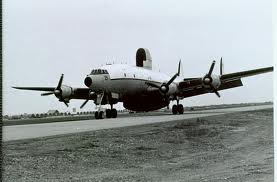
Then, on April 15, 1969, a Tuesday, a U.S. Navy spy plane known as an EC-121 was shot down over North Korea and its crew of 33 all died.

US Navy EC-121

The aircraft was on a mission about 100 miles east of the North Korean peninsula when it was shot down by a North Korean Mig-21 fighter.

I was working in the communications facility at the time this happened.  My battalion commander, a Lieutenant Colonel who seldom ventured into the facility, was suddenly sitting in my work area visibly shaken.  He informed us that the facility was on lock-down and no one would be allowed to enter or leave.  To that end, at the entrance way to my section the normal military policeman had been replaced by a South Korean soldier who was wielding a shotgun with orders to shoot to kill.  Additionally, those men who were in what was the cryptographic section, secure teletype communications, had their door, a bank vault door, secured with the combination lock spun.

Most men who served in areas like I did were aware of what was called survival time after the outbreak of hostilities and the launching of missiles.  Our survival time, as I remember it, was about 3o seconds, for obvious reasons.  What I was unaware of, since we there were no windows in this facility, was that a machine gun had been erected three-quarters of the way up our microwave tower.  Additionally, a heavily army truck was stationed just outside our facility.

Communications parlance of the day had various levels of importance assigned to every bit of communications either received or sent: routine, immediate, and flash.  Each level above routine required the sender to have certain increasing rank and responsibility.  There was one type of communication that was seldom seen and this was known as the “red rocket.”  This particular degree of urgency was reserved for the White House.  Starting on April 15 1969 we saw a lot of such traffic.  The situation was extremely grave as we soon found out that the rear infantry division, the 7th, had been moved to a forward position and many of its supporting artillery batteries were in the process of being moved.

At the time the U.S. had many naval and air forces stationed in Japan which were scrambled to Korean waters and air bases in South Korea.  But more importantly, at the time the Air Force had a group stationed at McDill AFB known as STRIKE Command.  This group had nuclear capability and had been scrambled as well.  I only found this out a couple of years later when, while stationed in Italy, my neighbor was a man who had been assigned to STRIKE Command at the time.  He said STRIKE Command aircraft were within a couple of hours of Korea when they were recalled.

For its part, the United States had absolutely no interest in having an armed conflict with the North Koreans.  The U.S. already had over 500,000 military on assignment in Vietnam and could ill-afford a new commitment of men and material.  The new Nixon White House, a mere 90 days into its tenure, used Henry Kissinger’s amazing diplomatic skills to avert a war.  That task was certainly difficult as both North and South Korea desired a fight.  Still, it took serveral days to resolve the issue, at least temporarily.

We who served in Korea at the time felt over-looked, almost forgotten.  Thought not nearly in the numbers of Vietnam, men were still giving their lives in Korea in those days.  To be sure, the formidable size of both the U.S. forces in Korea and the South Korean military itself was just enough of a deterrent, but only because cooler heads prevailed.

The Koreans


In December of 1968 I was sent by the Army to Korea.  I was one of the fortunate ones who through luck alone was spared the horrors of Vietnam.  But Korea was not a country without conflict.  To the contrary, Korea had a simmering peace that occasionally erupted into armed exchange.  The world took little note of these exchanges because of Vietnam.  But the exchanges were often deadly.  Two of the more infamous events at that time was the taking of the ship USS Pueblo and its entire crew, and the downing of an American spy plane, an EC-121.  I was there for the release of the Pueblo and the entire EC-121 incident.  The latter came close to bringing about an all out fighting war.

But this is not the story of a divided country on the brink of war.  This is the story of a people I came to know, respect, and love.  It was also my introduction to a third world country, and all its challenges.

When I alighted from the Boeing 707 that took me to Korea I noticed a distinct scent in the air.  I found out in time it was a mixture of burning wood, burning charcoal, and human excrement.   The wood and charcoal were the fuels of choice for most of the Korean population and human excrement was used in the rice fields as fertilizer.

Many of the soldiers in Korea, myself included, lived in Quonset Huts.  Each of the huts was kept clean and in good order by a house boy, a Korean man we paid.  It was my house boy who introduced me to Korean society, such as it was.  But prior to arriving in Korea, I had met a Korean family in my home town who expressed to me their desire I visit with their relatives in Seoul.  I did that too.

At the time, Korea had a very small rich class, a slightly larger though still tiny middle-class, and a huge number of poor.  Korea was still recovering from the second world war.  My house boy, of course, was a member of the poor, and the family I was entreated to visit was a member of the middle-class.  You could tell middle-class members by their black and refurbished former US Army jeeps.  The rich owned small Toyotas and Datsuns.

My house boy invited to his house for supper one day.  I, of course, was obliged to accept.   His house was little more than two rooms that included his wife and children plus his parents.  In Korea it was expected and accepted that children cared for their parents.  The door to the outside was a wooden frame with paper filling what would otherwise have been small window frames.  The house was heated by a small charcoal stove situated beneath the floor.  These devices proved to be deadly too often, giving off much carbon monoxide.  It always amazed me that these structures never seemed to catch fire.  Such a fire would have ravaged its neighborhood with its extremely tightly intertwined wooden edifices.

A veritable feast was laid out in front of me.  We sat on the floor and ate there.  It was not as much because of custom but from a lack of any sort of furniture.  Such furniture was a luxury the poor could not afford.  The feast in front of my was, I am certain, far more expensive and expansive than the family could afford.  Rice, fish, kimchi and seaweed were a large part of this feast.  At the time, most poor Koreans allowed themselves fish once a week, opting for rice and kimchi as their staples.  Somewhere in the course of the evening my house boy offered how good they had it compared to others.  He explained that the truly poor were forced to eat rat at times.  Dogs were rare, for obvious reasons, but were considered a delicacy, he told me.   When the meal was finished we men had a drink of cheonju, a Korean rice wine.  When he took a drink my house boy turned his head away.  He later explained he that out of respect to his father, that he did not drink in front of him.

When the EC-121 was shot down my house boy disappeared for a week.  The entire Korean and American army had mobilized for what everyone was certain was the coming war.  My house boy was a member of the national guard which included every man between the ages of 18 and 60 without exception.  My house boy expressed a passionate desire to fight the north and re-unite the two Koreas.  He had relatives in the north he had never met.  When he returned he expressed his disappointment that a war had not started.  It did come to an exchange of artillery fire at the DMZ, and a lot of posturing.

I was also treated to dinner with the middle-class family I had been introduced to.  I do not remember how we found each other, but I do know their American relatives informed them I was there and where to find me, so I expect they reached out at some point.  They picked me up in their black jeep and took me to their home, considerably larger than that of my house boy.  The meal they put out, equal of course to that of my house boy, included pulgogi, beef that is fried upon a small stove.

I visited something that was rather unique in the orient while I was there, a “girl’s university.”  Women were still second class citizens in the far east.  But in Seoul there was a rather large, and or some prestige, college for women to attend, Yonsei University.

Koreans were hell-bent on being both autonomous and powerful.  Their army was large, extremely well-trained, and proud.  They were so highly thought of by the US Department of Defense that they were considered out best ally and fighting partner in Vietnam.  Many Koreans gave their lives in war in Vietnam.  Unlike other allies America has had, the Koreans never backed down from a fight and were intensely loyal.  The ROK soldiers, as they were known, were highly valued by the American troops.  This resolve was fermented in the 40 plus years of Japanese occupation Korea endured.

I knew, at the tender age of 20, that this industrious society would one day come into its own and be respected by the world.  That day, of course, has arrived.  I responded to what I found in Korea by vowing to verbally defend anyone who would detract Korea and its people.  These are wonderful people.  They have a marvelous country, rich with history, and a force in the world both economically and politically.  They are the epitome of Teddy Roosevelt’s axiom, “Walk quietly and carry a big stick.”