History of America: Chapter 3, 19th Century


The 19th Century was fairly steady state where immigration was concerned in the years from 1800 to 1890. The exception was, first, the potato blight in Ireland, 1845. A flotilla of 5000 boats brought tens of thousands of Irish to America. (When America Despised the Irish: The 19th Century’s Refugee Crisis – HISTORY) Those Irish congregated in two cities, New York and Boston. Boston’s blue bloods took exception to their influx as they brought their Roman Catholic religion with them to a place were Calvanist beliefs prevailed. The Irish in turn set up their own school system which was attached to their churches. A few decades later, the Boston Brahmins started sending their children to these Catholic schools as their proved far superior to the public school system in Boston at that time. Still, it was commonplace to see a sign in a shop window, “Irish Need Not Apply.”

The Chinese immigration to America started in 1848 with the discovery of gold in California. By 1850 25,000 Chinese had emigrated. In 1875, the Page Act excluded the emigration of Chinese nationals as laborers. In 1882, Congress passed the Chinese Exclusion Act which suspended all Chinese emigration for 10 years. (Chinese Exclusion Act – 1882, Definition & Purpose – HISTORY) Then in 1892, the Geary Act extended Chinese exclusion for another 10 years. Then in 1902, Chinese immigration was permanently banned. These acts were purely racially motivated.

In 1880 there was a second mass exodus from Ireland the result of wide spread famine among the poor farmers. Still, immigration until the 1890s was almost exclusively northern European. The Swedes started settling Wisconsin and Minnesota. The Germans tended towards Pennsylvania but a significant number settled in other Northeastern States. Names of cities and towns reflect this immigration, cities like Steubenville NY among others.

Starting around 1890 there was termoil and famine in Eastern and Southern Europe which brought those taking flight from Russian service impressment of the Polish, Armenians and Syrians fleeing the bloodbath inflicted upon them by the Ottoman Empire, Italians fleeing extreme poverty in the southern portion of Italy. By 1890 approximately 15,000 Greeks had come to America.

The late 19th century arrivals frequently came being lured by posters saying they can get rich in American mills. Federal law prohibited such advertisements from being put up but the industrialists felt, correctly, that the politicians of the cities and states would bow to their wishes. Even a Congressional probe into such acts said such actions were not happening.

When America switched from a mainly agrarian economy in the 1820s to an industrial economy as the result of the cotton gin and the importation of the water powered loom, mills cities throughout the northeast, Pennsyvania and New Jersery lured farm girls to their mills. No where was this more evident than the mills of Lowell MA where relatively good wages and good housing had farmers pushing their daughters from New Hampshire to the Lowell mills. The reason was a simple and pragmatic one: New England farms were always difficult entities from which they made a living. The farmer relied upon male offspring to assist in the farming while the girls were seen as surplus and a drain on the household. By moving the girls to Lowell, the farmers gained twice: first, the household budget no longer included the girls and secondly, the girls sent money back home.

The Lowell and Lawrence MA mills were textile for the most part. In the early 19th century the farm girls were plentiful enough to satisfy mill needs. But as the looms got larger and faster, and the entire process of textile fabrication grew more sophisticated, the mills expanded quickly and surpassed the labor available to them from the local economy. This started about 1885. That there was abundant work available in America sounded like a really good deal to the poverty stricken Europeans of all nationalities. The Germans supplied what was referred to as “skilled labor.” They took the positions of mechanics in these mills. The job of tending to looms, cleaning wool and cotton fell to the “unskilled labor” market. And it is that market which drew droves of Europeans who were battling poverty, religious oppression, and ethnic hostilities. By 1900, immigrants were counted in the millions per year. These immigrants filled mill positions from Maryland northward and from Massachusetts westward to Chicago.

There were also the coal miners of Pennsyvania, West Virginia and Colorado who came from this immigrant stock. They became some of the first to attempt to unionize and strike. There were many scenes of violence which played out around these mines when the miners struck. The miners’ strife continued through most of the 20th century.

America’s immigrants soon lived in America’s slums as was particularly visible in Massachusetts cities, New York’s lower east side, and Chicago. In her book, Twenty Years at Hull House, Jane Addams describes her outreach work in the Chicago slums to assist single mothers who had to work in the stockyards and mills of Chicago together with the task of parenthood. American novelists such as Sinclair Lewis, Theodore Dreiser, and Upton Sinclair. These authors took on the industrialists and their poor treatment of their workers. Theodore Dreiser wrote the fictional novel Sister Carrie which cronicled the life of a middle class young woman who becomes a nurse and finds herself starting a “settlement house” in New York’s lower east side. This was, of course, a thinly veiled look at the life of Margaret Sanger.

America seems to always have had problems with immigrants. Each ethnic group found itself being preyed upon by the older immigrants.

The Many Faces of Racism in the 1960s


I grew up in the town of North Andover Massachusetts.  North Andover is a small town some 25 miles north of Boston, and borders the cities of Lawrence and Haverhill.  North Andover in the 1950s and 1960s was a quiet town, a town whose history was steeped in the revolution, and which had its share of Massachusetts blue bloods.  Still, it was a mostly middle class town, a small number of wealthy families and a small number of poor families.  It had in those years only just begun to inherit the 2nd generation immigrants from Lawrence, mostly Italians and Poles.  They were the children of new immigrants who had escaped the textile mills of Lawrence and its tenements to the single family homes of North Andover.  A few still worked the mills, one of which, Stevens Mill, was a textile mill located in North Andover.

In the 1950s North Andover still had a handful of working farms, several of which were cow farms, and one turkey farm.  For that, the residents of neighboring Andover derisively nicknamed North Andover “Turkey Town.”  Andover was home to the elite Phillips Academy which had produced presidents, senators, and many wealthy businessmen.  Andoverites never missed a chance to assure the people of North Andover that they lived in a town that was something less than Andover, a poor relation. It didn’t affect us in the least.

The part of town I grew up in, known as the “old centre,” was mostly made up of upper middle class families.  It was not an area where, for the most part, young families lived unless you were part of the town’s old families which we were.  Our house was one of the homes which lined the town common, a large and old green area situated next to the North Parish Church, the first church of old Andover, and founded in 1646.  All the original families of the town belonged to the North Parish Church, and my family was one such, although that was only my father as my mother was Roman Catholic.  Things were changing.  The picture below is of the North Parish Church as seen from the common.
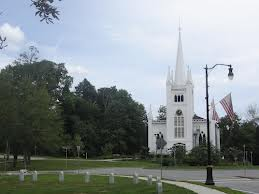
north parish

We were sheltered from the greater world.  The city of Lawrence, with its many ethnic neighborhoods, had a very stable population whose newest members were from Puerto Rico, a sign of things to come but not anything anyone took any particular note of.  If there were black families in Lawrence, I never saw them and was entirely unaware of them.  The first black man I ever set eyes on came in my sophomore year at North Andover High School, 1963, and he was an exchange student the North Parish Church had brought from Africa.  He was the last black person I knew prior to my going to school in New Jersey in September 1965.  Even my trips to Boston with my father on his business trips did not impress upon me the presence of the black population that lived there.  And that’s how it was.

Although there was some joking about a person’s ethnic background, none of that was ever taken seriously.  No one seemed to truly care what a person’s ethnic background was.  If there was bigotry in the town, it was well hidden.  We did not learn, nor was anyone trying to teach us, any sort of racial or ethnic bias.  Maybe things would have been different if there were some black families living in the town, but there were not.

My family was what was referred to as being “land poor.”  It meant we owned lots of land but did not have much money to go with it.  I never wanted for anything but I never got an allowance.  I did not even know such a thing existed, quite honestly, so asking for an allowance was alien to me.  It was expected that I would mow the lawn, rake the leaves, and take out the trash, and shovel snow in the winter, all without compensation of any sort.  I actually enjoyed and took pride in such chores, and so I always did them willingly. It was what was expected of me, and I thought that was a common thing that members of any family were expected to do.  Then one day, I was not more than 6 or 7 years old, the boy who lived next door said we could earn 25 cents if we shoveled this lady’s driveway.  I had never heard of such a thing!  Earn money for shoveling snow, incredible.  That was my introduction to earning money, and from then on I was always thinking of ways to earn money.  Her driveway was less than a third in length of my own driveway which made the job all the more desirable.

In my late adolescent years I had a paper route.  I delivered the Lawrence Eagle-Tribune to some 60 customers.  The price of the paper was 7 cents a day, and 42 cent the week.   Strangely, getting a tip meant the customer gave me 50 cents a week.  But who gave me such a tip was inversely proportional to their income.  The rich waited at the door for their 8 cents change after giving me 50 cents, while the poorer customers never thought to do such a thing.  I also managed a burgeoning lawn mowing business around the neighborhood.  My main customer was the same lady who wanted her driveway shoveled in the winter.  I could get all of 2 dollars for a simple mowing!  I never wanted for money and always had enough to go to the movies in Lawrence at the Palace and Warner movie houses, theaters of the old single screen variety, now long gone.

When I turned 14 I somehow learned of a summer job at Calzetta’s Farm.  It was regular work with a regular wage.  My lawn mowing business was a bit irregular, some of my customers given to occasionally mowing their own lawns in spite of my services offered.  The farm job required my presence from 8 in the morning until 5 in the afternoon, five days a week for the handsome sum of $15 a week.  I thought I was rich! In the early summer we picked strawberries, weeded the fields, and did whatever the farmers, the brothers Tom and John Calzetta, demanded of us.  Two other young workers, both from the Essex Agricultural Institute, worked with me.  Farm work then, as now, did not suffer a minimum wage requirement, hence the acceptable level of pay we received.  As the name shows, the Calzettas were Italian immigrants, though Tommy and John were second generation.  But everyone regardless of age who lived on the farm, worked on the farm.  The 80 year-old grandmother, dressed in her black mourning garments, worked the 90 degree fields the entire day with the rest of us.  It was hard and dirty work, and when I got home I always had to take a bath.  I worked that farm for two summers, my second I received the wage of $25 a week, I knew I was at the top of my field!  The thought, however, that I was possibly underpaid never once crossed my mind.  I always had money in my pocket and that was what was truly important to me.

The next summer, after I had turned 16, I did not want to go back to work on the farm.  It was too much work!  There was a man, a wealthy man we all knew, who lived in a new house on the common not far from my house.  It was the only modern design house, a ranch, which was ever allowed to be so constructed around the otherwise colonial area around the common.  I knew he owned a mill in Lawrence, and so I literally knocked on his door one evening and asked for a job in his mill.  I do not remember how the conversation went, but he told me to meet him the next morning at 6:30 and he would take me to the mill.

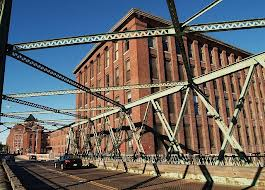
His name was Segal and the mill he owned was known as Service Heel Company, maker of heels for women’s shoes.  That morning was the last time I ever saw Mr. Segal.  He took me to the mill’s office and directed someone to give me a job, after which he disappeared into his own office.  This was the beginning of a most important part of my education, unbeknownst to me of course.  After that morning, I caught the city bus, which stopped right next to Mr. Segal’s house, each morning, lunch bag in hand and ready, more or less, for the day ahead.  My pay was the minimum wage for 1966, $1.25 an hour.  That was $10 a day and $50 a week.  I had doubled my income over the previous summer!  But I was warned, upon taking the job, that I had to be on time which meant being clocked-in by getting my time card stamped by 7AM, otherwise I would be docked 6 minutes if I were even 1 minute late.  I was paid entirely according to my time card.  And if I were late, I could not make up that time at the other end of the day without permission, and such permission was never given.  The picture below is of the mill I worked in.  In the foreground is where the Puerto Ricans worked, and in the background was where I worked.  Although it is not obvious, these two structures were not connected.

kunhardt kunhardt

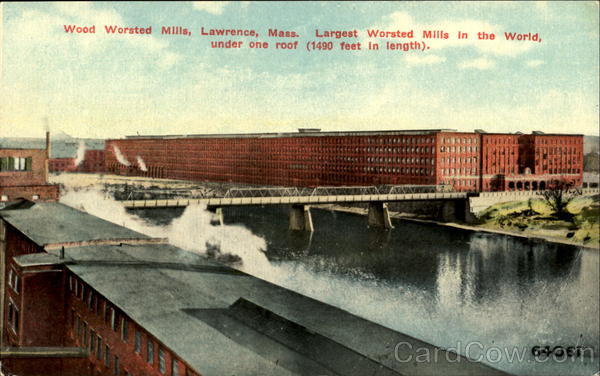
Service Heel Company was located in the old George F. Kunhardt textile factory.  By 1966 the once booming textile industry had entirely abandoned Lawrence, and a considerably smaller shoe industry had taken its place.  Still, at the time, Lawrence was second only to St. Louis in the production of shoes.  But that did not last.  Most of Lawrence’s vast textile mills stood vacant, relics of a bygone era.  The textile jobs had left but the people had not.  Many of the workers at the heel company had previously worked the textile mill at that very location.  One woman related to me that she had worked in that mill for over 35 years doing piece work the entire time.  At the time, piece work was exempt from the minimum wage.  I could not imagine sitting in such a place for so long a time doing basically the same job for all those years.  But she never complained.  To the contrary, she, and most of her fellow employees, always seemed grateful for the work they had.  There was not any sense of entitlement among these people.  Below is a picture of some of the textile mills of Lawrence.
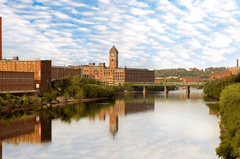
lawrenceWood Worsted Mills Lawrence

In 1966, the Lawrence mills were segregated, not between black and white, for as I said there was no black population, but between Hispanic and everyone else.  That fact was brought to my attention by the foreman, a very large and smelly man named Tony, who took me to the far side of the mill and pointing to the mill next door said, “that’s where the spics work.  You don’t have anything to do with them.”  He was referring to the Hispanics who worked that mill.  And his statement, rather than being a suggestion, came across as a command.  But I knew in my heart that there was something inherently wrong with his statement, although I doubt I could have explained why I felt that way.  The heel workers were almost entirely of French and Italian ancestry, and as such, were the old immigrants as opposed to the new immigrant from Puerto Rico.  But my experiences in Lawrence at that time never included any feelings of fear or animosity towards the Puerto Ricans aside from what Tony had pronounced.  But I did not challenge his belief either, after all, he was my boss and in charge of my continued employment.

I was a “floor boy” in the mill.  I was indoctrinated into the erstwhile sweatshop.  No air conditioning, no break room, no fans, no drinking fountain, only the steady clanging of machines and the smell of paint and glue as was applied to the heels.  The heels were placed by their type into wooden boxes, about a bushel in size.  It was my job to move the boxes from where they were “made up,” that is, the box had a particular type of heel put in them, to the proper station of the worker who would either cover the heel with leather, paint the heel, or press a nail into the heel.  Each job had a color coded ticket in it to signal when it was due to be finished.  I caught hell any time I moved the boxes in the wrong order or took them to the wrong station.  It was only Tony who gave me hell, as the worker at the station involved was inclined to giving me a friendly nudge to say I had messed up, but that I should not worry.  These were the people who were rightfully referred to as “the salt of the earth.”  They were kind hard-working people who you ate lunch with, got to know, and counted on to help you along.  They were union people who warned me that at the end of working 90 days at the mill I would have to join the union, but the cautioned me against that, not because they disliked the union, but because they knew I was still in school and wanted me to continue my schooling so I would not end up where they were.  But it was this very sort of worker who moved his family to North Andover to help their children get a chance at a better life.

The next summer I worked for the Raytheon Company at its facility in Shawsheen Massachusetts, its “missile systems division.”  I got that job because my best friend’s father worked there and said he could get me some sort of job working there.  I was a “clerk” whose main job was finding and filing schematics for the technicians and engineers who worked in the department.  I found out that summer two thing, first, I received 10 cents an hour more than a woman who held the exact same job and started exactly when I did.  I got that 10 cents because I was a man.  I also first heard the word “scab” as it was used to connote someone who crossed a picket line during a strike.  At the end of the summer Raytheon offered to pay for my college education if I remained there and took up a career in electronics.  But the job had left a bad taste in my mouth and I turned them down.  I had tasted gender discrimination and knew I did not like it.  I also acquired a negative feeling for unions, but that was due to my ignorance, and was something I later replaced with knowledge and a healthy respect for unions and their membership.  Below is a picture of the old Raytheon Mills in Shawsheen.  These mills were a part of a failed textile mill experiment.
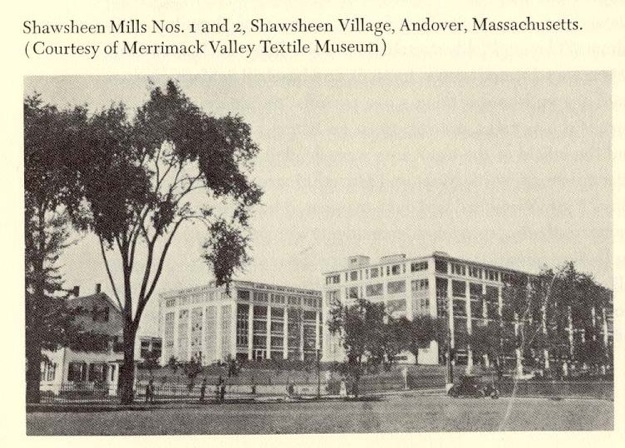
raytheon

That fall I entered Boston University, where I did incredibly poorly, and dropped out shortly before the end of the semester in December 1967.  I took a job pumping gas at a local chain gasoline dealer, pumping Texaco in North Andover, Andover, and Lawrence.  But that job I knew to be temporary as I had my sights set on going to the US Army’s aviation school.  And on February 19, 1968 I was sworn into the US Army and on the following day flown to Ft. Polk Louisiana.  Still, the job gave me work experience in yet another area.  In those days there was no such thing as pump your own gas, and almost every service station pumped your gas, cleaned your windshield, and checked your engine’s oil level.  Regular gasoline ranged from 28 to 32 cents a gallon in those days, oil was 40 to 50 cents a quart.

I had never been out of the northeast prior to going to Ft. Polk, and I was in for an education unlike any I had thus far known.  My last two years of high school were spent in Bordentown New Jersey where a number of my classmates were black or Hispanic.  But because of my father, my upbringing in his Unitarian culture, it never occurred to me that their heritage mattered.  We were just guys who were all intent on doing the same thing.  My trip to Ft. Polk was about to present to me a type of prejudice I had not known.

The trip to Louisiana involved flying to New Orleans followed by a second short flight to Lake Charles Louisiana.  From Lake Charles I had to take a bus to complete the journey to Leesville Louisiana where Fort Polk was located.  I remember staring out the bus window at the southern streets as they passed by, and at one particularly memorable stop, I saw the peculiar sight, to me at least, of two water fountains right next to each other on the outside of a building.  Above one was the sign “white” and above the other “colored.”  I was educated as to the ways of the “old south” which had yet to give way to a new way of thinking.
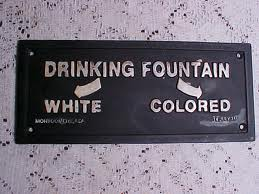
drinking

The US Army in 1968 was heavily engaged in the war in Vietnam, and it quite literally did not have time for anyone’s prejudices.  I would say roughly a third of the men in the company I was assigned to were black.  But to me, and to the army, they were just one of many, who had one job and one focus.  Anything that was not related to our being properly trained as a soldier was not approved of.  The assimilation of all races in the military was nearly complete and the vast majority of men in the army were forced to leave behind them whatever prejudices they had brought with them.  The picture below is what my company area looked like in 1968.

polk

The most telling time in those early months of my military career came on April 4, 1968 when Martin Luther King was assassinated.  In the bunk next to mine was a black man who upon hearing the news of Dr. King’s assassination broke down and cried.  I did not then understand the importance of the man.  All I knew was what the northern media, and the government, wanted me to know about Dr. King, and that was all negative.  It was a hard lesson I had to learn, but learn it I did.  That day, and several days afterwards, it was reported that there were riots in Leesville and many other locales.  The post was closed and we were denied day passes to leave the fort.

That was my experience up to 1968.  It was not particularly unique except that it was mine.  Others experienced many of the same things, just in different ways.  The 1960s changed me in more ways than I was aware of at the time, but am the better for now.

Sophia’s Sunday — Part 4


Sophia’s morning ended with a small lunch.  Her mother had boiled potatoes but there was no pork as was tradition.  Her father said they simply did not have the money, and the butcher was not taking any more credit.  The small meal, much less than usual, was not satisfying, leaving Sophia to wonder if they would truly run out of food entirely and starve to death.  The combination of cold and hunger did things to the mind.  When you went out after a meal not feeling sated, when the cold New England wind bit into your ill-clad body, the who world seemed a little more gloomy, and the times a little more desperate.  That feeling of desperation dominated much of the gossip among the out-of-work mill operatives.

The afternoon promised nothing.  Sophia had promised some friends, who she also worked with, that she would join them in a strike march at one of the mills.  The mill was not the one she worked in but was one of the more than half-dozen mills where the textile operatives had walked out.  A baby-faced Italian leader of the IWW had spoken the day before on the necessity to act as one, it “class warfare” even though, as he implored, they remain peaceful.  The thought of the march both excited and troubled Sophia.  As a part of the larger group she felt a certain safety and sense of kinship with people of so many varied ethnic background.  But she feared both the militia, local police, and private police, the Pinkerton men, who were little more than hired thugs who had been called in to break heads, literally, and stir up trouble.  She had more than once witnessed a policeman using his nightstick mercilessly on one of the strikers.  Women in particular seemed to be targets as they were the least likely to resist or take up the physical fight.  Such actions invariably happened at every such gathering she had ever attended, and she feared that one of this hot-headed Irish policemen would see her only as a “dirty Pollock,” as they frequently called her, and take their aggressions out on her.

The strikers started their march of the main street of the city only to be immediately confronted by a large contingent of the state militia that had become encamped their.  Those at the head of the march divided into two columns and swarmed around and past the militia fronting them but being extraordinarily careful not to directly confront them.  Though many epithets were tossed back and forth, neither side descended into violence and the march continued peacefully.

As they got to the middle of the business district they march turned left, southward towards the mill that was the object of the day’s protests.  All was quiet, and a little too peaceful in Sophia’s mind.  Things seemed to be going a little too well, but then, she thought, maybe the city fathers had finally realized that the strikers had no intentions of rioting, ever, has had been feared.  After all, she thought, it was 10 days into this strike already and there had not been a single riot, or anything close to one.  Maybe, thank God, things would remain peace.  Still, she positioned herself as close to the middle of the crowd of strikers as she could to protect herself for the endless line of police and militia who followed them on their sides.

One block down they turned left again as the reached the desired mill.  There was, a news reporter retold then next day, probably 2000 strikers out that day in the march.  But just as the last of the strikers turned the corner something entirely unexpected happened.  Men stationed on top of the mill in question turned on fire hoses and soaked the strikers.  The below freezing cold of the day coupled with the water had its desired effect of dispersing a large portion of the strikers.  But Sophia found herself caught between two groups, one trying to flee the situation, and another, mostly young men and boys, who were scrambling for chunks of ice to hurl at those men who had aim their hoses upon them.  It seemed suddenly to her that this would certainly turn into the riot she so feared.

As Sophia turned to tell her friend Anna that they should flee, she found that they had become separated and she could no longer find her friend in the frenzied crowd.  She was immediately gripped with fear and then suddenly jostled to the ground when she was stepped upon several times by people trying to flee.  As she got to her feet she was astounded to find that she was now at the front of the crowd but there was no longer water being sprayed down upon them.  Instead, she saw a combination of nightstick wielding policemen and armed militia bearing down upon her.  As she turned her back to flee she felt a sharp pain at the rear of her head.  The blow sent her to her knees and nearly unconscious.  The pain, however, only reinforced her fear and then her determination to flee.  She crawled several feet before getting back to her feet and this time, without fear of courtesy, she pushed herself through the remains of the crowd towards safety.

A minute later Sophia found herself back on the main business street heading home.  Her head still split with pain and as she took stock of herself, she felt the sharp coldness of the day racing through the soaking wetness of her clothing.  She also noticed the heavy scent of horse manure on her body somewhere from when she had fallen.  At other times such a condition would have greatly bothered her, but now her mind was focused entirely upon getting home as quickly and safely as she could manage.

As she burst through the door to the family apartment she almost ran headlong into her mother.  At the sight of her, her mother burst out in a series of questions about where she had been, what had happened, and what trouble she had gotten into.  The trouble portion concerned her mother almost as much as her daughter’s physical condition as all immigrants did their utmost to avoid trouble, to keep the police from their door, to stay out of jail, although such things sometimes proved fruitless even when a person as most careful.  The common $5 fine for loitering, causing a public nuicance, and other charged meeted out at the city’s police court, represented a price higher than most immigrants could afford.  A week’s stay in jail for such infractions was not uncommon.

Sophia quickly comforted her mother with multiple assurances that no police officer had taken any particular notice of her and that she had acted  as a proper woman the entire time.  It was only then her mother noticed Sophia’s bloody scalp and once again lapsed into a long series of question about how her daughter could possibly have come by such a wound, although the reality was she knew exactly how it had happen, it was still extremely difficult to accept that any child of hers would be involved in such disreputable activities.

Sophia had not seen this coming from her mother but she should have.  Both her parents were of the belief that good Catholics, particularly Polish Catholics, always carried themselves in such a way as not to go astray of the law.  Even more, pronouncements made from the pulpit, even the Italian Catholic pulpit, represented the wishes of God and that going against them was always some sort of sin.  Of that they were always certain, even though they usually did not understand such directives.  In this case the clergy had admonished their parishioners from joining in an IWW activities.  The IWW, the contended, was a subversive socialist group that was both anti-God and anti-Catholic in particular.  The Polish community was quick to point out how the IWW was led by “those Jews” and how could one trust such people.

Sophia listened quietly to her mother’s admonishment as she fully understand that to stand up to her would not only be fruitless, but would have some sort of lasting consequences.  Strangely, as she sat there, cold and in pain, Sophia felt a sort of victory within herself.  She had come to be in a violent situation, and her head wound not withstanding, she had come out all right.  She deafened herself to her mother’s continued tirade by considering how it might just be a good thing what she had done.  Maybe, she thought, it was something in which she should become even more active.  But then what, she wondered.  How would that play out.

Sophia’s Sunday — Part 3


Her family did rouse themselves, more slowly than most Sundays, but this was not most Sundays.  Except for going to mass as 9:30 that morning, none of their usual preparations for the week ahead needed to happen.  They would wash their clothes, but there was no sense of urgency to get it done.  If it had to be finished on Monday, that would be all right.  Sophia noted how structured her Sundays usually were, and there was comfort in that structure.

Unlike her brothers, who disdained going to mass and frequently found ways to keep from going, Sophia enjoyed the mass.  She found it comforting.  Father DiGrasso, who always said the 9:30 mass, always gave uplifting sermons.  They unfailingly provided comfort and hope, particularly when the community was going through hard times.  He always seemed to know exactly what to say, and Sophia really liked him.  Fr. DiGrasso was someone she had found in whom she could confide, more than just as her confessor, but especially as a spiritual advisor.  He was not like the priests she had known in Poland, a little cold and aloof, he always seemed happy to see her and always had time to listen to her troubles.

At this particular Sunday’s mass Fr. DiGrasso was markedly different from any she had observed before.  He was quite solemn, and never broke a smile, as he usually did.  He spoke of the strike they were all enduring.  He spoke at great length on the rewards of “turning the other cheek.”  He implored his congregation to avoid trouble at every turn.  He assured the people that the Boston Archdiocese would be helping the congregation with food supplies and other necessities.  Sophia wanted to believe him but his statement troubled her now because he had made that promise a week earlier and so far nothing had happened.

Two days after the strike had started the local socialist labor union, the Industrial Workers of the World, held a mass meeting in the city’s common.  A large man they called “Big Bill” spoke to them and promised them the same support Fr. DiGrasso had promised.  But the IWW had set up soup kitchens within a couple a days, and Sophia had had a number of meals there already.  They were lean meals, but far better than nothing.  And nothing, as the IWW was fond of saying, is what the Catholic church had given them thus far.  In private, her parents had contended that had their been a Polish church in the city thing would have been different for them.  Sophia was not so sure.

But what Sophia did know, and everyone she knew seemed to agree with, was that they were all literally starving.  It was what the strike was truly about.  They had begged the church on numerous occasions for help but it seemed their pleas had fallen on deaf ears.  She knew the Catholic Church hated the IWW socialists, and she suspected most of the IWW leaders felt similarly towards the Church.  But the IWW had kept its promises, so far, and the church had not.  She had heard rumors that the pastor of the Irish Catholic church had literally ordered his congregation not to participate in the strike.  But a few days after the strike had started, they had little choice, the mills were closed, although there were scabs who crossed the lines to do what little work could be done.

As she walked home, Sophia reflected on the strikers who put out the cry for “bread” on their table where they claimed there was none.  Although her family had fared well enough during the tough times, she knew of other families who had young children who had died from malnutrition, or were always sick because they did not have enough to eat.

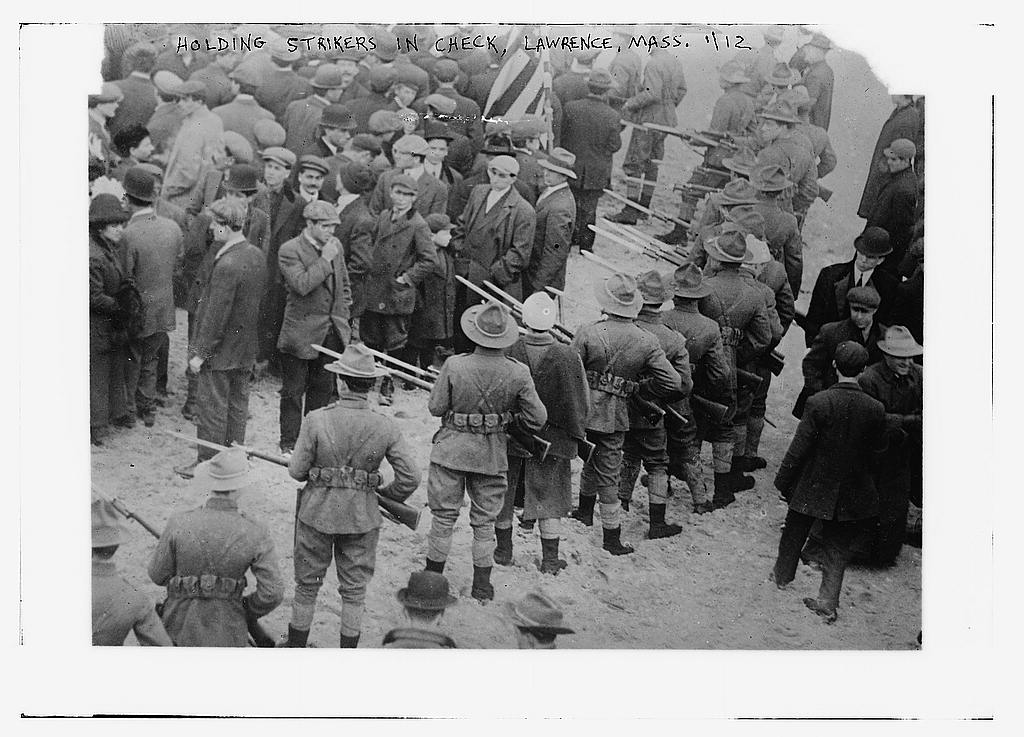
Then she felt a bit of pride over the fact that it was Polish women who had started the strike when they found their wages had gone down with the new year.  They had walked out of the mill yelling “short pay” and imploring their co-workers, of every ethnicity in the city, to join them.  Most did.  It had seemed a glorious moment when it started.  Sophia had worked on the floor below the women who started the strike.  But she remembered how the Polish women had left the mill arm-in-arm with the Italian women who worked with them.  It had seemed such a joyous moment, in a morbid sort of way, but it was a declaration of freedom.  Those first few days had been both heady and scary.  A day after the strike started several hundred of the state’s militia came to the city to assist in keeping the peace.  That was scary.  They all carried rifles with their bayonets attach.  When crowds of strikers gathered, the militia would taunt them with their bayonets pointed at the crowd.  Nothing had come of these taunts, but everyone feared a riot was sure to break out.

Holding strikers in check, Lawrence, Mass

As she arrived home from church that morning she wondered to herself what she should do next.  It was a most perplexing problem, fraught with the fear of the unknown.  She thought briefly about the promise the mill owners had made right after the strike had started that anyone who returned to work would be fully employed and there would be no retributions.  But then her mind went to the IWW leaders, Godless anarchists the city fathers had called them, who said publicly that they could win only if their remain solid.  In private everyone “knew” of the threat of violence to any who crossed the picket line.  She found choosing between hunger and violence a difficult task, certainly not one someone of her young years could fully fathom.

Sophia’s Sunday


It was January 21, a Sunday, and Sophia did not have to work today.  But then it had been 10 days since she last worked, and the prospects were grim.  She arose at 5:30 that morning, just like she had every morning.  Her sister, Elizabeth, was snoring lightly in the bed next to her.  Elizabeth was 10 years younger and had just started working.  On a mattress next to her were her brothers Januz, Frank, and Thaduez.  They ranged in age from 11, Januz, and 12, Frank, to 17 Thaduez.  On a third mattress to himself was Walter, a strapping young man of 20.  As the eldest child it had fallen to Sophia to rouse her brothers each morning and prepare breakfast for them.  This was a tradition they had brought with them from when they had lived in Przybyslawice Poland, a village not far from Krakow.  They had left Poland in 1906 when Sophia’s mother and father had feared their sons would be conscripted into the Czar’s army.

Sophia’s parents had saved as much as they could, and when they felt they had to leave, they sold their farm to an aunt and uncle who said they wanted to move from the city of Katowice to get away from the constant noise and unhealthy air of the city.  Sophia suspected they had bought the farm for far less than it was worth preying on her father’s need for cash to buy passage to America.  They arrived at the port of Boston with slightly less than $100, and claimed to the immigration official that they would be living with her father’s brother.  That was curious as her father was the only boy in a family of seven children, but they were related to the man, though distantly, and reasoned that it was God’s will they use this falsehood to gain admission.  Her parents had not known that giving any name and address would have sufficed.  The port officials knew these immigrants would help fill positions, extremely low and ill-paying, that drove the American economy.

Sunday meant church.   The Polish community was trying to set up its own ethnic church in the city, but until it did they all attended mass at the Italian Catholic church just down the street.  When Sophia question the necessity of building a Polish church when a perfectly good Italian church was only a block away, her mother chastised her and instructed her as to the necessity of retaining their culture in this alien nation.

Sunday also meant they would have meat in their meal that day, probably pork shoulder, along with turnip and cabbage.  It took the combined pay of everyone who worked to ensure that meal but Sophia knew this day would be meatless.  No one had worked the last ten days which meant meat was a luxury they could not afford.  Sophia wondered what the big meal of the day would be, or even if it would be.  She had overheard her father speaking to her mother the evening before saying he would have trouble meeting rent, let alone buy food.  She had heard such desperate words before, but always before at least one of them was still working.  That simply was not the case this Sunday.

As Sophia attempted to survey the room around her in the near darkness surrounding them, she wondered what they day truly held.  It was at that same moment she noticed how cold her nose felt and she wondered what the temperature outside was.  They had been suffering through a particularly cold spell.  The windows of their small apartment did little to keep the drafts at bay.  In Poland they had always had a good supply of wood to keep the fireplace burning high even on the coldest of nights.  They also had a good supply of down quilts with which to keep warm when the winds blew strong.  But then they seemed to have some control over their living conditions, something they no longer had.  Each day the younger of her brothers were tasked with finding errant coal at the coal bins around the city, and particularly at the rail yards.  Their task was a tough one as they competed with other children on the same mission, each hoping to find what another had not.  Mostly it was futile and they would scavenge scraps of wood.

Sophia hated getting up on mornings such as this.  The cold cut through to her bones.  The routine of washing up quickly and dressing went more quickly in the cold of such mornings.  The small coal stove in the kitchen would take its time heating just the kitchen, let alone any of the other rooms.  While her mother tended to her younger siblings, Sophia was charged with getting the stove going.

As she lay their, Sophia wondered what other girls her age did on Sunday mornings.  Not the girls of the city, like herself, but the girls who lived in the more affluent towns surrounding her city.  Did they have to rise early too?  She reminded herself that on Sunday she could get up an hour later than her usual 5:30.  That always felt a bit luxurious.  But were other girls required to take care of their siblings as she was?  She wondered how many of their siblings had to share a bed and a bedroom.  Then her mind wandered  back to wondering why they had ever left Poland.  She had never known anyone who had been conscripted into the Czar’s army.  Maybe it was all just a rumor, she thought, and if they had waited a little longer as her father had implored her mother the troubling news would have passed without adverse affect.

Once out of bed she turned on the single overhead light and attempted to rouse her brothers from their sleep.  This was always a difficult task as they always resisted her attempts, particularly on Sundays when their presence at the mill was not necessary.  Her attempts on this particular Sunday proved to be particularly futile and Sophia gave up quickly.  Her mind was elsewhere, though she could not seem to nail it down to any particularly place, she felt no motivation to continue her morning task.  She looked out the dirty window of her second story bedroom at the apartment directly next to them.  She could see into their bedroom when the shades were pulled, which they usually were not.  The family in that apartment was the Andreottis who, she thought, were louder than her own loud family but fun and extremely friendly.