Why Do Republicans Fear “Critical Race Theory”?


Over the last 6-plus years, the Republican Party has attacked this idea. Their political ads make out the idea of teaching this idea in our public schools as something which should horrify the average American.

What is “Critical Race Theory”? It is the idea that there exists structural racism in society, first when it was introduced by 3 Colombia University law professors in the early 1980s, and today. What is “structural racism”? It is the fact of racist tendencies that have been passed down for many generations and is too widely accepted in today’s society. (https://news.columbia.edu/news/what-critical-race-theory-and-why-everyone-talking-about-it-0)

I was getting my master’s degree in U.S. History from Harvard University when this idea was presented, although I did not hear of it at the time. In one course that I took, one of our required readings was a book named A Thick Interpretation of Culture by Clifford Geertz. Geertz explained why using a simple cause/effect idea of telling history to be undesirable. That is, in one of his examples, he used the Battle of Waterloo where Lord Wellington defeated the far superior force of Napolean. He stated that by simply assigning the victory to Wellington’s having gained the literal high ground is far from enough to explain the battle. He showed that Napoleon’s tired troops, who had marched many hundreds of miles, his lack of good logistics, the weather, the temperament of troops, and other things must be brought to light to give a full view of the battle.

In “critical race theory,” we are charged with looking at a broad view of racism, not only as it exists in America today, but its history going all the back to 1865 when the Civil War ended. For nearly a century, Jim Crow laws of the south used the idea of “separate but equal” as being an acceptable response to race. Today we know, or should know, that such laws were used to manage white supremacy as the norm. Northern states were guilty as well but in different ways. In the north, as in the south, people of color were routinely pushed aside in favor of white people, even when the person of color was the better choice. In the area in which I grew up, the Merrimack Valley of Massachusetts, the newest immigrants, who were also people of color, were of Hispanic heritage, particularly of Puerto Rico at first and then from the Dominican Republic. These people were looked upon as being lazy and inherently violent. Of course, these things were not true, then or now. But when that is how you are “educated,” that is what you come to believe.

Critical Race Theory is an attempt to look at the whole person of color, not just his race, but his entire heritage which includes the forces which worked against these people over the decades. It asks the question, “Why is the crime rate higher in neighborhoods of color than in white neighborhoods?” But it would force the question of how such neighborhoods, if the statement is in fact true, came to be that way.

Sadly, the Republican party, these days, is embracing white nationalist ideas and ideals. These are things which can not only be identified as coming part-and-parcel from the Trump administration, but from Republican governors of states bordering Mexico. When Trump decried the refugees from Central America as being “rapists, drug dealers and murderers,” is his simply saying out loud what many of the more conservative Republicans have thought for many decades.

Were the greatest part of the Republican Party to embrace “Critical Race Theory” would mean alienating an unfortunately large portion of voting Americans. They fear losing power more than doing the right thing. They would rather embrace the institutional racism which exits today in America rather than decrying it and working towards a more unified, accepting America.

One last thing, on the current state of immigration. Today, both legal and illegal immigration is about 1 million per year from all countries. Those coming over the border, both legally and illegally, to the states that border Mexico, are about 200,000 per year. In 1910 there were about 1.12 million immigrants to the U.S., most of whom came through the ports of Boston, New York and Baltimore, a large portion of whom settled within 50 miles of those ports. Today this a large part of our present Italian, Polish and Russian Jewish population. Sadly, our national resentment towards new immigrants still exists today towards immigrants, not only from Hispanic regions, but also those coming from India and Asia. In the 1900 to 1920 era, our largely Republican northeastern states acted towards immigrants as our southern Republicans do today. And that, sadly, defines too many Republicans and is why Critical Race Theory is so important.

Teaching critical race theory in our public schools is a necessity if we are ever to ever embrace our entire society with equity and understanding. We are a nation which was founded on the idea of “all men are created equal” and we are now challenged to ensure that. It is only through an honest education, starting in our elementary schools and continuing forward, that we will become closer to a nation of our ideals rather than a nation of shortcomings.

Where Racism Does Not Exist!


For the second year in a row, I have been tasked with teaching kindergartens. Last year it was in Somerville, Massachusetts and this year is in Greenville, North Carolina. In Somerville I had a class of about 40% Latino students and this year in Greenville, I have a class that has 16 black students, 1 Hispanic student and 1 white student. At this age of 5 years, I dare say, most American children have no concept of race. They are pure in heart and mind. They are the perfect American.

If they are perfect at age 5, what happens by the time they are age 12 and all that has changed? The answer is quite simple. It is primarily the influence of their parents. They teach their white children, their black children, their Hispanic children that it is “us” against them. Secondarily, it is the influence of their peers and of the social norms of their neighborhood.

For 14 years now, I have been teaching in racially diverse school rooms. I can say that between 90% and 100%, the children in these classes have maintained their color blindness. They are racially mixed and most times to turn their backs on any one particular group would bring an end to those whom they call friend. They are mostly unwilling to do this.

It is easy to say that this sort of discrimination is part of white culture. But the white culture is not alone. Certain parts of black culture and Hispanic culture are also discriminatory.

When I was a child, my Roman Catholic orthodoxy taught me religious discrimination. We Catholics were right while all Protestants were not going to heaven. A ridiculous idea in most of today’s culture. Black culture was so tired of the overt discrimination they felt that they took to the streets to protest and, at times, these protests turned violent.

It was my father who greatly tempered my Catholic doxology with his Protestant Unitarian view of the world. They sought to find the expected good in all people.

Almost always through the eyes of young children, we find a perfect world. Yes, a good part of that is their lack of understanding of the world at large. Their world is one of family, school and play friends. Why cannot adults garner the same attitude as their children? Because they lack the understanding necessary to see all people in the same light. They have mostly allow other people to do their thinking for them, a most unhealthy way of life.

Whjle their may be nothing we can do for older prejudiced adults, their is something we can do for children and adults. We can educate them as to while certain minorities feel so angry as they do. They are not angry just to be that way. They are angry because of the overt and covert discrimination they have felt. Fully enlightened education will work. That education must begin at an early age. We as parents, as educators, as leaders of the community must see to it that our children and young adults are witness to a culture of good-will and acceptance.

Southern Baptists Espousing Racism?


First, I am obligated to give credit to the Sunday Boston Globe (June 13, 2021) for certain of the beginning thoughts here.

Tennessee and Oklahoma have recently passed certain laws in regard to what is taught in public schools about race and racism. At the heart of these laws is a restriction in how racism is taught. This is the result of many factors, not the least of which is the political divide of the very conservative wing of the Republican party and its evangelical proponents. This coming week there is a meeting of the white Southern Baptist ministers in Nashville. These far-right wingers claim to be strict adherants to Biblical law. The difficulty here, of course, is the very definition of Biblical law, every church having its own interpretation.

The Baptist Church of the south split from its northern bretheren in 1848 over the issue of slavery. The historical boundary was laid in place and where the northern churches have been far more inclusive, the southern churches have clung to “old south” ideas. But problematic here is the very nature of church and state. Everyone thinks of the 1st Amendment as the “freedom of speech” amendment, which it is and includes religion, however, within that amendment is a bar against making laws that support any single religious idea. And so, it would seem that the newly enacted laws in Tennessee, Oklahoma and Idaho, along with a dozen more southern states with plans to enact similar laws, fly in the face of the 1st Amendment.

What bothers me most about these very conservative churches is that while they swear they are following Biblical Law, it sounds like their tendency is more towards Mosaic Law, Old Testament, than New Testament Law. Two phrases in the Gospels of the New Testament have always been a guide to me as to how Jesus meant us to live our lives. He was asked twice about how to act and said, in so many words, do unto others as you would have others do unto you, and, whatever you do unto the least of my children, you do unto Me. As far as I can tell, conservative southerners do not follow either of these principles. They seem more comfortable with the “eye for an eye” concept, as rendered in the Old Testament. But they are unwilling to accept that highly educated theologians of all walks have long argued over the veracity of both Old and New Testament verses. The best example of this comes under the guise of Moses. The problem here is that there is no proof that a person by the name of Moses ever lived. To wit, the Egyptians of those days kept very exacting records of events and no where is the name of Moses or anyone akin to him mentioned. This in turn puts into doubt all stories about the Ten Commandments which many historical theologians have placed at more along the lines of 500 commandments.

I only bring up those Biblical references as examples of religious dogma and its affect upon modern society. In our country, Christianity makes up 67% of all beliefs in the U.S. No other religion commands more 2% to include atheists. Of the Christian religions, 25% of all are Evangelicals, 21% are mainline and black protestants, and 21% are Catholic. But, according to today’s Bostn Globe, Evangelical religions have been enduring a decreasing membership which have the southern bishops fearing they are losing out to more centrists beliefs. But, since Evangelicals hold substatial polical sway in all southern capitals, they are doubling down of their efforts to stem the tide. This, as shown above, is coming at the expense of truth in history and society. The 1925 Scopes Trials first brought into view the problems with religion dictating what is taught in our schools. It would seem that nearly 100 years has put this landmark decision into the fog of history and allowed those who have forgotten it to return to more primitive times. It would seem the time has arisen for a second Scopes trial, only this time it must be brought before the U.S. Supreme Court to stem religion’s hold on public education.

It is our responsibility to allow our children the full view of both history and society, and to allow them the purview to make up their own minds as the progress in life. It is ill-advised to allow blinders to be put on our children to hide inconvenient truths, to the stains of our past, the the need for civility and acceptance of all people regardless of their beliefs for if we do not, the ability of our democracy to survive will be put on trial.

We are Forever Changed — COVID-19 Just Started It All


The reason it is called “COVID-19” is that the 19 refers to the year in which is was discovered and that would be 2019. I believe it was in November. The Chinese discovered it. And everyone wants to lay blame of some sort at their feet but the Chinese scientists were at that time grappling with what they had discovered. People need to remember that just because science discovers something does not mean they immediately and fully understand exactly what they have discovered. To the contrary, most scientific discovered take decades to fully explain and sometime longer, much longer.

No one knew this would become the pandemic is has. No one knew and most still grapple with what the immediate and long term effects of this disease are and will be. The best immunologists and epidemiologists are working very hard to get the arms around this virus but to get it right they need time. It is almost a shame that Dr. Fauci informed us that it would take at least 18 months to get a vaccine for this disease. He has told us that such would be the case if everything went right and we got it on the first try. He has also said that it is unlikely those things will happen. But no one seems to be hearing what he is saying. I am not in the medical field but I remember from the one microbiology course I took in college that the professor told how a virus is the most difficult of all maladies to remedy because of the way it exists.

Let’s take AIDS as an example of the above difficulties. We first new of AIDS is the early 1980s. It is a virus. Problematic to it is that it mutates hence the finest minds have yet to create a vaccine 40 years later! What does this have to do with COVID-19? Two things, first, COVID-19 is a virus that the Chinese believe has already mutated as they are having new outbreaks of this disease. Second, the best way to prevent the spread is through personal protection. My personal experience in traveling from Boston to Montana, Wyoming and Idaho is that people in these states are not taking this virus seriously and are not wearing masks. That will change.

I fear we will suffer with this disease for the next 2 years which will cause states to close down again, hospitals to become overwhelmed and more people dying. This may well be one of our new realities for some time to come. I hope I am wrong.

COVID-19 has already forever changed the way businesses will run. Those business who had never done work from home have been forced into it and have discovered it to be a very effective way to do business. Businesses have been forced to change the way they do business or die. And I read this morning where it is expected that 1/4 of all small business will not reopen. I expect business schools will be changing their curriculum to accommodate the new business models that will inevitably come out of this pandemic.

Additionally, the way we look at response to health crises has already changed and will change more. We simply were not prepared for this pandemic in large part because our belief systems had not allowed for such an occurrence.

We have a new phrase in our language, “social distancing.” Will this be temporary or long-lasting, possibly a new standard?

Amid the Pandemic and new ways of doing business came the policeman who murdered a black man by asphyxiation. First it forced police forces around the country to reconsider apprehension techniques. Then another black man was killed just because three white men thought he was a wanted man when in truth he was just out for a jog, something he had done regularly for a long time and finally there was the policeman who shot and killed a black man in the back because he was resisting arrest.

I knew America was still ways to racist for my liking, but to the extent it has suddenly reared its ugly head was surprising. These events caused demonstrations against racism across America. When it was discovered in the black community that some of them were taking advantage of the situation to cause property damage and looting, black leaders took it upon themselves to call out these thugs and remind both them and America that the protests are to be peaceful. In a number of demonstrations it was police mishandling of the protests that cause them to turn violent. But maybe, just maybe, out this will come a more widespread intolerance for all forms of racism. We can only hope.

The Rules of Life


Whatever happened to manners, common curtesy, thoughtfulness? I do not know where it went but we need it back, and we need it back right now!

When I was a kid and had received a present, Christmas or birthday, my mother sat me down at the dining room table and had me write out a thank you note to the person who had given me the gift. It was a small thing but at the time I did not realize how important it was.

RULE 1: ALWAYS BE GRATEFUL

That thank you letter was an acknowledgement of a kindness given. It was a curtesy demanded of people who desired to have good manners. So what is curtesy?

There was a time when men would stand up at the dinner table when a woman came in to sit down. A man would hold the door for a woman to walk through. There was a time when you spoke to your elders using the word “sir” or “ma’m.” It seems like much of that has fallen by the wayside.

Americans are in a rush, all the time and everywhere. But why? I do not know. But here’s something to chew on. If you live 15 miles from work and the average posted speed is 45, that means it will take you about 20 minutes to get to work. Now today’s American is in a rush so he is going to try to average 55 miles an hour for that 15 miles to work. How much time does he gain from going 55? A little over 1 minute. Yup, that’s it, one minute! But that extra 10 MPH makes that driver more dangerous on the road. It is likely he will take chances along the way, rush a yellow light before it turns red, cut off another driver, or worst of all, cause an accident.

RULE NUMBER 2: NEVER EXCEED THE SPEED LIMIT

Now it would appear that rule 2 is meant for the previous paragraph and it is, but only in part. There is a speed limit to living life. But it the case of life, you can neither live it faster or slower than the clock allows. But some people believe that have to push as hard as possible to get where they want to go. To be who they want to be. That person will try to get things done in half a day that normally takes a full day. Are they moving too fast? Speeding? Possibly. Each person needs to check his stress level. A train can go into a curve traveling at a rate of speed greater than the tracks can handle. The tracks become overstressed and fail. People do the exact same thing. Stress is not a normal state of living. That you feel stress for an extended period of time is proof positive you need to slow down.

RULE NUMBER 3: BE A GOOD FRIEND

Okay, so if this were a question it would be a trick question. Being a good friend to the people we know is easy. The people I am speaking are those people we do not know. If you live in a city environment, as I do, you can easily come in contact with a thousand people every day. Most of them we simply pass by without a thought. But occasionally someone catches our eye. Their eyes meet our eyes. At that point we become their brief friend. We smile, nod to them, and maybe even say ‘good morning’ or ‘good afternoon.’ This is what friends do for one another.

Recently I have exacted a demand of myself. Whenever someone asks me how my day is going I must answer with a smile and say energetically, “I’m having a marvelous day! How’s your day going?” I have found it absolutely amazing the positive response I get. I believe if I do that enough times and on a regular basis, sooner or later I am going to run across a person who is actually having a crappy day but my positive energy will lift them just enough to smile for a moment and possibly allow them to feel a little better. But is that not exactly what you would do for a friend?

RULE NUMBER 4: BE INTOLERANT OF INTOLERANCE

The United States of America may be the most diverse country of any in the world. I would not be surprised if we have at least one person who represents every country, every race, every everything in the world. We probably have a member of every religion here too. But just between those two things Americans seem to generate an awful lot of intolerance, bigotry, racism and xenophobia. Do not allow yourself to be drawn into the trap the likes which Donald Trump is making popular. We are both bigger and better than those whose small minds speak poorly of others. We need to recognize that all people, regardless of who they are, share common fears, desires, and interests. My years of living have taught me that whatever you fear, whatever you have done, whoever you are, you are just one of many who feel the same things, want the same things, fear the same things.

RULE NUMBER 5: NEVER LOAN MONEY ANYONE; GIVE IT TO THEM

Few things cause more resentments and hard feelings than money which is lent out and not repaid. Every now and then someone will ask me to loan them some money. I tell them I will not loan them any money but will give them some money with just a single provision attached. That provision is that they promise when someone asked them for a load they will give that person some money. I tell them once that is done, their debt to me is paid but the must never tell me of it. This is just the “pay it forward” concept someone else came up with.

RULE NUMBER 62: DON’T TAKE YOURSELF TOO SERIOUSLY

The world does not revolve around you! Ever hear that saying? Well it is true! But here is the really good news: the world does not know you exist. That means when it rains, it rains on everyone, not just you! When you are stuck in a traffic jam and will be late for a super important meeting, just look around you. Everyone else is stuck in that same jam and one of those people may be a doctor who is desperately needed to save a life.

The world was here billions of years before we were born and will continue on billions of years after we die. In time we will all be forgotten. That is neither a good nor bad thing, it just is. If you want to know how to live, take trip to your local park, sit on a bench, and watch the squirrels. Each of them lives entirely within a single moment in time. They scurry around to find food. Hide in the branches to escape the wind and rain. And when they sense danger, as we do, there is that little place in their brain that yells at them to run, same as us. But have you ever heard of an unhappy squirrel. No. And you never will. They simply adapt to what is going on around them and move on.

RULE NUMBER 0: EVERY DAY YOU WAKE UP IS GOING TO BE A GOOD DAY, CONSIDER THE ALTERNATIVE

A Yankee’s Introduction to the South


Sometime around noon, February 20, 1968, I stepped off a Delta airlines Boeing 727 and into the airport in New Orleans Louisiana.  It was the first time in my life that I had ventured out of the northeast, and greater Boston in particular, in my life.  It was only three months prior that I had dropped out of Boston University knowing that I was not yet ready for college life.  I was not sure what I was ready for so I decided to enlist in the army, staying one step ahead of the draft board which would have been hot on my newly designated 1-A status.  But even with the Vietnam war roaring, I had no thoughts of going there.  I wanted to fly and had managed to get myself into the Army’s aviation program for helicopter pilots.  First, however, I had to go through the army’s basic combat training which, for officer candidates, existed at Fort Polk Louisiana.  When I left Boston the temperature was a chill 23 degrees and was greeted by  the low 60s in New Orleans, short sleeve weather for me.  A short lay over in New Orleans was followed by a flight to Lake Charles on Trans-Texas Airlines, or as the locals euphemistically called it, “Tree Top Airlines” from its TTA logo.

The Lake Charles of 1968 was sort of a non-descript place.  It contrasted northern cities with its wide concrete boulevards, corrugated steel roofed buildings, and in inherent slower way of life.  But just below the surface of this typical American town of the south were smoldering embers of a highly change resistant south.  There was an uneasy tension between black and white which shown through but the still existing Jim Crow laws.  But my 18 years of life had no experience with such things.  My experience with blacks to that point was limited to my schoolmates at the boys school in New Jersey I had attended over the previous two years.

About mid-afternoon I boarded a bus destined for Leesville Louisiana where the army would claim me.  But at the beginning of that bus trip I watched out the window as the landscape passed by me.  At a bus stop along the way I was introduced to the old south when I observed a pair of water fountains, one barely a foot away from the other.  But above each was a sign, “white” and “colored.”  My virginity was taken and my mind indelibly imprinted with the sight.  I had had the good fortune to be brought up by parents who believed racial equality was a given, not an argument.  But still, I did not yet realize, how much racism has been infused, thought unwittingly, into my spongy mind.

The US Army in 1968 did not have time for racism.  It had been integrated in the early 1950s, and whatever racism existed in any single soldier, was considered unacceptable by the army in general.  While the US population in 1968 was roughly 12% black, the army was at least double if not triple that number.  During my entire basic training, and all training afterward, there was never a hint of racism either between my fellow trainees, or in the case of the all southern drill sergeant cadre, them towards the black trainees.  And such thoughts would have quickly faded had it not been for the April 4, 1968 assassination of Martin Luther King and the ensuing race riots that occurred in the neighboring Leesville.  Fort Polk was closed, all leaves of absence cancelled.  But at least on the fort, there was no tension between white and black troops.  Still, we were all stunned by the events in Leesville.

A little over a year later I was station in Yongsan Korea when I became aware of a group known as the Black Panthers.  There existence, and reason for existing, came to me from a white soldier who was sadly misinformed,  However, I was uneducated to the facts and took his word that they were in Korea and looking to knife white soldiers while they slept.  But rather than seek out the truth, I allowed myself to believe his lies.  But then, I had believed the old government pronouncements, J. Edgar Hoover to be exact, that Martin Luther King was a dangerous person.

It took another year plus for my ideas to be corrected, while I was stationed in Livorno Italy.  At that time I saw a black soldier reading a book named “The Spook Who Sat By the Door” by Sam Greenlee.  My memory says that the title actually used an even more derisive epithet, but I cannot find any supporting evidence.  Regardless, my shock must have registered well on my face because the soldier informed me that it was about race relations in the US.  He went on to educate me about the true reason for the existence of the Black Panthers and other black radicals of the late 1960s, Bobby Seale, Huey Newton, and Angela Davis.  The FBI went to great lengths to associate these people with violence when the truth was something entirely different.

As the years went by, I learned that what the south had been doing overtly, the north had been doing covertly.  The great lesson of all this was, I needed not look at the south as the home of racism, it was always all around me, had I only known what I was seeing.

The Many Faces of Racism in the 1960s


I grew up in the town of North Andover Massachusetts.  North Andover is a small town some 25 miles north of Boston, and borders the cities of Lawrence and Haverhill.  North Andover in the 1950s and 1960s was a quiet town, a town whose history was steeped in the revolution, and which had its share of Massachusetts blue bloods.  Still, it was a mostly middle class town, a small number of wealthy families and a small number of poor families.  It had in those years only just begun to inherit the 2nd generation immigrants from Lawrence, mostly Italians and Poles.  They were the children of new immigrants who had escaped the textile mills of Lawrence and its tenements to the single family homes of North Andover.  A few still worked the mills, one of which, Stevens Mill, was a textile mill located in North Andover.

In the 1950s North Andover still had a handful of working farms, several of which were cow farms, and one turkey farm.  For that, the residents of neighboring Andover derisively nicknamed North Andover “Turkey Town.”  Andover was home to the elite Phillips Academy which had produced presidents, senators, and many wealthy businessmen.  Andoverites never missed a chance to assure the people of North Andover that they lived in a town that was something less than Andover, a poor relation. It didn’t affect us in the least.

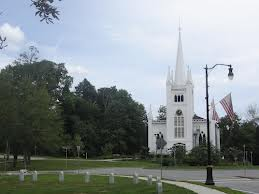
The part of town I grew up in, known as the “old centre,” was mostly made up of upper middle class families.  It was not an area where, for the most part, young families lived unless you were part of the town’s old families which we were.  Our house was one of the homes which lined the town common, a large and old green area situated next to the North Parish Church, the first church of old Andover, and founded in 1646.  All the original families of the town belonged to the North Parish Church, and my family was one such, although that was only my father as my mother was Roman Catholic.  Things were changing.  The picture below is of the North Parish Church as seen from the common.
north parish

We were sheltered from the greater world.  The city of Lawrence, with its many ethnic neighborhoods, had a very stable population whose newest members were from Puerto Rico, a sign of things to come but not anything anyone took any particular note of.  If there were black families in Lawrence, I never saw them and was entirely unaware of them.  The first black man I ever set eyes on came in my sophomore year at North Andover High School, 1963, and he was an exchange student the North Parish Church had brought from Africa.  He was the last black person I knew prior to my going to school in New Jersey in September 1965.  Even my trips to Boston with my father on his business trips did not impress upon me the presence of the black population that lived there.  And that’s how it was.

Although there was some joking about a person’s ethnic background, none of that was ever taken seriously.  No one seemed to truly care what a person’s ethnic background was.  If there was bigotry in the town, it was well hidden.  We did not learn, nor was anyone trying to teach us, any sort of racial or ethnic bias.  Maybe things would have been different if there were some black families living in the town, but there were not.

My family was what was referred to as being “land poor.”  It meant we owned lots of land but did not have much money to go with it.  I never wanted for anything but I never got an allowance.  I did not even know such a thing existed, quite honestly, so asking for an allowance was alien to me.  It was expected that I would mow the lawn, rake the leaves, and take out the trash, and shovel snow in the winter, all without compensation of any sort.  I actually enjoyed and took pride in such chores, and so I always did them willingly. It was what was expected of me, and I thought that was a common thing that members of any family were expected to do.  Then one day, I was not more than 6 or 7 years old, the boy who lived next door said we could earn 25 cents if we shoveled this lady’s driveway.  I had never heard of such a thing!  Earn money for shoveling snow, incredible.  That was my introduction to earning money, and from then on I was always thinking of ways to earn money.  Her driveway was less than a third in length of my own driveway which made the job all the more desirable.

In my late adolescent years I had a paper route.  I delivered the Lawrence Eagle-Tribune to some 60 customers.  The price of the paper was 7 cents a day, and 42 cent the week.   Strangely, getting a tip meant the customer gave me 50 cents a week.  But who gave me such a tip was inversely proportional to their income.  The rich waited at the door for their 8 cents change after giving me 50 cents, while the poorer customers never thought to do such a thing.  I also managed a burgeoning lawn mowing business around the neighborhood.  My main customer was the same lady who wanted her driveway shoveled in the winter.  I could get all of 2 dollars for a simple mowing!  I never wanted for money and always had enough to go to the movies in Lawrence at the Palace and Warner movie houses, theaters of the old single screen variety, now long gone.

When I turned 14 I somehow learned of a summer job at Calzetta’s Farm.  It was regular work with a regular wage.  My lawn mowing business was a bit irregular, some of my customers given to occasionally mowing their own lawns in spite of my services offered.  The farm job required my presence from 8 in the morning until 5 in the afternoon, five days a week for the handsome sum of $15 a week.  I thought I was rich! In the early summer we picked strawberries, weeded the fields, and did whatever the farmers, the brothers Tom and John Calzetta, demanded of us.  Two other young workers, both from the Essex Agricultural Institute, worked with me.  Farm work then, as now, did not suffer a minimum wage requirement, hence the acceptable level of pay we received.  As the name shows, the Calzettas were Italian immigrants, though Tommy and John were second generation.  But everyone regardless of age who lived on the farm, worked on the farm.  The 80 year-old grandmother, dressed in her black mourning garments, worked the 90 degree fields the entire day with the rest of us.  It was hard and dirty work, and when I got home I always had to take a bath.  I worked that farm for two summers, my second I received the wage of $25 a week, I knew I was at the top of my field!  The thought, however, that I was possibly underpaid never once crossed my mind.  I always had money in my pocket and that was what was truly important to me.

The next summer, after I had turned 16, I did not want to go back to work on the farm.  It was too much work!  There was a man, a wealthy man we all knew, who lived in a new house on the common not far from my house.  It was the only modern design house, a ranch, which was ever allowed to be so constructed around the otherwise colonial area around the common.  I knew he owned a mill in Lawrence, and so I literally knocked on his door one evening and asked for a job in his mill.  I do not remember how the conversation went, but he told me to meet him the next morning at 6:30 and he would take me to the mill.

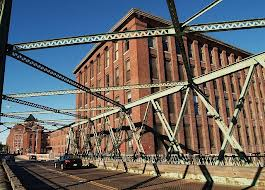
His name was Segal and the mill he owned was known as Service Heel Company, maker of heels for women’s shoes.  That morning was the last time I ever saw Mr. Segal.  He took me to the mill’s office and directed someone to give me a job, after which he disappeared into his own office.  This was the beginning of a most important part of my education, unbeknownst to me of course.  After that morning, I caught the city bus, which stopped right next to Mr. Segal’s house, each morning, lunch bag in hand and ready, more or less, for the day ahead.  My pay was the minimum wage for 1966, $1.25 an hour.  That was $10 a day and $50 a week.  I had doubled my income over the previous summer!  But I was warned, upon taking the job, that I had to be on time which meant being clocked-in by getting my time card stamped by 7AM, otherwise I would be docked 6 minutes if I were even 1 minute late.  I was paid entirely according to my time card.  And if I were late, I could not make up that time at the other end of the day without permission, and such permission was never given.  The picture below is of the mill I worked in.  In the foreground is where the Puerto Ricans worked, and in the background was where I worked.  Although it is not obvious, these two structures were not connected.

kunhardt kunhardt

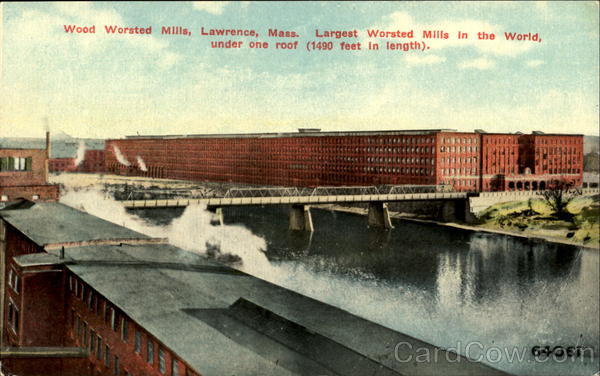
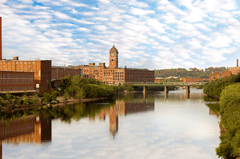
Service Heel Company was located in the old George F. Kunhardt textile factory.  By 1966 the once booming textile industry had entirely abandoned Lawrence, and a considerably smaller shoe industry had taken its place.  Still, at the time, Lawrence was second only to St. Louis in the production of shoes.  But that did not last.  Most of Lawrence’s vast textile mills stood vacant, relics of a bygone era.  The textile jobs had left but the people had not.  Many of the workers at the heel company had previously worked the textile mill at that very location.  One woman related to me that she had worked in that mill for over 35 years doing piece work the entire time.  At the time, piece work was exempt from the minimum wage.  I could not imagine sitting in such a place for so long a time doing basically the same job for all those years.  But she never complained.  To the contrary, she, and most of her fellow employees, always seemed grateful for the work they had.  There was not any sense of entitlement among these people.  Below is a picture of some of the textile mills of Lawrence.
lawrenceWood Worsted Mills Lawrence

In 1966, the Lawrence mills were segregated, not between black and white, for as I said there was no black population, but between Hispanic and everyone else.  That fact was brought to my attention by the foreman, a very large and smelly man named Tony, who took me to the far side of the mill and pointing to the mill next door said, “that’s where the spics work.  You don’t have anything to do with them.”  He was referring to the Hispanics who worked that mill.  And his statement, rather than being a suggestion, came across as a command.  But I knew in my heart that there was something inherently wrong with his statement, although I doubt I could have explained why I felt that way.  The heel workers were almost entirely of French and Italian ancestry, and as such, were the old immigrants as opposed to the new immigrant from Puerto Rico.  But my experiences in Lawrence at that time never included any feelings of fear or animosity towards the Puerto Ricans aside from what Tony had pronounced.  But I did not challenge his belief either, after all, he was my boss and in charge of my continued employment.

I was a “floor boy” in the mill.  I was indoctrinated into the erstwhile sweatshop.  No air conditioning, no break room, no fans, no drinking fountain, only the steady clanging of machines and the smell of paint and glue as was applied to the heels.  The heels were placed by their type into wooden boxes, about a bushel in size.  It was my job to move the boxes from where they were “made up,” that is, the box had a particular type of heel put in them, to the proper station of the worker who would either cover the heel with leather, paint the heel, or press a nail into the heel.  Each job had a color coded ticket in it to signal when it was due to be finished.  I caught hell any time I moved the boxes in the wrong order or took them to the wrong station.  It was only Tony who gave me hell, as the worker at the station involved was inclined to giving me a friendly nudge to say I had messed up, but that I should not worry.  These were the people who were rightfully referred to as “the salt of the earth.”  They were kind hard-working people who you ate lunch with, got to know, and counted on to help you along.  They were union people who warned me that at the end of working 90 days at the mill I would have to join the union, but the cautioned me against that, not because they disliked the union, but because they knew I was still in school and wanted me to continue my schooling so I would not end up where they were.  But it was this very sort of worker who moved his family to North Andover to help their children get a chance at a better life.

The next summer I worked for the Raytheon Company at its facility in Shawsheen Massachusetts, its “missile systems division.”  I got that job because my best friend’s father worked there and said he could get me some sort of job working there.  I was a “clerk” whose main job was finding and filing schematics for the technicians and engineers who worked in the department.  I found out that summer two thing, first, I received 10 cents an hour more than a woman who held the exact same job and started exactly when I did.  I got that 10 cents because I was a man.  I also first heard the word “scab” as it was used to connote someone who crossed a picket line during a strike.  At the end of the summer Raytheon offered to pay for my college education if I remained there and took up a career in electronics.  But the job had left a bad taste in my mouth and I turned them down.  I had tasted gender discrimination and knew I did not like it.  I also acquired a negative feeling for unions, but that was due to my ignorance, and was something I later replaced with knowledge and a healthy respect for unions and their membership.  Below is a picture of the old Raytheon Mills in Shawsheen.  These mills were a part of a failed textile mill experiment.
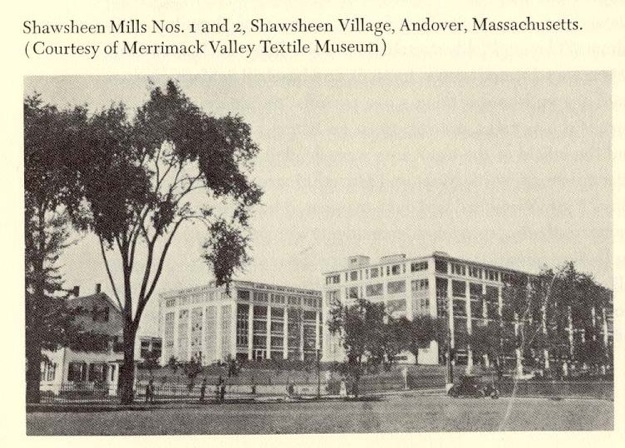
raytheon

That fall I entered Boston University, where I did incredibly poorly, and dropped out shortly before the end of the semester in December 1967.  I took a job pumping gas at a local chain gasoline dealer, pumping Texaco in North Andover, Andover, and Lawrence.  But that job I knew to be temporary as I had my sights set on going to the US Army’s aviation school.  And on February 19, 1968 I was sworn into the US Army and on the following day flown to Ft. Polk Louisiana.  Still, the job gave me work experience in yet another area.  In those days there was no such thing as pump your own gas, and almost every service station pumped your gas, cleaned your windshield, and checked your engine’s oil level.  Regular gasoline ranged from 28 to 32 cents a gallon in those days, oil was 40 to 50 cents a quart.

I had never been out of the northeast prior to going to Ft. Polk, and I was in for an education unlike any I had thus far known.  My last two years of high school were spent in Bordentown New Jersey where a number of my classmates were black or Hispanic.  But because of my father, my upbringing in his Unitarian culture, it never occurred to me that their heritage mattered.  We were just guys who were all intent on doing the same thing.  My trip to Ft. Polk was about to present to me a type of prejudice I had not known.

The trip to Louisiana involved flying to New Orleans followed by a second short flight to Lake Charles Louisiana.  From Lake Charles I had to take a bus to complete the journey to Leesville Louisiana where Fort Polk was located.  I remember staring out the bus window at the southern streets as they passed by, and at one particularly memorable stop, I saw the peculiar sight, to me at least, of two water fountains right next to each other on the outside of a building.  Above one was the sign “white” and above the other “colored.”  I was educated as to the ways of the “old south” which had yet to give way to a new way of thinking.
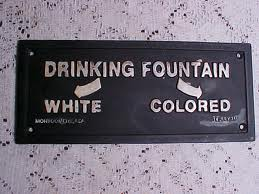
drinking

The US Army in 1968 was heavily engaged in the war in Vietnam, and it quite literally did not have time for anyone’s prejudices.  I would say roughly a third of the men in the company I was assigned to were black.  But to me, and to the army, they were just one of many, who had one job and one focus.  Anything that was not related to our being properly trained as a soldier was not approved of.  The assimilation of all races in the military was nearly complete and the vast majority of men in the army were forced to leave behind them whatever prejudices they had brought with them.  The picture below is what my company area looked like in 1968.

polk

The most telling time in those early months of my military career came on April 4, 1968 when Martin Luther King was assassinated.  In the bunk next to mine was a black man who upon hearing the news of Dr. King’s assassination broke down and cried.  I did not then understand the importance of the man.  All I knew was what the northern media, and the government, wanted me to know about Dr. King, and that was all negative.  It was a hard lesson I had to learn, but learn it I did.  That day, and several days afterwards, it was reported that there were riots in Leesville and many other locales.  The post was closed and we were denied day passes to leave the fort.

That was my experience up to 1968.  It was not particularly unique except that it was mine.  Others experienced many of the same things, just in different ways.  The 1960s changed me in more ways than I was aware of at the time, but am the better for now.