
This is black history month and we hear a lot about famous figures from our more recent past. Martin Luther King, of course, leads that, as he should. But what about others? Others from our more distant past. Some are people of whom you may have heard. Others, probably not. Still, they deserve the light of day on their achievements. Some were witness to history, others made history in passing, and still others, by their contributions. In an era of continued ignorance about this history, I thought I would bring some of those forgotten figures forward.
This first person is Phyllis Wheatley, shown below.

She was born about 1753 in West Africa before being brought to Massachusetts as a slave. The Wheatley family, however, and unlike in the south, saw to it that Phyllis was taught to read and write. By the age of 12 she was reading Greek and Latin classics in their native language. This was an accomplishment for those Harvard students but almost unheard for someone like Phyllis. Later, she wrote both prose and poetry with equal ease. Her poetry was published in 1773, Poems On Various Subjects. She was emancipated in 1773 and died December 5, 1784.
Crispus Attucks was born 1723 and died March 5, 1770. His death is most noteworthy.

Very little is known about Attucks except that he was born into slavery in the town of Framingham, MA. to an African father and a native American mother from whom he got his name. Attucks was an escaped slave when he was in the town of Boston in 1770. On March 5, 1770, a squad of British soldiers fired upon a group of American civilians, a group that was unruly and throwing ice at the soldiers. When they opened fire, killing 7 Americans, Attucks was among those who fell.
Salem Poor
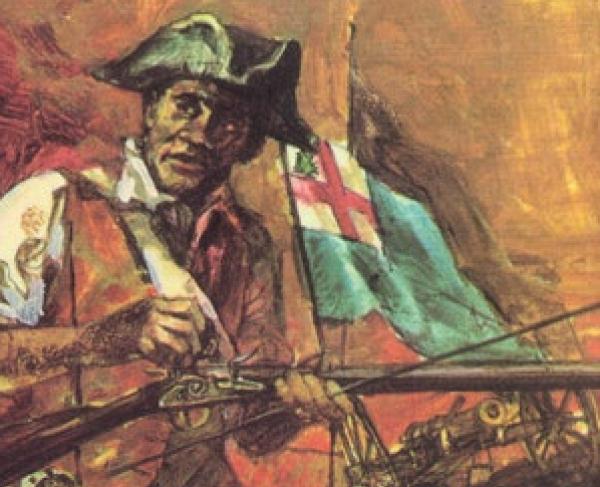
Salem Poor was born into slavery in Andover, MA in 1747 to John and Rebecca Poor, not his parents but his owners. In 1769 he had saved enough money to buy his freedom. In 1775, Poor enlisted in the 1st Andover Company of Minutemen and was only a few months later took part in the Battle of Bunker Hill. He became famous for his heroism at that battle and the fact that he killed the British Lieutenant Colonel James Abercrombie. The assembly to the Massachusetts General Court petitioned, “To the Honorable General Court of the Massachusetts Bay: The subscribers beg leave to report to your Honorable House (which we do in justice to the character of so brave a man), that, under our own observation, we declare that a negro man, called Salem Poor, of Col. Frye’s regiment, Capt. Ames’ company, in the late battle at Charlestown [Massachusetts, where the Battle of Bunker Hill took place], behaved like an experienced officer, as well as an excellent soldier. To set forth particulars of his conduct would be tedious. We would beg leave to say, in the person of this said negro, centers a brave and gallant soldier. The reward due to so great and distinguished a character, we submit to the Congress.”
Simply put, Poor was the first hero of the American Revolution.
The 54th Massachusetts Regiment
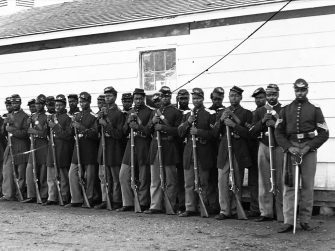
This is the one variation I make from individual because this was a group of individual black soldier who each in his own way was a hero of the Civil War.
On Jan. 26, 1863, the U.S. War Department authorized the governor of Massachusetts to recruit Black troops to the Union Army in the Civil War.
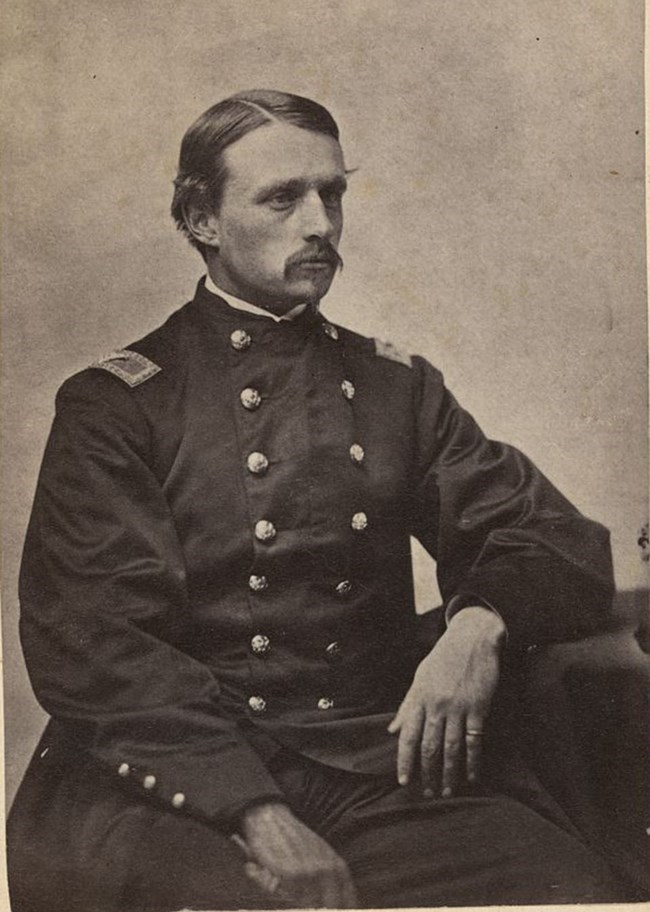
Robert Gould Shaw, shown above, at the tender age of 23 was named the regiment’s first commander. Shaw, chosen by Massachusetts Governor Andrew, was a Harvard Graduate and had experience in the Civil way, not the least of which came at the Battle of Antietam.
Once fully trained, the regiment was sent south and fought valiantly in numerous skirmishes until it was assigned as the lead regiment in the attack on Fort Wagner where half those soldiers, including Shaw, were killed.
Sergeant William H. Carney
Carney gained his fame as a member of the Massachusetts 54th.
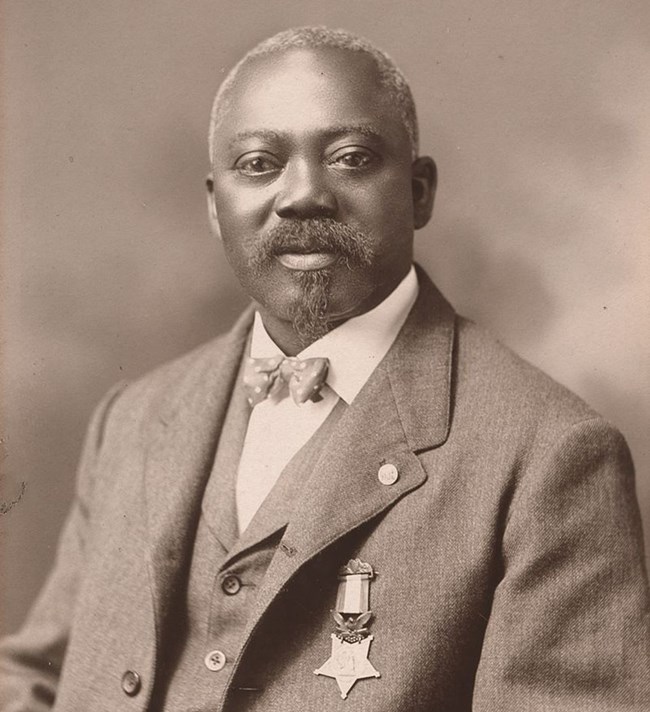
Carney was a slave in Virginia before escaping via the Underground Railroad, to New Bedford Massachusetts. During the charge on Fort Wagner, Carney dropped his weapon and grabbed the colers during the charge and is reputed to have said, “Boys, I did but my duty; the dear old flag never touched the ground.” On May 23, 1900 President Theodore Roosevelt awarded Carney the Congressional Medal of Honor for his valor 37 years earlier, becoming the first African American to receive the honor.
Sojourner Truth
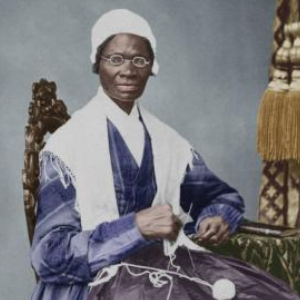
Sojourner Truth was born in New York in 1797. She became as outspoken critic of slavery during the early 1800s. William Lloyd Garrison, the better-known abolitionist, along with Frederick Douglass, became a voice lost behind those of the men working the same cause. Truth, however, differentiated herself by not just talking about abolishing slavery but also about women’s rights, another cause she is seldom remembered for. She died November 1883.
Nannie Helen Burroughs
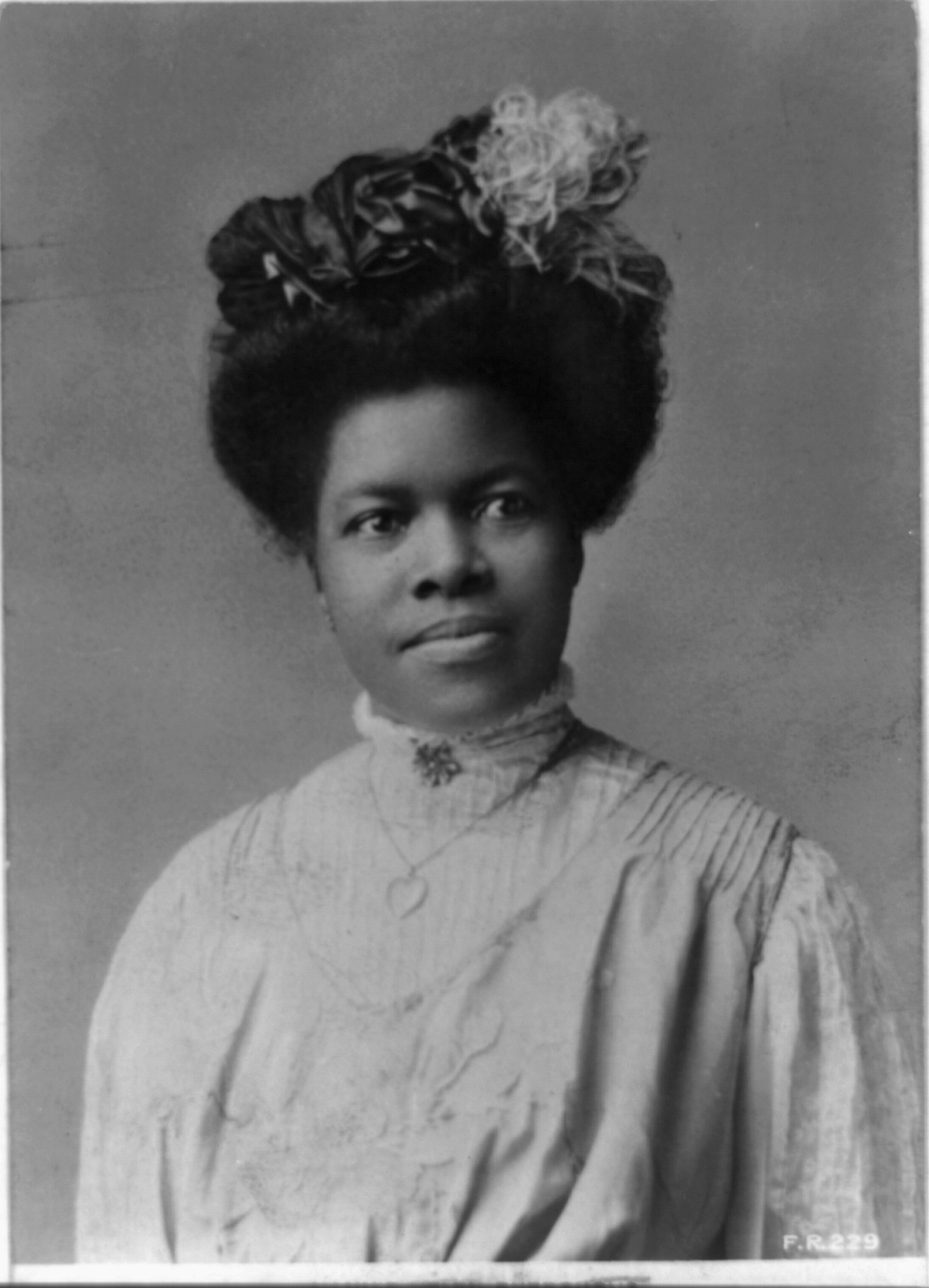
Nannie Helen Burroughs was born in Orange, Virginia May 2, 1879 to parents John and Jennie Burroughs. In 1907 Burroughs, supported by the National Baptist Convention, began planning the National Trade and Professional School for Women and Girls in Washington, D.C. The school opened in 1909 with 26-year-old Burroughs as its first president. Burroughs adopted the motto “We specialize in the wholly impossible” for the school, which taught courses on the high school and junior college level. She led her small faculty in training students through a curriculum that emphasized both vocational and professional skills. Her students were to become self-sufficient wage earners and “expert homemakers.” (blackpast.org) She is known for her early advancement of the idea of Black History. She was also an extremely effective teacher and then principal in an era where black teachers were few. She was an early and outspoken advocate of black women’s suffrage and education. She additionally was a suffragette in gaining the right to vote with the 19th Amendment.
The Tuskegee Airmen
My final addition is also a group of black American war heroes.
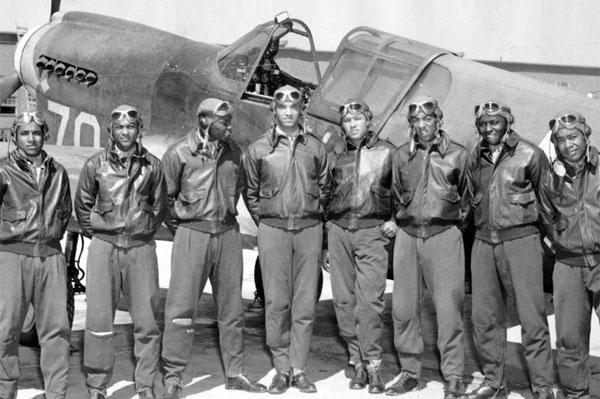
These men were a group of African Americans who learned to fly, became officers, and were assign to the 332 fighter group in Italy. Over the objection of the white bomber pilots, they were assigned escort duty. This meant that they flew with the bombers to protect them against marauding German fighters trying to shoot down the bombers. The though among the white pilots that the black pilots would not be up to the job and would lead to many deaths.
The Tuskegee pilots shot down 409 German aircraft, destroyed 950 units of ground transportation and sank a destroyer with machine guns alone — a unique accomplishment. However, their most distinctive achievement was that not one friendly bomber was lost to enemy aircraft during 2000 escort missions. No other fighter group with nearly as many missions can make the same claim. Reflecting their superior performance, they were called “Black Birdmen” by the Germans, and given the nickname of “Black Redtail Angels” by the Americans because of the vivid red markings on their aircraft tails. (military.com)
Finally, although there is no actual record, there is a story that there was at least one African person on the Mayflower.
 You Didn't Ask But.....