The Future of America?


When March 2020 arrives, I will celebrate birthday number 71. I have seen a lot and traveled at lot during those years. I lived in three different countries, Korea, Italy and Micronesia, and been witness to their way of living. I have visited the Middle East, most of Western Europe to include Poland and the Czech Republic. I have also been to 44 of our 50 states. There was much to be seen and learned. I wish I could say I saw it all and learned to an expert level but that just is not true. But what I did see and learn was uniformity.

It did not matter what country I visited, Korea, Syria, or any state, everyone is about the same. Those people I met, Palestinians, Cypriots, Marshallese, each was friendly and welcoming. And so my takeaway from this is that it did not matter what country I was in, people are not political parties, religions, rich or poor, they are just people who are making their way through life in their own particular way. I never expected people to speak English. I always believed the language barrier was mine to be broken down and that usually worked. And those times when the other person did speak English, well, that was a bonus of which I always was grateful.

One thing which was common to almost all the people I visited was they were very nice but hamstrung by the governments which claimed to represent them. I seldom found that to be the truth. I visited Syria, for example, in 1972. That was only five years removed from the 7-days war Israel fought which brought extreme fear and unrest to the entirety of the middle-east. But walking among the people, you would not know that. In Syria, a country which at the time had no U.S. Embassy, the fact that I was American, something that was known when I crossed the border from Lebanon to Syria, seemed of little or no consequence to the military who controlled the border crossings. And once we reach Damascus, the entire bus of people I was with was treated with great warmth and to my surprise, the tour was done in English. There, at the Central Mosque, I learned that in Islam it is believe the head of John the Baptist lies in that Mosque and he is considered a prophet in their religion. And soldiers visiting the golden cage at the spot where the head lies, kneeled and cried before moving to a corner of the Mosque which faced Mecca where they prayed.

Today, when I think of a country, I never think about its government but of its people because they are the true representatives of their country, not their elected officials.

America today is in the most unfortunate position of having a President who has shown no appreciation for the absolute necessity of America getting along with the rest of the world. Worse, it appears this President has taken America backwards and into a 2nd Cold War. When you deal with the devil, as is the case with Putin in Russia and Kim Il in North Korea, it is necessary to present yourself as the protector of those countries they would seek war, to include America itself.

During his years as President, Barrack Obama made serious in-roads in diplomacy with Iran. That was extremely important for peace in the Middle-East and has since been undone by the present administration. When Russia invaded the Crimea, the present President offered no help to the Ukrainian government to stem that incursion. To Russia, that was not a test of the Ukrainian military but of the resolve of the rest of the world, America in particular, to intervene against an illegal act and yet no one did anything. Now Putin knows he can retake former USSR territories with impunity. Are Estonia, Latvia and Lithuania next? Or is he setting his sights on Kazakhstan, Turkmenistan, Uzbekistan, and the other former USSR satellites of that region?

The United States has in place rules for countries where corruption is an issue which can limit or completely withhold U.S. aid to such countries. But what if they become targets of the Russian government. Do we stand by and watch it happen or do we form a coalition to stem any such incursion? Remember now, in even the most corrupt nation, the average person is honest and hard working and deserving of protection of his freedom. Right now, America is not that country and what a shame that is.

Over the past three years, America has acted shamefully towards the rest of the world. Its isolationist policy, its arrogance, and its ignorance, in the form of its lack of action, of issues problematic to most of the world, makes America a country upon which the rest of the world cannot rely. Is this who we really want to be? We desperately need a leader who has a healthy respect for the power of good diplomacy and a diplomatic policy the rest of the world will once again respect. We need a new President.
The New American Xenophobia


Xenophobe n. One who fears or hates strangers or foreigners or anything that is foreign. (Webster’s II New Riverside University Dictionary, 1988, p. 1332)

At the beginning of the 20th Century American immigration laws were few. An immigrant had to have on his person $50, a named sponsor to take him in, be free of disease or mental defect, and have no criminal record. Americans today view all immigrants of that time coming through Ellis Island New York. But in truth, the ports of Boston and Baltimore were also quite alive with immigrants.

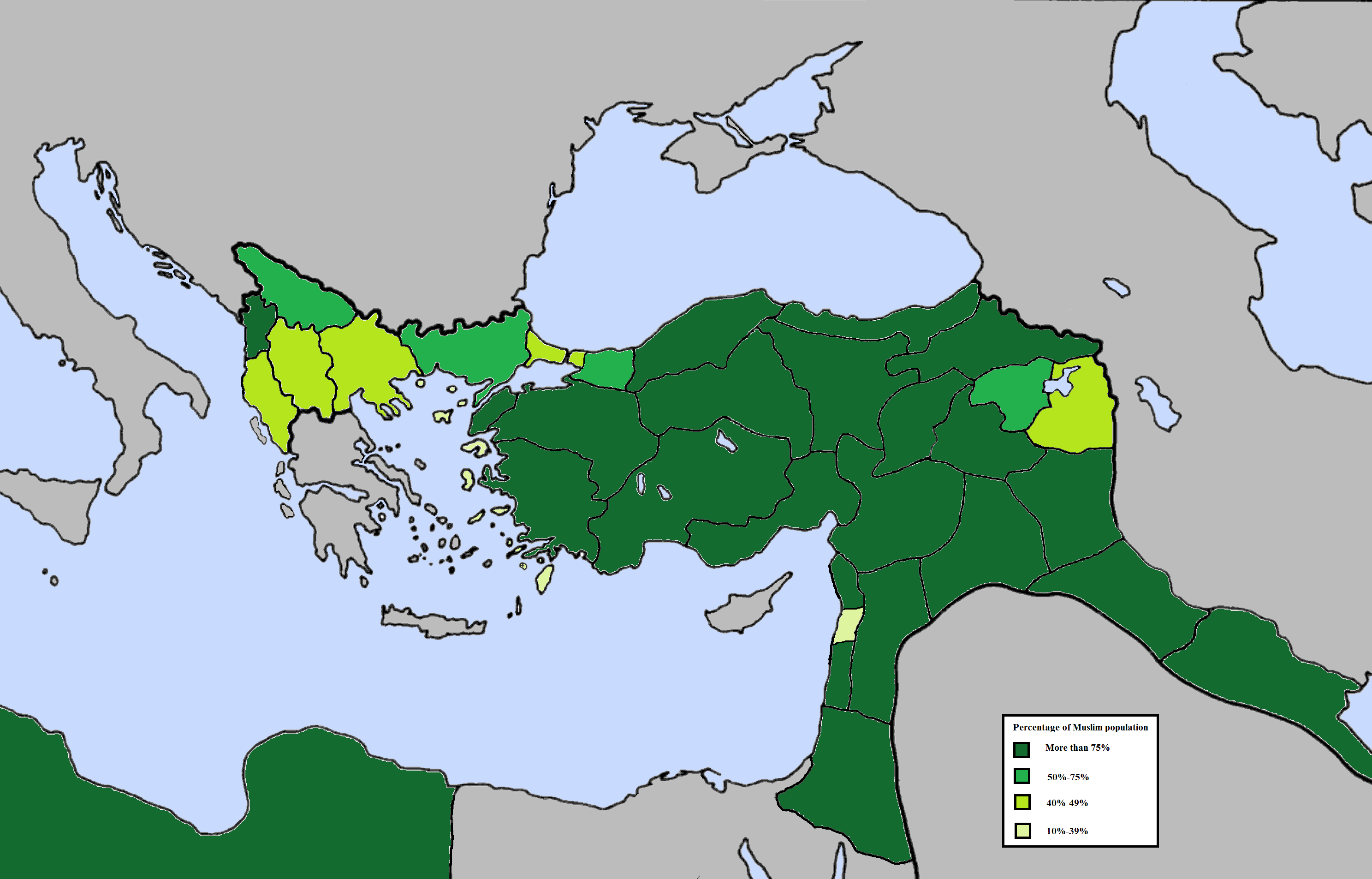
Europe during the period 1900 to 1915 was fraught with civil wars, unrest, and an Ottoman Empire which was at war with Great Britain. As can be seen by the map below, the Ottoman Empire covered most of the Baltic countries and large portions of the middle east. It is also worthy of mention that this was a Moslem Empire which Christian Europe feared. In Eastern Europe, Russia was flexing its influence as it held onto much of the territory it controlled when it became the USSR. In particular, it controlled most of Poland as we know it today. In 1905 the Czar ordered that all Polish men of a certain age be drafted into the Russian Army. Those who refused realized harsh consequences.

Muslim_population_Ottoman_Empire_vilayets_provinces_1906_1907_census

Ottoman Empire 1905


1_Russian-growth-1801-1914

Russian Czarist Empire


In the case of Italy, the country’s industrial north did not offer enough employment for Italy’s labor force. The Italian tendency towards large families made for an excess labor force. The excess labor force could find work neither on the farm nor in Italy’s factories, hence they looked towards America where, they heard, there existed a need for more labor. They also heard, falsely of course, that such labor, even though unskilled, was well-paid.

The social, economic and political unrest of much of Europe lead to its radicalization. Some were of the new socialism as outlined by Karl Marx and practiced by Trotsky and Lenin prior to the revolution. Conversely, Fascism arose out of Europe’s aristocracy against the growing socialist ideals. The common man found himself caught between the two groups in Europe with no place to run, except America.

The overwhelming majority of immigrants to America in the early 20th century were people coming from extreme poverty. They were indeed a cross-section of Europe embracing every type of religious, political and social belief. And as with any cross-section, among them were the anarchists and others who would prove troublesome to the established American public.

The epicenter of American radicalism in those days was in the small boarding house rooms of Greenwich Village. They were a small but vocal group who advocated the overthrow of the wealthy, the industrialists, and the powerful politicians by any means possible. Names like Emma Goldman, Edna St. Vincent Millay, Margaret Sanger, and John Reed seemed to most Americans to be the ones originating most of America’s radical troubles, but as with many things, the truth was something quite different.

When Leon Czolgosz assassinated President William McKinley, William “Big Bill” Haywood, Emma Goldman was extremely vocal in her opposition to violence as a tool of the anarchists. Margaret Sanger attended many anarchists meetings in Greenwich Village, but her purpose was to gain support for her settlement house in the lower east side and in getting aid for single mothers. John Reed was a journalist who was more interested in reporting on the anarchists, though he did agree with their views, the partaking in their political actions. Big Bill Haywood was an organizer for the Industrial Workers of the World, a socialist union whose prime member was the unskilled laborer. But in 1907 Haywood had been tried for murder in Idaho. Haywood was innocent of the charge, a charge that had been trumped up simply because local politicians hated him, and found innocent after his trial. But he could not shake being labeled as a murder and his presence always brought trepidation to any community he visited.

People like Haywood and Sanger took on the cause of the immigrant and were closely associated with the various new immigrant groups. When a strike broke out in Lawrence Massachusetts in 1912, Big Bill visited the city and both city and state leadership felt certain that riots and all sorts of violence were sure to follow. Again, the truth is far different. Haywood spent very little time in Lawrence and focused his energies on raising funds for the strikers in other parts of New England. He actually had no interest in being a part of the strike save the role of fund-raiser. But then dynamite was found at a house in North Lawrence and everyone was certain that the IWW and Big Bill were somehow behind it. A few days later it was discovered that William Wood, a mill owner, had planted the dynamite in an effort to discredit the efforts of the IWW to win the strike.

What in common between the events of the early 20th Century and those of this presidential campaign, is Donald Trump’s use of fear and xenophobia to activate an American public. Fear is common to all human beings and has been used to exploit people throughout the ages. Because we are in the middle of Trump’s plotting it can be hard to gain perspective, but it is perspective that will save us from foolish beliefs and even more foolish moves.

The immigrant is the life blood of America and their introduction into our country makes us stronger. And while it is true that there are elements in those immigrants who would do America harm, we are more than strong enough to survive their worst. Unlike much of the world, our country thrives upon its diversity. Our Constitution guarantees that diversity cannot be used against us.   And the words at the base of the Statue of Liberty bear remembering, Give me your tired, your poor, your huddled masses yearning to breathe free, the wretched refuse of your teeming shore. Send these, the homeless, tempest-tossed to me, I lift my lamp beside the golden door!”

Amen!

Peace in the Middle East


The largest part of the political dialogue today is over the containment and ultimate elimination of ISIS and other groups like ISIS. I find it scary to hear leading Republican candidates talking about carpet bombing and send large number of troops into the Middle East to resolve this problem. The Democrats seem to have a little more palatable response but still quite imperfect. Is there a perfect response? Yes, but no one knows what it is.

I think it high time we give both Afghanistan and Iraq a 30-day notice of complete removal of all our troops from their respective countries. The United States has overspent in both areas trying to bring about a peace which history shows has never existed for any extended length of time. The bottom line is, and contrary to what both major parties claim, our major interests in Iraq lie entire in its huge oil reserves and nothing else. That is simply irresponsible.

Now I am not suggesting we abandon these countries entirely, that is irresponsible. What I am suggesting is that we provide intelligence support, logistical support and air support. Both the government of Turkey and Saudi Arabia have allowed for our military presence within their boundaries and both countries are quite stable.

During last night’s Democrat debate, I heard exactly one suggestion on how to carry this war to a successful completion. It was that ground military forces fighting ISIS be made up entirely of Moslem troops. In this aspect the United States can play a key role. We can certainly train and arm such armies to a level where their success is at least likely if not probable.

The fly in the ointment is Iran. Claims have been made that Iran sponsors terrorism. President Obama has done a masterful job of getting Iran to open up its nuclear program to inspection. This has given the Middle East, and Israel in particular, a feeling of safety where nuclear arms are involved. In return, the United States has freed up here-to-fore frozen Iranian assets. I suggest that through diplomatic channels a deal can be made with Iran to further reduce existing sanctions by getting Iran to end any state sponsored terrorism which now exists. I think a partnership between Turkey and Iran could help in ending Iran’s isolation from the world by it gaining a powerful and trustworthy trading partner in the Moslem world which Turkey is.

Contrary to what many Americans believe, there are more peaceful countries in the Middle East than there are those suffering civil war and terror. Saudi Arabia, Jordan, Oman, Qatar, Iran, the Emirates, and Kuwait need to enter into a mutual defense coalition. Even though it is experiencing a great deal of unrest, Iraq too needs to be included. This coalition, like NATO, would help preserve the peace in the Middle East from those who would have it otherwise. I have left out Lebanon because it is fairly evenly split between Moslems and Christians, 54 to 46 respectively, and might prove unwise. That is unless the Christians of Lebanon thought it a good idea.

There is no question that many countries in the Middle East need military aid from the United States. The only question is, in what form? A unified Middle Eastern army made up entirely of Moslem soldiers make the most sense in ending the strife that region now endures. The United States will not be shirking its responsibilities to Middle Eastern countries by removing all our ground personnel from Iraq but maintaining military support through other means. Our removing ourselves may actually help bring about a regional peace much sooner than our staying there as we are.


Dealing With ISIS


The terrorist attack on Paris is despicable, to say the least. The group that calls itself ISIS claims responsibility. Those are all the facts, there are no more. Politician in this country, and probably all others, debate what sort of response should be taken. The responses I have heard from politicians in this country have been anywhere from measured to outrageous.

The good thing about this country is we get to say whatever we believe and the government cannot restrict that. That works well until you enter the national and international arena. Once you find yourself on the national stage this wise response is always the measured response. Many of the Republican presidential candidates have made the decision that the best and only response the U.S. can make to terrorist attacks is by sending in the army. Such remarks are not only ill-considered but irresponsible.

Governor Christie has said he would send in the troops. Trump, Rubio and Bush have said as much. It is this kind of thinking that gets the United States into trouble over and over.

The military of the United States, and of any country, is an extension of that country’s political system. The two prime reasons for having a military is first to defend your country against those who attack you and second, to take the battle to those countries which present a real and present danger to your well-being. A secondary reason is going to an ally’s aid and defense.

That ISIS presents a real and present danger in the world is unarguable. ISIS, however, it not presently claimed by any country in particular nor has any country come out in support of ISIS. It is my belief that there is not a country in the middle-east, North Africa, southeastern Europe, the Balkans and probably all of central Asia which does not have a contingent of ISIS living within its borders. This makes attacking ISIS problematic, at the least, because of where it exists. For example, ISIS probably exists substantially in Lebanon and Lebanon borders Syria. Right now, neither of those countries have invited the U.S. inside its borders.

Former President Bush used the pretense of weapons of mass destruction the attack Iraq. We now know for fact that we were fed half-truths and absolute lies when the real motivation was to remove Saddam Hussein from power. I only mention that to pre-empt the idea of entering Syria to eradicate ISIS, and oh by the way, we remove Assad from power.

Right now the only nation that has an iron clad reason to attack ISIS with troops on the ground is France, and so far they have shown no desire to do such. Why? Because they probably realize that their chances of successfully destroying the entire central leadership of ISIS with infantry is minimal at best. And even if France were to decide to use ground troops, I think anything beyond existing NATO agreements and UN agreements is unwise. And anything beyond logistical support would be going too far. And that logistical support would exist only in Iraq in the Middle East.

The greatest threat ISIS is to the world now is mostly peace of mind. It is obvious that Europe has got to figure out a way, quickly, to secure its borders. The U.S. is already doubling down on its security, really the only thing we can do. The next right step the leadership of the world has to figure out is how to contain ISIS. For all the Middle Eastern countries this means they will have to use a combination of civil policing and military actions within their borders. For the U.S. this means we are going to have to secure the borders of both Afghanistan and Iraq. That may require additional infantry troops. Neither country is strong enough by itself to provide for its own security against the likes of ISIS.

The United States has a lot of experience in attempting to deal with an unseen enemy such as ISIS. That enemy was called the Viet Cong and the war, of course, was Vietnam. We failed miserably trying to root out the Vietcong with conventional military. ISIS is no different.

The bottom line is simple: we are already stronger than ISIS, we just need to be smarter than them to defeat them.


A Day Trip to Damascus


Many years ago I was fortunate to have been stationed in Pisa Italy when I was in the army.  The summer of the year after my arrival, I decided I want to tour the middle east.  After touring Greece, I caught an airplane to Beirut Lebanon.  Beirut is a surprising gem of a city.  It is little known to Americans but is a destination of choice for the French.  That, in no small part, is due to the fact that following World War 1, when the European powers were divvying up the old Ottoman Empire, the French laid claim to Lebanon while the British were claiming its southern neighbor, Palestine.

The French, in turn, made Beirut into a middle eastern version of the Riviera complete with a casino.  I stayed in Beirut for four days.  I found the people of Lebanon to be extremely friendly and seemed to have no opinion on American tourists, probably because we were a bit of a rarity and had not offended them, yet anyway.  The hotel manager, one day, suggested I take the bus tour to Damascus, that I would thoroughly enjoy it.

Early the next morning I boarded the tour bus and quickly found a pair of Canadian girls, the only North American people on the trip.  Damascus is only 55 miles distant from Beirut.  At the time, the only road between the cities was a single two lane highway.  Upon arrival at the Lebanese Syrian border, the bus is boarded by the border guards who collected all our passports.  We were told that we were not allowed to get off the bus while our passports were processed.  That took a good two full hours which meant we were sitting in the desert sun for the entire time.  Nothing of note took place and once our passports were returned we continued on to Damascus without incident.

Upon our arrival in Damascus the bus driver informed us that we had to change to another bus to have the tour of the city, which we did.  It turned out there was a really good reason for changing buses but that did not become apparent until we returned.

Damascus is one of the oldest cities in the middle east and get mentioned a number of times in the Bible including a reference to a “street called Straight.”  The particular old Roman street is where Paul supposedly was converted to Christianity.  For someone who grew up where cities and towns had a history dating in the hundreds of years, it was really quite remarkable being at a historic location which counted its age in the thousands of years.

The picture below is of a cathedral located in Damascus that was built by the Christians during the era of the crusades.

In later centuries the cathedral was turned into a mosque and now serves as the central mosque for Damascus.  Upon entering, you are greeted by Persian rugs layered about 7 deep.  They cover the entire walking surface of the mosque.

Towards the front, as seen in the above interior shot of the mosque, is an encased area where the Moslem world believes the head of John the Baptist is.  It turns out, according to our guide, that he is considered one of the prime prophets of the religion.  Furthermore, our guide pointed out that in Islam, places held in reverence in the Christian world is held equally as highly in Islam.  These two things were eye-opening for me to say the least.  And as you can see, from the above picture, the interior of the old cathedral is quite as beautiful as it ever was, maybe even more so.

I was struck by the sight of Syrian soldiers who came to the enclosure as they cried while they prayed there.  After that they moved to a place next to the wall that faces Mecca and said additional prayers.  It was really quite a touching scene.

For the return trip, we returned to the bus that brought us to Damascus.  The two Canadian girls and I sat together but there was one problem.  When I tried to push my feet beneath the seat in front of me I found there to be an obstruction.  Upon inspection I found that skeins of fabric had been secreted underneath the seats to be smuggled back into Lebanon.  We were now part of an international smuggling ring!  Upon arrival at the border I jokingly said to my Canadian friend that we should probably report the smuggling operation.  She informed me that if the Lebanese did not kill me, she would! I had no intention of saying a thing and, fortunately, the border guards did not inspect the interior of the bus so the contraband was not found.  I have to admit, however, that we did have a number of anxious minutes.

I cannot say I have ever had any experience similar to this one in my life but I would not trade it for anything.  Furthermore, I highly recommend visiting these areas, of course only after the conditions in Syria settle down and life returns to the routine.

Never Be an American Tourist


I have been to about 20 foreign countries over the years.  When I first started visiting those countries I was actually living in Italy at the time.  I made a decision to abandon my U.S. dollars for Italian Lira.  Yes, this was well before the Euro.  My first stop was Greece.  I had a hotel room in Athens and set out to see the sights.  The people of Athens were horrible.  They reminded me of those arrogant entitled Americans!  They had no time for anyone, and were only too willing to ignore me.  I rented a car and headed out for Thessalonica in the north.  I was not very far outside Athens when I picked up a couple of hitchhikers who just happened to be Americans.  It was getting close to lunchtime so we stopped at a very small roadside cafe we came to.

We had an immediate problem.  Americans expect everyone who serves them should naturally speak English and have real problems when that is not the case.  I was fortunate enough to have lived in Italy for some time at that point, had learned Italian, and knew that these small, out of the way places were not where English was spoken.  The cafe was just an extension of a typical European farmhouse.  A man and a woman ran the place and of course spoke only Greek.  We three Americans accepted that and quickly set about breeching the language gap.  We had acquired some ears of corn along the way and we wanted to have it cooked for us.  At the time, most Europeans did not eat corn on the cob, and many considered it to be only good as cattle food.  Through hand gestures, and other means, we were able to convey our desire to have the corn boiled.  Our hosts were aghast but were more than willing to comply.  I do not remember what else we had with the corn, but I can assure you it was really good.

As we sat in the cafe, we being the only ones there, we were able to have a conversation, of sorts, with our hosts.  They conveyed to us how things were for them during World War 2 and why they truly loved Americans.  These people were extremely nice.  It was at that point I discovered that speaking a common language was totally unnecessary to gain an understanding of the people you find yourself with.  This set the tone for the rest of my trip.  Even though my feelings for Athens remain unchanged, my feeling for the Greek people in general is extremely positive.  I truly saw these people as just like me in many ways and that was comforting.

At another point on this trip I found myself in the Lebanese capital of Beirut.  I exchanged some of my Italian lira for Lebanese pounds, found a cab and headed for my hotel, the Alcazar.  The man at the reception desk spoke perfect English and was extremely helpful.  I later asked him about his knowledge of foreign languages.  He told me that to be employed in a hotel in Lebanon you were required to know at least four languages, Arabic, French, German, and English, so you could deal with the greatest number of the guests.  He knew several more languages on top of these.  It was really impressive.

Across from my hotel there was a sign about a casino to the north of the city.  I asked the man at the desk about it and he told me to rent a cab and go because it would be a wonderful experience.  I had met up with a couple of Canadian women in Beirut and they agreed that it would be a really nice way to spend the evening.  I noted that the cab fare to this place was only about ten American dollars.  We rented the cab and went to the casino.  Upon arriving I tried to pay the cabbie but he said no, that I could pay him after we got back to the hotel.  I was really surprised by this statement and said we would be inside for hours and the cabbie assured me that he expected that.  Then I asked him how long it would take him to get there when we came out.  He assured me he would be one minute away.  It was unbelievable, to the American mind, but we decided to accept what he said.

When we finally decided to return to our hotels the cabbie was there just as he said he would be.  When we arrived back at out hotel he said the fare was 30 Lebanese pounds, ten American dollars.  We were shocked, to say the least.  We decided between us to give him 60 pounds feeling it was more than worth it.  The cabbie had been everything he offered and more.  He was polite, friendly, and offered us some useful tips.  He suggested we go on a tour to Damascus, that we would really enjoy ourselves.

Well, the next day the three of us boarded a tour bus going to Damascus.  The trip to Damascus was uneventful although upon arrival at the border we were held for over an hour while our passports were inspected.  Upon our arrival in Damascus we were asked to change buses for our tour.  We did not think much of that at the time and went on our tour of the city.  I loved Damascus.  When our tour bus returned us to the bus that had brought us to Damascus we were quick to find skeins of fabric pushed underneath all of the seats.  We had become a part of a smuggling scheme from Syria to Lebanon.  I joking said to my companion that maybe we should say something about this at the border.  She assured me she would kill me if I even breathed wrong.

Shortly after our return to Beirut we were walking through the city bazaar when I spotted a heroin deal going down right out in the open.  Not 20 feet away was a policeman who could not have missed such a transaction.  I noted what was going on to one of my friends and we agreed that had any of us been involved, the policeman would have been quick to notice.

My entire stay in Lebanon showed me one very important thing.  The Arabic people, the common man, were extremely friendly and took me as I was.  I have nothing but good things to say about these people and take offense at anyone who says anything to the contrary.

The thing is, when I am in these foreign countries I never present myself as an American, as if that is supposed to count for something.  I am always aware that I am a guest in the country and that good manners is what I need to display.  By acting this way, I cannot tell you how many times the people of these countries have been surprised upon discovering I am an American.  I was fortunately aware of the concept of the “Ugly American” and it was the last thing I wanted to be.  I cannot say I have always been treated really well but in general, I have been treated really well.  Because of that I have enjoyed my travels abroad immensely.

Americans, when you travel abroad, leave at home your American ideas of the way things should be, of how people should treat you, and especially, leave at home all feelings of entitlement because you are an American.  The phrase “I am an American” abroad means something between nothing and utter contempt to anyone you would say this to.

Ten Places To Visit You Have Probably Never Considered


These are ten places I have been to that seldom make it to an American tourist’s itinerary.  I have been to all these places and cannot recommend them highly enough.

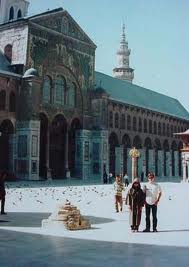
1.  Damascus Syria — Damascus is one of the oldest continuously inhabited cities in the world.  It is huge in the Moslem world but it also has much Christian history attached to it.  The picture below is of one of the main mosques in the city.  But if you look closely you will see that it resembles a cathedral, which it was.  The cathedral was built by the Crusaders but when the Ottoman Empire moved the Christians out it retained its status as a holy place.

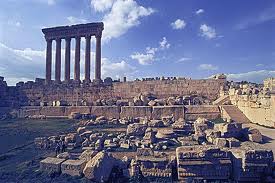
2.  Baalbek Lebanon — Lebanon  was once a destination for French tourists.  Beirut is a beautiful city with very friendly people.  The ancient town of Baalbek sits northwest of Beirut.  The picture below shows the remains of the temple of Baal, the Phoenician sun-god.  The Greeks and Romans also built temples on this site dedicated to their sun-god.

3.  Cyprus — Cyprus is an island at the eastern end of the Mediterranean.  It has endured centuries of fighting between its Greek and Turkish inhabitants.  Still, it is a place of beauty and great historical importance.  Cyprus is the location of Othello’s Castle as told by Shakespeare.  The picture below is of one of the beaches on the north coast of Cyprus.

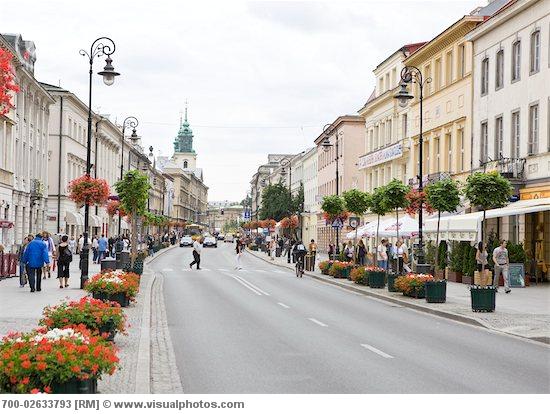
4.  Warsaw Poland — Warsaw is a city rich in Polish, and European, history.  Its people are very friendly, its food extremely good, and its prices very reasonable.

The picture below is of a street called Nowy Swiat and is typical of many Polish streets.

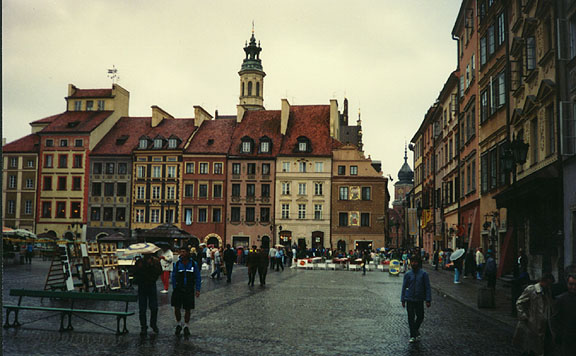
This is a picture of Market Square in Warsaw.

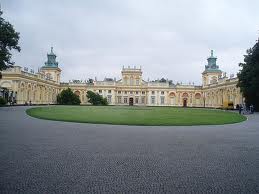
This last picture is of the Wilanow Palace in Warsaw.

5.  Porto Fino Italy — Most people who visit it visit places like Rome, Venice, Florence, and Naples.  But Italy has hundreds of other cities that are great destinations.  Chief among these is one well-known to Europeans, Porto Fino.  Porto Fino is a small city south of Milan that is a hideaway for European millionaires.  This is a place where seeing the large yachts of the wealthy and the super-wealthy is not at all unusual.  Even so, reasonably priced accommodations are not difficult to find.

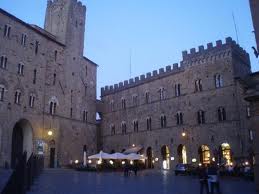
6.  Volterra Italy — Volterra is a small  town located in the central Italian mountains.  Its 13th Century center remains virtually unchanged since it was built.  Extremely narrow street defy the use of automobiles in them.  Volterra is also the site of a first century Roman amphitheater.

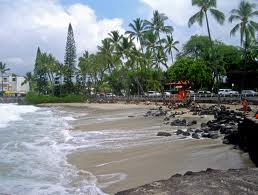
7.  Kona Hawaii — When visitors to Hawaii decide to go to other Hawaiian Islands they make Maui, Molokai and Kauai their prime destinations. But the largest island of the chain, known as the Big Island of Hawaii, offers everything any of the other islands have and more.  For people visiting the big island Kona is the city where you want to stay.  It is the second largest town, to Hilo, on the island but has a quaintness about it that is extremely attractive.  Not too far from Kona is one of the most active volcanoes in the world.

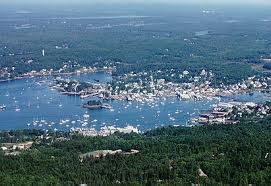
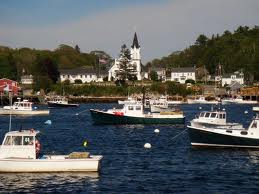
8.  Boothbay Harbor Maine — I have visited most of the seaside cities and towns on the Maine coast and I believe Boothbay Harbor to be far and away the finest of these.  Boothbay is a small town situated in mid-coast Maine.  It is at least half an hour from the nearest interstate.  Boothbay is rich with history surrounding ship building and fishing.  The town has any number of bed and breakfast houses which are virtually the only place you can stay there as there are only a very few motels.

9.  Monaco — When Americans consider what countries to visit in Europe, I doubt Monaco ever comes under consideration.  You cannot fly there, it does not have an airport.  The closest is probably Marseille France.  Monaco is a hidden gem.  It sits between the Alps and the Mediterranean sea.  You arrive there either by car or by train.  The city-state offers beautiful beaches, casinos, and an active castle.

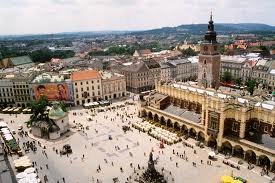
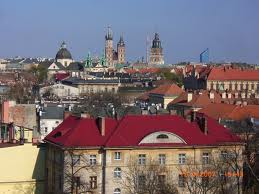
10.  Krakow Poland — Krakow is the most ancient of cities in Poland.  Its history reaches back to the earliest of times in Polish history.  The city was amazingly untouched by World War 2, it was never bombed or even attacked.  It retains all of its old-world quaintness.  Its leisurely way of life is conducive to the most restful of vacations.  It is also home to Jaglonian University which dates back to the 14th Century.