AMTRAK EXPANSION NOW!!


I was pretty discouraged about writing after my last post that admonished people against voting for Trump and yet they did and now where are we?

I saw an article that attempted to say AMTRAK is reasonably similar to the European rail system. I can only wonder what that guy was smoking. First of all, all major routes are electrified, something AMTRAK needs to expand. Secondly, all large cities are connect by many trains each day. Only the Northeast Corridor, Chicago to St. Louis, and the L.A. to San Diego route can claim that. There may be one or two I missed but I hope I made my point. For example, if you want to go to Chicago from New York there are two trains but they take different routes. The old “Water Level” route of the New York Central Railroad was the prime route to Chicago with many trains each day. Today there is but one train connecting New York to Cleveland, Toledo, and Chicago. This route is begging to be a high speed rail corridor for people going from New York to Buffalo or Cleveland. There are probably more the 25 million people along this route who, if there was decent frequency, would use it over the hassle at the airport. Think of someone wanting to go from Rochester NY to Cleveland. There is only one train and it leaves Rochester at 11:29PM and arrives in Cleveland at 3:53AM. They couldn’t do better than that? This train only works well for people in New York who are going all the way to Chicago. Coach is only $47 and private rooms are $265 one way and $467 the other. AMTRAK needs to go to a single price policy rather than using airline schemes of fares.

The U.S. Department of Transportation, Surface Rail had designated a number of corridors across the U.S. Several regional corridors do not even have rails meaning they are considered one thing while being another. Priorities are at odds with the states, especially more conservative states like New Hamshire.

Then there are the missing lines that cannot be made sense of. For example, there is a bus but not train from Detroit to Toledo. Trains are much more efficient and passengers will take a train before a bus. There once was a route that went from Cleveland to St. Louis connecting many intermediate sized cities. There is no such train today. Then there is the St. Louis to Los Angeles train that only runs 3 days a week. I have never heard why this is that way. And the big hole in the system is the Chicago to Miami route. AMTRAK actually had such a route at one time but it got eliminated because of Congressional foolishness.

There used to be an AMTRAK train that went from L.A. to Salt Lake City which included a stop in Las Vegas. Airlines love the LA to Las Vegas route, a real money maker but no trains. If you look at an AMTRAK map you will see blue lines that indicate AMTRAK’s Thru-Way Buses. Most of those routes are former train routes! If the U.S. truly wants to make AMTRAK at the level of European trains, it has a lot of catching up to do.

Electrification of routes in the East and on the West Coast are a must. Energy efficient and cost effective routes. Right now the only expansion of AMTRAK is happening in Maine where the progressive state is looking at its future and is actively upgrading existing track to accommodate passenger rail. This route sees 5 trains a day and is quite profitable for AMTRAK. It would seem to me that a state like Wyoming which currently has no AMTRAK trains, although they once did, would do well to promote rail travel through their state to Salt Lake City.

One last thought. Before all the rail mergers started in the 1960s, there used to be seasonal trains to ski resorts. Anyone who has been to one of these knows how horrible both driving and parking is. The old railroads used to run what they called “Ski Trains.” Such trains were very popular.

AMTRAK needs to go back to before it existed, the 1950s, and see what routes were serviced by rail and the frequency of the trains and make plans use those routes as a baseline.
A Day Trip to Damascus


Many years ago I was fortunate to have been stationed in Pisa Italy when I was in the army.  The summer of the year after my arrival, I decided I want to tour the middle east.  After touring Greece, I caught an airplane to Beirut Lebanon.  Beirut is a surprising gem of a city.  It is little known to Americans but is a destination of choice for the French.  That, in no small part, is due to the fact that following World War 1, when the European powers were divvying up the old Ottoman Empire, the French laid claim to Lebanon while the British were claiming its southern neighbor, Palestine.

The French, in turn, made Beirut into a middle eastern version of the Riviera complete with a casino.  I stayed in Beirut for four days.  I found the people of Lebanon to be extremely friendly and seemed to have no opinion on American tourists, probably because we were a bit of a rarity and had not offended them, yet anyway.  The hotel manager, one day, suggested I take the bus tour to Damascus, that I would thoroughly enjoy it.

Early the next morning I boarded the tour bus and quickly found a pair of Canadian girls, the only North American people on the trip.  Damascus is only 55 miles distant from Beirut.  At the time, the only road between the cities was a single two lane highway.  Upon arrival at the Lebanese Syrian border, the bus is boarded by the border guards who collected all our passports.  We were told that we were not allowed to get off the bus while our passports were processed.  That took a good two full hours which meant we were sitting in the desert sun for the entire time.  Nothing of note took place and once our passports were returned we continued on to Damascus without incident.

Upon our arrival in Damascus the bus driver informed us that we had to change to another bus to have the tour of the city, which we did.  It turned out there was a really good reason for changing buses but that did not become apparent until we returned.

Damascus is one of the oldest cities in the middle east and get mentioned a number of times in the Bible including a reference to a “street called Straight.”  The particular old Roman street is where Paul supposedly was converted to Christianity.  For someone who grew up where cities and towns had a history dating in the hundreds of years, it was really quite remarkable being at a historic location which counted its age in the thousands of years.

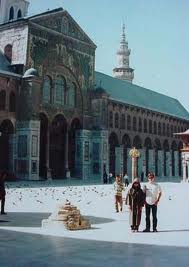
The picture below is of a cathedral located in Damascus that was built by the Christians during the era of the crusades.

In later centuries the cathedral was turned into a mosque and now serves as the central mosque for Damascus.  Upon entering, you are greeted by Persian rugs layered about 7 deep.  They cover the entire walking surface of the mosque.

Towards the front, as seen in the above interior shot of the mosque, is an encased area where the Moslem world believes the head of John the Baptist is.  It turns out, according to our guide, that he is considered one of the prime prophets of the religion.  Furthermore, our guide pointed out that in Islam, places held in reverence in the Christian world is held equally as highly in Islam.  These two things were eye-opening for me to say the least.  And as you can see, from the above picture, the interior of the old cathedral is quite as beautiful as it ever was, maybe even more so.

I was struck by the sight of Syrian soldiers who came to the enclosure as they cried while they prayed there.  After that they moved to a place next to the wall that faces Mecca and said additional prayers.  It was really quite a touching scene.

For the return trip, we returned to the bus that brought us to Damascus.  The two Canadian girls and I sat together but there was one problem.  When I tried to push my feet beneath the seat in front of me I found there to be an obstruction.  Upon inspection I found that skeins of fabric had been secreted underneath the seats to be smuggled back into Lebanon.  We were now part of an international smuggling ring!  Upon arrival at the border I jokingly said to my Canadian friend that we should probably report the smuggling operation.  She informed me that if the Lebanese did not kill me, she would! I had no intention of saying a thing and, fortunately, the border guards did not inspect the interior of the bus so the contraband was not found.  I have to admit, however, that we did have a number of anxious minutes.

I cannot say I have ever had any experience similar to this one in my life but I would not trade it for anything.  Furthermore, I highly recommend visiting these areas, of course only after the conditions in Syria settle down and life returns to the routine.

Taking the Train Across America


I have taken the train across the United States, Boston to San Francisco, both ways twice.  It is a trip like none other.  You do not have to be a lover of trains to truly enjoy the trip either.  There are not a lot of such cross-country trains, but they do exist.  You can leave from any large city in the Northeast to start your trip.  It is necessary, with one exception, that you go through Chicago to make a connection for the rest of the trip.

That one exception is a train that runs from Washington D.C. to New Orleans, and from there onward across Texas, New Mexico, and Arizona to Los Angeles.  The only difference with this train, the link that goes from New Orleans to Los Angeles only runs three days a week while all the routes departing Chicago daily including all holidays.

One of the routes leaving Chicago heads in a southwesterly direction taking you through Las Vegas before reaching Los Angeles.  The next route, leaves Chicago for Denver, and thence through Salt Lake City before reaching the outskirts of San Francisco.  The fourth train takes a northern route traveling Chicago to Milwaukee, Minneapolis and then across the northern states to Seattle.

My trip started in Boston.  At the time the train left in the late afternoon and is named the Lakeshore Limited.  It travels through Worcester and Springfield Massachusetts before reaching Albany New York.  At this point the train is linked up with another train from New York City.  From there the train travels through Syracuse, Buffalo, Cleveland, and Toledo before reaching Chicago.  Unfortunately, the lateness of the day keep the beautiful upstate New York scenery from view, however that is remedied on the return trip where the train enters western New York in the early dawning hours.  This train is equipped with a diner, sleeping accommodations, along with regular coach cars.  The sleeping accommodations give one a private compartment for daytime travel.  Service aboard the train is friendly and the food is really pretty good, far better than anything any airline has to offer.

Once reaching Chicago you have a layover of several hours while you wait for your next train.  The Chicago station is an entirely renovated facility that is very clean and offers good restaurants and other places for people to shop or just lounge.

The San Francisco leg of the trip leaves Chicago early in the afternoon.  As with the previous train accommodations include coaches, a diner, and sleeping facilities.  But unlike its eastern brother, it also has several high level cars from which one can enjoy a 360 degree vista of the passing countryside.  This is particularly attractive after the train leaves Denver early the next morning and follows the Green River valley through some remote territory.  You go a long time with no road in site as you hug the side of a river with the valley walls sweeping upwards on either side.

The next morning as you depart Nevada you enter the eastern edge of the Rockie Mountains.  One stop, Colfax, is particularly close to Lake Tahoe, one of the most beautiful lakes anywhere in the U.S.  During this portion of the journey the train slips through numerous short tunnels before re-emerging in the gorgeous mountainous countryside.

Unlike air travel, people on trains recognize they are going to be in each other’s company for quite some time, and there is a certain friendliness that arises from these circumstances.  Even if you are making the trip alone, you will find many people who are more than happy to pass the hours in interesting conversations.

Also, as good as the food on the train is east of the Mississippi River, it is that much better to the west of it.  AMTRAK has worked hard to maintain some of the old-time romanticism of rail travel and its good food and friendly atmosphere.  On these trains, because of space limitations, you may well find yourself sharing your table with a stranger but that becomes an opportunity to meet someone new and interesting.  The waiters are polite and efficient, and you never feel rushed.

I cannot recommend that everyone try this at least once in their lifetime.  It is well worth the investment.

Never Be an American Tourist


I have been to about 20 foreign countries over the years.  When I first started visiting those countries I was actually living in Italy at the time.  I made a decision to abandon my U.S. dollars for Italian Lira.  Yes, this was well before the Euro.  My first stop was Greece.  I had a hotel room in Athens and set out to see the sights.  The people of Athens were horrible.  They reminded me of those arrogant entitled Americans!  They had no time for anyone, and were only too willing to ignore me.  I rented a car and headed out for Thessalonica in the north.  I was not very far outside Athens when I picked up a couple of hitchhikers who just happened to be Americans.  It was getting close to lunchtime so we stopped at a very small roadside cafe we came to.

We had an immediate problem.  Americans expect everyone who serves them should naturally speak English and have real problems when that is not the case.  I was fortunate enough to have lived in Italy for some time at that point, had learned Italian, and knew that these small, out of the way places were not where English was spoken.  The cafe was just an extension of a typical European farmhouse.  A man and a woman ran the place and of course spoke only Greek.  We three Americans accepted that and quickly set about breeching the language gap.  We had acquired some ears of corn along the way and we wanted to have it cooked for us.  At the time, most Europeans did not eat corn on the cob, and many considered it to be only good as cattle food.  Through hand gestures, and other means, we were able to convey our desire to have the corn boiled.  Our hosts were aghast but were more than willing to comply.  I do not remember what else we had with the corn, but I can assure you it was really good.

As we sat in the cafe, we being the only ones there, we were able to have a conversation, of sorts, with our hosts.  They conveyed to us how things were for them during World War 2 and why they truly loved Americans.  These people were extremely nice.  It was at that point I discovered that speaking a common language was totally unnecessary to gain an understanding of the people you find yourself with.  This set the tone for the rest of my trip.  Even though my feelings for Athens remain unchanged, my feeling for the Greek people in general is extremely positive.  I truly saw these people as just like me in many ways and that was comforting.

At another point on this trip I found myself in the Lebanese capital of Beirut.  I exchanged some of my Italian lira for Lebanese pounds, found a cab and headed for my hotel, the Alcazar.  The man at the reception desk spoke perfect English and was extremely helpful.  I later asked him about his knowledge of foreign languages.  He told me that to be employed in a hotel in Lebanon you were required to know at least four languages, Arabic, French, German, and English, so you could deal with the greatest number of the guests.  He knew several more languages on top of these.  It was really impressive.

Across from my hotel there was a sign about a casino to the north of the city.  I asked the man at the desk about it and he told me to rent a cab and go because it would be a wonderful experience.  I had met up with a couple of Canadian women in Beirut and they agreed that it would be a really nice way to spend the evening.  I noted that the cab fare to this place was only about ten American dollars.  We rented the cab and went to the casino.  Upon arriving I tried to pay the cabbie but he said no, that I could pay him after we got back to the hotel.  I was really surprised by this statement and said we would be inside for hours and the cabbie assured me that he expected that.  Then I asked him how long it would take him to get there when we came out.  He assured me he would be one minute away.  It was unbelievable, to the American mind, but we decided to accept what he said.

When we finally decided to return to our hotels the cabbie was there just as he said he would be.  When we arrived back at out hotel he said the fare was 30 Lebanese pounds, ten American dollars.  We were shocked, to say the least.  We decided between us to give him 60 pounds feeling it was more than worth it.  The cabbie had been everything he offered and more.  He was polite, friendly, and offered us some useful tips.  He suggested we go on a tour to Damascus, that we would really enjoy ourselves.

Well, the next day the three of us boarded a tour bus going to Damascus.  The trip to Damascus was uneventful although upon arrival at the border we were held for over an hour while our passports were inspected.  Upon our arrival in Damascus we were asked to change buses for our tour.  We did not think much of that at the time and went on our tour of the city.  I loved Damascus.  When our tour bus returned us to the bus that had brought us to Damascus we were quick to find skeins of fabric pushed underneath all of the seats.  We had become a part of a smuggling scheme from Syria to Lebanon.  I joking said to my companion that maybe we should say something about this at the border.  She assured me she would kill me if I even breathed wrong.

Shortly after our return to Beirut we were walking through the city bazaar when I spotted a heroin deal going down right out in the open.  Not 20 feet away was a policeman who could not have missed such a transaction.  I noted what was going on to one of my friends and we agreed that had any of us been involved, the policeman would have been quick to notice.

My entire stay in Lebanon showed me one very important thing.  The Arabic people, the common man, were extremely friendly and took me as I was.  I have nothing but good things to say about these people and take offense at anyone who says anything to the contrary.

The thing is, when I am in these foreign countries I never present myself as an American, as if that is supposed to count for something.  I am always aware that I am a guest in the country and that good manners is what I need to display.  By acting this way, I cannot tell you how many times the people of these countries have been surprised upon discovering I am an American.  I was fortunately aware of the concept of the “Ugly American” and it was the last thing I wanted to be.  I cannot say I have always been treated really well but in general, I have been treated really well.  Because of that I have enjoyed my travels abroad immensely.

Americans, when you travel abroad, leave at home your American ideas of the way things should be, of how people should treat you, and especially, leave at home all feelings of entitlement because you are an American.  The phrase “I am an American” abroad means something between nothing and utter contempt to anyone you would say this to.

Visiting Northern California


When people hear about California I think their mind tends to go to the Los Angeles area and all its glitz and glamour.  I have visited there a number of times and frankly, I am not all that impressed.  Don’t get me wrong, there is plenty to see, really good things, but it all still leaves me a little wanting.

Northern California is like a totally different state.  It in no way resembles the south.  Where Southern California is hundreds of square miles of urban sprawl, Northern California, even with its cities, allows you to quickly escape to the countryside.  My observations come more from all the time I spent out there on business than vacation time.  There was a stretch of four months were I stayed in Sacramento for the majority of the days during any given month.  That gave me a lot of time to explore and visit.

San Francisco is the gem of the west.  As different as it is from my home town city of Boston, it also has much of Boston’s quaintness and charm.  You will find lots of great restaurants, historic places of interest, and activities to keep you entertained for at least a week.  Just to the north of San Francisco is the city of Sausalito.  This is an artist community situated just across the Gold State Bridge.  From there you need drive only a short distance to John Muir Woods where you will find a wonderful redwood forest.

Redwood National Park is in the southeastern part of the state and a bit of a drive.  Although you cannot get all the wonderful sights of Redwood National Forest, John Muir Woods still gives you plenty of redwoods to marvel over.  The woods have any number of trails you can stroll along and enjoy the aromatic and scenic delight of the forest.

You might from San Francisco venture northward to the Napa Valley.  The Napa Valley is one of the premier wine growing areas of the United States.  It extends from Napa northward to Calistoga along route 29.  En route you will encounter many wineries most of which are open to tourists and offer you a free taste of some of the wines they make.  One thing, do not swallow the wine!  You will get drunk.  The wines are  really good but these wineries all offer you a place to spit out the wine you have tasted.

From Napa you drive about an hour and a half to the state’s capital, Sacramento.  Sacramento is an absolutely delightful little city to visit.  I highly recommend visiting the “Old Town” district.  This is the old portion of the city as it sat along the banks of the Sacramento River.  It gives you some of that old city flavor but there is also the State Railroad Museum at the site.

From Sacramento take U.S. Route 50 eastward to Lake Tahoe.  It will take several hours but the scenery along the way is really good.  En route, look for the famous Folsom Prison.  And the highway, even though not offering the speeds of an Interstate, still allows you to average over 50 MPH to Tahoe.  Upon reaching the area of Lake Tahoe you will have traveled through 3 very different regions: the coastal mountainous area, the inland plains, and finally the Rocky Mountains.

Lake Tahoe is truly one of the most beautiful regions in the entire state.  The lake is an extremely deep crystal clear lake that is surrounded by chalet style houses.  Lake Tahoe itself is actually intersected by the states of California and Nevada.  Route 50 travels along the southern edge of the lake into Nevada.  If you were a fan of the western t.v. show Bonanza, you can see the actual set on the eastern shore.  There is also a road leaving the western edge of the lake at route 50 and going northward around the lake.  I highly recommend this beautiful route.

I am obviously a fan of Northern California but in this short article I have not even scratched the surface of all the many wonderful sites you can see there.  With just a little planning you can have a vacation like none you have had before.

Ten Places To Visit You Have Probably Never Considered


These are ten places I have been to that seldom make it to an American tourist’s itinerary.  I have been to all these places and cannot recommend them highly enough.

1.  Damascus Syria — Damascus is one of the oldest continuously inhabited cities in the world.  It is huge in the Moslem world but it also has much Christian history attached to it.  The picture below is of one of the main mosques in the city.  But if you look closely you will see that it resembles a cathedral, which it was.  The cathedral was built by the Crusaders but when the Ottoman Empire moved the Christians out it retained its status as a holy place.

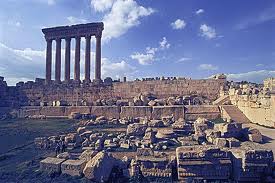
2.  Baalbek Lebanon — Lebanon  was once a destination for French tourists.  Beirut is a beautiful city with very friendly people.  The ancient town of Baalbek sits northwest of Beirut.  The picture below shows the remains of the temple of Baal, the Phoenician sun-god.  The Greeks and Romans also built temples on this site dedicated to their sun-god.

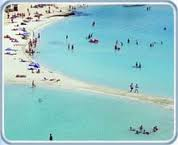
3.  Cyprus — Cyprus is an island at the eastern end of the Mediterranean.  It has endured centuries of fighting between its Greek and Turkish inhabitants.  Still, it is a place of beauty and great historical importance.  Cyprus is the location of Othello’s Castle as told by Shakespeare.  The picture below is of one of the beaches on the north coast of Cyprus.

4.  Warsaw Poland — Warsaw is a city rich in Polish, and European, history.  Its people are very friendly, its food extremely good, and its prices very reasonable.

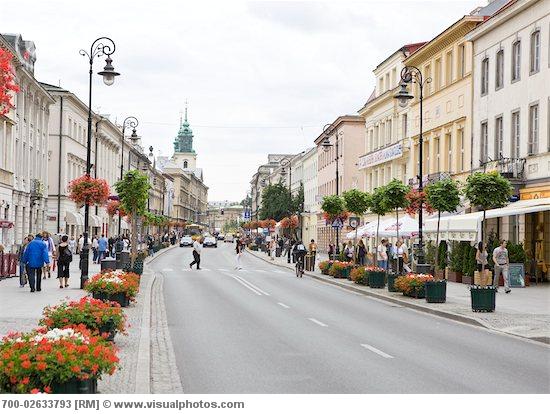
The picture below is of a street called Nowy Swiat and is typical of many Polish streets.

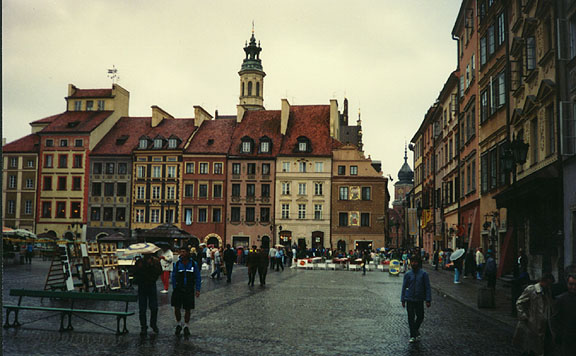
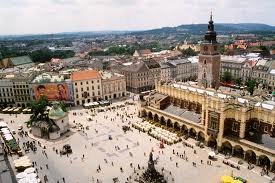
This is a picture of Market Square in Warsaw.

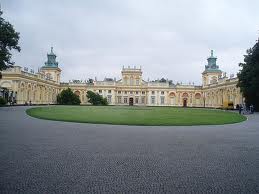
This last picture is of the Wilanow Palace in Warsaw.

5.  Porto Fino Italy — Most people who visit it visit places like Rome, Venice, Florence, and Naples.  But Italy has hundreds of other cities that are great destinations.  Chief among these is one well-known to Europeans, Porto Fino.  Porto Fino is a small city south of Milan that is a hideaway for European millionaires.  This is a place where seeing the large yachts of the wealthy and the super-wealthy is not at all unusual.  Even so, reasonably priced accommodations are not difficult to find.

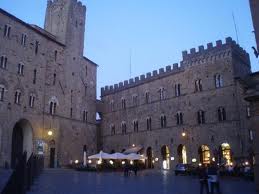
6.  Volterra Italy — Volterra is a small  town located in the central Italian mountains.  Its 13th Century center remains virtually unchanged since it was built.  Extremely narrow street defy the use of automobiles in them.  Volterra is also the site of a first century Roman amphitheater.

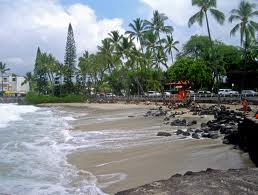
7.  Kona Hawaii — When visitors to Hawaii decide to go to other Hawaiian Islands they make Maui, Molokai and Kauai their prime destinations. But the largest island of the chain, known as the Big Island of Hawaii, offers everything any of the other islands have and more.  For people visiting the big island Kona is the city where you want to stay.  It is the second largest town, to Hilo, on the island but has a quaintness about it that is extremely attractive.  Not too far from Kona is one of the most active volcanoes in the world.

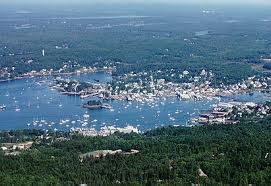
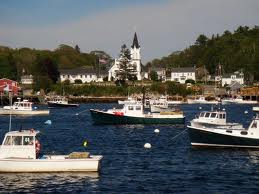
8.  Boothbay Harbor Maine — I have visited most of the seaside cities and towns on the Maine coast and I believe Boothbay Harbor to be far and away the finest of these.  Boothbay is a small town situated in mid-coast Maine.  It is at least half an hour from the nearest interstate.  Boothbay is rich with history surrounding ship building and fishing.  The town has any number of bed and breakfast houses which are virtually the only place you can stay there as there are only a very few motels.

9.  Monaco — When Americans consider what countries to visit in Europe, I doubt Monaco ever comes under consideration.  You cannot fly there, it does not have an airport.  The closest is probably Marseille France.  Monaco is a hidden gem.  It sits between the Alps and the Mediterranean sea.  You arrive there either by car or by train.  The city-state offers beautiful beaches, casinos, and an active castle.

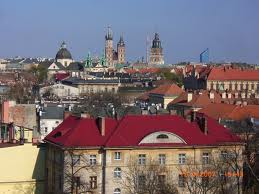
10.  Krakow Poland — Krakow is the most ancient of cities in Poland.  Its history reaches back to the earliest of times in Polish history.  The city was amazingly untouched by World War 2, it was never bombed or even attacked.  It retains all of its old-world quaintness.  Its leisurely way of life is conducive to the most restful of vacations.  It is also home to Jaglonian University which dates back to the 14th Century.

Living On a Tropical Island


In the first 35 years of my life I was fortunate enough to have lived in severalforeign countries and visited many others.  Among those place was Italy, where I lived for 3 years, and Hawaii, where I lived for a little less than 2 years.  I also lived in Korea and visited, France, England, Germany, Holland, Switzerland, Monaco, Austria, Poland, Greece, Cyprus, Lebanon, Syria, and Israel.  But in 1981 I went to work in a country that is like none other, the Marshall Islands.

In 1981 I took a job at GTE under the auspices of MIT-Lincoln Laboratories to do satellite tracking out in the Kwajalein Atoll which is in the Marshall Islands.  To get there you have to first fly to Honolulu before getting into the belly of an Air Force C-141 for the remainder of the trip.  Kwajalein sits about 2500 miles west south-west of Honolulu.  To put that in perspective, Honolulu is about 2500 miles for the US west coast.

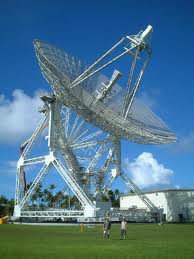
The radar shown below is a UHF/VHF radar named Altair.  It is tasked with tracking near-earth satellites.  These are satellites exist within several hundred miles of the earth’s surface as opposed to those in the synchronous belt, 42,000 miles distant.

The Marshall Islands are a part  of what is called Micronesia and at the time was a part of the U.S. Trust Territory of the Pacific.  That was the result of the removal of the Japanese from these islands during World War 2.

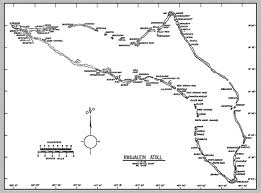
The Kwajalein Atoll is a string of over 100 very small islands that line the top of an ancient volcano.  The largest of these islands, Kwajalein, is on several thousand feet wide by about 2 miles long.  The island I lived on was at the opposite end of the atoll, about 26 miles distant, and was 1 mile long by 4000 feet wide.  I will add pictures of the islands and island life after this post.

The entire population of Roi-Namur was about 400 men, no women.  We were all there to run one of the two satellite tracking radars on the island.  There were Marshallese people who lived on an island 3 islands away.  You can actually walk down the reef at low tide to get to that island.

There are no birds on these  islands, not even sea gulls.  I can only guess that the remoteness of the islands has something to do with that.  The only land animal native to the island is a thing called the coconut crab.  These are very large crabs, some growing even larger than the Alaskan King  Crab.  Their large claw literally had the power to crack open a coconut.  I was told these crabs are good eating.  But catching the coconut crab is discouraged because their population has been decimated.  The picture below shows the coconut crab getting ready to crack the coconut.

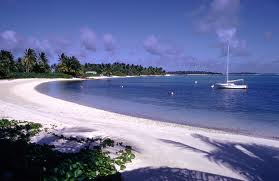
The waters surrounding the island were teeming with fish and other critters, such as the moray eel, Pacific spiny lobster, crabs of all sorts, octopi, and squid.  Many of the fish lived in and around the untouched coral reefs.  I learned to snorkel these waters very well and found myself swimming with some really large tuna, even sharks.  This happened in the lagoon side of the atoll and since sharks usually did not live there they did not bother us usually.  We were not in their territory.  The picture below is of a beach on Roi-Namur on the lagoon side of the island.

On any given day you could count on the temperature being about 81 degrees.  The land mass being so small, even though we were only 9 degrees above the equator, the Pacific acted like a huge air conditioner.  I think the all time high temperature was 85 and the all time low was a crisp 79.

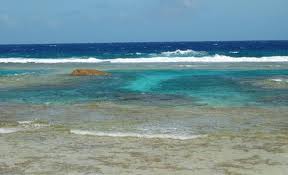
The following picture was taken of the reef looking from the shore towards the Pacific Ocean.  This reef is several hundred feet wide.  To be clear, the lagoon side of these islands do not have such a reef.  At the end of the reef, the island drops off sharply going down many thousands of feet.

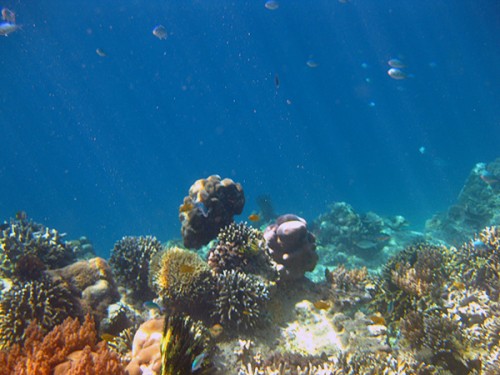
The picture below is a picture of the reef in the Kwajalein reef.  The camera is incapable of taking a picture that properly displays how colorful this reef truly is.

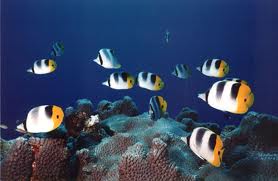
There is an almost endless variety of fish that live in the reef.  The following picture shows some of them and as with the reef, the picture does not do justice to how colorful they are.

The only type of storms that the islands ever encountered were the monsoon rains.  The islands exist too close to the equator to experience typhoons or other such storms.  We would experience downpours that went on for hours.  There was zero chance of flooding as we were at most a few feet above sea level the rain water either seeped through the ground to the coral below of quickly drain off into the ocean.  But that rain water was also our only source of fresh water.  Curiously, it was discovered that a very large pool of fresh water collected beneath the island.  It literally floated on top of the salt water.

The Kwajalein Atoll is immune to the force of a Tsunami.  That is because the atoll is literally the top of a volcano.  For a tsunami to exert its force it needs a long incline to concentrate its power.  There is no incline around an atoll.

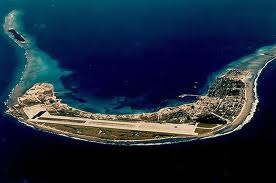
The only vehicles allowed on the island were the two fire trucks, a couple of pick-up trucks, and the aircraft that shuttled us from Roi to Kwajalein.  Our food supplies were delivered by a barge that plied the lagoon two or three times a week between Kwajalein and Roi-Namur.  Lighter time critical items were delivered by aircraft.  When you look at a picture of the island of Roi you will see that the island’s runway literally runs from one edge of the island to the other.  A picture of Kwajalein shows a similar pictures.  The much longer runway there runs down the middle of the island for about two-thirds of its length.

Unfortunately Kwajalein is a place that does not allow for visitors, in case you are thinking you might like to go there.  But there is a near-by island, Majuro, that is also in the Marshall Islands and where you can experience what I did.

Poland, the Best Kept Secret Destination


About three years ago I was looking for somewhere to go on vacation with my wife.  I really wanted to go back to Italy but upon looking at what it would cost for 2 weeks, I felt it rather expensive.  We have both been to Hawaii on numerous occasions, so that was not something to consider.  Then I thought about Poland.  My wife’s family, several generations ago, emigrated to the United States from Poland.  I thought it might be an interesting destination so I researched it a little.  I found that we could spend 2 weeks in Poland for about half what Italy would have cost.  My wife was, of course, excited about going.

We flew out of Logan Airport on a Friday evening and connected through Frankfurt to Warsaw.  My first impression upon arriving at the airport was that Poland would be a stark former Iron Curtain remnant of the old communist regime.  The airport seemed to say that was still true.  It was a sunny Saturday afternoon and we go a cab to where we were staying.  I had found a place that looked pretty good and was centrally located.  It is called St. Andrews Residency.

This was the start of my transformation of thought.  We were greeted by an extremely pleasant young woman who welcomed us to St. Andrews Residency and to Poland.  She took us to the top floor and showed us where we would stay.  The best way to describe our accommodations is to say it is quite similar to a one-bedroom apartment.  It had the bedroom, a separate living room, a small kitchen, and a huge bathroom.  St. Andrews itself was small and I would guess it accommodated maybe 25 people.

The entrance to St. Andrews was off a small courtyard.  Diagonally across the courtyard was a terrific little coffee shop that also served a nice continental breakfast.  It was truly European at its best.

On Sunday were started our discovery of Warsaw by heading out walking towards Old Town which was about 2 miles distant.  The walk from St. Andrews to Novy Swiat, the street leading to Old Town, was a walk through what could have been any European city.

Novy Swiat is a busy two lane road lined with coffee shops, restaurants none of which were chains, several large churches, the University of Warsaw, the Polish Capitol buildings and finally Old Town.  This street was very clean and well kept.

The area around the Royal Castle had been completely destroyed during World War II.  It has been rebuilt.  Pictures of the castle and the buildings nearby allowed reconstruction of the area so that it looks almost identically as it did prior to 1940.  The beauty of that area is unparalleled.

On Tuesday we rented a car and headed out for Krakow.  Poland does not have a single super highway like we have here in the U.S. or that you find in Western Europe.  Still, there was a single two lane highway from just outside Warsaw to Krakow.  It took us most of the day to get there.

I had found a nice hotel in the Kazimierz section of the city.  This is the old Jewish section of the city and it is also where significant portion of the movie Schindler’s List was filmed.  Unlike Warsaw, Krakow went untouched by World War II and has fully retained its old world elegance.  Upon the highest point in the city sits the castle Wawel.  This is a 16th century castle where many Polish kings resided.  Like Boston, you can see everything on foot using a guidebook.  Not far from the castle is the Old Town district and Jagiellonian University.  One of the most famous graduates of Jagiellonian was Copernicus.

Even though our visit to Krakow was still early in our trip, we had already visited many Polish churches.  Any one of those churches would be called a cathedral in the U.S.  They all seemed to be very large and lavishly decorated in their interiors.  Each church had works of art lining the walls and gilded gold everywhere.  But in the Old Town Square there is the Church of St. Mary.  Mary is the Patron Saint of Poland and this is epitomized at this church.  It is one of the larger churches in Poland.  It is a 15th century gothic edifice whose beauty is unparalleled.

On Thursday we left Krakow to return to Warsaw.  We left early, however, so we could visit the city of Chestahova.  This is a small city situated about 50 miles west of Krakow.  Its significance is that the church there hold a painting that is named “The Black Madonna.”  The Madonna’s face in this picture has darkened significantly since it was painted, and there a numerous purported miracles that have happened in its presence.  This has made visiting this church a pilgrimage for many Poles.

Back in Warsaw we continued our tours of the city seeing places such as the old Warsaw Ghetto where the Jews were held prior to their being moved to Auschwitz, about 30 miles west of Krakow.  We also visited the Park Lazienkowski in the heart of the city.  Once in this gorgeous park, the sounds of the city quickly disappear.  One of the first things you see in the park is a statue commemorating Fredric Chopin who was born in Poland.  The park is also the location of the Palace on the Water.

On our final day before we departed we visited the Wilanow Palace and Park.  The palace is also known as Villa Nova.  It is a 17th century palace where the infamous “Warsaw Pact” was signed.  But more than that, the palace itself is of particular beauty and is surrounded by many gorgeous gardens and grassy walkways.

The only bad meal we had during our entire stay in Poland was when we went to a restaurant that was trying to be American.  It’s about what you’d expect in an American fast food restaurant.  The Polish food was delicious and the service in every restaurant was always great.

We found the Polish people to be exceptionally polite and friendly.  We did not have a single negative encounter.  That is unless you count the woman in the National Museum in Warsaw who got angry with me because I was using a flash on my camera!  There were no signs saying no flash pictures but I really should have known better.

Two weeks in Poland was not nearly enough time for us to see everything we wanted to see.  I cannot recommend a trip to Poland enough.  The entire two-week trip cost us about $5000 which included everything.

It would have been easy for me to have written at least 4 times as much as I have.  I recommend that anyone interested simply look up some of the places I have mentioned on the Internet and you will see what a great country this is to visit.   I would go back to Poland in a heartbeat and it is number one of my list of places to go even now.