The Great Bread and Roses Strike of 1912 — Part 1


What follows is the true story of labor unrest in the city of Lawrence Massachusetts in 1912.  In the history of the United States, before or since, this is the largest strike to effect any single city.  But out of it came many of the long overdue changes needed for working men and women.  The improbability of success for this strike was extremely high and that it would last 62 days was unheard-of.  If on January 1 1912 you had asked anyone could a strike not only go on for 62 days but end in success, you would have been roundly laughed at.  It was considered impossible, even by labor leaders.  But this strike got the attention of the nation, and possibly even more importantly, it got the Republican President of the United States, William Howard Taft, a friend to management, to summon a house committee to investigate the strike while it was in progress!

To tell this story in one sitting is too much.  I am breaking it up into many parts and will endeavor to keep both detail and interest high.  The protagonist in this story, the Industrial Workers of the World (IWW), won the day but lost in the long run while the antagonist, the American Federation of Labor, lost the day but won in the long run.   And the mill owners, well, they won even in losing as is often the case even today.


Lawrence Massachusetts was born from portions of two other towns, Methuen and Andover. It had been proposed that a showcase manufacturing city be built on the banks of the Merrimack River. Each town gave up a little over 3 square miles of land towards that dream. As a consequence, one more new town was created as Andover split in 1853 into two parts, Andover and North Andover, each having its own government.

The financing came from a group of Boston Bankers who had observed the huge success Lawrence’s sister city, Lowell, had been just 20 years prior. Its mills were large and bustling and bringing a tidy profit to owners and shareholders alike.

By 1900 Lawrence was Lowell’s equal in the manufacture of textiles. And to insure a constant power source, the founders of Lawrence had built a dam on the Merrimack river from which two canals were built to bring water to the new mills. The water was needed for the large steam turbines that powered each of the mills.

It was around 1900 when the make-up of the two cities diverged a bit. Lawrence became a magnet city for large numbers of America’s new immigrant groups, Italians and Poles making up the bulk. But there were also Armenians, Russians, and Syrians. The Italian immigrants are a curious anomaly for Lawrence. While both Lawrence and Lowell were attracting large number of these new immigrants, the vast majority of Italians chose Lawrence over Lowell. I have not been able to discover a reason for this except that it is known that William Wood, president and owner of the American Woolen Company, a conglomerate of over a dozen mills, sent men to Italy where posters were put up claiming that any who wished to emigrate to America would share in its riches. Wood vociferously denied this because to have done so would have broken American law. But there was no shortage of immigrants who claimed to have come to Lawrence because of his posters.

This group of immigrants, starting around 1900, are known as the “new immigrants.” The “old immigrants” included the Irish, Germans, Welch, Belgians, and French Canadians. They had held all the positions in Lawrence mills until 1900. Wood at the time was building two new mills, the Ayer Mill and the Wood Mill. The latter is the largest single mill enclosure ever built in America. But the labor pool available to fill these new mills was quite short hence Wood’s decision to entice new immigrants.

Wood really did not need to entice the Italians; they would have come anyway. The European economy of the early 20th Century was very weak. In southeastern Europe, the Balkans, Greece, and Turkey, the old Ottoman Empire was beginning to crumble but it was not going quietly. It was during this period the Turks declared war on Armenia and set about to obliterate it with one of the worst genocides ever.

In Eastern Europe the Russian Empire was also beginning to fall apart. The Czar had set about ridding Russia of its Jews by a series of Pogroms. The ploy was to unceremoniously push the Jews from where they had been living westward with the idea that they would tire of being constantly uprooted and leave the continent entirely. And to a small degree that worked.

Until 1907 Russia ruled over half of Poland. It was there that Russia pushed many of its Jews. But it also imposed its tyranny on the native Poles by requiring military service from its young men. This, of course, did not sit well with the Polish people and rather than fight the mighty czar, many chose to leave for the New World.

By 1912, Lawrence’s population was close to 90,000, an incredible number considering the city was barely 60 years old. The major of its population was either new immigrant or first generation immigrant. Because of this it gained the nickname “immigrant city.” But unlike other cities that attracted large numbers of immigrants, New York and Chicago, Lawrence was not divided into ethnic neighborhoods. For example, the first block moving away from the large Everett Mill had a large number of Italians and Poles with a few Syrians, French and English mixed in. This is not to say Lawrence had no ethnic neighborhoods, it did. The Germans settled an area known as Prospect Hill. The French and Irish had neighborhoods in South Lawrence. But considering Lawrence had claim to at least 15 large ethnic groups, those exceptions are the outliers.

Social unrest in Lawrence started, at the latest, in 1910. It was, however, part of a greater unrest going on in all of Massachusetts. The average mill worker in 1910 was required to work a 58-hour week, 10 hours a day Monday through Friday and 8 on Saturday. It is important to note that this was true for both skilled and unskilled labor. It was the skilled labor that petitioned for, and was granted, a shorter work week when the Massachusetts legislature passed a law reducing the work week to 56 hours which took effect in 1910. In 1911 it changed that law and reduced the work week to 54 hours starting January 1, 1912. It is that point this story begins.

Prior to 1912 unions nationwide were weak even though a number, but mostly the coal miners, conducted large scale strikes. But strikes seldom ended in a win for the working man. Mill and mine owners alike used the tack of hiring new workers to replace the striking workers. Such moves sometimes resulted in riots as in the Pullman Strike and the Johnstown strike. Lesser strikes were frequent in the western coal fields of Wyoming and Colorado but out of them came a man who would greatly influence the Lawrence strike of 1912. He was known as William “Big Bill” Haywood and he represented first the Western Miners Union and later the Industrial Workers of the World (IWW). The latter was ill-received by Americans because of its socialist doctrine and its affiliation with known anarchists and other “trouble makers,” as they were called.

Extremely poor working conditions in the textile and garment industry was well-documented. Just a year earlier in New York City, March 1911, a disaster known as the Triangle Shirtwaist fire caused the death of 146 garment workers, mostly women, many who jumped to their death or were burned alive. The factory owner did not want the women sneaking out so he had ordered exit doors chained and locked during normal working hours. Their escape routes blocked, the women had to rely on a small and slow elevator. The fire horrified New Yorkers and reforms were called for, some were even enacted, but state legislatures in those days held little empathy for the average mill worker. The reason being a simple one, their election often times relied upon the largess of the mill owners.

In June of 1911, and possibly foretelling a strike, a member of the I.W.W., probably Joseph Ettor, came to Lawrence with the expressed job of recruiting workers into the IWW. Ettor would play a prominent role later on in the strike. The only other union in Lawrence at the time was the Textile Workers Union, a branch of the larger American Federation of Labor (AFL). The TWU membership was entirely made up of skilled labor as was in keeping with AFL doctrine of the day. But the majority of mill workers fell into the category of unskilled labor. Conversely, the IWW had no such restriction and welcomed all comers, skilled and unskilled, into what it called “one big tent.” But to be a union member you had to pay dues and therein lay the problem for the IWW. The group it most ardently wished to represent could not even afford the meager one dollar dues as the worker was already living on starvation wages where pennies were counted. The total membership of the IWW prior to, during, and after the strike never exceeded 900. There were close to 35,000 mill operatives in Lawrence at the time.

January 11, 1912, a Thursday, the residents of Lawrence awoke to a bone chilling 10-degree morning. For many breakfasted consisted of molasses spread over bread. With the exception of the Arlington Mill, all of Lawrence’s mills were clustered along the Merrimack river and an easy walk for the operatives who filled them. Notwithstanding the literal chill in the air, there was also a great deal of tension. On that day the first pay envelopes of the new year were passed out and with them the operatives would find out if their wages had been cut because of the new 56-hour rule. No one knew for certain what would happen if the wages were reduced. Strike committees had been set up but no plan of action had been put forth.

The mill owners felt confident that the operatives would not strike simply because they knew the operatives were already living on the edge and could ill-afford to lose any income and put their welfare in jeopardy. But they also felt that if the mill operatives did strike they, the owners, could simply wait them out. This tack had been quite successful in well over 75% of all previous strikes in Massachusetts going back years. Mill owners refused to meet with strikers and hear their demands and usually within a week the workers returned to their position having won nothing. This is where the owners got their confidence.

What the mill owners of Lawrence failed to recognize on that fateful day in January was just how desperate the condition of their operatives was. It is well documented that a full third of all new immigrants who came to Lawrence to work the mills found the poverty of their native land more inviting than the poverty of Lawrence and therefor they returned home. For those who could not go back there was a feeling of “nothing to lose” by going on strike.

Sometime around 11AM in the giant Everett Mill the paymaster walked through the various departments handing out pay envelopes. When he reached one particular room, a Polish woman whose name is lost to history, shouted out “short pay! Short pay!” She promptly left her position and engaged others to do the same. They did. The moved from the third floor, to the second, to the first, gaining followers as they went. They marched out onto the street, Union Street, turned left and headed down towards the other mills, the first being the Duck Mill on their right and the Kunhardt mill on their left.

As they reached the mills numbers of the new strikers stormed through the entrances to these mills and called to their fellows to follow them into strike. They proclaimed that the worst had happened and their action was necessary.

Next they crossed the Merrimack River to the Ayer Mill on their right and the giant Wood Mill on their left where they repeated their actions and gained supporters. At the same time, a splint group from the original had turned right, just before the Duck Mill and marched down Canal Street to the Pemberton, Washington and Pacific Mills. By day’s end thousands of mill operatives were on strike. This was an unforeseen eventuality by the mill owners.

 

Where Has America Gone?


I went to graduate school to study U.S. History. I have always wondered how we, as a country, have gotten to where we are. I still wonder that but at least now I have a good working knowledge of the forces which brought us to this day. I have a deep appreciation of George Santayana’s words: “Those who cannot remember the past are condemned to repeat it.”

I, like so many Americans today, look upon our Congress as the most dysfunctional body imaginable. The present Congress in its dysfunctionality is not, in my opinion the worst ever. That honor, if you will, belongs to the various Congresses which presided during our Civil War of 1861 to 1865. Both major parties where so horribly splintered it is amazing they ever agreed upon anything. It was only a few years earlier, 1856, when Rep. Preston Brooks of South Carolina attacked Sen. Charles Sumner of Massachusetts on the senate floor, literally with his cane, beating him so badly he required medical attention. Brooks was ostensibly defending the honor of Sen. Andrew Butler whom Sumner had earlier called an “imbecile.” For his actions Brooks was fined $300.

It is of note that members of Congress in the 19th century were seldom millionaires although most were from well-to-do families. They were elected because they espoused the desires of their constituency and, as in the case of Brooks, were willing to literally fight for those desires. Brooks was incensed over the personal verbal attack abolitionist Sumner made on Butler by saying, “Senator Butler has chosen a mistress. I mean the harlot, slavery.”  These men were obviously and heatedly devoted to those causes important to their state.  Sadly, I do not believe such can be said for any member of Congress today.

Every American has 3 representatives in Congress, two senators and a representative.  But if someone were to ask me what any of those three people has done for my state, Massachusetts, lately, I quite honestly could not say a thing.  I simply do not know even though I do my best to remain informed.

At its inception the United States could easily have broken apart into 13 separate countries.  After all, each state had long before adopted its own constitution, set up its own form of democratic elections, and put together a fully and independently functional state government.  But by 1783 the colonies had come to realize the value of coalescing into a single and strong central government.  Still, they were bitterly divided upon what that government would look like and how each state could maintain a reasonable level of autonomy within the structure of a federal government.  To that end they decided on an election process which provided for the possibility of a complete turnover of the federal government at 6 year intervals.

That process was designed prior to political action committees, huge and rich corporations, and even, yes, political parties.  Thomas Jefferson believed that their need only be a single party made up of the “wise and well-born.”  But Jefferson actually oversaw that exact change when he departed from the Federalist party line, with which he greatly disagreed, and stated the Democratic Republicans.  He realized that Virginia’s needs were frequently at odds with those of Massachusetts or New York.  The original fight over state autonomy versus federal regulation continued until 1868 and the adoption of the 14th Amendment which, in part, bars states from enacting laws contrary to federal law.  At that time states fought jealously to preserve the general good and well-being of the residents of their state.  They did this through those elected to Congress.

At the beginning of the 20th Century politicians who were called “Populists” saw well-moneyed interests exerting control of the US Government to the detriment of the individual citizen.  Industrialists like Vanderbilt had lobbied and secured eminent domain so they could gain control of otherwise privately owned property.  Rockefeller who was able to gain monopolistic control of the fledgling oil industry, Carnegie the same in the steel industry and other “tycoons” of the day.  Congress enacted anti-trust laws, monopoly laws and in 1934 the Securities and Exchange Commission.  It took well over 30 years but Congress properly recognized that corporate America had systematically diluted the power of the individual American for its own use.

From 1900 until 1980 Congress and the President did an excellent job of insuring that the rights of the individual American were not trampled on by a few powerful interests.  But when Ronald Reagan became President the executive and legislative elements of our government began undoing all the work of the previous 80 years.  Reagan used sleight of hand by breaking up the communications monopoly AT&T had created while his real agenda was something entirely different.  Reagan started the charge against the average working man when he successfully oversaw busting the air traffic controllers union.  It was an entirely unnecessary action as the power of the president has always allowed for his ending a strike when he believed the national interest and the national defense were at issue.  Previous presidents had used this power to end lengthy coal miners’ strikes for example.  But none ever considered breaking up a union as this would have been viewed as un-American.  He effectively declared open season on America’s unions even though the power of all unions was lessening and the frequency of strikes decreasing.

He then took aim at the federal regulatory process, in particular financial interests.  He declared that such institutions were too heavily regulated and unnecessarily regulated, that they were self-regulating by their very nature and in their own interest.  This gives rise to the question of why the stock market crash on 1987 happened.  Is it possible that the sudden deregulation had gone contrary to the public good?  Congress ostensibly righted that ship by putting in place laws which would limit or stop stock trading should the market give signs of being in a free-fall.  But the deregulation continued.

Since 1980 control of the Congress has switched between the Republicans and Democrats many times.  But they have increasingly shown an inability to come to a consensus of compelling domestic and foreign issues, not the least of which is the regulation of the giant conglomerates existing in the United States today.  While America’s infrastructure deteriorates at an alarming speed, Congress is having a food fight over taxes, entitlements, and defense.

No state and nor individual, conservative or liberal, is benefiting from the actions of today’s Congress.  If individual members of Congress were truly interested in the welfare of their constituents, they would be figuring out how many multiple trillions of dollars it will take to bring our infrastructure back to where it should be rather than allowing it to continue where it where it is.  Such an investment would of course greatly benefit corporate America but unfortunately they are totally devoted to their own selfish interests.  Every year corporate America spends literally billions of dollars lobbing Congress to do their bidding while trampling on the rights of private Americans.  For example, the energy industry has long touted how “clean” burning natural gas is while failing to reveal that in reality from its mining to its burning natural gas actually hurts the environment more than coal!  But who has more money to spend on lobbying, environmentalists or the energy industry?  The energy industry has done such a great job of championing their cause that they have been able to get local environmentalists to do their bidding, vis-à-vis closing coal burning electric generating plants.  It would be fine if they actually maintained the 3% pollution rate they claim rather than the 16% reality.

Starting around 2006 and continuing for the next 5 years the foreclosure rate in American sky-rocked mostly because of a mostly unregulated banking industry which allowed sub-prime loans to people who had little idea of the agreement they had entered into.  Worse, these very same large financial institutions were making bets on the success or failure of marginal investments.  It came to light that these institutions were cooking the books, so to speak, to justify what they did.  First came Enron, then Morgan Stanley, then Shearson, and so on.  A few failed but most were propped up thanks to the federal government, “too big to fail” was the war cry.  Why did it happen?  Deficient regulation and oversight.

Sadly, while all this was happening, Congress was kowtowing to the moneyed interests which got them elected while to some extent, if not completely, ignoring the welfare of the individual American.  Democrats and Republicans had obfuscated their duty to the individual American rather than anger the PACs which got them elected.

At this point I should come up with a solution.  Sadly, I do not have one short of saying America needs to toss out everyone who now populate Congress and put in new people.  That is not going to happen but something akin to it needs to happen.  Today’s members seem to feed on being antagonism and lack either the will or ability to come to any sort of an understanding with their adversary, they seem to believe that maintaining an adversarial relationship is the recipe for political success.  They use that very negative adversarial and contentious mood to invigorate those who voted them into office.  They sell it as acting in their constituents’ best interest when nothing could be further from the truth.  Members of Congress keep their attention focused on the next election and how they will get re-elected while subordinating the needs of those they represent.  Congress has become adept at selling Americans a ticket to hell and having those same Americans out beating the bushes for directions.

I fear for the future of my children and grandchildren, it seems very bleak right now.  I fear the America my ancestors fought and died for has been purchased by corporate America and that future governance is being decided in America’s boardrooms rather than America’s living rooms.  America is in desperate need of a revolution, a revolution that will empower them and put them back in control of their future.

America’s Failing Democracy


Lest there be any doubt, at the forefront of the American Revolution were American merchants who were primarily interested in protecting their right to run their business as they saw fit.  Paul Revere was a silversmith, John Hancock was a merchant whose interest lay in shipping.  Thomas Jefferson was a tobacco farmer, among other trades.  Samuel Adams was a tax collector, John Adams a lawyer, and Benjamin Franklin a printer, writer, philosopher, and scientist.  None, save Samuel Adams, was particularly interested in going to war with Britain in 1775.  They, and their peers, favored amelioration over confrontation.  But when confrontation came, as those same people feared it would, to a man they claimed taxation without representation to be tyranny.  When the war ended in 1783, all returned to their former business.  The first government, the Continental Congress, assembled without the aid of a single of those men, their attentions returned to business, as they understood it.

The Constitution was written entirely with business in mind.  No issues reinforces this point than the fact that the issue a slavery, condemned by most who designed the Constitution, purposely left the issue out knowing that no state from Virginia southward would accept the prohibition of that institution.  The reason was simple, the southern economy heavily relied upon the institution of slavery to keep the cotton and tobacco plantations viable, at least in the minds of those in that business.  The idiosyncrasy of the constitution was such that even though 75% of the American population lived north of slavery, nearly 50% of the states needed to ratify it were a party to slavery, and that meant, quite simply, with 9 states needed to ratify, at least half of those slave states would have to vote for it.

For the most part, ideals of democracy state that the majority rules, but America put a twist to certain of its law-making ideas, a 2/3 vote was necessary for not just the ratification of the Constitution, but for any changes, amendments, to it.  The stated idea behind this was the protection of the less populated states of being consistently overruled but the more populous states.  This is also seen in each state be apportioned 2 senators, regardless of population.  But even so, from a purely democratic point of view, America was not a democracy but a republic with democratic tendencies.  These principles work quite well as long as the will of the people, a shared sentiment of the founding fathers, is always at the base of our legal system.  And our legal system, a set of rules and regulations, states how we conduct ourselves as a republic.  But that republic was formed at a time when the agrarian economy ruled supreme, and all other forms of business, shipping, smelting, and service, existed only to serve the farmer.

Maybe we can blame the Irish and Ely Whitney for the shift from an agrarian economy to an industrial one.  Whitney’s cotton gin ended the hand cleaning of cotton, and the Irish invented the mechanized loom which ended the cottage industry of cloth manufacture.  And we could probably blame Francis Cabot Lowell, with his theft of the design of the power loom, using a man with a photographic memory to see first-hand how the English power looms worked and bring that design to America.

The mechanization of the textile industry quickly spread to the burgeoning Massachusetts shoe industry.  The industrial revolution was on, and America’s agrarian past gave way to invention and mechanization that continued until 1929 when the stock market crash brought the American economy to its knees.  But during those 100 years America had to come to grips with industrialization and all its problems.  The first strike of any sort occurred in 1834 Massachusetts when a group of women struck, not for better wages, but better working conditions.  They won.  But it was another 35 years before the idea of unionizing labor came to reality with the founding of the Knights of Labor.  The Knights, for the first time, pitted worker, in an organized manner, against management.  The Knights, however, were inherently weak and seldom won any of their strikes.  Their core belief that any strike must include all members of a certain trade, and not just those dissatisfied with a particular employer.

Until 1912, the American industrialist had had its way.  During those 80 plus years of industrialization, the industrial leaders had learned how of impose their will upon the Congress of the United States.  The textile industrial had been able the get congress to enact import duties that restricted the ability of foreign competitors in the American marketplace.  They also were able to have rules of trade put in place so that American cotton growers and sheep farmers could only sell to American mills and make any sort of profit.

In the period of 1912 – 1920, it was basically the American slum which brought an end to the vice grip exerted by industrialists upon labor.  Minimum wage laws, child labor laws, and the length of workday, created what we know today as the American middle class.  Starting with the Theodore Roosevelt administration and continuing through the Carter administration, the American government passed law after law regulating every American industry.  The industrialists of 1912, largely unregulated, were so wealthy that today’s billionaires, Gates and Koch, pale in comparison.

One of the more noticeable effects of government regulation of industry were the safety issues enacted to protect that industry’s workers.  In the ensuing decades, with the introduction of such agencies as the Food and Drug Administration, the safety of the public was the focus of regulation.  Today, save commercial aviation, no industry is more heavily regulated.  But that wasn’t always true.  In 1929, when the stock market crashed, the federal government realized that the conduct of the American economy started in its banks and other financial institutions.  In 1929 the number of people involved in the stock market was extremely small, but the repercussions of its failure were inflicted on all Americans without exception.  Even those Americans who had wisely invested or secured themselves, found the relative value greatly reduced.  It was only the second time the financial systems of the United States were radically changes, the institution of the Federal Reserve System in 1913 being the first.

When the banks started failing in 1929 and 1930, average Americans ran to their bank to remove their funds only to find that these same banks had been a party to the financial meltdown and did not have their funds.  The Roosevelt administration set up the Federal Deposit Insurance Corporation to insure that all deposited funds would be guaranteed by the full force of the federal government.  With that corporation congress enacted a series of laws and regulations that spelled out exactly how financial transactions would happen.

In the 1930s when the cost of labor in the north was high, the northern textile mills closed and moved to the south where far cheaper labor existed.  Other American industries, reigning supreme on the world’s markets, survived through their might in those world markets.  Other countries made everything the United States but no one produced as much, and in some respects, foreign manufacturers were of inferior quality.  But World War 2 ended all that.

By the 1970s the traditional American heavy industries, steel and automobiles, could no longer compete on an even basis on the world markets.  The American industrialist’s response to this was to shut down his American operations and either move overseas or invest in foreign manufacture.  To maximize their profits they paid their lobbyists to get congress to change American trade laws.  They argued that to compete in the world’s markets we had to open American markets to all comers and to do so without the imposition of tariffs.  But it was always a hollow claim as American production of textiles, steel, automobiles, and most other industries, fell.  Imports to the American market quickly outstripped exports and such has been true for over 40 years now.

And this brings us back to the issue of capitalism versus democracy.  Democracy states that the will of the people must remain supreme at all times.  By extension, and common sense, the will of the people is that Americans experience as low a rate of unemployment as is reasonably possible.  But it would probably surprise most Americans to find out that the real rate of unemployment in American today, 2013, is closer to 20% than the 8% claimed.  That is simply because the American rate of unemployment is arrived at by counting the number of Americans receiving unemployment checks.  It does not count the chronically unemployed, the homeless, those who rely entire upon welfare and other forms of public assistance for their income.

Until the early 1980s, the American labor union was the working man’s hedge against noncompliant employers.  But on August 3, 1981, President Ronald Reagan decertified PATCO, the air traffic controllers union, claiming public safety, he signaled industrialists that the weight of the government was in their corner.  To be fair, labor unions were weakened by their own corruption.  But all unions have been so weakened that in a blatant anti-union move,
the governor of Wisconsin removed public employees’ unions’ right to collective bargaining.  According to the Cornell school of law: “Collective bargaining consists of negotiations between an employer and a group of employees so as to determine the conditions of employment. The result of collective bargaining procedures is a collective agreement.”  This had traditionally been the very basic element of all unions.  But in a move by a single man, the will of thousands of people was co-opted for political expediency.

Today, Americans are the best educated of any generation.  And yet the average American finds little comfort in the promise that the will of the people will be affirmed.  Gun control legislation, a hot button issue in America today, never sees the floor of congress even though it is the will of upwards of 80% of the people that tighter controls exist.  Why is this?  Powerful and extremely smart lobbyists exert power over enough of congress to insure the issue is not even discussed on the floor of congress.  And this is true of countless other issues where extremely strong and well-fund lobbies assure the will of the PAC will rule over the will of the people.  It is easy for liberals to point to strong conservative lobbies and claim malfeasance but liberal PACs achieve the same results the same way as their conservative counterparts.  And in the end, the will of the people is nullified by the will of the well-placed and the well-financed.

What Americans must become can be stated in a single world, pragmatic.  By definition: “of or pertaining to a practical point of view or practical considerations.”  The founders of our country, those who spelled out our special version of democracy, were quite pragmatic and equally adept at compromise.  It is a fact that our political leadership today is adept at neither and that is a blatant attack of what little democracy we have left.

Are Unions Regaining Power?


In this morning’s Sunday Boston Globe I read an article which speaks of a recall vote in Wisconsin that seeks to oust Republican Governor Scott Walker because of his role in ending collective bargaining in the state.  The move is being headed up by a union that represented George Pacific paper employees in the state.  Most telling is the comment made by billion dollar industrialist David H. Koch who said, “If the unions win the recall, there will be no stopping union power.” (“Wis. recall effort highlight unions’ election-year push,” Globe, April 29, 2012, p. A10)

Yesterday I attended a conference that celebrated the 100th anniversary of what is call the
“Bread and Roses Strike” of 1912 in Lawrence Massachusetts.  The strike pitted 33,500 mostly non-union textile operatives against the well-monied industrialists and mill owners of the city.  The irony of the situation is the owners then, in the form of William M. Wood, owner of the very large American Woolen Company, expressed the very same sentiment that Koch recently expressed.  It leads me to believe that American industrialists have believed, and probably rightly so, that they have had the upper hand with regard to unions in the corporations.

Last year the Wisconsin legislature outlawed the use of collective bargaining for its unionized public employees.  The idea of collective bargaining started with the Lawrence strike in 1912 when the textile workers refused to make deals on a mill-by-mill basis.  They adamantly stood behind the idea of one deal for all, the collective if you will.  Although strikes were not unusual in the day, they were always settled without any collective bargaining, and in over 75% of the cases, that meant in favor of management.  Even more, industrialists of the era counted on support from the governmental bodies in the cities and states where they existed.  The always got that support.

Between 1950 and about 1975 unions did themselves a huge disservice.  At the time they were at the peak of their power and wielded it with perceived impunity.  The ability of a company to manage its finances had frequently been co-opted by overzealous unions that felt they could win almost any strike they started.  For example, in 1961 a strike by union employees against the Rutland Railroad, a small Vermont railroad, came with a warning from railroad management that a strike would mean the end of the railroad.  The union decided not to believe that and struck anyway.  Within weeks of the strike the railroad closed down forever.  Other industries, steel, auto, textile, who were beginning to see foreign competition also suffered from long strikes and unreasonable solutions.  To be fair, much of American industry had failed to properly retool in the post-WWII era and suffered from the more advanced German and Japanese manufacturing techniques.  But unions of the AFL-CIO, were corrupt and far too powerful.

In the 1980s Ronald Reagan and the Republicans led an anti-union charge that gutted the power of all American unions.  Courts no longer sided with union-busting techniques used by the federal and local governments, most notably was the Air Traffic Controller’s union.  Although the union had the right to strike, Reagan successfully broke the union by having all employees fired, absolutely against the law, but with a public who feared for its safety, a popular move.  Most controllers were rehired but were no longer represented by a union.  Reagan then extended that to include all federal employees who a still unionized, National Association of Government Employees, but who are not allowed to strike even though there are no public safety issues at stake.

But the pendulum of power swung decidedly in favor of today’s corporate management.  The last major strike of any consequence was against Verizon.  Verizon’s response was simply to take all non-union employees and require them to work in the jobs that had been held by union employees.  This quite literally meant that a person who had been a computer database manager could be required to climb a telephone pole to work a wire.  Unsafe, to be sure, but legal.  The public outcry was minimal, and the strike went largely unnoticed.

In the case of Wisconsin, stripping public employees of their right to collective bargaining was simply a way the reduce the power of the union representing them.  For example, a single union may represent the police, firefighters, and building inspectors of a single city.  If the state is trying to double the amount these employees must pay for their insurance, that one union can speak out for those employees collectively rather than the particular local that represents the police having to bargain for their people, the local for the firefighters doing the same, and the building inspectors.  Rather than have three separately locals fighting for the same thing, the overseeing union does it collectively.  That is no longer possible in Wisconsin.  Remember, most public employees do not or cannot strike, police and fire have been banned from strikes for as much as 100 years.  This begs the question, what do state official fear if a strike is unlikely or impossible?

And that takes us back to David Koch and his statement.  Those who head corporate America have enjoyed a prolonged period of employment peace and power.  More often than not, when union contracts have come up for renewal, they have won concessions from the unions.  Union membership feared, rightfully so, that a new contract could lead to layoffs if the perception was they had gotten too much or had not made certain concessions.  But what corporate leadership could not do in 1912, any more than they can do it today, is hide their profits from the general public.  Large American corporations are making huge sums of money, lavishing the board of directors with exorbitant salaries and bonuses, and returning healthy dividends to their stockholders.  The perception, right or wrong, is that this is being done on the backs of workers and to their detriment.

Corportate greed is giving power to the unions once again. And it is being done in exactly the same fashion as happened 100 years ago.  In 1912 there were absolutely no strong unions in America but that changed over the following 10 yeras.  Today’s unions certainly do not have the power they once held but because of actions like those in Wisconsin, they are regaining some of their power and, more importantly, are being seen in a much more favorable light by the general public.

100th Anniversary of the Strike That Changed American Unions


On January 12, 1912 in Lawrence Massachusetts a strike of textile workers started innocuously enough.  Polish women in the Everett Mill received their pay envelopes and noted their pay was less than it had been previously.  This was not a surprise.  Massachusetts had enacted a law reducing the work week from 58 hours to 56 hours.  Mill operatives all over the state implored their employers to not let the reduction in hours effect their pay.  The average pay of a textile operative was about $7 a week at the time, or about 1/2 the average wage of people working in just about any other field.

Massachusetts was not different from any other state with regards to pay.  Other centers of textile production, New Jersey, Georgia, and Alabama, were equally poor in the pay of operatives.  What made the Lawrence situation different from any other location was the number of operatives involved in the manufacture of textiles in one city.  It is estimated that Lawrence employed over 40,000 people in that one industry.  Typically the number of people working in a textile mill in any one city was between 500 and 1500 people.  There were a few exceptions but even these exceptions the number of people was still far below that of Lawrence.

The beginning of the 20th Century in America saw a huge influx of immigrants.  Prior to 1900 most immigrants came from Ireland, France, and Germany.  After 1900 there was a radical shift to immigrants from Italy, Poland, and the Eastern Mediterranean.   The immigrants were different from those before because they were far poorer and were frequently fleeing persecution of some sort.  Even more, most of them came to America with little or no education.  They were usually farmers with no experience in mill work.

American industrialists played on this.  It is known that they advertised in the countries of origin, something that was actually illegal, telling the people of a wonderful life they would find  in America.  They showed pictures of housing that textile workers in America enjoyed.  What they failed to tell the immigrants is that the housing shown was for shop bosses.  What these immigrants found upon arrival was tenements that were overcrowded.  My own investigation showed over 70 people living in one four-floor tenement building.  A report done for the U.S. Dept. of Commerce declared one part of Lawrence to be the most densely populated city in the U.S.

Textile operatives were entirely at the mercy of the mill owner.  Only a small number, those considered skilled workers, were allowed to join the A.F. of L. (American Federation of Labor).  In Lawrence, a city of more than 40,000 textile operatives, only about 500 were union members.  That meant the rest were subject to the whims of the mill owner.  For these people steady work was virtually unknown.  The worker never knew when he would show up for work only to be turned away, or told not to come back the next day due to lack of work.  Of course this impacted their take-home pay which was little enough as it was.  Most families had to have all members over the age of 14 working, and some even sought out false documents so those under the age of 14 could work.

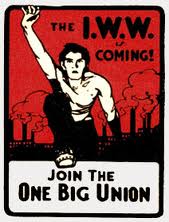
In the early summer of 1911 the I.W.W. (Industrial Workers of the World) came to Lawrence seeking members.  Unlike the AFL, the IWW accepted anyone into their union who wanted to join.  The IWW, however, came with a lot of baggage.  It was a socialist organization that had been connected with violence in strikes and the anarchists who associated with them.  Americans still remembered vividly that it was an anarchist who had killed President William McKinley.  The AFL did not fear the IWW given that.  But it was with the IWW in December 1911 the earliest thoughts of a Lawrence strike were fomented.

When the Polish women of the Everett Mill walked off the job yelling “short pay! short pay!” No one knew how quickly the strike would snowball.  The women, and the men from the mill they took with them, marched the short distance down Union Street to the Wood Mill, the largest mill of any sort in America.  Along the way the passed the Kunhart Mill and Lawrence Duck imploring the operatives to join them, which they did.  By the time they reached the Wood Mill, and the Ayer Mill across the street, the crowd of people was huge and loud.  Strikers entered the mill and got more operatives to walk off the job with them.  That was on a Thursday.  By the following Monday the strike had spread to all of Lawrence’s woolen mills, the Pacific, the Atlantic, the Pemberton, and the Arlington.  The mills were virtually shut down, although the mill owners denied that to be true.  By that time at least 15,000 people were on strike, more than any single city in the U.S. had ever experienced.

Wood Mill 1912

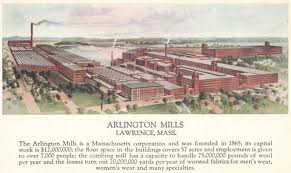
Arlington Mill Lawrence MA

In past strikes the mill owners around the state had a simple answer.  They fired the strikers and hired people to take their place.  The AFL, and the Knights of Labor before them, were far too weak to stop such actions.  But these strike seldom involved more than 50 people so replacing strikers was never a problem.  Mill owners knew there was plenty of immigrant labor looking for work.  But 15,000 striking workers were far too many to replace.

Textile strikers facing Massachusetts Militia

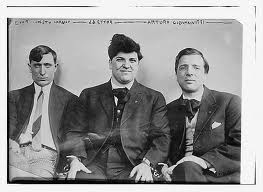
The mill owners decided they would simply wait out the workers, knowing full well how impoverished they were and counting on empty stomachs to bring them back.  What few believed, particularly the AFL, was how well the IWW had set up an organization to deal with the strike and the striker’s needs.  Soup kitchens, food banks, and even monetary handouts were arranged by the IWW.  Its leader, a quiet Italian named Joseph Ettor, was jailed at the strike’s two-week point on the charge that he had incited riots and possibly be responsible for dynamite supposedly brought into the city.  It was quickly shown that one of the mill owners, William Wood, had been responsible for the dynamite.  It did not gain Ettor’s release and he was kept in jail until long after the end of the strike.  The IWW quickly replaced Ettor with William “Big Bill” Haywood, a sharp-tongued IWW activist who had been involved in the coal strikes in Wyoming and Colorado, and, who had been charge with the murder of Gov. Frank Steunenberg of Idaho.  He was not guilty of such which the jury found true.  But just the charge was enough to give him a really bad image with East Coast Americans.

Joseph Ettor

William “Big Bill” Haywood

The mill owners, state politicians, and others, hoped the strike would end quickly.  They did not understand the plight of the mill operatives.  They also did not understand how the IWW worked.  Unlike the AFL, the IWW did not believe in a single leader.  It put in place a leadership committee, some 28 people, who made all decisions regarding the strike.  That meant that the arrest of Ettor had little impact on the progress of the strike.  The true leadership of the strike was vested in a committee that had representatives from every ethnic group and nationality taking part in the strike.  These were people who could clearly send out the message of the strike to all the people and clearly.  They did not allow language or custom to become an issue.

Industrial Workers of the World

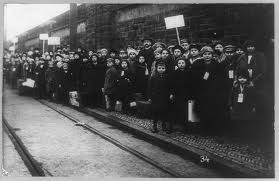
As the strike dragged on into mid-February, far beyond the week or two everyone expected, mill owners still felt confident that the strikers were becoming disillusioned with IWW promises and would soon return.  A group of workers who were in particularly dire straits, decided to send their children to relatives in New York City.  The movement of the children had not been anything more than economics but when mill owners engaged the militia, who had been “guarding” the city since the outset of the strike, to keep more children from leaving the city a cry went out that was heard around the nation.  The first group of children sent to New York was reported on by the New York Times, and other newspapers, brought into focus the plight of the workers.  Not a single child was noted to have any sort of underwear on even though it was quite cold and the clothes they wore were threadbare.  But denying people a basic right of free movement brought everything into focus.

Children leaving Lawrence for New York City

This last move brought the strike to the attention of President William Howard Taft’s wife, and of course, to him.  This persuaded Taft to convene a committee to investigate the strike.  The writing was on the wall and the mill owners knew it.  In an effort to end the strike before the investigation went to far, the mill owners said they would give the strikers an immediate 10% increase in wage, not the 15% the strikers demanded and without agreeing to any of the other four demands made by the strikers.  The strikers turned down the offer and the strike continued on another 10 days until March 14 when the owners agreed to meet all but one portion of the strikers’ 5 demands.

Child labor in woolen mills

From all this it is reasonable to assume that membership in the IWW skyrocketed but that was not the case.  It is doubtful that IWW membership ever went over 1000 at any time during the strike even though as many as 33,500 were on strike at one time.  AFL membership went down slightly.  A simple reason for that is that the strikers could not afford to pay the dues for membership.  Although the AFL would have seen that as an impediment to representing a group of workers, the IWW did not.

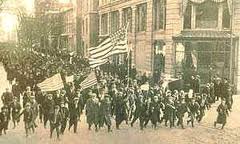
Textile workers marching down Essex Street in Lawrence during 1912 strike

What the IWW lead strike in Lawrence showed was how it was more effective to represent a group of workers according to the industry they were in rather than the trade that they plied, as was the AFL tact.  The IWW involved women in its activities, another thing the AFL had refused to do.  The IWW had provisions for worker health and welfare, another thing the AFL had never done.  These things were, of course, very attractive to the striking worker and allowed him to have more faith in a successful outcome to the strike he was engaging in.

Even though the IWW never held much favor with the American public, its tactics in this strike were noted and used by the more traditional American unions in future strike.  The IWW had used one other revolutionary strike tactic in a strike in Schenectady NY in 1911, the sit-down strike.  It too had been entirely successful.  But the size of the Lawrence strike and the tactics used changed the way strikes were waged after that.