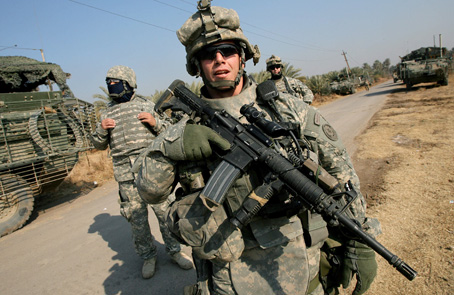
Are We Headed For War?


George Santayana, “Those who do not remember the past are condemned to repeat it.” This haunting quote should be front and center in the United States today. But is it? I fear it is not, and that may exist at the highest part of our government.

As someone who is trained in U.S. History, I have in my knowledge the events which lead up to the U.S. involvement in World War 2. At that time the U.S. was very much of an isolationist stance among the general public. Those wars already in progress were so far away that there was no way we could, or should, have gotten involved. And yet we did!

Now I am not predicting a Pearl Harbor type situation arising. Fortunately, at the Pentagon level of current situations, the generals and admirals are always plotting a response to all perceived threats to the United States’ security. Europe, of course, is a high priority in that. But only 10 years ago, Russia was already starting a warlike stance. Our complete failure to realize Russia’s imperialistic adventurism allow Russia almost unfettered access to the Crimea which today is under Russian occupation. Former President Obama has admitted to that.

But first I need to go back over 30 years of military history. As was the case after the end of World War 1, the U.S. has steadily decreased it numbers of military servicemen. At first this was a good move. There were many no longer necessary military bases. The Vietnam War had ended, and our troop strength was greater than deemed necessary. I was still a part of the military at that time and saw this firsthand. In the early 1980s, the U.S. Army National Guard was in horrible shape. Many units were still using Korean War equipment. But a plan was afoot in our government to change that. In the ensuing years, the national guard was modernized and brought up to active military standards. But then the politicians turned on the military and started reducing the number and size of military units. For example, the 26th Infantry Division was decommissioned and changed to a brigade strength. That sort of action happened across the U.S. The entire Army National Guard has 336,000 troops today, along with 189,000 reservists backing up 481,000 active-duty personnel. With the exception of the Marine Corps, there has been a decline of about 40% troops strength since 1990! This should be alarming to all.

President Biden has repeated stated that the United States will not send in any troops to help defend the Ukraine. Is this the truth or just political speak? I think it is political speak because as I mentioned before, the Pentagon has for decades formed plans for all possible events.

It has been suggested by analysts that this Wednesday, February 16, 2022, Russia will invade the Ukraine! Is that a foregone conclusion? No! But it would be foolish to not prepare for such an eventuality. And if Russia does indeed invade, what will the U.S. due other than its threatened economic threats? All told, the Russian military has over 2.9 million troops while the Ukraine has 1.1 million. But Russia spends far more per soldier than does the Ukraine. That quite simply explains the U.S. sending military supplies to the Ukraine. In the eventuality that Russia does indeed invade the Ukraine at any date, what will the U.S. response be when the Ukraine asks NATO countries for troops? Can the U.S. and its allies simply say “no”? I do not think so but if we do, both sides are open to “unintended consequences.”

One possible unintended consequence is for Russia to use its nuclear capability on Eastern Europe. Russia fully understands the possible result of this and that is something called “MAD,” or Mutually Assured Destruction. A very appropriate acronym. I seriously doubt in that unintended consequence but the next is very much more likely and that is NATO powers and Russia and its allies being drawn into a full-scale war. Russia’s most important ally is China. China has 2.8 million troops! As much as I think it unlikely that China would respond to a Russian request for troops, it is certain not out of the realm of possibilities. And to put that into perspective, all of NATO has 2.2 million troops. The U.S. Army has 10 active military divisions which totals about 200,000 troops. But the U.S. has only once sent in all of its divisions, World War 2.

The point of all this is how tenuous our military strength is and how we have planned our defensive posture in Europe. Without U.S. and NATO intervention, Russia could easily overwhelm the Ukraine. And if that happens, what of the other Eastern European Countries, former Soviet Satellites? Even though we have some troops in each of these countries, we are hardly in a condition to properly respond militarily to any Russian provocation.

Finally, in addition to reconsidering the size of our military, the U.S. public needs to consider the possibility that Russia, under Putin’s dictatorship, is considering regaining control of Eastern Europe. The Ukraine may be nothing more than a ploy to test NATO’s response to its adventurism.
Afghanistan: Biden’s Huge Blunder


President Biden made a misguided plan to remove U.S. troops from Afghanistan immediately after taking office. He was more concerned with the look rather than the reality. As someone who served in the 25th Infantry Division, I can tell you that absolutely no commander is willing to leave the battlefield before the job is done, and the job in Afghanistan is far from done!

One of the concerns, unwarranted, was that we were becoming an occupational force in a country where we have been involved for 20 years. Really? Let us look around and you will quickly see that we have been an occupying force in Germany, Italy, Korea and Japan since 1945. What of that? In Korea we have committed 28,500 troops. And in Japan we have 39,000 troops! In Germany we have 34,000 troops. That is a total of over 100,000 troops.

Afghanistan is unstable and very likely to fall under the control of the Taliban before year’s end. This is extremely unnecessary since we should maintain a large military presence there. The army maintains 10 infantry style divisions on active duty. That comes to over 200,000 men. By simply splitting 2 divisions at a time for one year in Afghanistan, you would not be putting our men at risk for more than a minimal time.

The Afghan troops are failing miserably, many just quitting the fight even before it has begun and giving up bases and materials to the Taliban. There are a small number of elite forces who are struggling to push back against the Taliban but they simply lack the numbers to maintain the fight, let alone win it.

The Vietnam War shows us the inevitability of what will happen upon our departure. Now, as someone who was a part of that, I can say in that case we needed to withdraw as we lacked any commitment from the general public for us to stay. But you can see on YouTube how the last personnel leaving that country had the Vietcong hot on their tails. Although such a thing will not happen in Afghanistan, it will still happen in time.

If we are going to continue to be a true friend to the people of Afghanistan, we must recommit to having a large military presence in that country until its troops are fully and properly trained, and, until the country is both politically and economically stable. That will probably take a long time but for our own security, we need as many stable governments in the middle east as can happen.

Freedom Isn’t Free


soldier

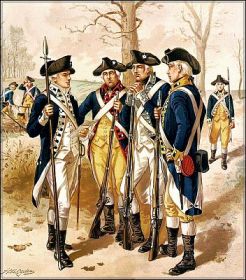
On July 5 1776, one day after the Declaration of Independence was made public, our new-born nation was a mess.  Mostly, we had been clashing with the British since April 19 1775.  The Battle of Bunker Hill was the one exception where large numbers of men on both sides lost their lives.  But in truth, neither side was yet prepared for a full out war.  The British troops were the best trained, best armed, and had the best leadership by far.  England had the ability to fund a short war and defeat almost any enemy she desired.  That British confidence of an impending American defeat was high was understandable.  The single thing that kept America viable over the next 7 years was its dogged desire to prevail.  The be sure, the Continental Congress was bankrupt, unable to pay its soldiers as promised.  The new American army suffered through a very high rate of desertion.  Conversely, the British Army suffered virtually no desertions.  Gen. Washington looked upon the British commander, Gen. Howe, with envy.  His troops were well fed, well armed, well trained, and supremely confident.  While the Battle of Yorktown was the finality of the war, it had truly ended long before by greatly diminishing the English war coffers and the distance at which the war was fought.  Also, sentiment in England was of a country weary of a civil war, that being that Americans had previously been viewed by the English public as brethren who had previously been an integral part of their country.  But the cost of that war, on both sides, lingered for decades after 1783.  For the first time, America had to deal with its war veterans and the promises it had made to them.  Some of those promises were not fulfilled until well into the 19th century.

When Thomas Jefferson took office he took offence to the large standing army he inherited and did his level best to entirely disband it, claiming that such an army was entirely unnecessary.  And although his feeling about the American Navy was not quite so draconian, he still reduced its size as well.  But then came the War of 1812.  The war was started over the impressment of American sailors in the British Navy.  And even though the war was started at sea, it was entirely completed on land.  Britain had entertained the idea that it could recapture this country that had slipped its rule only 30 years prior, well within the memory of most in government and power.  But again, the cost of a protracted war at a great distance proved too much.  Britain had actually conceded the war prior to the Battle of New Orleans because of that reason.  But America had quickly reassembled its army but not before the British army lay waste to the new American capitol at Washington and ran with impunity for well over a year.


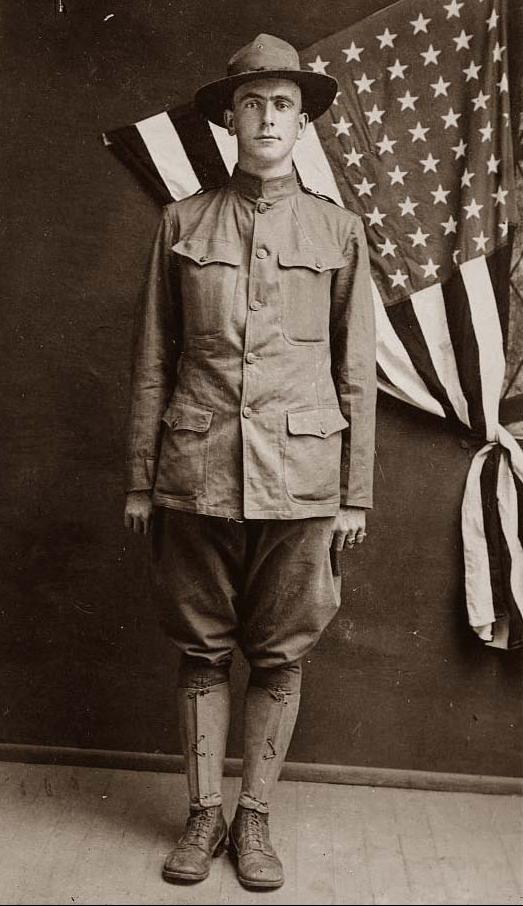
The American army was relatively stable, well trained, and well equipped until the end of World War 1.  Many called that war, “the war to end all wars.”  It was believed that after WW1, a war which counted its casualties in the 10s of millions, there would never again rise the desire of any country to war upon any other country at such a scale.  The allies, America, Britain, and France agreed upon the size of the world’s navies.  It was believed that only a navy could transport large armies to other countries and by limiting those navies would necessarily limit any country’s desire to do war.  That, of course, proved hugely fallacious  By Americans, gripped by isolationist ideas, reduced its army by such large numbers that had the Japanese attacked the US mainland 1940 with its marines and armies using it large naval fleet, we would have been in serious trouble.  Couple that with its ally, Germany, and an invasion by Germany, American’s 458,000 men in uniform would have been severely tested and, in many cases, eliminated owing to poor training, being poorly equipped, and marginally led.  I mention that number because it was only due to Franklin D. Roosevelt’s belief that the US entry into the European war being eminent, he increased the size of the military to 1.8 million in 1941.  Even so, that military was not particularly well trained or well equipped.

Soldier-World-War-I

That 1940 number is worthy of note because it is the number at which today’s Army stands.  The total number in today’s military, all branches and both active and reserve, stands at about 1.3 million but declining.  Since 1988 the US Congress has been hell bent on reducing the size of the military, and the number of its installations when there were about 2.1 million men in uniform.  People viewed, and still do, our defense budget as out of control, over-burdening, and unnecessary.  The present day public has this view that we can somehow conduct a war at a distance and with a “World of Warcraft” mentality.  We have smart bombs, high tech aircraft, and cutting edge equipment at every point.  But what the American public forgets is that in the end, it is the individual soldier would fights and wins, or God help us, loses the war.  High tech equipment is rendered useless without men to operate and maintain it.  But even more importantly, and something we all should be intimately aware of right now, is that today’s war, today’s battles, are largely fought and won by the rifleman.  We fight large numbers of enemies who do not wear any uniform, are terrorists who blend in with the local population.  We should have learned that lesson back in the 1970s when in Vietnam we had to fight the Viet Cong who did the same.  But it seems we have forgotten and so we have doomed ourselves to repeating our past mistakes.

Today, the US Army has a total of 13 divisions, 1 armored, 1o infantry of various sorts, and only 2 reserve/national guard.  During the conduct of the Vietnam War, the Defense Department guaranteed each soldier that he would be required to serve in a war zone for only one 12-month period in his career.  Today, soldiers are required to serve 2, 3 and even 4 tours in our present-day war zones.  We have known since World War 1 the hugely negative effects of war upon soldiers and we strived for 50 years to protect our soldiers against such circumstances.  What in World War 2 and Korea was called “battle fatigue” is today known as Post Traumatic Stress Disorder.  Most, if not all, our soldiers today who have served in Afghanistan and Iraq suffer for some degree of PTSD.  This too is a cost of war.

PH2008011502336

We have two choices right now, as I see it.  We can either withdraw all our troops for the worlds battle grounds or greatly increase the size of our military.  Our military is extremely stressed and stretched far too thinly for the mission it has been given today.  Too few are being asked to do too much.  And since I do not see us withdrawing from the world’s battlefields at any time in the near future, it is our duty, an imperative, to adjust the size of our military to fill those needs.  And as distasteful as the American public may find it, the best deterrent to terrorist and like activities in countries such as Iraq and Afghanistan is the presence of a large infantry force until that country is capable of defending itself.  Clearly neither Iraq nor Afghanistan is ready to defend itself.  This is exactly what we did at the end of World War 2 in Germany and Japan, and it worked extremely well.  Why is it we cannot commit ourselves in the same manner today?

Americans really need to consider its mindset towards our military and those we serve.  While it has become common practice to thank those who serve, those words ring rather hollow when we do not back them up with actions that show our support.  Americans should insist that soldiers not be forced into harms way more than once in their military service and back that promise up with the dollars it takes to keep that promise.  Americans need to suck it up, bite the bullet, or whatever cliché you care to use, and commit to a force that not only serves our country in general, but those who serve within it as well.  Right now we are asking too few to do too much.

A Yankee’s Introduction to the South


Sometime around noon, February 20, 1968, I stepped off a Delta airlines Boeing 727 and into the airport in New Orleans Louisiana.  It was the first time in my life that I had ventured out of the northeast, and greater Boston in particular, in my life.  It was only three months prior that I had dropped out of Boston University knowing that I was not yet ready for college life.  I was not sure what I was ready for so I decided to enlist in the army, staying one step ahead of the draft board which would have been hot on my newly designated 1-A status.  But even with the Vietnam war roaring, I had no thoughts of going there.  I wanted to fly and had managed to get myself into the Army’s aviation program for helicopter pilots.  First, however, I had to go through the army’s basic combat training which, for officer candidates, existed at Fort Polk Louisiana.  When I left Boston the temperature was a chill 23 degrees and was greeted by  the low 60s in New Orleans, short sleeve weather for me.  A short lay over in New Orleans was followed by a flight to Lake Charles on Trans-Texas Airlines, or as the locals euphemistically called it, “Tree Top Airlines” from its TTA logo.

The Lake Charles of 1968 was sort of a non-descript place.  It contrasted northern cities with its wide concrete boulevards, corrugated steel roofed buildings, and in inherent slower way of life.  But just below the surface of this typical American town of the south were smoldering embers of a highly change resistant south.  There was an uneasy tension between black and white which shown through but the still existing Jim Crow laws.  But my 18 years of life had no experience with such things.  My experience with blacks to that point was limited to my schoolmates at the boys school in New Jersey I had attended over the previous two years.

About mid-afternoon I boarded a bus destined for Leesville Louisiana where the army would claim me.  But at the beginning of that bus trip I watched out the window as the landscape passed by me.  At a bus stop along the way I was introduced to the old south when I observed a pair of water fountains, one barely a foot away from the other.  But above each was a sign, “white” and “colored.”  My virginity was taken and my mind indelibly imprinted with the sight.  I had had the good fortune to be brought up by parents who believed racial equality was a given, not an argument.  But still, I did not yet realize, how much racism has been infused, thought unwittingly, into my spongy mind.

The US Army in 1968 did not have time for racism.  It had been integrated in the early 1950s, and whatever racism existed in any single soldier, was considered unacceptable by the army in general.  While the US population in 1968 was roughly 12% black, the army was at least double if not triple that number.  During my entire basic training, and all training afterward, there was never a hint of racism either between my fellow trainees, or in the case of the all southern drill sergeant cadre, them towards the black trainees.  And such thoughts would have quickly faded had it not been for the April 4, 1968 assassination of Martin Luther King and the ensuing race riots that occurred in the neighboring Leesville.  Fort Polk was closed, all leaves of absence cancelled.  But at least on the fort, there was no tension between white and black troops.  Still, we were all stunned by the events in Leesville.

A little over a year later I was station in Yongsan Korea when I became aware of a group known as the Black Panthers.  There existence, and reason for existing, came to me from a white soldier who was sadly misinformed,  However, I was uneducated to the facts and took his word that they were in Korea and looking to knife white soldiers while they slept.  But rather than seek out the truth, I allowed myself to believe his lies.  But then, I had believed the old government pronouncements, J. Edgar Hoover to be exact, that Martin Luther King was a dangerous person.

It took another year plus for my ideas to be corrected, while I was stationed in Livorno Italy.  At that time I saw a black soldier reading a book named “The Spook Who Sat By the Door” by Sam Greenlee.  My memory says that the title actually used an even more derisive epithet, but I cannot find any supporting evidence.  Regardless, my shock must have registered well on my face because the soldier informed me that it was about race relations in the US.  He went on to educate me about the true reason for the existence of the Black Panthers and other black radicals of the late 1960s, Bobby Seale, Huey Newton, and Angela Davis.  The FBI went to great lengths to associate these people with violence when the truth was something entirely different.

As the years went by, I learned that what the south had been doing overtly, the north had been doing covertly.  The great lesson of all this was, I needed not look at the south as the home of racism, it was always all around me, had I only known what I was seeing.