A Year in Korea – The Day It Hit the Fan


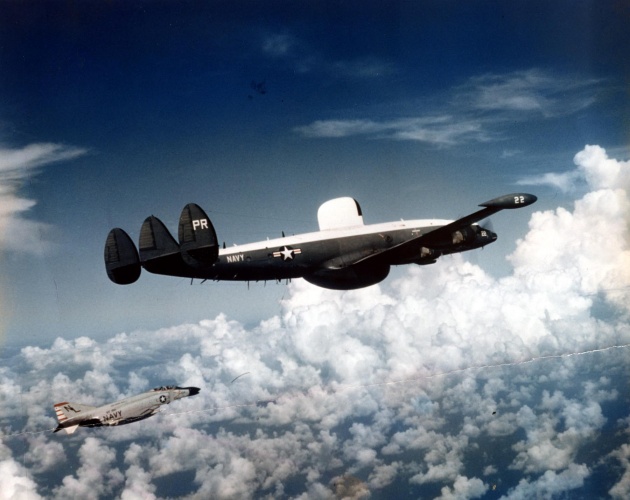
On April 15, 1969, a U.S. Air Force EC-121 aircraft (shown below) was shot down after a flyover of North Korea. The plane went down 100 miles off the North Korean coast. All crewmembers were killed. The EC-121’s mission was to gather intelligence on North Korean military installations and positions. Things at the 8th U.S. Army Headquarters communications center, better known as “where I worked,” became very scary very fast. This first thing that happened was the office in charge of the site went around to each section and announced that no one would be leaving until further notice. He also informed us that the usual guard at the entry gate had been replaced by a Korean soldier with orders to shoot to kill.

gary_pr-22

In communications, there are four general categories of communications: routine, priority, immediate, and flash. The first three could be used by almost anyone. The four was limited to high ranking officials in the Pentagon and White House. There were actually two more lesser known categories, flash override and red rocket. I do not know if the latter was a real status but it was what we called communications coming from the President. Communications equipment was, and probably still is, programmed to sort through the various levels of demand and proper prioritize messages. Anyway, on that fateful day we were suddenly deluged with flash override and red rockets. Even though I was not in the classified portion of the com center, guys would wander over to our section and tell us what was happening.

A little background. In government communications, there are two general areas which are called the red side and the black side. The black side refers to encoded communications, messages that are scrambled, while the red side refers to messages in plain print, just like on this page. I was always on the black side but the guys on the red side could read these very highly classified messages if the felt like it. I can tell you from experience, as I later in my career found myself on the red side, soldiers purposely do not read what is passing before them. It just keeps things a lot simpler. That was true on April 15th as far as I know.

Very shortly after things got hot, my battalion commander showed up in my section, the only section he had access to, and sat in a chair. I remember seeing total fear in the man’s face. Maybe it was because I was only 20 and maybe it was because I had never considered my own mortality, but I never felt a twinge of fear.

Sometime during all this we found out that our MPs had mounted a 50-caliber machine gun half way up one of our transmission towers. There was a pre-existing crow’s nest up there already for just such an eventuality. To the front and rear of our com center, the two entrances, were a squad of well-armed MPs. We were allowed out of the com center and so I did observe these things for myself. It was just that we could make it out of the door but could not fully leave the com center grounds.

What was happening that I, and everyone in the com center, did not know was that the rear infantry division had been very quickly moved from the southern portion of South Korea to positions just past the Han River, a river just north of Seoul. Also, many artillery batteries were also quickly moved northward. I learned some years later that a major portion of the Air Force’s Strike Command had left its base in Florida and was 2 hours distant from Korea when they were recalled. The guy who told me this inferred they had nuclear capability but I have no idea if that was true. According to a National Public Radio article written July 6, 2010, President Nixon was in fact considering a nuclear option.

Back in the United States, the nightly news reported that 71 servicemen had lost their lives in Vietnam. There was barely a mention of the EC-121 incident. Maybe it was because by that time the U.S. was truly a war weary nation and such news seemed almost routine. After all, as Sen. John McCain can attest to, aircraft were being shot down almost daily in Vietnam.

The entire incident, from beginning to end, lasted less than a day, but we were almost sucked into another war. President Nixon’s decision to take no action was absolutely correct. That is, unless you asked the South Koreans. My houseboy disappeared for a week. When he returned, he related that everyone one had been called to duty and they were itching for a fight. Just a month earlier, North Korean commandos had infiltrated to the south and ended up killing a South Korean police officer. At the same time, seven U.S. Army infantrymen were killed by North Korean soldiers. One of the lesser known facts about that era is that a portion of South Korea was still labeled as a war zone and soldiers received combat pay 16 years after the “cease fire” was agreed upon by the United States, North and South Korea. It was an uneasy truce to be sure.

Before 1969 ended, four more army infantrymen were killed and a North Korean hijacked a South Korean airliner. I think it unlikely any of these incidents got much press as my general impression from home was they thought everything was peaceful in Korea.

People today cannot imagine the difficulty with communications in the late 1960s. Where today we can dial a number on our cell phone and get someone on the line seconds later in Korea. In 1969 it seemed like it took an act of God to get a phone call back to the U.S.   Even though I was in communications, I had no way to access phone lines connecting to the civilian populace. You had to know someone who did have such access and then make a deal with them. I think I managed half a dozen such calls, maybe fewer, but definitely not more. For the majority of GIs, of all rank, direct communications to the U.S. just did not happen during their tour of duty.

The only newspapers we had access to over there was an English version of the Korean News and the Defense Department published Stars & Stripes newspaper. If you really want to know the sort of news they allowed in that publication, watch the movie “Good Morning Vietnam.” There is a very accurate depiction of what was and was not allowed.

This is probably a good place to mention a phenomenon I have felt and found other GIs feel the same who served in the late 60s and early 70s: survivor guilt. Many of us, myself included, feel that we should have been sent to Vietnam and that we somehow played it safe, or other foolishness, by serving in Korea. We are Vietnam era veterans but not Vietnam veterans. I have never been able to put my finger on exactly what its genesis is, but I have found some relief in knowing it is a shared emotion.

If We Are Going to War, Let’s At Least Do It Right


The latest bombing in Manchester England only reinforces how increasingly dangerous our world is. These terrorists are going to continue what they have been doing in recent years and, I fear, with increasing regularity. It is only a matter of time before such a tragedy strikes the United States, again. Remember the Boston Bombing. The United States is a lot of things, but security against such attacks is, unfortunately, unreliable. I do not say that our law enforcement people will not do their utmost to defend against such an eventuality, they will. What I am saying is that there is just so much they can do and a committed terrorist, such as just struck in Manchester England, is virtually impossible to protect against.

My liberal friends, and even my conservative ones, might find it surprising for me to make the following statement but I feel it is one which must be said. The United States needs to increase its ability to fight a land war. But as we stand now, we are woefully unprepared to do so.

According to the Heritage Foundation, the U.S. Army will be at a strength of 460,000 by year’s end, the navy will have 272 ships which falls short of the 308-ship battle force it needs. The Marine corps will have 182,000 active personnel. Finally, the Air Force a little over 5,000 air craft of all types. It has 76 B-52H aircraft, 62 B-1s, 20- B-2s, almost 600 F-15s of, a little over 950 F-16s, and 182 F-22s. The last B-52H, the latest model, was delivered in 1962 giving the average age of that aircraft over 55 years old. The B-52 is the only long range heavy bomber in our arsenal, a key component to any strategic fleet. The average age of its F-15 fleet, the backbone of its fighters, is approaching 30 years. Equally as bad is that the majority of the Air Force’s long range refueling aircraft, the KC-135, a Boeing 707 variant, is also over 50 years. It does have much newer KC-10s but only purchased 59 of this aircraft.

The Heritage Institute, which studies military preparedness, rates the Army’s and Navy’s preparedness at “weak to marginal,” the Air Force was rated “marginal” in 3 out of 4 categories, only in “capacity” did it score “very strong.” The Marine Corps was rated “marginal” in 3 of 4 categories, and “weak” in capacity. What can we derive from all this? The United States Military forces are overextended, overtaxed, and under strength.

It is likely we will soon be engaged in another protracted land-war. Given the various terrorist organizations and the state of the middle-east, it seems almost inevitable. But it is a sin to send our troops into modern battle in antique aircraft, sparse support organizations, and an overtaxed cadre of men.

The signs of battle fatigue were first noted in WW1, more so in WW2 and by the time the Vietnam war was over, medical science had come up with a name for it, Post Traumatic Stress Disorder. PTSD is worse now than ever. How can we tell? The rate of suicide in the military is at an all-time high per capita. I was a Vietnam era vet and the promise made to us, and kept, was that if we were put into a war zone, such duty would be required of us one time only. And the Defense Department kept its word on that point. Still, the horrors of war proved too much for some.

Today, it is common practice to send soldiers into a war zone 3 times or more. The reason? We simply do not have a large enough force to guarantee the soldier that one war zone tour my generation was granted.

A mentally tired soldier is a soldier more susceptible to being killed or wounded than one with top mental acuity. The answer is a simple, albeit expensive, one. We need to increase the size of our active and reserve forces first. Then we must put our airmen in the most modern aircraft we can build. Such an action will easily cost trillions of dollars, but sending men up in aircraft that should only be seen in museums is nothing short of criminal.

We face an enemy who seems impervious to our high-tech warfare. Why? He is spread out in small units which can move on a moment’s notice. He can outsmart the smart bomb simply by moving from one place to the next. As advanced as we are in the art of war, we still do not have an adequate replacement for the infantryman, and this is not likely to change anytime soon. Simply put, we need to reactive many infantry divisions which have been retired over the years. The 5th ID, 7th ID, 24th ID, 26th ID and 2nd Armored Division. This would add as many as 90,000 infantrymen and tankers and greatly bolster our troops.

What this is going to take, more than money, is our politicians finding the courage to face facts and then be truthful with the American public. The public in general will probably not like the news, but properly presented, they will accept it. It is in all our best interest that we stop pretending we can fight a war with just the men and equipment we now have. We cannot.

Vietnam Era Veterans; All Veterans Remembered


I am a Vietnam Era vet. I did not serve in Vietnam as I was sent to Korea. And that turned out to be a bit of a hot zone all by itself, though Americans had little if any knowledge of that. But I am getting ahead of myself.

When I joined the army, I was sworn in February 19, 1968, the Vietnam war had taken a dark turn for Americans. Earlier that month the Viet Cong mounted what is known as the Tet offensive. Tet is the Vietnamese New Year. Americans let their guard down figuring the Vietnamese would be busy celebrating Tet, their new year. Contrary to what people were told in America, the North Vietnamese Army and the Viet Cong were very smart and very savvy. They hoped we would let our guard down so they could spring a surprise attack of large proportions, and that is what happened. Starting on January 31 they attacked over 100 South Vietnamese cities and nearly overwhelmed many American strongholds. Hue, Danang and even Saigon were attacked. The Marines at Hue were nearly overrun and suffered nearly 700 casualties.

But who were the men who were fighting in Vietnam? All branches of the armed forces, Army, Navy, Air Force and Marines, and the U.S. Coast Guard too, who in those days fell under the auspices of the Treasury Department. A very large portion of those in Vietnam were draftees even though some were never formally drafted. Many guys waited for the draft notice to show up and went for induction. But others with the knowledge that they were probably next, gave in and enlisted just prior to their likely drafting. Then there were the poor. The army was filled with a disproportionate number of blacks, mostly poor, mostly poorly educated. To them, the army seemed like a good deal. Then there were the white kids like me who, lacking direction, enlisted because we did not know what else to do but also because our fathers had fought in World War 2 and it seemed like the right thing to do.

When I arrive for my basic combat training at Fort Polk Louisiana, I discovered there were four identifiable groups of men, those who had signed up known as RAs, those who were drafted known as USs, those who signed up for the reserves, ERs, and those who joined their state’s national guard, NGs. The two letter codes were the letters that preceded our soldier’s identification number, for example, I enlisted and my number was RA11625182. Some things you never forget. But had I been a draftee the RA letters would have had US substituted. And since we all had to recite our number many times in the early days, we knew what every man had chosen.

A tour in Vietnam was mandated by law to last no longer than 12 months. This meant there was a high turnover of personnel going and coming to and from Vietnam. But there was also this country called Korea which also had a maximum 12-month tour. From 1964 to 1975 over 9 million men in uniform served in Vietnam, 58,145 died there. And here is a stunning fact: over the 4 years an infantryman served in WW2, he saw about 40 days of combat. Over the 1 year an infantryman served in Vietnam, he saw about 240 days of combat. It is small wonder so many came back so screwed up.

The infantry training at Fort Polk, in those days, was rough. The drill sergeants were charged with bringing together a very disparate group of men into a single fighting force. One of their most successful ways of doing that was to pit us against each other. I was in Company B, 5 Battalion, 1st Training brigade. I was in what was called the “Yankee Platoon.” We were men from north of the Mason-Dixon line of course. Then there were two southern platoons and finally one “misfit” platoon. The misfits were from states like California which were not easily grouped. The drill sergeants showed great favoritism towards the southern platoon in large part because every one of them hailed from the south. The drill sergeant assigned to my platoon was from Texas. Our company command was from Alabama and his executive officer was from Georgia. But a funny thing happened during those 8 weeks, we all came together. Any sort of divisions which existed at the start of basic training disappeared along the dusty roads were we force marched along. Their plan worked magnificently. On graduation day a full 95% of the men of our company were loaded onto the back of cattle trucks and taken to “Tiger Land.” Tiger Land was the advanced infantry training course with an emphasis on tactics used in Vietnam with a faux Vietnamese village to boot. I had gotten myself into helicopter training school so that was not in my future. But for as much as those drill sergeants yelled at us “Charlie’s gonna get you!”, Charlie being a euphemism for the North Vietnamese army, I do not remember a single conversation regarding the possibility we could die over there.

The American forces in Korea in 1968-1969 number in excess of 50,000 troops. There were two full infantry divisions, 2nd and the 7th. And there were countless support units. I was stationed a mere 25 miles from the DMZ and had change to travel in its proximity on several occasions. Places known as Camp Humphries, Camp Casey, Camp Red Cloud and others we each an armed camp unto themselves. They were armed because there was always the very real threat of a North Korean incursion into the south which actually happened though in small numbers. Still, anything north of the Han River was considered a combat zone and many an infantryman in Korea saw his share of combat, as did some of the field artillery units. Remember, this was the time when North Korea captured the USS Pueblo and shot down a US Air Force EC-121 reconnaissance aircraft.

During my tour in Korea a fair number of American soldiers were killed in action by North Korean soldiers but most of that was never reported.  Few new of that war zone.  Those tasked with guarding the frontier were under the constant threat of an attack from the north.  North Korea regularly lobbed artillery shells into the south.  A lieutenant who was inspecting the DMZ was cut to pieces by a machete wielding North Korean soldier.  America seemed to have forgotten that even 15 years after a truce was declared, it remained a truce in those days and that truce was violated by the north of many occasions.  American soldiers died and no one knew.

As for Vietnam, on April 30, 1969, there were 543,482 men station there at one time. But one thing was consistent for the soldier in Vietnam, his short-time calendar. A “short-time calendar” was the outline of a naked woman with 365 squares, or what passed for squares, within her body. You filled in one day waiting impatiently for that day you could call yourself a “short-timer.” A short-time was someone who had 99 days or less of time to serve. You got to call yourself a 2-digit-midget because you were getting so close. Sadly, stories abounded of guys who were within two weeks of rotating back to the U.S. only to be killed. Everyone knew such a story and some even knew the guy. Such things wreaked havoc on the psyche’ of the young soldier. Many came back so damaged, not just physically, that putting them back together was an impossible job. It wasn’t until either very late in the war or in the first few years following it that the term PTSD came into being. The VA and Army hospitals overflowed with men so damaged that it was felt they would never be right. I knew of at least 2 such individuals. One put a gun to his head and the other had a heart attack at the young age of 34. He had yelled at the VA that he had been sprayed with agent orange but that fell on deaf ears.

If you want a good picture of the army in those days first watch “The Boys of Company C” which will give you an excellent view of basic training during Vietnam and then watch “Good Morning Vietnam.” Each in its own way does justice to what really happened, to the tensions which existed, the horror of war, and how boys were forced to become men literally overnight.

About 90% of the men who served in Vietnam never saw any combat but it did not free them from the horrors of the war. No one was ever very far from a medivac hospital where surgery was frequently done in what would be considered unsterile conditions but the surgery being needed in such an immediate fashion, the doctors had no choice. These doctors and nurses suffered greatly as they attempted, too many times in vain, to put back together the wounded soldiers, and to provide some sort of reason and solace for those of his friends when the soldier died. The rock group, Country Joe and the Fish, came out with a song in 1968 which had a line that went “then it’s one two three four, what are we fighting for, don’t ask me I don’t give a damn, next stop is Vietnam.” That was the sentiment of the soldiers in those days. We don’t know why we are here but we will do the best job we can.

While in Vietnam there were phrase such as “back in the world” which meant back at home, and round eyes, which meant American girls. The soldiers had created a language peculiar to their environment which helped them deal with what they were up against. Many of those soldier had never traveled more than 100 miles from home and now they were in a country so alien to them, that fitting in was impossible so they worked hard just to get by. Soldiers received no training about the customs of Vietnam nor what to expect of the general population. It was all on the job training.

Guy did not do marijuana in Vietnam. Why would they when they could get the more potent form of cannabis known as hash, of Thai Stick. Much stronger in content it allowed many troops to escape the horror of the day. And there were those who found solace in the all too prevalent heroin.  And what did the military do about those problems? Virtually nothing. They were too busy fighting a war than to consider the welfare of their men.

Soldier returned to America in large numbers from 1968 to 1972. But they found no welcome mat, no parades, no gestures of kindness. Americans knew the war was ugly and they wanted to distance themselves from it. They did this by ignoring the returning troops. They turned a blind eye to the problems the troops returned with. They did this because of their collected guilt.

It was well-known that the upper middle-class and the upper class did not serve, or if they did, they found comfy jobs in Washington or in Germany. Their service would have been good except that they took extraordinary measures to insure that the Department of Defense would not mistakenly assign them to Vietnam.

If nothing else, the War in Vietnam should have taught us what not to do, which skirmishes to stay away from, and to let people pitted against themselves the space to work out their issues. But we did not do that. Iraq 1 seemed a necessity and I have no issue with it. But Iraq 2 was a pure boondoggle. In Vietnam we said we were preventing the expansion of Communism. In Iraq we were supposedly going after weapons of mass destruction. In each case not only was the premise faulty, but our actions were and are virtually defenseless. But once again, the American soldier has been asked to do far more than is right. Our armed forces have been decimated by repeated reductions in force to where once again soldiers are being asked to do more than their psyche can handle, and it shows in the returning troops.

One thing which has changed for the better, it is common to hear the phrase, “thank you for your service.” But as nice as those words are to hear, they do not heal the injured psyche, and that remains an all too prevalent problem.

All who serve, by the nature of the oath they take, promise to put their life on the line in defense of our Constitution and our country. No other job requires this of a person. A truly grateful nation will take care of all its veterans to whatever extent is needed, but that is not happening. Too many veterans come back to no jobs and no prospects. Too many come back severely broken, are patched up and pushed back into society long before they are ready. If America wants to show how it is truly grateful for the service of all veterans, it will do whatever is necessary to insure a safe and secure future for them. It will find the reasons they turn to drugs and sometime crime and resolve those issues. It will make Veteran’s Day more than just a national holiday, it will treat it with the same respect as Christmas gets, only necessary people work that day and all others take a day to remember those who put their lives in danger so that we can live feeling safe and secure.

Reflections of a Veteran on Veterans Day


As United States holidays go, Veteran’s Day is one of the newest. As a holiday by this name, it came into being in 1954. Prior to that, Veterans Day was known as Armistice Day commemorating the end of World War 1. World War 1 officially ended on the 11th hour of the 11th day of the 11th month in 1918. Shortly afterward President Wilson declared November 11th a national holiday. Then World War 2 happened followed by the Korean War. As a veteran, President Eisenhower decided that rather than remembering a peace treaty for a single war, the day would be better served by recognizing the service of everyone who had ever served in the Armed Forces of the United States. But there are two additional groups of veterans who did not serve within the Defense Department who are also veterans and they are the members of the Coast Guard and the Merchant Marines. The Merchant Marines were a vital force during World War 2 transporting goods and troops to the European Theater of War. And the Coast Guard, whose primary mission is the protection of the U.S. Coast lines, was deployed to the Mekong Delta in Vietnam among other missions.

I entered the U.S. Army on February 19, 1968 and served on active duty until November 10, 1979. After that I served in the Massachusetts National Guard for several years. My years of service in the U.S. Army are many of my proudest moments in life. I am the son of a World War 2 veteran, my father served in the U.S. Army Air Corps in North Africa, Italy, and France. Two of my daughters are veterans as well. My eldest served as a U.S. Army Nurse in Kosovo and my next daughter has served in the U.S. Air Force in both active and reserve duty. She is still serving.

I am of the Vietnam era which many view as a low point of the U.S. history in war. But this needs to be put into perspective. All military forces, not just American, are a natural extension of a country’s political system and honors the decisions of the country’s political leadership. My experience in the Army is that we never discussed politics except maybe to criticize what we viewed a lack of support from time-to-time.   But I never once knew nor discussed the political persuasions of any of my brothers in arms. Such discussion served no purpose. I know from experience that at the highest levels of the military establishment, politics is very much a part of a soldier’s daily life but below the level of flag officers, generals and admirals, politics was generally non-existent. That was always a good thing.

All soldiers are required to complete basic combat training. Basic training is the great leveler. That is, regardless of a person’s background or appearance, the most important thing is learning how to be a soldier and what it means to serve with pride. It is a unique system found nowhere else in society, not even the police forces which copy many of the training techniques of the military. All members of the military are instilled with the concept of “duty, honor, and country.” That means that each member of the military has sworn to put his life on the line to protect his country from those who would do harm to it. This oath of allegiance has been in place since the Revolutionary War. It is an absolute and cannot be compromised.

Only the Civil War divided this country more than the war in Vietnam. When I volunteered to join the Army I did not say that I would only join if I would not be sent to Vietnam. There is no such option nor has there ever been one. Most veterans never saw combat duty but every veteran was eligible for it. I was sent to Korea in 1968 which was a war zone in those days. It was certainly not as hot as Vietnam but U.S. soldiers were still dying there. Why? Because they were doing their duty.

War does funny things to men. Greatness arises out of some of the most unexpected places. During the Civil War at the battle of Gettysburg, a former college professor from Maine, a very humble man, so distinguished himself that he became one of the first recipients of the Medal of Honor. He was Col. Joshua Lawrence Chamberlain. During World War 1, a former blacksmith and pacifist from Tennessee distinguished himself in battle to become a Medal of Honor recipient. Most recently a young man from Long Island, Lt. Michael Murphy, distinguished himself in Afghanistan to receive the Medal of Honor. Each of these men had one thing in common, they joined the service out of a sense of duty and in the worst of conditions their concern was completion of the mission and protection of their comrades. And I can assure you that none saw themselves as heroes. To a man they would tell you if asked that they were just doing their job. And in that sentiment is the common thread for all veterans. We did our job in difficult situations because it was the right thing to do and our sense of honor and patriotism were driving forces.

During my time in Korea we came under the threat of attack many times. The attack never came but maybe that was because we were there. We were enough of a deterrent. I seldom talk of my time in Korea mostly because I do not remember most of the details. But those who served in Vietnam are even more guarded in their speech. If you find a vet who served in Vietnam, the Gulf Wars or Afghanistan you will probably get a lot of resistance from them in the telling of their experiences. Why? Because war is and always has been an ugly affair. People at home hear of the deaths of soldiers and grieve them. Soldiers see the deaths of non-combatants, women and children, and mourn that. My personal experience with that came in the form of a visit to a Korean orphanage where the casualties of the ongoing conflict resided. To say it was heartbreaking is to minimalize the reality.

For 20 years following the Vietnam War the experience of veterans was something no one wanted to discuss. But the Gulf War changed that and the phrase “thank you for your service” came into being. I hope that such sentiment never goes out of fashion because as a veteran I am grateful whenever I hear it expressed. If you know a vet, give him or her a call on this Veterans Day and thank them for their service. When you see someone in uniform on the street where you are walking, thank that person for their service, after all, they have sworn to put their life on the line for you. Finally, most cities and towns in the United States have a war memorial. Take the time to visit it, look at the names listed, because they are the ones who gave their life for you.

Freedom Isn’t Free


soldier

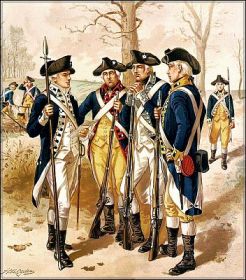
On July 5 1776, one day after the Declaration of Independence was made public, our new-born nation was a mess.  Mostly, we had been clashing with the British since April 19 1775.  The Battle of Bunker Hill was the one exception where large numbers of men on both sides lost their lives.  But in truth, neither side was yet prepared for a full out war.  The British troops were the best trained, best armed, and had the best leadership by far.  England had the ability to fund a short war and defeat almost any enemy she desired.  That British confidence of an impending American defeat was high was understandable.  The single thing that kept America viable over the next 7 years was its dogged desire to prevail.  The be sure, the Continental Congress was bankrupt, unable to pay its soldiers as promised.  The new American army suffered through a very high rate of desertion.  Conversely, the British Army suffered virtually no desertions.  Gen. Washington looked upon the British commander, Gen. Howe, with envy.  His troops were well fed, well armed, well trained, and supremely confident.  While the Battle of Yorktown was the finality of the war, it had truly ended long before by greatly diminishing the English war coffers and the distance at which the war was fought.  Also, sentiment in England was of a country weary of a civil war, that being that Americans had previously been viewed by the English public as brethren who had previously been an integral part of their country.  But the cost of that war, on both sides, lingered for decades after 1783.  For the first time, America had to deal with its war veterans and the promises it had made to them.  Some of those promises were not fulfilled until well into the 19th century.

When Thomas Jefferson took office he took offence to the large standing army he inherited and did his level best to entirely disband it, claiming that such an army was entirely unnecessary.  And although his feeling about the American Navy was not quite so draconian, he still reduced its size as well.  But then came the War of 1812.  The war was started over the impressment of American sailors in the British Navy.  And even though the war was started at sea, it was entirely completed on land.  Britain had entertained the idea that it could recapture this country that had slipped its rule only 30 years prior, well within the memory of most in government and power.  But again, the cost of a protracted war at a great distance proved too much.  Britain had actually conceded the war prior to the Battle of New Orleans because of that reason.  But America had quickly reassembled its army but not before the British army lay waste to the new American capitol at Washington and ran with impunity for well over a year.


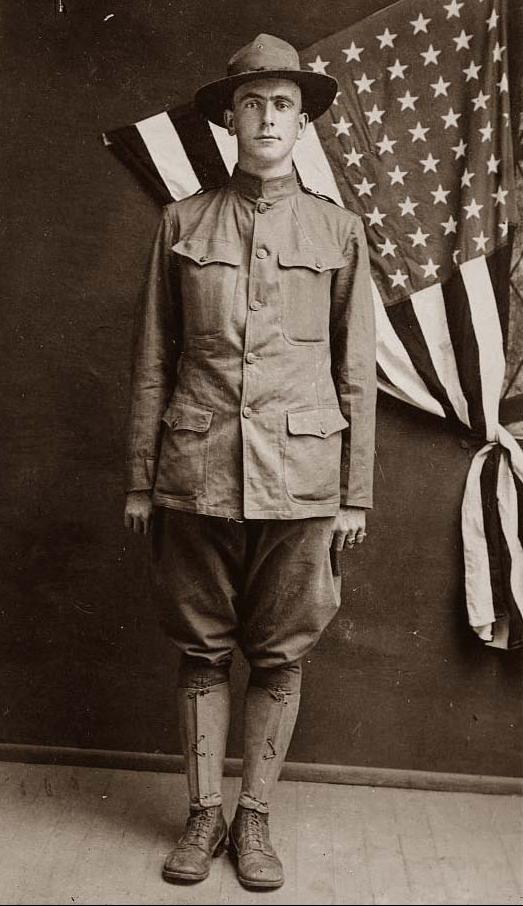
The American army was relatively stable, well trained, and well equipped until the end of World War 1.  Many called that war, “the war to end all wars.”  It was believed that after WW1, a war which counted its casualties in the 10s of millions, there would never again rise the desire of any country to war upon any other country at such a scale.  The allies, America, Britain, and France agreed upon the size of the world’s navies.  It was believed that only a navy could transport large armies to other countries and by limiting those navies would necessarily limit any country’s desire to do war.  That, of course, proved hugely fallacious  By Americans, gripped by isolationist ideas, reduced its army by such large numbers that had the Japanese attacked the US mainland 1940 with its marines and armies using it large naval fleet, we would have been in serious trouble.  Couple that with its ally, Germany, and an invasion by Germany, American’s 458,000 men in uniform would have been severely tested and, in many cases, eliminated owing to poor training, being poorly equipped, and marginally led.  I mention that number because it was only due to Franklin D. Roosevelt’s belief that the US entry into the European war being eminent, he increased the size of the military to 1.8 million in 1941.  Even so, that military was not particularly well trained or well equipped.

Soldier-World-War-I

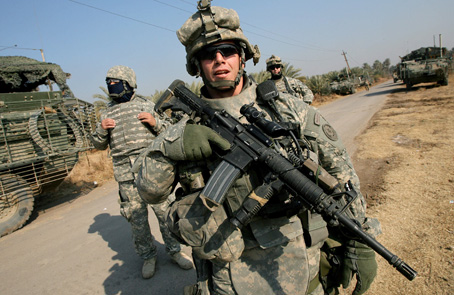
That 1940 number is worthy of note because it is the number at which today’s Army stands.  The total number in today’s military, all branches and both active and reserve, stands at about 1.3 million but declining.  Since 1988 the US Congress has been hell bent on reducing the size of the military, and the number of its installations when there were about 2.1 million men in uniform.  People viewed, and still do, our defense budget as out of control, over-burdening, and unnecessary.  The present day public has this view that we can somehow conduct a war at a distance and with a “World of Warcraft” mentality.  We have smart bombs, high tech aircraft, and cutting edge equipment at every point.  But what the American public forgets is that in the end, it is the individual soldier would fights and wins, or God help us, loses the war.  High tech equipment is rendered useless without men to operate and maintain it.  But even more importantly, and something we all should be intimately aware of right now, is that today’s war, today’s battles, are largely fought and won by the rifleman.  We fight large numbers of enemies who do not wear any uniform, are terrorists who blend in with the local population.  We should have learned that lesson back in the 1970s when in Vietnam we had to fight the Viet Cong who did the same.  But it seems we have forgotten and so we have doomed ourselves to repeating our past mistakes.

Today, the US Army has a total of 13 divisions, 1 armored, 1o infantry of various sorts, and only 2 reserve/national guard.  During the conduct of the Vietnam War, the Defense Department guaranteed each soldier that he would be required to serve in a war zone for only one 12-month period in his career.  Today, soldiers are required to serve 2, 3 and even 4 tours in our present-day war zones.  We have known since World War 1 the hugely negative effects of war upon soldiers and we strived for 50 years to protect our soldiers against such circumstances.  What in World War 2 and Korea was called “battle fatigue” is today known as Post Traumatic Stress Disorder.  Most, if not all, our soldiers today who have served in Afghanistan and Iraq suffer for some degree of PTSD.  This too is a cost of war.

PH2008011502336

We have two choices right now, as I see it.  We can either withdraw all our troops for the worlds battle grounds or greatly increase the size of our military.  Our military is extremely stressed and stretched far too thinly for the mission it has been given today.  Too few are being asked to do too much.  And since I do not see us withdrawing from the world’s battlefields at any time in the near future, it is our duty, an imperative, to adjust the size of our military to fill those needs.  And as distasteful as the American public may find it, the best deterrent to terrorist and like activities in countries such as Iraq and Afghanistan is the presence of a large infantry force until that country is capable of defending itself.  Clearly neither Iraq nor Afghanistan is ready to defend itself.  This is exactly what we did at the end of World War 2 in Germany and Japan, and it worked extremely well.  Why is it we cannot commit ourselves in the same manner today?

Americans really need to consider its mindset towards our military and those we serve.  While it has become common practice to thank those who serve, those words ring rather hollow when we do not back them up with actions that show our support.  Americans should insist that soldiers not be forced into harms way more than once in their military service and back that promise up with the dollars it takes to keep that promise.  Americans need to suck it up, bite the bullet, or whatever cliché you care to use, and commit to a force that not only serves our country in general, but those who serve within it as well.  Right now we are asking too few to do too much.

Who Was Deborah Sampson, and Why Should We Care?


There are three words all men and women who join the military are made aware of: Duty, Honor, Country.  Men and women join the military do so for many reasons, but in the end, those who serve fully and honorably understand those words implicitly, and better than any who have never served.  This is not meant as a slight towards those who have not served, but as a point of divergance.  The idea, and ideal, of “duty, honor, country” goes back to April 19, 1775, when a few Massachusetts men bravely said, “no more!”  The knew they would either be hung as traitors to the crown, or heroes of a new country.  In those days we were largely a bunch of poorly trained, poorly armed, and raggedty bunch as has ever been seen.  There was no shortage of fear that our independence, as declared July 4, 1775, would be still-born.   Washington himself, upon arriving at Cambridge Massachusetts to review the tens of thousands of colonial soldier camped there, feared for the future.  They were ill-mannered, dirty, vulgar, and about the furthest things from a group of soldiers as could have been imagined.  But as Washington passed among these fledgeling soldiers, in support of a fledgeling cause, his six foot two frame mounted smartly upon a white stallion, and regaled in as smart a uniform as could be found in the colonies, every men paused to take measure of this man who they knew intuitively to be their new leader.  Each and every one of these men had come to fight the British regulars out of a sense of duty to their America, though such duty was more a feeling than anything yet written in words.

Image from the collections of the Massachusettts Historical Society.

The colonial army, though too oft defeated in singular battles, had clung on tenaciously, in spite of hunger, desertions, quarrels among the colonial officers.  The idea that a woman could fight as a soldier was not even a consideration, let alone a reality.  But on May 20 1782, Deborah Sampson (her image above) of Plympton Massachusetts, her breasts tied tightly to her chest, her hair cut short, and dressed as a New England farmboy, enlisted as Robert Shurtleff in the company of Captain Nathan Thayer of Medway Massachusetts.  Seven months prior to her enlistment, the British surrendered at Yorktown, Virginia, and the October 1781 battle was the last large-scale one.  Guerilla warfare continued, however, and Sampson’s unit, the Fourth Massachusetts Regiment, fought several small battles in upstate New York, especially near West Point and Tarrytown.  Sampson proved quite skillful, yet despite her ability in these hand-to-hand skirmishes, she was wounded.  In one skirmish, she received a head injury from a saber and was hit with a musket ball in the upper thigh.  She received medical attention for the head wound, but did not inform the doctor of her thigh wound for fear that her identity would be discovered.  After leaving the hospital, Sampson bravely removed the musket ball herself and went on fighting.

Sampson was one of the special soldiers selected to go to Philadelphia to defend Congress from soldiers who were upset that they had not been paid at the war’s end.  During this time, she grew sick and became unconscious due to a head fever.  The nurse thought that Sampson was dead and went to retrieve the doctor.  While searching for a heartbeat the doctor felt the wraps around Sampson’s chest and unwrapped them to inspect what he thought was an injury.  To his surprise he found that his patient was actually a woman.  Dr. Barnabus Binney decided to take her home to give her better care without revealing her identity.

Dr. Binney kept her secret, and Sampson returned with her regiment to New York.  There, General Henry Knox (who would become the nation’s first Secretary of War) honorably discharged “Robert Shurtleff” at West Point on October 25, 1783.

Sampson continued the ruse in face of talk in Stoughton Massachusetts, where she had returned to, that a woman, she, had fought in the war.  She denied such accusations.  But she was found out eventually.

Deborah Sampson Gannet (she had married Benjamin Gannet in 1785) was recognized by Massachusetts less than a decade after the war was over.  On January 19, 1792, she was awarded 34 pounds, which included the interest accumulated since her 1783 discharge.  A document praising her service was sent with the pension.  The document stated “that the said Deborah  Sampson exhibited an extraordinary instance of feminine heroism by discharging  the duties of a faithful, gallant soldier, and at the same time preserving the  virtue and chastity of her sex unsuspected and unblemished and was discharged  from the service with a fair and honorable character.” It was signed by John Hancock.

The call to military service has always been a strange one, attracting one while repulsing another.  That call is no less plaintiff to women, as this relation has shown.  Though they were barred from any form of military service until World War 1.  Women, however, disguised as men, fought in every war until then.  The call to service is a strong one to all who answer.  It defies definition but its existence is without doubt.  Deborah Sampson, and everyone else who has answered the call, has always done so for country, and never for any political predeliction.  While war is an extension of political ambition, service, entirely unrelated, is an extension of ones duty to his, or her country.  Deborah Sampson was the first American woman hero, but far from the last.  She, like most others who have served, did so not because she had to, but because she wanted to, more, the need to.

What Price Defense?


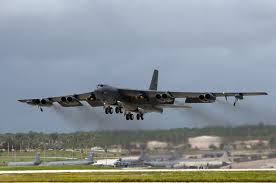
b-52

The picture above, as you all probably recognize, is of a U.S. Air Force B-52 bomber.  What you probably do not realize is that this bomber, of which 92 are still on active duty, was first manufactured in 1955 with the last being made in late 1962.  That means the youngest B-52 is 51 years old!  How many of you would consider driving a 1962 Ford or Chevy as your everyday car?  Well, that is exactly what we ask the men who man these bombers to do.  The B-52 has a 5-man crew.  To be fair, only the latest models are still in use, and they receive a degree of maintenance which guarantees the safety of the crew.  Still, it is flying on something you cannot replace, the airframe, and that airframe is at least 51 years old.  The Boeing 707 was the heart of the long-range commercial fleet when these aircraft were first produced.  Anyone flown on one of those lately?  Why do you think that is?

Within the Air Force inventory are the B-1 and B-2, but neither can fly the mission of the B-52.  So why do we not just retire them?  Because we are not ready to say the nuclear bomb era is over and this aircraft still reigns supreme when it comes to carrying such a payload.

kc-135

The front aircraft above is a KC-135, a refueling aircraft, which just happens to be refueling a B-52.  This aircraft was first delivered to the Air Force in 1956, and if it looks a little familiar, it should, it is the military version of the Boeing 707.  According to the Air Force, it stills has 414 of these aircraft on active and reserve status.  The last KC-135 was delivered to the Air Force in 1965.  That fleet is no younger than 48 years old, most older.  To be fair, the Air Force, reinforced its refueling fleet by buying a military version of the McDonnell Douglas DC-10, the KC-10, which were built after 1981.  But military cutbacks allowed a purchase of a total of 59 of these aircraft, far fewer than needed to replace an already aging KC-135 fleet.  The entire KC-10 fleet is at least 20 years old.

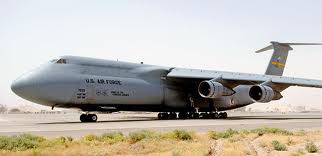
c-5

The picture above is of an Air Force C-5A.  This air craft was first delivered to the Air Force in 1970 and were produced, in the “B” and “C” models, until 1989.  A fleet of 59 C-5 “M” models are scheduled to be delivered.  Still, the bulk of this fleet is at least 20 years old.  In 1991 the Air Force started taking delivery of its replacement, the C-17.

f14

The picture above is of the Navy’s F-14, first delivered in 1970, but fully retired in 2006.  The Navy replaced this aircraft with the F/A-18, seen below.

fa-18

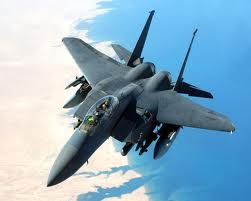
f-15

The picture above is of an Air Force F-15.  It was first delivered in 1975.  This aircraft, however, is still in production costing taxpayers about $140 million a copy.

f-22

The aircraft above is the Air Force F-22.  It cost about $140 million a copy.  This is the aircraft the Air Force prefers to the F-15.  Strangely, the F-22 is no longer produced, the last coming off the assembly line November 2011.

Keeping the peace is expensive, particularly in a world as unpredictable as this one is.  The majority of servicemen and women are not interested in going to war, but when they must, they would prefer to do it with equipment that was developed for today’s circumstances.

Take your 1962 Ford to your mechanic and tell him you want it to have a catalytic converter, GPS, satellite radio, air conditioning, and all the other bells and whistles.  He can do it but by the time he gets finished you will wonder why you did not just buy a new car in the first place.  Yes, you will have all the bells and whistles of today’s car but you are still going to have a 50-year-old body, frame, and numerous other parts.  As foolish as all this sounds, it is exactly what people are expecting of the military.  You are asking our military men and women to fight tomorrow’s wars with yesterday’s equipment.  Please, tell me the logic of that?

I was recently told that the money we spend on new F-22 aircraft would be better spent on education.  The sophistry of that argument is incredible.  I absolutely think we should spend more money on the education of our young people, but not to the detriment of those charged with protecting our country.

Just as a bit of a post script, present plans include keeping the venerable B-52 for the next 20 years!

America’s Politicians Are Compromising Its Future


Winston Churchill said, Those that fail to learn from history, are doomed to repeat it.”  He was repeating what George Santayana said in 1906.  Churchill’s reference is more compelling because he said it as the result of the outbreak of war in Europe in 1939.  It seems, however, that this bit of wisdom has fallen upon deaf ears when it comes to the Congress of the United States.  Democrats in particular, but some Republicans too, are hell-bent on reducing the size of our military.  The concern is the size of the defense budget.  What is being forgotten is America’s security.

After World War I the United States entered into a period of isolationism that proved disastrous.  When it came time that we had to go to war against Germany and Japan, our military was in a very sad state of affairs.  But that was where it had found itself just prior to Word War I as well.  Why?

Then, as now, the price of freedom is steep.  The guardians of our freedom is our standing military.  It is their readiness and ability to quickly go into action that keeps us strong, safe, and free.  After World War I Americans, with a complicit Congress, thought the size and price tag associated with it was far too steep.  There was a huge reduction is equipment and personnel.  When the United States was drawn into World War II in 1941, it was extremely undermanned, poorly trained, and poorly equipped.  But after WWII we seemed to have learned our lesson.  The United States, particularly with the cold war, kept a well-equipped, well-trained, and reasonably sized force until the mid-1980s.  Then, during the Reagan administration, it was decided that we needed to close out-dated and redundant military installations.  With that, it was felt we could achieve a budget savings that was needed.  It was a truly good idea in theory but in practice it has been a political boondoggle that defies logic and common sense.

The Base Closure Commission was first convened in 1988 to consider the necessity of the 3800 military installations then in existence.  On December 29, 1988, the first base closure commission (with its 12 members appointed by the Secretary of Defense Carlucci) issued its report. It recommended the closure, in part or in whole, and realignment of 145 bases. The commission projected that this would improve the effectiveness of the base structure, and would save an estimated $693.6 million a year in base operating costs.  Considering the total defense budget for 1989 was $427.7 billion this was fairly insignificant.  The first base closed was Pease AFB in Portsmouth NH.   But as usual, members of Congress fought tooth and nail to keep every single proposed closing that impacted their state removed from the list.  This, of course, lead to the back-room deals which resulted in the closing of bases that left both the Pentagon and those knowledgeable in military affairs scratching their heads.

For example, during the second round of base closures Fort Huachuca Arizona was scheduled to be closed.  Its men and facilities would be moved to Fort Devens Massachusetts.  Fort Huachuca was the home of the Army Communications Command along with a number of other smaller groups.  Fort Devens was home to the Army Security Agency and several other groups.  The Army Security Agency was responsible for the security of military communications.  With Massachusetts’ nation leading technology base it seemed a match made in heaven.  Its operations and those as the nearby Hanscom AFB, an air force research and development installation engaged in many of the same activities as the army’s security agency.  It must have made too much sense.  But Hanscom AFB has also been a target for a base closure.  To this day it is my belief that Sen. Ted Kennedy made a back room deal with Sen. John McCain in which he secured the future of Hanscom in exchange for closing Fort Devens.  Fort Huachuca remains open today.

To put a dot on this i, if you look at the history of base closures you will find that the majority have come in states where Democrats either tend to be in power or hold great sway.  Large bases which probably should be closed, but have consistent avoided that bullet, remain open and all are in states that are strongly conservative.  Large bases like Fort Sill Oklahoma, Fort Jackson South Carolina, Tinker AFB Oklahoma, and others which probably should be closed remain open because of their location over their mission and cost.  I mention these things just to show how much of a political football our military is.  Political expediency reigns supreme over military needs.  This is exactly how it went right after World War I.

I would like to suggest that one major area of savings can come from reducing our military presence abroad.  Korea, for example, is home to some 50,000 troops.  Why?  The South Korean military is large, very well-trained, and very well-equipped.  Whatever threat exists from North Korea is something they can deal with themselves.  I would suggest removal of all troops from Korea save a small contingent at a joint US/Korea facility at Osan AFB which is an excellent staging area in the case of an emergency.

Then there is the US presence in Japan.  Following World War II, Japan signed an agreement that it would maintain only a defense force, no capital ships or large tactical army allowed.  But in the 75+ years since that treaty was signed Japan find its power in its industrial might, something it always wanted anyway, and shows no interest in being a military power.  I suggest that like Korea all U.S. troops save a very small contingent at an air force base be removed and that Japan be allowed to grow its own military.

The same is true for Germany.  After World War II it was required to sign a treaty that allow only for a purely defense military.  Like Japan, Germany is no longer a state that has any interest in the militaristic tendencies of its past.  Here again we could easily remove all troops save the small contingent and allow Germany to raise and maintain its own regular military.  There is absolutely no reason to believe that Japan and Germany would not continue to be anything but wonderful allies.  And this in turn would greatly reduce the cost of military forces abroad.

One of the things our military has become extremely adept at is quickly deploying to anywhere in the world in response to foreign threats.  We are better served by having a highly mobile and quickly deployable force located in the United States than at most of the locations overseas.  This would mean, however, increasing the number of available transport aircraft but that cost is greatly offset by the savings realized from removing forces overseas.

Key to this is keeping enough men and material available to respond to any emergency.  The proposed cut of 100,000 troops is entirely contrary to good military standing.  We are already too small in the size of forces.  Our soldiers are forced to endure too many overseas deployments to meet the nation’s needs.  Military effectiveness relies upon good troop morale.  A good way to undermine that is to send the same soldier over and over again into harm’s way.  We learned, supposedly, in World War II the dangers of that and during Korea and Vietnam soldiers were not required to serve more than one tour of one year in a combat zone.  That could not be further from the truth today.

We must get our Congress to work smarter and put aside their selfish political agendas.  Democrats have to give into the idea that the entitlement programs desperately need reigning in and controlled.  Republicans have got to understand that the only way our government gets revenue is through taxes.  They have got to put an end to corporate welfare and give in to the hard reality that we all may have to pay a little more to continue our way of life.

The large land wars of the past involving multiple nations at once seems unlikely.  But we can no longer afford the cold war deployment model either.  What we need is to listen to the Pentagon’s Joint Chiefs of Staff and their aides as to the present and future needs of a well-trained, well-equipped, and properly manned military force.  Politicians really need to get it out of their heads that they both understand and are sensitive to the real needs of the military.  Don’t build ships that naval leaders do not want.  Don’t build aircraft that air force leadership doesn’t want.  Address their real concerns and you will show, finally, that you do remember our history.

Want to Know Where the Next War Will Break Out? Look to Where the Last One Happened!


The countries which count themselves among “the west” have a very poor track record when it comes to recognizing how their present-day actions will inevitably affect the future.  In the history of the United States this did not take long at all.  Once the American Revolution ended in 1783, it was just a matter of time before the next outbreak of hostilities would come to its shores.

From 1783 and well into the Washington and Adams administrations, there was much talk between these presidents and the congress as to what represented a good army and a good navy.  To be sure, money was short for funding more than a minimal army and navy at best, but they had a difficult time deciding among themselves what one should even look like.  When Thomas Jefferson took office in 1803, he was so vehemently against the United States having any sort of standing army that he set out to entirely disband what we did have.  So weakened were U.S. forces in 1812, that when the United States finally took action against British Naval ships that were impressing American sailors, it was inevitable that the U.S. would have difficulties defending itself against the vastly superior British forces yet again.

James Madison, the president during the War of 1812, had his work cut out for him but he rallied support and put together a force that finally in 1814 ended the hostilities with the Battle of New Orleans.  Never again were U.S. forces so weak as to be incapable of defending our shores.

That World War 1 would happen where and when it did was apparent to all but those in complete denial of the instability that existed in the Balkan Republics.  While Austria was rightfully outraged at the assassination of Franz Joseph, it could have avoided dragging western Europe into a conflict had it not taken the actions it did.  But once it did, fierce Austrian and German nationalists used it as a way to united Prussia, Germany, and Austria in a fight with Russia, and then with France.  Prior to World War 1 national borders were frequently in dispute, often fuzzy, and at times certain territories claimed by one country were under the government of another.  It was this that thrust Austria-Germany into the fray.  Prussia in particular made claim to Russian territory and that brought in the Russians.

By the time World War 1 had ended in 1918 Europe was as war-weary as it had ever been.  The French felt the most wronged by the German incursions.  And the British, not to be outdone, felt they had been forced to contribute an inordinate amount of financial backing to the allied forces.  Each wanted its pound of flesh extracted from the German people.  When the final treaty was signed in 1919, Germany was required to pay so much in financial reparations as to render it bankrupt for decades to come.  The demands of the French and British were extremely unreasonable.  This so embittered the German people who a very small very right-wing group of Germans known at the National Socialists used that, and other prejudices, to champion their cause.  Throughout the 1920s the German economy expanded but because of its heavy debt it was felt by most Germans that they were being held down.  German feared, and rightfully so, that their military had been so weakened that their natural enemy, the Russian Communists, could overrun them at will.

When a world-wide depression hit in the 1930s, it gave the German National Socialists, lead by Adolph Hitler, the perfect opportunity to take power.  He rightfully pointed to the treaty signed in 1919 as the basis of the economic woes, and promised to take back German pride.  Once elected chancellor, Hitler did that at least in part.

Historians today point out how World War II is but a continuation of World War I, there having been no reasonable treaty agreed to.  But the end of World War II necessarily gave seed to both the Korean War and the war in Vietnam.

Until 1945, China had been led by Emperors and a conflagration of local war lords who ruled heavy handedly over the people.  For as long as anyone could remember these feudal lords were waring with neighboring feudal lords over land and power.  But by the end of World War II, the Chinese people were tired of monarchies and all their trappings.  Enter Chang Kai-shek.  Chang Kai-shek had been the visible leader of the opposition to the Japanese occupation forces, and of course at the end of World War II he was the U.S. choice to led the country.  But Chang Kai-shek did little to change the culture of the government.  The popular general turned into a hated governmental administrator.  Mao Zedong, who had also lead opposition forces during World War II proffered the idea of a socialist state, a “people’s government.”  So popular was this idea among the Chinese people who four short years after World War II, Mao Zedong was the head of the new Chinese government.

Mao Zedong quickly made friends with two neighbors each of whom was ethnically related, the North Koreans and the Vietnamese.  Both countries had established a communist form of government and both had a desire for their countries to be united, north and south.

The U.S. greatly underestimated the power of the North Korean and Chinese forces that invaded in 1950 and were nearly driven off the peninsula.

Not long after the end of hostilities in North Korea things were getting unsettled in Vietnam with the withdrawal of the French in what had been Indochina.  Here again a general who had opposed the Japanese during World War II, Ho Chi Mihn, was leading his communist nation.  But unlike the North Koreans, Ho Chi Mihn made an offering to U.S. official to avoid hostilities.  But 1954 America had become wrapped up in McCarthyism and negotiations with communists was viewed by many as unpatriotic.  No talks were ever held.

When the French left Vietnam the U.S. stepped in.  But U.S. officials had little understanding of Vietnam’s problem.  All they saw were the hated communists who had evil in their hearts and had to be controlled if  not eliminated.  As early as 1954 war in Vietnam had become inevitable.

For the past 11 years we have been involved in the conflicts of the middle east.  While things have at least settled down in Iraq and Afghanistan, the region is far from stable.  Also in question, what are our long-range motivations with regard to that region?  Where are our allegiances?  What countries are most likely to drag the region back into hostilities?

One thing is certain, we cannot use our beliefs in what is right and wrong and overlay those beliefs on the people of other countries.  That simply does not work and it categorically unfair to the people of those countries.  What we need is a greater understanding of the needs of the gross population of these countries, their desires, and their beliefs.

The 2nd Korean War That Almost Happened


In 1969 I was stationed in the US Army at Yongsan South Korea.  Yongsan was, and is, the headquarters of the 8th U.S. Army as well as assigned US Air Force detachments.  I worked in the 8th Army communications facility that provided communications for the Headquarters to locations around Korea, to Japan, and to the United States.  Upon arrival it had seemed an easy enough assignment considering it was not Vietnam and no one was trying to kill me on a daily basis.  That does not mean there was no conflict at all, there was, more than most people in the U.S. ever knew about.

In February of 1968 the crew of the USS Pueblo, a naval spy ship, had been captured by the North Koreans and were held in captivity for the next 11 months, being released on December 23 1968.  Although the Korean military commands had been on heightened status, is was not perceived as grave.  Still, the South Korean government, in control of the world’s 5th largest standing army at the time, was nervous as Kim Jong Il had promised to invade the south and reunite the countries by force.  All South Korean men between the ages of 18 and 60, at the time, were either on active duty with the military or in the reserves.  Each considered war likely, and some even looked forward to seeking to avenge the hostilities that had ended only a decade and a half before.

At the time, the United States had two complete infantry divisions in Korea, the 2nd Infantry Division and the 7th Infantry Division.  It was the job of the 2nd Division to patrol and keep safe the demilitarized zone (DMZ).  Men, both observers and infantrymen, could easily see the North Korean soldiers on a daily basis.  The North Koreans were known for being provocative and frequently probed at the U.S. lines.  In one instance while I was there, a 2nd lieutenant of the US was out on an inspection tour of the DMZ when he was attacked by machete wielding North Koreans who killed him in broad daylight.  This incident, and many more like it, never made it to either the newspapers or the nightly news broadcasts in the US as those facilities were tied up in the news coming out of Vietnam.  And yet, soldiers in Korea who served north of the Han River were all considered to be in a combat zone and given commensurate combat pay.

Then, on April 15, 1969, a Tuesday, a U.S. Navy spy plane known as an EC-121 was shot down over North Korea and its crew of 33 all died.

US Navy EC-121

The aircraft was on a mission about 100 miles east of the North Korean peninsula when it was shot down by a North Korean Mig-21 fighter.

I was working in the communications facility at the time this happened.  My battalion commander, a Lieutenant Colonel who seldom ventured into the facility, was suddenly sitting in my work area visibly shaken.  He informed us that the facility was on lock-down and no one would be allowed to enter or leave.  To that end, at the entrance way to my section the normal military policeman had been replaced by a South Korean soldier who was wielding a shotgun with orders to shoot to kill.  Additionally, those men who were in what was the cryptographic section, secure teletype communications, had their door, a bank vault door, secured with the combination lock spun.

Most men who served in areas like I did were aware of what was called survival time after the outbreak of hostilities and the launching of missiles.  Our survival time, as I remember it, was about 3o seconds, for obvious reasons.  What I was unaware of, since we there were no windows in this facility, was that a machine gun had been erected three-quarters of the way up our microwave tower.  Additionally, a heavily army truck was stationed just outside our facility.

Communications parlance of the day had various levels of importance assigned to every bit of communications either received or sent: routine, immediate, and flash.  Each level above routine required the sender to have certain increasing rank and responsibility.  There was one type of communication that was seldom seen and this was known as the “red rocket.”  This particular degree of urgency was reserved for the White House.  Starting on April 15 1969 we saw a lot of such traffic.  The situation was extremely grave as we soon found out that the rear infantry division, the 7th, had been moved to a forward position and many of its supporting artillery batteries were in the process of being moved.

At the time the U.S. had many naval and air forces stationed in Japan which were scrambled to Korean waters and air bases in South Korea.  But more importantly, at the time the Air Force had a group stationed at McDill AFB known as STRIKE Command.  This group had nuclear capability and had been scrambled as well.  I only found this out a couple of years later when, while stationed in Italy, my neighbor was a man who had been assigned to STRIKE Command at the time.  He said STRIKE Command aircraft were within a couple of hours of Korea when they were recalled.

For its part, the United States had absolutely no interest in having an armed conflict with the North Koreans.  The U.S. already had over 500,000 military on assignment in Vietnam and could ill-afford a new commitment of men and material.  The new Nixon White House, a mere 90 days into its tenure, used Henry Kissinger’s amazing diplomatic skills to avert a war.  That task was certainly difficult as both North and South Korea desired a fight.  Still, it took serveral days to resolve the issue, at least temporarily.

We who served in Korea at the time felt over-looked, almost forgotten.  Thought not nearly in the numbers of Vietnam, men were still giving their lives in Korea in those days.  To be sure, the formidable size of both the U.S. forces in Korea and the South Korean military itself was just enough of a deterrent, but only because cooler heads prevailed.