The 2nd Korean War That Almost Happened


In 1969 I was stationed in the US Army at Yongsan South Korea.  Yongsan was, and is, the headquarters of the 8th U.S. Army as well as assigned US Air Force detachments.  I worked in the 8th Army communications facility that provided communications for the Headquarters to locations around Korea, to Japan, and to the United States.  Upon arrival it had seemed an easy enough assignment considering it was not Vietnam and no one was trying to kill me on a daily basis.  That does not mean there was no conflict at all, there was, more than most people in the U.S. ever knew about.

In February of 1968 the crew of the USS Pueblo, a naval spy ship, had been captured by the North Koreans and were held in captivity for the next 11 months, being released on December 23 1968.  Although the Korean military commands had been on heightened status, is was not perceived as grave.  Still, the South Korean government, in control of the world’s 5th largest standing army at the time, was nervous as Kim Jong Il had promised to invade the south and reunite the countries by force.  All South Korean men between the ages of 18 and 60, at the time, were either on active duty with the military or in the reserves.  Each considered war likely, and some even looked forward to seeking to avenge the hostilities that had ended only a decade and a half before.

At the time, the United States had two complete infantry divisions in Korea, the 2nd Infantry Division and the 7th Infantry Division.  It was the job of the 2nd Division to patrol and keep safe the demilitarized zone (DMZ).  Men, both observers and infantrymen, could easily see the North Korean soldiers on a daily basis.  The North Koreans were known for being provocative and frequently probed at the U.S. lines.  In one instance while I was there, a 2nd lieutenant of the US was out on an inspection tour of the DMZ when he was attacked by machete wielding North Koreans who killed him in broad daylight.  This incident, and many more like it, never made it to either the newspapers or the nightly news broadcasts in the US as those facilities were tied up in the news coming out of Vietnam.  And yet, soldiers in Korea who served north of the Han River were all considered to be in a combat zone and given commensurate combat pay.

Then, on April 15, 1969, a Tuesday, a U.S. Navy spy plane known as an EC-121 was shot down over North Korea and its crew of 33 all died.
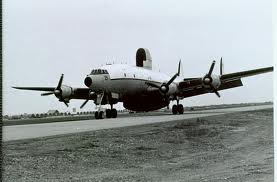
US Navy EC-121

The aircraft was on a mission about 100 miles east of the North Korean peninsula when it was shot down by a North Korean Mig-21 fighter.

I was working in the communications facility at the time this happened.  My battalion commander, a Lieutenant Colonel who seldom ventured into the facility, was suddenly sitting in my work area visibly shaken.  He informed us that the facility was on lock-down and no one would be allowed to enter or leave.  To that end, at the entrance way to my section the normal military policeman had been replaced by a South Korean soldier who was wielding a shotgun with orders to shoot to kill.  Additionally, those men who were in what was the cryptographic section, secure teletype communications, had their door, a bank vault door, secured with the combination lock spun.

Most men who served in areas like I did were aware of what was called survival time after the outbreak of hostilities and the launching of missiles.  Our survival time, as I remember it, was about 3o seconds, for obvious reasons.  What I was unaware of, since we there were no windows in this facility, was that a machine gun had been erected three-quarters of the way up our microwave tower.  Additionally, a heavily army truck was stationed just outside our facility.

Communications parlance of the day had various levels of importance assigned to every bit of communications either received or sent: routine, immediate, and flash.  Each level above routine required the sender to have certain increasing rank and responsibility.  There was one type of communication that was seldom seen and this was known as the “red rocket.”  This particular degree of urgency was reserved for the White House.  Starting on April 15 1969 we saw a lot of such traffic.  The situation was extremely grave as we soon found out that the rear infantry division, the 7th, had been moved to a forward position and many of its supporting artillery batteries were in the process of being moved.

At the time the U.S. had many naval and air forces stationed in Japan which were scrambled to Korean waters and air bases in South Korea.  But more importantly, at the time the Air Force had a group stationed at McDill AFB known as STRIKE Command.  This group had nuclear capability and had been scrambled as well.  I only found this out a couple of years later when, while stationed in Italy, my neighbor was a man who had been assigned to STRIKE Command at the time.  He said STRIKE Command aircraft were within a couple of hours of Korea when they were recalled.

For its part, the United States had absolutely no interest in having an armed conflict with the North Koreans.  The U.S. already had over 500,000 military on assignment in Vietnam and could ill-afford a new commitment of men and material.  The new Nixon White House, a mere 90 days into its tenure, used Henry Kissinger’s amazing diplomatic skills to avert a war.  That task was certainly difficult as both North and South Korea desired a fight.  Still, it took serveral days to resolve the issue, at least temporarily.

We who served in Korea at the time felt over-looked, almost forgotten.  Thought not nearly in the numbers of Vietnam, men were still giving their lives in Korea in those days.  To be sure, the formidable size of both the U.S. forces in Korea and the South Korean military itself was just enough of a deterrent, but only because cooler heads prevailed.

Expediant Politicians Have Compromised America’s Fighting Men


If you have read my previous posts you may believe I am beating this subject to death.  But as a veteran, and hopefully a thoughtful and patriotic American, I feel responsible to speak up on my belief that those in political power, obsessed by their own self-serving priorities, are putting our nation’s warriors in harm’s way.

In October and November of 1925, Colonel William Mitchell was court-martialed for having the temerity to speak his conscience and call into question the conviction of American politicians in providing a proper defense, in the field of aviation, for America.  For those of you unfamiliar with this case, in 1921 he predicted that Japan would launch a sneak attack by aircraft based on ships at sea, on a Sunday morning around 7AM, and upon the ships of the United States based in the port of Honolulu.  His assertion, at the time, was of course brushed off as the rantings of a man more interested in his own fame than anything else.  Mitchell, over the next four years, continued his attack on military leadership whose “conservative” views did not allow for the idea of new and revolutionary ideas.  They, in turned, conspired with the numerous politician to maintain the status-quo or, worse, weaken the nation’s defenses.

Fortunately, America no longer disregards the advances that are being made in warfare.  To the contrary, America’s development of “smart bombs” and other technological advances are a point of pride.  But a lesson that was learned in World War II seems to have been forgotten.  To be sure, America’s technological advances during World War II helped win that war.  But it was the individual fighting man who was at its base.  That is, the technological advances not withstanding, it was the overwhelming numbers of American fighting men, and women, who helped put us over the top.  America fielded over 2 million men during that war.  But out of that war came something we had not expected, combat fatigue.  It was really nothing new, had been experienced in both the Revolutionary War and World War I, but it finally had a name, and a face.

Fighting a war is like running a marathon.  The runner knows full-well that he will hit “the wall,” that point at which he runs out of initial calories, and has to do the final 8 miles on his reserves.  But he knows that at 26.2 miles he will be done, and that in mind, he can maintain a very high level of effectiveness overcoming his bodily pains to complete his mission.  Military men are no different.  They are given a “tour of duty” in a war zone that will last no longer than one year before they are returned home.  Like the runner, however, they must enjoy an extended time of rest to recover from their experience.  But unlike the marathoner, they have incurred a psychological debt that cannot be quantified and may be difficult, if not impossible, to overcome.

American politicians, most of whom have never served in the military, never mind in a war-zone, do not allow for the psychological damage of war to enter into their considerations when planning for a properly manned military.  They look only at the national budget, and seeing the largeness of the defense budget, they allow political necessity to rule their decisions rather than the proper defense of America and the safety of those who are entrusted with its defense, the military.

Freedom is not free but American politicians, fearful of having to defend its expense, allow for the reduction in the size of America’s military at the expense of the safety of the individual military person.  Even the Spartans, the best-trained, best-equipped, best prepared military force of its day were defeated by numbers.  As valiant as they were, in the end, they ceased to exist simply because of being overwhelmed by an extremely more extensive military force.  Could this happen to America?  Yes!

I am intensely proud of my service in the U.S. Army and am extremely protective of any who would desire to do it wrong.  Right now, as I see it, those who do it wrong are our elected officials, those who we have asked to do our bidding but who, because they lack honor, prefer to force upon the military systems it neither wants nor needs, to curry favor with industrialists who support their political careers but who have no vote in their election.

When Dwight Eisenhower was made commander of all allied forces in Europe during World War II, he knew full-well it was not because he was a stellar tactician, but rather because he could navigate the harsh world of politics and do it in a manner that both mollified the political powers of the allies while tending to the emergency needs of the troops.  He of course surrounded himself with the best tacticians he could find.  The result was his ability to have exactly the number of troops he needed and resources needed to pull off to D-Day invasion of 1944.   America and Americans seemed to finally have come to terms with the idea of “whatever it takes” to win a war.  We committed unconditionally.  To be certain, in 1944 America was weary of war and wanted it over as-soon-as possible.  It continued for another 15 months beyond D-Day 1944.

Since that time America has committed itself to the defense of free thinking people everywhere and especially to the defense of the American homeland.  Nothing shows that resolve more than our response following 9/11.  But America seems to have forgotten, and needs to be reminded, particularly those who assume public office, that war is always a game of numbers, and those numbers are always a count of individual human lives.  Those numbers are necessarily the man who wears the uniform and puts himself in harm’s way in defense of the country he loves.  But men wear out just like machines, and war wears a man out more quickly than any other single endeavor.  To meet our obligations world-wide we need a large active military force.  We do not have that, nor have we for too long.  We wear our those individual parts to their detriment.  We seem to but unable, or unwilling, to pay forward the tax of field the military we promise.

Our active and reserve military forces are simply being over-taxed because there are not enough of them.  We reduce the size of our military at our own peril, and the peril of the individual we ask to go to war for us.  We need an active military in excess of 1 million men and a reserve force that numbers at least 3 million.  We are not even close to either of those figures.  What we should be learned from present-day actions, but do not seem to be, is that modern wars will be long and drawn out requiring long-term commitment from us.  It is unreasonable to keep asking the same individuals to put themselves in harm’s way time and again when we have the resources, and ability, to field far more.