Crisis at the U.S. Southern Border


The crisis there is very real but the U.S. government is handling wrong. Worse, the Republican Party seems hell-bent on making these people into a menace. They are not! Trump demonized them by saying they were all drug smugglers and the like. Also not true.

Our country is a country of immigrants with one exception, the Native Americans who are, sadly, few in number today. My own family arrived in America in its earliest of days, 1638, flees Englands policy of imprisoning Puritans and sometimes putting them to death because they disagreed with the Church of England. They fled persecution.

As the decades passed, many other new Americans came here for the same reason. Three waves of Irish came here because of famine, harsh living conditions under the thumb of land owners.

Then the Chinese came to the West Coast of America and helped build the railroads and do other jobs that Americans thought below them. That was until the Chinese Exclusion Act, thoroughly racist in design, was passed in 1862.

Otherwise, our borders were wide open. Starting in the 1890s and continuing until 1923, almost everyone from a foreign country who arrived here was welcomed. Most were southern Europeans although some were German immigrants and Jewish immigrants. The Germans were fleeing forced military service, worsening economics, and other factors. Many of these Germans were skilled laborers who helped our economy.

Then, starting around 1900, Italians, Poles, Syrians, Armenians and other groups came to America to escape both economic failures, government repression, ie. the Ottoman Empire and the Russian occupation of Poland. They too were welcomed with open arms. The only requirements for these people is that they arrive disease free, have $50 and an address to go to. Most did not have the $50 and many used addresses given to them by friends even though most would never go to that address. And during this era there was an explosion of American industry due to these people taking wages that long time Americans were unwilling to take. They filled mostly jobs in the various types of mills in the Northeast and the mid-west mills.

It was not until the Immigration Act of 1924 limits the number of immigrants allowed into the United States yearly through nationality quotas. Under the new quota system, the United States issues immigration visas to 2 percent of the total number of people of each nationality in the United States at the 1890 census. The law favors immigration from Northern and Western European countries. Just three countries, Great Britain, Ireland and Germany account for 70 percent of all available visas. Immigration from Southern, Central and Eastern Europe was limited. (https://www.history.com/topics/immigration/immigration-united-states-timeline#new-restrictions-at-start-of-wwi). The reason the 1890 census was chosen is because it did not reflect the great immigration from 1890 to 1920.

For some reason, America has long been Xenophobic. It does not seem to matter that previous generations of immigrants have always found a productive place in American and have contributed greatly to our economy.

And so, today we have this crisis at the southern border. Xenophobia is at a height never seen before. The vast majority of people arriving at our border are fleeing various types of repression, personal attacks, forced labor, etc. This is a humanitarian crisis to which we must respond in a positive manner. Before us stand the future of American labor, and not to belabor a point, this has always and without exception, been an extremely positive thing for our country and our economy. Yes, there are a springling of coyotes, drug smugglers and other undesirables among the group, but they can be ferreted out and put in jails in Mexico.

The U.S. would do well to make an agreement with the Mexican government to build housing on Mexican soil for these immigrants. It would be costly, but far more humane than what exists today. Republican truly need to read the base of the Statue of Liberty, “Give me your tired, your poor, your huddled masses yearning to breathe free, the wretched refuse of your teeming shore” written by Emma Lazarus. Are we now too arrogant, too unsympathetic, too xenophobic to remember those words, the people arrived at Ellis Island, that we now think to turn our backs on those words is somehow all right?

Let them in via making at least 100 more immigration judges, faster processing and, of course, weeding out the undesirables. In the end, decades from now, we will be reaping the benefits of such immigration.
A History of Immigration in the U.S.: Preface


This is the first in a series of posts to tell of the history of immigration to America starting with its earliest instances and continuing to today. I am prompted to do this because of the latest round of xenophobia stoked by the Trump presidency. But Trump is only the latest in a long history of such response.

The United States undoubtedly has citizens who trace their ancestry back to every country in the world today, and, to countries which either no longer exist or have changed their identity.

We are a nation of immigrants with only a very small portion of indigenous peoples, who, according to anthropologists are actually immigrants themselves. The difference is that those immigrants came approximately 10,000 years ago over the frozen bridge between present day Russia and Alaska. But that sort of migration was a ancient form of world population which first began in Eastern Africa a million years ago, possibly longer.

The immigration policies of today in the United States have only existed since 1924 in full force as part of a quota system established by the Johnson-Reed Act of 1924. That act had its beginnings in 1917 when the United States tried to stem certain populations from entering the United States. But even 1917 is not the beginning. In 1882, Congress passed the Chinese Exclusion Act, a purely racist act by the westesrn states over fear of white supremicy and racial purity. Those Chinese immigrants first started entering the U.S. in 1848.

The American idea of who was an American came out of the large emigration of people from England in the early years of our country. As other nationalities started to enter the United States, there was a push back against them over fears of these immigrant taking jobs from established residents.

But the American view of who was actually an American was narrowly defined excluding black Americans who first arrived in 1619 in the Virginia Colony but quickly spread to all 13 of the original colonies. Later, when there were threee waves of Irish immigration, more and more the actual signage on stores of “Irish Need Not Apply” were common. What brought this sort of xenophobia was the fact that almost all Irish brought with them Roman Catholocism with them, a challenge to the anti-Papal religions of Protestantism.

But anti-Irish sentiment quickly passed into the background when beginning in the 1890s a wave of southern and eastern Europeans arrived on our shores. These non-English speaking peoples who not only brought more Catholicism with them, also brought Judeism with them. Additonally the southern Europeans brought a darker skinned people who stood out. Nowhere in the United States was this assimilation shown more prominently than in the lower east side of New York City when these peoples settled. Suddenly the English speaking majority’s ears heard Italian, Polish and Yiddish languages which these immigrants clung to. But this shows the short memories of those Americans who had forgotten the German speaking immigrants of the 1880s.

In the following chapters, I will outline how and who grew our population over the decades. But also, with the great immigration of 1890 to 1920 was the beginnings of many reform movements and unionization. Each of these was an anathema to the English speaking conservative Americans. Immigants poured through the ports of New York, Boston and Baltimore unabated until 1924. American industrialists fought that immigration and were behind the 1924 act.

This is an overview of what I will present in the following chapters. American thought today has the unfortunate lack of understanding that we are still a country heavily reliant upon new immigrants, a fact that will undoubtedly continue in the coming decades. Hopefully you will gain an appreciation of “how we got here” when I finish.

The New American Xenophobia


Xenophobe n. One who fears or hates strangers or foreigners or anything that is foreign. (Webster’s II New Riverside University Dictionary, 1988, p. 1332)

At the beginning of the 20th Century American immigration laws were few. An immigrant had to have on his person $50, a named sponsor to take him in, be free of disease or mental defect, and have no criminal record. Americans today view all immigrants of that time coming through Ellis Island New York. But in truth, the ports of Boston and Baltimore were also quite alive with immigrants.

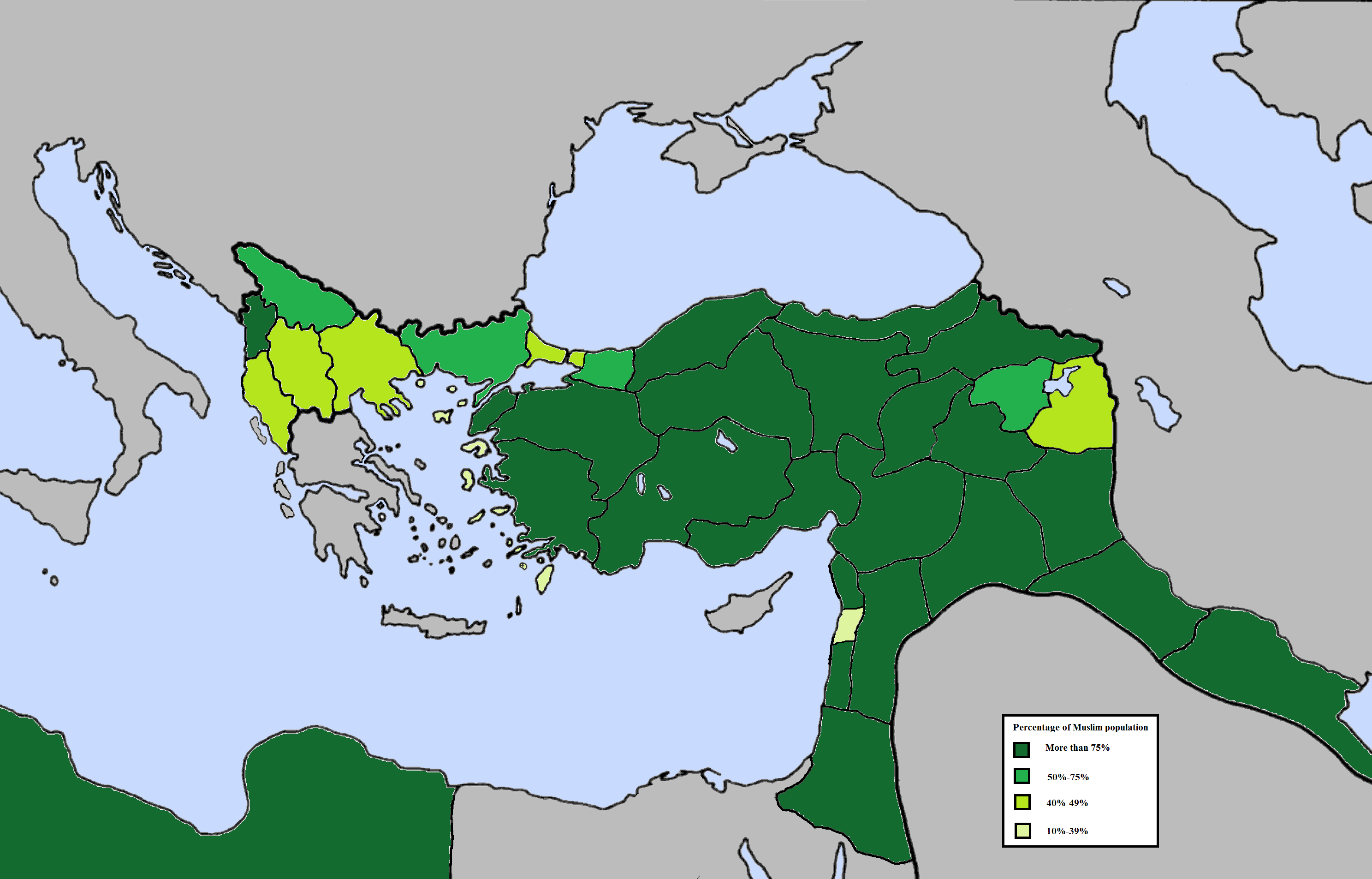
Europe during the period 1900 to 1915 was fraught with civil wars, unrest, and an Ottoman Empire which was at war with Great Britain. As can be seen by the map below, the Ottoman Empire covered most of the Baltic countries and large portions of the middle east. It is also worthy of mention that this was a Moslem Empire which Christian Europe feared. In Eastern Europe, Russia was flexing its influence as it held onto much of the territory it controlled when it became the USSR. In particular, it controlled most of Poland as we know it today. In 1905 the Czar ordered that all Polish men of a certain age be drafted into the Russian Army. Those who refused realized harsh consequences.

Muslim_population_Ottoman_Empire_vilayets_provinces_1906_1907_census

Ottoman Empire 1905


1_Russian-growth-1801-1914

Russian Czarist Empire


In the case of Italy, the country’s industrial north did not offer enough employment for Italy’s labor force. The Italian tendency towards large families made for an excess labor force. The excess labor force could find work neither on the farm nor in Italy’s factories, hence they looked towards America where, they heard, there existed a need for more labor. They also heard, falsely of course, that such labor, even though unskilled, was well-paid.

The social, economic and political unrest of much of Europe lead to its radicalization. Some were of the new socialism as outlined by Karl Marx and practiced by Trotsky and Lenin prior to the revolution. Conversely, Fascism arose out of Europe’s aristocracy against the growing socialist ideals. The common man found himself caught between the two groups in Europe with no place to run, except America.

The overwhelming majority of immigrants to America in the early 20th century were people coming from extreme poverty. They were indeed a cross-section of Europe embracing every type of religious, political and social belief. And as with any cross-section, among them were the anarchists and others who would prove troublesome to the established American public.

The epicenter of American radicalism in those days was in the small boarding house rooms of Greenwich Village. They were a small but vocal group who advocated the overthrow of the wealthy, the industrialists, and the powerful politicians by any means possible. Names like Emma Goldman, Edna St. Vincent Millay, Margaret Sanger, and John Reed seemed to most Americans to be the ones originating most of America’s radical troubles, but as with many things, the truth was something quite different.

When Leon Czolgosz assassinated President William McKinley, William “Big Bill” Haywood, Emma Goldman was extremely vocal in her opposition to violence as a tool of the anarchists. Margaret Sanger attended many anarchists meetings in Greenwich Village, but her purpose was to gain support for her settlement house in the lower east side and in getting aid for single mothers. John Reed was a journalist who was more interested in reporting on the anarchists, though he did agree with their views, the partaking in their political actions. Big Bill Haywood was an organizer for the Industrial Workers of the World, a socialist union whose prime member was the unskilled laborer. But in 1907 Haywood had been tried for murder in Idaho. Haywood was innocent of the charge, a charge that had been trumped up simply because local politicians hated him, and found innocent after his trial. But he could not shake being labeled as a murder and his presence always brought trepidation to any community he visited.

People like Haywood and Sanger took on the cause of the immigrant and were closely associated with the various new immigrant groups. When a strike broke out in Lawrence Massachusetts in 1912, Big Bill visited the city and both city and state leadership felt certain that riots and all sorts of violence were sure to follow. Again, the truth is far different. Haywood spent very little time in Lawrence and focused his energies on raising funds for the strikers in other parts of New England. He actually had no interest in being a part of the strike save the role of fund-raiser. But then dynamite was found at a house in North Lawrence and everyone was certain that the IWW and Big Bill were somehow behind it. A few days later it was discovered that William Wood, a mill owner, had planted the dynamite in an effort to discredit the efforts of the IWW to win the strike.

What in common between the events of the early 20th Century and those of this presidential campaign, is Donald Trump’s use of fear and xenophobia to activate an American public. Fear is common to all human beings and has been used to exploit people throughout the ages. Because we are in the middle of Trump’s plotting it can be hard to gain perspective, but it is perspective that will save us from foolish beliefs and even more foolish moves.

The immigrant is the life blood of America and their introduction into our country makes us stronger. And while it is true that there are elements in those immigrants who would do America harm, we are more than strong enough to survive their worst. Unlike much of the world, our country thrives upon its diversity. Our Constitution guarantees that diversity cannot be used against us.   And the words at the base of the Statue of Liberty bear remembering, Give me your tired, your poor, your huddled masses yearning to breathe free, the wretched refuse of your teeming shore. Send these, the homeless, tempest-tossed to me, I lift my lamp beside the golden door!”

Amen!